

The short answer
Once a claim is approved and the vehicle is in the shop, most full-vehicle hail repairs at DentPicks take about 5–10 business days; single dents are often same-day. The timeline stretches when hidden damage requires an insurance supplement, when parts or trim must be ordered, and after major storms when every shop in the region is booked. A shop should give you a written time range at check-in and update you if it changes.
 Written by the DentPicks Editorial Team
Technically reviewed by Vytas Kucinskas, Founder & Master PDR Technician
Written by the DentPicks Editorial Team
Technically reviewed by Vytas Kucinskas, Founder & Master PDR Technician
Published: Aug 19, 2026 · Last reviewed: Aug 19, 2026 · 8 min read
When people ask how long hail repair takes, they are usually asking two different questions at once: how long the shop needs the car, and how long the whole process takes from the day the hail fell. Those are very different numbers, because the shop only controls part of the timeline — the claim, the adjuster, and sometimes a parts order control the rest. This guide separates the two so you can plan around a rental car, a work commute, and a realistic delivery date.
The honest answer, by repair type
A single door ding or a small dent on an accessible panel is usually a same-day repair — often an hour or two of actual work once the technician has the panel under proper lighting. Quotes for that kind of job are usually verbal, from photos, in about 30 minutes.
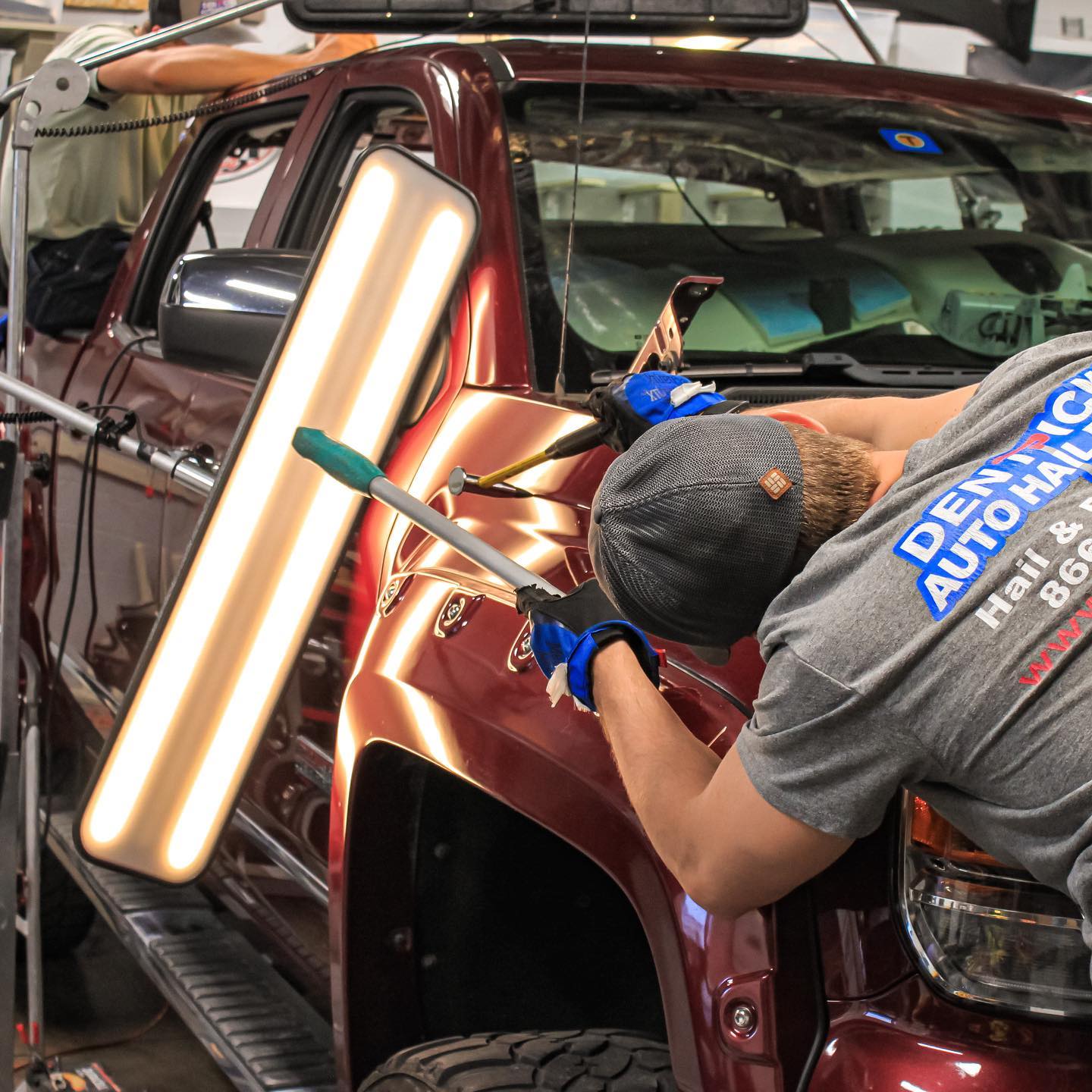
Full-vehicle hail damage is a different animal. Hundreds of dents spread across the hood, roof, deck lid, and both sides mean panel-by-panel work, trim removal, and often headliner drops to reach the roof from behind. At DentPicks, most approved full-vehicle hail repairs take about 5–10 business days in the shop. That range comes from our own repair history in Plano — it is a typical shop range, not a guarantee, because severity varies enormously from car to car. A lightly peppered sedan can be done near the front of that range; a truck with deep roof damage and backordered mouldings can run past it.
Stage by stage: where the time actually goes
The in-shop days are only the visible part of the timeline. Here is the whole sequence, from the storm to your driveway. You file the claim with your insurer — that part is yours by law — and DentPicks walks alongside for everything around it: photos, adjuster meetings, supplement paperwork, and scheduling.
| Stage | What happens | Typical time |
|---|---|---|
| 1. Claim filed | You report the damage to your insurer under comprehensive coverage. Filing itself takes minutes by phone or app. | Same day |
| 2. Inspection & approval | An adjuster inspects the vehicle and writes the initial estimate. After a large storm, catastrophe teams can be booked out. | Days to a few weeks — insurer-controlled |
| 3. Drop-off & teardown | Check-in, damage mapped under PDR lighting, trim removed where needed. Hidden dents usually surface here. | First 1–2 shop days |
| 4. Supplement (if needed) | Newly found damage is documented and sent to the insurer; the adjuster approves or negotiates the difference. | A few business days — insurer-controlled |
| 5. Repair | Panel-by-panel PDR work; any approved panel replacement or refinishing happens in this window too. | The bulk of the 5–10 business days |
| 6. Quality control | Reassembly, then the job is signed off by whoever runs quality control — you'll see it in your portal. | Final shop day |
| 7. Delivery | A mini exterior detail, a walkthrough of the panels, and your written lifetime warranty paperwork. | Pickup day |
Shop-time figures above are DentPicks ranges drawn from our own repair history in Plano, TX. They are typical ranges, not promises — the insurer-controlled stages are outside any shop's hands.
What stretches a hail-repair timeline
Four things account for most of the delays we see, and only one of them is within the shop's control:
- Supplements and hidden damage. Initial estimates are often written outdoors, where shallow dents are nearly invisible. Once the car is under shop lighting, more damage surfaces, and the additional work has to be documented and approved before it can be repaired. Our guide to insurance supplements in hail repair explains why this is a normal part of the claim, not a red flag.
- Parts and trim orders. Roof mouldings, badges, and one-time-use clips sometimes cannot be reused after removal, and after a regional storm thousands of vehicles need the same trim pieces at once. A backordered moulding can add days to an otherwise finished car.
- Post-storm volume. When a hailstorm crosses the Metroplex, every reputable shop's schedule fills quickly. Cars that arrive early in the queue are delivered weeks before cars that waited.
- Insurance response time. Approval of the initial estimate and of any supplement moves at the insurer's pace, which slows during catastrophe events.
The rental-car clock
If your policy includes rental reimbursement, it typically covers a rental for up to about 30 days, and insurers commonly extend that window when a documented supplement adds repair time. That is usually plenty for a 5–10 business-day repair — but it is one more reason not to let a car sit in a slow queue. Coverage depends on the language of your policy, and your insurer or licensed agent can confirm your specific rental terms before you drop the car off.
For insurance-approved hail claims in DFW, DentPicks also offers complimentary pickup and a loaner, which takes the rental clock out of the equation for many customers. The details are on our auto hail repair service page.
How a shop should communicate during the repair
A realistic date is good; a shop that keeps you informed when the date moves is better. During a multi-day hail repair, you should expect:
- A time range at check-in — a stated window in business days, not a vague “we'll call you.”
- Live updates as the vehicle moves through teardown, supplement, repair, and reassembly, so you are never guessing which stage your car is in.
- Immediate notice if a supplement changes the date, along with what was found and what was sent to your insurer.
- A visible quality-control sign-off before delivery — at DentPicks, the job is signed off by whoever runs quality control, and you'll see it in your portal.
Common mistakes and red flags
- Trusting an exact delivery date quoted before teardown. Nobody can promise a date before the panels have been inspected under proper lighting. An honest shop gives a range and narrows it after day one or two.
- Waiting weeks to book after a storm. The queue only grows, trim parts get scarcer, and rental windows are easier to manage when the repair starts promptly.
- Choosing a shop because it promised the fastest turnaround. A repair rushed past hidden damage or reassembled without a quality check is not faster — it is unfinished. This is a classic pressure tactic of temporary storm-chaser operations.
- Assuming silence means progress. If a shop cannot tell you what stage your car is in, that is a process problem, not just an annoyance.
What to do next
If your car was just hailed on, photograph the damage, confirm you carry comprehensive coverage, and file the claim with your insurer. Then get the car scheduled: send us photos for a verbal quote — usually about 30 minutes — and we'll walk alongside you through the inspection, any supplement, and delivery. The quote form below is the fastest way to start.
Frequently asked questions
Does the 5–10 business days include the insurance approval time?
No. The 5–10 business-day range is in-shop time after the claim is approved and the vehicle is checked in. The claim itself — filing, the adjuster inspection, and the initial approval — happens before that clock starts, and after a major storm those insurer-controlled steps can take longer than the repair.
Can I keep driving my car while I wait for the repair date?
Usually yes. Cosmetic hail dents do not make a car unsafe to drive as long as the glass, lights, and mirrors are intact. If a windshield or lamp was broken, have that addressed right away. Driving the car while you wait also means you only give it up for the in-shop days, not the whole claim.
Is paintless dent repair faster than a body shop for hail damage?
Generally yes, because PDR skips filler, priming, painting, and paint-cure time on every panel where the factory finish is intact. That said, some panels genuinely need replacement or refinishing — badly stretched metal or cracked paint cannot be reshaped — and in those cases the repair plan combines methods. We do what's best for the vehicle, and the timeline reflects the mix.
What happens if the repair takes longer than my rental coverage?
Talk to your insurer as soon as a delay is documented. When a supplement or parts backorder adds time, insurers commonly extend rental coverage because the delay is part of the covered repair — but the extension has to be requested, not assumed. Coverage depends on the language of your policy, so confirm the rental terms up front.
Why did my completion date move after the car was already in the shop?
Almost always because teardown found damage the outdoor estimate missed, and the added work had to go to your insurer as a supplement before it could be repaired. The extra days are mostly waiting on approval, not extra shop work. A shop should tell you the moment this happens rather than letting the date quietly slip.
How soon after a storm should I schedule the repair?
As early as you can, even if your adjuster inspection has not happened yet. Reputable local shops book in the order calls come in, and after a large Metroplex storm the queue can stretch for weeks. Getting in line early does not commit you — it protects your spot while the claim moves.
Sources and methodology
- Automobile insurance guide — Texas Department of Insurance.
- Tips for filing claims after hail or windstorms — Texas Department of Insurance.
Cost and timing figures labeled as DentPicks figures come from the shop's own quoting and repair history in Plano, TX, and are ranges, not promises.
Want a real date instead of a guess?
Send photos of the damage. You'll get a verbal quote and a realistic time range — usually within about 30 minutes.