
The short answer
Before drop-off: remove personal items, note existing damage with the advisor, and bring your claim or estimate paperwork. A reasonably clean car helps the technician read the panels. Afterward, PDR needs no cure time — the metal is finished when you drive away — so normal washing is fine; it is still sensible to inspect the repaired panels under good light at pickup and keep your invoice and warranty with the vehicle records.
 Written by the DentPicks Editorial Team
Technically reviewed by Vytas Kucinskas, Founder & Master PDR Technician
Written by the DentPicks Editorial Team
Technically reviewed by Vytas Kucinskas, Founder & Master PDR Technician
Published: Aug 19, 2026 · Last reviewed: Aug 19, 2026 · 8 min read
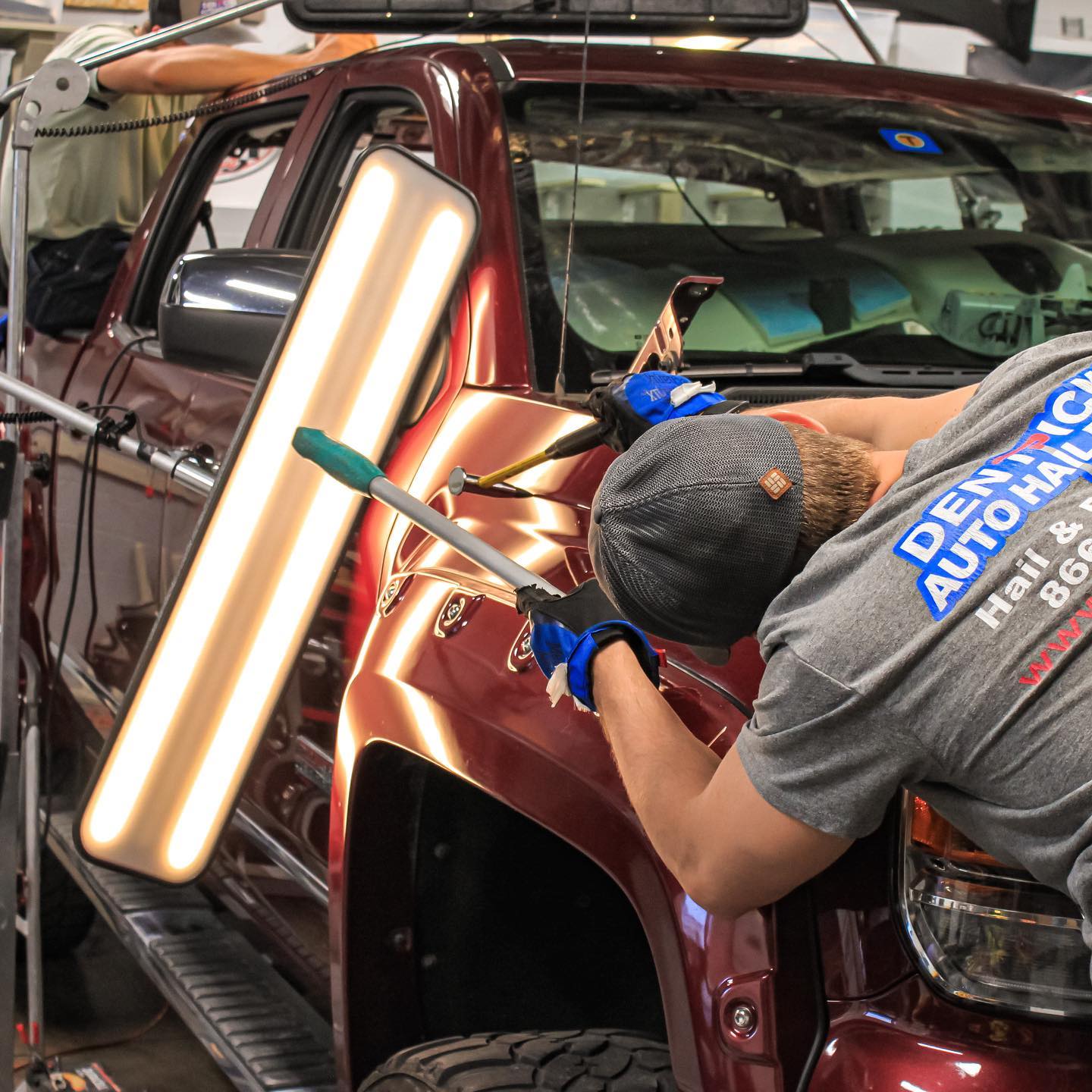
A paintless dent repair appointment asks very little of you compared to a traditional body-shop visit — there is no paint to cure, no rental paperwork marathon, and in most cases no multi-week timeline. But the fifteen minutes you spend at drop-off and the ten minutes you spend at pickup are where careful customers protect themselves. This guide walks through both ends of the appointment, plus what genuinely matters (and what doesn't) once the car is back in your driveway.
Before drop-off: four things worth doing
1. Clear out personal items
Technicians often need to work from inside the vehicle — pulling interior trim panels, reaching behind door skins, or accessing the underside of the roof through the headliner area. Empty the trunk, glovebox, door pockets, and seat backs of anything valuable or in the way. Take your toll tag and garage remote if the vehicle will sit at the shop for several days, and note your parking or seat presets if you're particular about them. Less clutter means less handling of your belongings and faster access to the panels.
2. Walk the vehicle with the advisor and document existing damage
This is the single most important pre-repair step, and it protects both sides. Before the keys change hands, walk around the vehicle with the shop advisor and note every pre-existing scratch, chip, curb-rashed wheel, and prior repair — anything that is not part of the dent work being authorized. A good shop documents this at check-in as a matter of routine; at DentPicks the check-in condition record becomes part of the job file. If a shop shrugs off the walkaround, insist on it anyway and take your own dated photos of all four corners, the roof, and the glass. Nobody enjoys the "was that scratch there before?" conversation, and five minutes of documentation makes it unnecessary.
3. Bring the paperwork
What to bring depends on how the repair is being paid for. For an insurance hail claim, bring your claim number, the adjuster's estimate if you have received one, and the adjuster's contact details — the shop uses these to document additional damage and communicate with your insurer. The Texas Department of Insurance recommends keeping records of all claim-related damage and correspondence, and your check-in file is part of that record. For a cash repair, the quote you received — usually verbal, from photos, in about 30 minutes — is confirmed in person once the technician sees the dent under proper lighting.
4. Arrive reasonably clean
A dirty panel hides dents. PDR technicians read damage through reflection — a light board or LED matrix reflected across the paint shows every low spot — and a film of road dust, pollen, or water spots breaks up that reflection. You don't need a full detail; a basic wash in the days before drop-off is plenty. If the car arrives heavily soiled, expect the shop to wash it before assessment, which can add time to the estimate stage.
Drop-off checklist
- ✓ Personal items, toll tag, and garage remote removed
- ✓ Walkaround completed with the advisor; existing damage noted at check-in
- ✓ Your own dated photos of all four corners, roof, and glass
- ✓ Claim number and adjuster contact (insurance jobs) or your quote details (cash jobs)
- ✓ Vehicle washed within the last few days
- ✓ Best phone number confirmed for updates, and repair authorization read before signing
What a repair authorization actually covers
Before work starts you'll sign a repair authorization. Read it — it is short, and it defines the whole relationship. A proper authorization identifies the vehicle, describes the scope of work (which panels, what method), states how payment works, and permits the shop to move and test-drive the vehicle as needed. On insurance jobs it typically also authorizes the shop to document additional damage found during repair and submit it to your insurer as a supplement, which is a normal part of hail claims. What it should never be is blank: never sign an authorization with the scope or price left empty, and never sign over an insurance check to a shop before the scope of work is defined in the paperwork.
If hidden damage changes the plan — say a panel turns out to be stretched beyond what paintless dent repair can safely correct and needs conventional repair instead — the shop should contact you before proceeding, because that changes both the scope you authorized and, on a claim, what gets reported. Sometimes panels genuinely do need replacement and refinishing; a shop that does what's best for the vehicle will tell you rather than force PDR onto damage it can't fix properly.
While the car is in the shop
Single-dent repairs are often finished the same day. Full-vehicle hail work usually runs several business days once parts and approvals are in place — our guide to how long hail repair takes breaks down what stretches a timeline and what doesn't. During the repair, DentPicks customers get live updates through the customer portal, and the job is signed off by whoever runs quality control — you'll see it in your portal. If your shop offers nothing between "dropped off" and "done," it's fair to ask for a mid-repair status call.
Logistics note for DFW customers: on insurance-approved hail claims, DentPicks offers complimentary vehicle pickup across the Metroplex, which means the drop-off steps above can happen at your home or office — the walkaround and condition photos still happen, just at your curb instead of the shop counter.
At pickup: inspect before you accept
PDR quality is judged in reflection, not head-on. Paint can look flawless from straight above while a shallow low spot hides in the surface, so inspect the way technicians do:
- Use raking light. Ask to see the car under the shop's lights, or park it so daylight strikes the panel at a shallow angle. Overhead fluorescent light in a dim corner hides more than it shows.
- Sight down the panel, not at it. Crouch so a straight reflection — a light tube, a rooftop line, the horizon — runs across the repaired area, then watch the reflection as you move. Waves, dips, or kinks in the reflected line reveal surface irregularities.
- Go panel by panel. Check every panel on the repair order, not just the one you remember. On hail jobs that means hood, roof, trunk, and both sides.
- Check the edges of the work. Run your eye along body lines and panel edges near the repair — crisp lines should still be crisp.
- Confirm reassembly. If trim, lights, or interior panels were removed for access, make sure everything is refitted, gaps are even, and nothing rattles on a short test drive.
If you find something, say so before you leave — a reputable shop would rather put the car back on the light board immediately than have you return later. At DentPicks every vehicle also gets a mini exterior detail before delivery, so you're inspecting clean paint, not dust.
Pickup checklist
- ✓ Each repaired panel viewed under raking light or reflection
- ✓ Body lines and panel edges checked near every repair
- ✓ Trim, lights, and interior pieces refitted with even gaps
- ✓ Pre-existing-damage notes from check-in compared against the car
- ✓ Invoice lists every panel repaired and the method used
- ✓ Written warranty received and its terms understood
Aftercare: the honest version
Here is where PDR differs from almost every other repair your car will ever get: there is essentially no aftercare. Nothing was painted, filled, or glued into place permanently, so there is nothing to cure. The metal was reshaped back to its factory contour, and it is as finished the moment the technician sets down the tools as it will ever be. You can wash the car on the drive home. You can wax it the same afternoon. There is no "wait 30 days before washing" rule, no avoiding sunlight, no soft-cloth-only period — those rules exist for fresh paint, and your car doesn't have any.
Two sensible qualifiers. First, if your vehicle has paint protection film, a vinyl wrap, or ceramic coating, mention it before the repair: film or wrap sometimes has to be lifted or replaced on a repaired panel, and any freshly installed film or coating carries its own installer's cure guidance, separate from the PDR itself. Second, if any part of your job involved conventional refinishing — a replaced panel on a hail claim, for instance — follow the paint aftercare instructions for that panel specifically; manufacturer and paint-system procedures vary.
The one piece of aftercare that genuinely matters is paperwork: file the invoice and the written warranty with your vehicle records. The DentPicks warranty is a written lifetime warranty for as long as you own the vehicle (it is not transferable), and the invoice is your proof of professional repair when you eventually sell or trade in the car.
Common mistakes to avoid
- Skipping the walkaround — the check-in condition record protects you as much as the shop.
- Signing a blank or open-ended authorization — scope and payment terms should be filled in before you sign.
- Inspecting in the dark, or not at all — five minutes under proper light at pickup beats a return trip.
- Accepting the car with a "we'll fix that later" promise — get any touch-up commitment in writing on the invoice.
- Losing the invoice — it documents that dents were repaired professionally without repainting, which matters at resale.
What to do next
If you're new to the process, start with our plain-English explainer on how paintless dent repair actually works — knowing what the technician is doing behind the panel makes both the drop-off conversation and the pickup inspection easier. Then book with photos: send a few shots of the damage and you'll typically have a quote the same day, before you've moved the car an inch.
Frequently asked questions
Do I need to wash my car before a PDR appointment?
A basic wash in the days before drop-off is genuinely helpful — technicians assess dents by reading light reflected across the paint, and dirt breaks up that reflection. You do not need a detail or wax; a $10 drive-through wash is fine. If the car arrives heavily soiled, the shop will usually wash it before assessment.
Can I wash or wax my car right after paintless dent repair?
Yes, immediately. PDR reshapes the existing metal without paint, filler, or coatings, so there is nothing to cure and no waiting period. Wash-and-wax rules only apply if part of your job involved actual refinishing — for example a replaced panel — in which case follow the paint aftercare guidance for that panel.
What should I leave in the car, and what should I take out?
Take out valuables, toll tags, garage remotes, and anything stored in the trunk, door pockets, or seat backs — technicians often work from inside the vehicle and may remove interior trim for access. Leave the items that stay with the car: wheel-lock key, and both keys if the shop requests them for moving the vehicle.
What if the shop finds more damage after I drop off?
On hail claims this is common — many dents only show under shop lighting. The shop documents the additional damage and submits it to your insurer as a supplement, which is a normal part of the claim process. On cash jobs, the shop should contact you and get your approval before the scope or price changes. Either way, nothing beyond what you authorized should happen without your knowledge.
What if I notice a problem after I've already taken the car home?
Call the shop and bring the car back — lighting at home sometimes reveals what shop lighting angle concealed, and a reputable shop will re-inspect without argument. This is exactly what a written warranty is for. DentPicks repairs carry a written lifetime warranty for as long as you own the vehicle, so a legitimate concern with the repair is covered whether you spot it at pickup or later.
Does PDR aftercare differ for cars with PPF, wrap, or ceramic coating?
Tell the shop about film, wrap, or coating before the repair, because access to a dent sometimes requires lifting or replacing film on that panel. The PDR itself still needs no cure time, but newly installed film or coating comes with its own installer's care instructions — follow those for that panel. Products and installer guidance vary, so ask your installer for specifics.
Sources and methodology
- Auto and homeowners claims after hail or windstorms — Texas Department of Insurance, on documenting damage and keeping claim records.
Cost and timing figures labeled as DentPicks figures come from the shop's own quoting and repair history in Plano, TX, and are ranges, not promises. Check-in and pickup procedures described here reflect DentPicks' own process; other shops' procedures vary.
Ready to book your repair?
Send us photos of the damage — quotes typically come back the same day, before you drive anywhere.