

The short answer
Usually yes for visible dents on an otherwise clean vehicle: appraisers deduct reconditioning at retail rates, which typically exceeds the cost of PDR, and a dent-free car photographs and negotiates better. It stops making sense when repair costs approach the value they recover — heavily damaged or high-mileage vehicles may not return the spend. Get a written repair quote first and compare it against a real trade-in appraisal difference.
 Written by the DentPicks Editorial Team
Technically reviewed by Vytas Kucinskas, Founder & Master PDR Technician
Written by the DentPicks Editorial Team
Technically reviewed by Vytas Kucinskas, Founder & Master PDR Technician
Published: Aug 19, 2026 · Last reviewed: Aug 19, 2026 · 8 min read
Every dent on a car you're about to sell is going to be paid for by somebody — the only question is who, and at what rate. Fix it beforehand and you pay a repair shop's price. Leave it, and the buyer or the dealer's appraiser prices the same dent into their offer, almost always at a higher number than the repair would have cost. This guide walks through why that gap exists, when it genuinely favors repairing first, and — just as important — when spending money on repairs before a sale is throwing it away.
Why appraisers charge you more for a dent than a repair shop would
When a dealership appraises your trade-in, the used-car manager is working backward from what the car will sell for on their lot. Every flaw becomes a reconditioning line item — and dealers price that reconditioning at retail body-shop rates plus a cushion, because they carry the risk that the "small dent" turns out to be a bigger job. A door ding you could have fixed with paintless dent repair for a modest sum can show up in the appraisal as a full panel refinish, priced accordingly. The appraiser is not cheating you; they are pricing their downside. But the structural result is the same every time: the deduction for visible damage usually exceeds what it would have cost you to repair it properly beforehand.
There is a second, softer cost on top of the line items. A car with visible dents reads as "not cared for," and that impression bleeds into the negotiation on everything else — tires, service history, interior wear. Clean sheet metal doesn't just remove a deduction; it removes an argument.
The math, illustrated
The following is an illustrative calculation, not a real customer or a quote. Assume a mid-size SUV worth roughly $22,000 clean at trade-in, with three visible flaws: two door dings and one larger dent on the rear quarter, all with intact paint. Assume PDR pricing in the middle of typical DFW specialty-shop ranges — say $150 per door ding and $350 for the larger dent, about $650 total. A dealer appraiser looking at the same three dents might book $1,200–$1,800 of reconditioning against the offer, because they price the quarter-panel dent as potential paint work. Under those assumptions, repairing first recovers roughly $550–$1,150 more than it costs. Change the assumptions — an older car, cracked paint, a bigger dent — and the math can flip entirely, which is why you should run it with real numbers, not this example.
For reference, DentPicks' own quoting history in Plano puts small door dings at about $75–$200, mid-size dents at $150–$450, and large or complex panel work at $400 and up. Those are ranges from real repair history, not promises — dent size, depth, location, panel material, and access all move the number, which is why photo quotes (usually verbal, in about 30 minutes) get confirmed in person.
When repairing first does NOT pay
Honesty cuts both ways, and there are cars we tell people not to fix. Repairing before a sale stops making sense when:
- The repair cost approaches the value it recovers. If a $900 repair moves the appraisal by $1,000, you worked hard for $100. The gap needs to be meaningful to justify the errand.
- The vehicle is high-mileage or low-value. On a $6,000 car, cosmetic perfection barely moves the price — buyers at that level are paying for a running drivetrain, not flawless panels.
- The damage is heavy or widespread. A car with severe dents on most panels may cost more to fully recondition than the reconditioning adds back. Selling it as-is and letting the buyer price the work is often the rational move.
- The paint is already compromised. Cracked or chipped paint takes the job out of PDR territory and into refinishing, where costs rise sharply — and where the repair itself can become reportable history. Repairability depends on paint condition, metal stretch, panel access and prior repairs.
- You're selling to a we-buy-any-car style wholesaler. Volume buyers apply formula deductions and rarely reward cosmetic investment the way a retail buyer or franchise dealer does.
Private sale vs. dealer trade-in: the dynamics differ
Dealer trade-in. The appraisal is a single number produced in minutes, and dents are its easiest lever. Repairing PDR-suitable dents beforehand removes the lever. One more nuance: PDR itself creates no vehicle-history record because nothing is replaced or repainted — but if damage ever required a panel replacement instead, that replacement can be reported and show up when the dealer runs the history. Keeping repairs paintless, where the damage allows it, keeps the history clean.
Private sale. Photographs do the selling. Dents show up brutally in listing photos — phone cameras at an angle catch every shadow — and a listing with visible damage attracts lowball openers from buyers who assume there's more wrong. A dent-free car photographs better, draws stronger inquiries, and gives the buyer one less reason to renegotiate at the meetup. Private buyers also can't recondition at wholesale rates the way dealers can, so they mentally price dent repair at retail — often higher than the dealer would.
One special case worth knowing: if your dents came from a documented hailstorm and you carry comprehensive coverage, a hail claim may pay for the repair itself — in Texas, hail falls under comprehensive rather than collision. Whether that makes sense before a sale depends on your deductible and the damage, and coverage depends on the language of your policy; your insurer or licensed agent can confirm your specific coverage. And if you're returning a lease rather than selling, the math works differently again — our lease return dent repair guide covers excess-wear billing specifically.
Repair or not? A quick decision table
| Situation | Usually worth repairing? | Why |
|---|---|---|
| Few visible dents, intact paint, clean mid-value car | Yes | PDR cost is typically well under the appraisal deduction |
| Door dings on a late-model or luxury vehicle | Yes | Buyers of these cars pay a premium for flawless panels |
| Private sale with online listing photos | Usually | Dent-free photos draw better offers and fewer lowballs |
| High-mileage car under ~$8,000 | Often no | Cosmetics barely move the price at this level |
| Severe or widespread damage | Often no | Repair total can approach or exceed value recovered |
| Cracked or chipped paint | Case by case | Refinishing costs more and can create reportable history |
How to actually run the numbers
The mistake most sellers make is deciding on instinct in either direction. The comparison takes two short steps:
- Step 1 — get the repair number. Send photos of each dent to a PDR shop; you'll typically have a quote the same day. For a resale decision, ask the shop to confirm the figure in writing so you have a line-item number to compare against, not a memory of a phone call.
- Step 2 — get the appraisal difference, not just an appraisal. When a dealer appraises the car, ask directly: "What would this number be without the dents?" Appraisers deal with this question constantly and will usually tell you. If they won't split it out, get an online instant-offer quote describing the car with damage and again as clean — the spread between the two is your answer.
- Step 3 — compare with a margin. Repair first only if the appraisal difference exceeds the repair quote by enough to matter to you. If the numbers land within a hundred dollars of each other, the repair isn't buying you money — at best it's buying convenience.
Documentation to keep for the buyer
Whichever way you go, paperwork converts your decision into value:
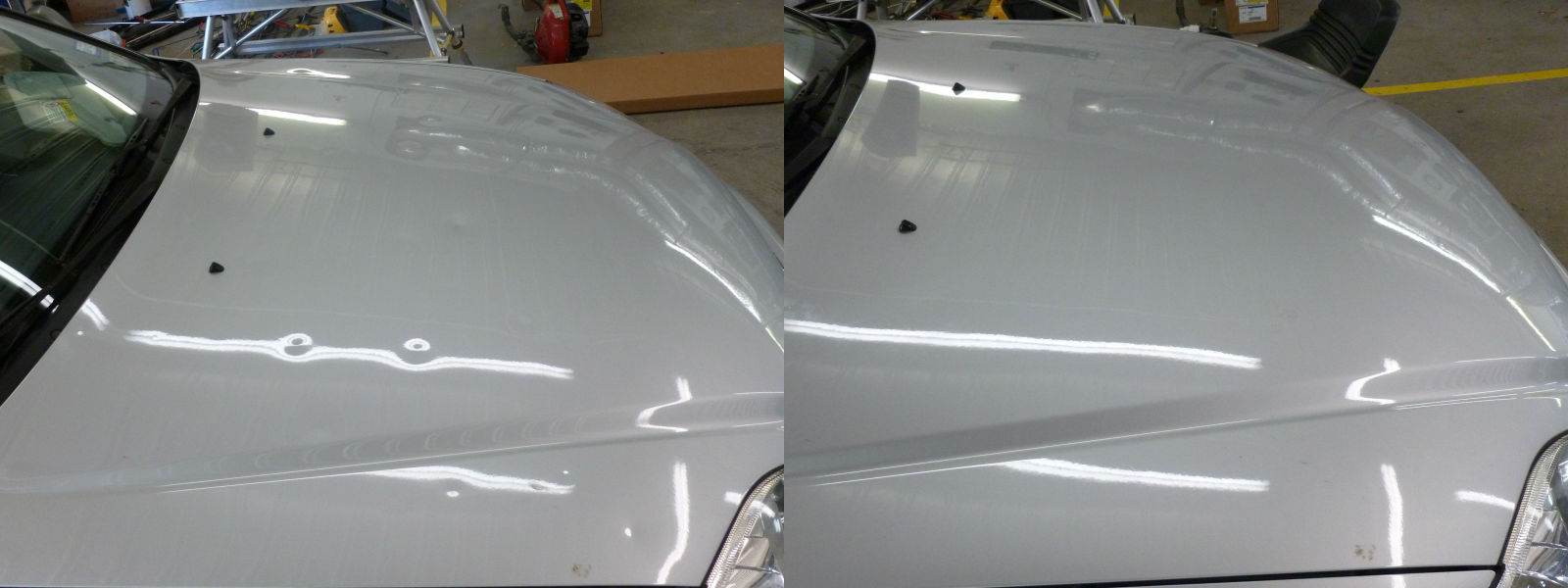
- The repair invoice — it shows exactly which panels were repaired and that the method was paintless, meaning no filler and no repaint. For a cautious private buyer, "here is the invoice" ends the conversation that "trust me, it was minor" starts.
- Before-and-after photos — if the shop provides them, keep them with the invoice.
- A note on warranty: the DentPicks written lifetime warranty covers the vehicle for as long as you own it and is not transferable to the buyer. Show it as evidence of professional repair, but don't represent it as transferring — an honest seller's paperwork should match reality.
- If you chose not to repair, keep your damage photos and any quotes you gathered. Handing a buyer a real repair quote for the dents beats letting them imagine a number twice as large.
What to do next
If you're within a few weeks of selling, start with photos: our team quotes from pictures, usually within the hour, so you can have the repair side of the comparison before you ever visit a dealership. If you want to sanity-check whether your dents are PDR-suitable at all, the PDR vs. body shop guide explains which damage keeps the factory paint — the thing appraisers care about most.
Frequently asked questions
Will fixing dents show up on Carfax and hurt my sale?
Paintless dent repair itself creates no vehicle-history record — nothing is replaced, filled, or repainted, so there is nothing to report. The exception: if damage requires a panel replacement instead of PDR, that replacement can be reported and appear in history reports. That distinction is one reason PDR is the preferred pre-sale repair where the damage allows it.
How much value do dents actually take off a trade-in?
There is no universal figure — it depends on the vehicle's value, the number and location of dents, and how the appraiser prices reconditioning. The reliable pattern is directional: dealers deduct at retail repair rates plus a risk cushion, so the deduction usually exceeds what the repair would cost you at a PDR shop. The only trustworthy number is the one you get by asking an appraiser to price your car with and without the dents.
Should I repair dents on a car I'm selling for under $8,000?
Often not. At lower price points buyers are paying for mechanical condition, and cosmetic perfection moves the price very little. Possible exceptions: a single cheap-to-fix dent on an otherwise clean car, or a model whose buyers are unusually condition-sensitive. Run the quote-versus-appraisal comparison before spending anything.
Can I just detail the car instead of fixing the dents?
A detail helps presentation but does not hide dents — appraisers and private buyers both check panels in reflected light, where dents are obvious on even a spotless car. The strongest combination for a sale is repaired panels plus a clean car. If budget forces a choice on a mid-value vehicle, the dent repair usually recovers more than the detail.
My dents are from hail — should I file a claim before selling instead of paying cash?
Possibly. In Texas, hail damage falls under comprehensive coverage, so a claim may fund the repair with only your deductible out of pocket — and the hail claim itself cannot raise your rates in Texas, since it's an act of nature under comprehensive. Whether it beats paying cash depends on your deductible versus the repair cost. Coverage depends on the language of your policy; your insurer or licensed agent can confirm specifics.
How fast can dents be repaired if my sale is already scheduled?
Single dents and door dings are often same-day work once the vehicle is in the shop, and a few dents can usually be handled inside a day or two. Larger multi-panel jobs take longer, especially in spring hail season when shops book up. If your timeline is tight, say so when you send photos — scheduling honesty runs both directions.
Sources and methodology
- Automobile insurance guide — Texas Department of Insurance, on comprehensive coverage for hail damage referenced in the claims discussion above.
Cost and timing figures labeled as DentPicks figures come from the shop's own quoting and repair history in Plano, TX, and are ranges, not promises. The worked example above is an illustrative calculation with stated assumptions, not a real customer or appraisal.
Selling soon? Get the repair number first.
Send photos of your dents and get a quote — usually within the hour — so you can compare it against a real appraisal difference.