

The short answer
Move the car under cover, photograph everything before touching it — wide shots, close-ups, and the storm date — and confirm the hail event through official weather reports. Then check that you carry comprehensive coverage, report the damage promptly to your insurer, and schedule a professional inspection under proper lighting before accepting any estimate. Avoid DIY fixes and driveway repair offers. The first hour of documentation makes the whole claim easier.
 Written by the DentPicks Editorial Team
Technically reviewed by Vytas Kucinskas, Founder & Master PDR Technician
Written by the DentPicks Editorial Team
Technically reviewed by Vytas Kucinskas, Founder & Master PDR Technician
Published: Aug 19, 2026 · Last reviewed: Aug 19, 2026 · 8 min read
A hailstorm is over in minutes, but what you do in the next few hours shapes everything that follows: how smoothly your insurance claim goes, how completely the damage gets documented, and whether you end up dealing with a reputable shop or a stranger knocking on your door. None of the steps below are complicated. The mistake most drivers make is skipping the documentation and jumping straight to "who can fix this?"
The first 24 hours: step by step
Work through these in order. Most take a few minutes each.
- Get the car under cover — once it is safe. Wait until the storm has fully passed, then move the vehicle into a garage or under a carport. This prevents a second round of hail from compounding the damage and keeps rain from pooling in dents while you photograph them.
- Photograph the damage before you touch anything. Before washing, wiping, or even brushing melting hailstones off the hood, take the full set of photos described in the checklist below. Fresh, untouched damage photos are the strongest evidence you will ever have.
- Write down the date, time, and location. Note where the car was parked when the hail fell. Your phone's photo metadata records the timestamp automatically, but a short written note ties the damage to a specific address.
- Confirm the storm through official reports. Look up the event in the Storm Prediction Center's daily storm reports and your local National Weather Service office records. A documented hail event at your location on that date is hard evidence if the claim is ever questioned.
- Check your declarations page for comprehensive coverage. Hail falls under the comprehensive portion of an auto policy, not collision. If "Comp" appears on your declarations page, hail damage is the kind of event it exists for.
- Report the damage to your insurer promptly. You file the claim — by app, online, or phone — and most policies require prompt notice. Early reporting also gets you into the inspection queue before the post-storm rush.
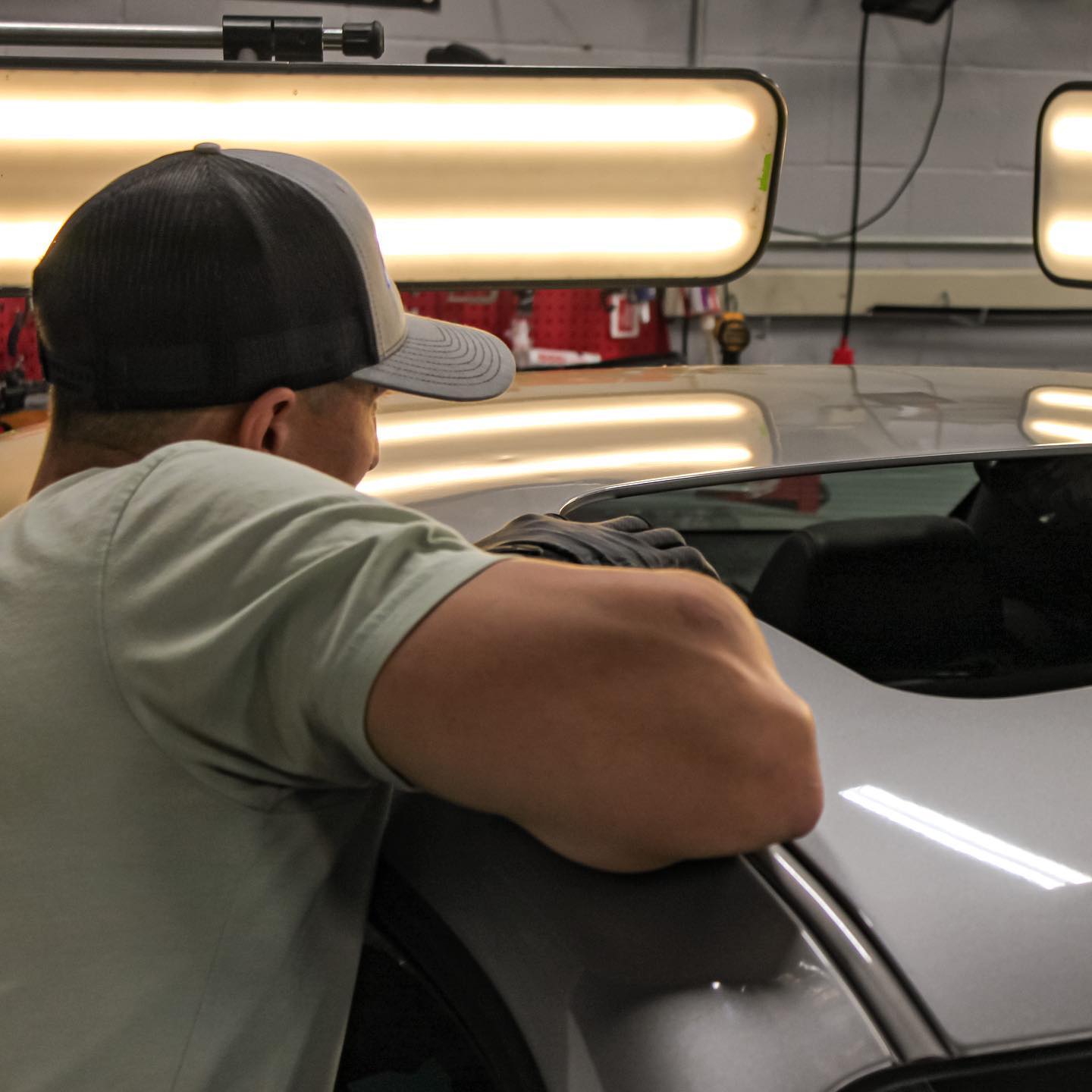
- Schedule a professional inspection under proper lighting. Hail dents hide in ordinary daylight. Have the vehicle assessed under PDR lighting before you accept any estimate as final.
- Say no to driveway offers and DIY tricks. Anyone who wants you to sign paperwork or start repairs in your driveway the day after a storm is not the careful choice. More on both below.
Photograph everything before you touch the car
Photos taken before the car is washed or moved are the backbone of a clean claim. They establish what the damage looked like on the storm date, which matters if a dispute ever arises about when or where the damage happened. Here is the set worth capturing:
- Four wide shots — one from each corner of the vehicle, far enough back to show the whole car and the license plate.
- Panel-by-panel shots of the hood, roof, and trunk lid — the horizontal surfaces that take the most hits. Angle the camera low across the panel so the light rakes over the dents instead of flattening them.
- Close-ups with a scale reference. Place a coin or key next to representative dents so their size is obvious.
- Any broken or cracked glass, mirrors, lights, and trim — these are part of the same claim and are easy to forget.
- The scene itself: hailstones on the ground (next to that same coin), dented gutters or screens nearby, and the spot where the car was parked.
- Keep the originals. Do not crop, filter, or edit — the untouched files carry the metadata that proves when they were taken.
If the light is poor when the storm ends, take the best set you can and repeat the panel shots the next morning in low-angle sunlight. Early and late daylight reveals shallow dents that midday sun washes out.
Confirm the storm officially — it takes five minutes
The NOAA Storm Prediction Center publishes daily severe-weather reports, including hail reports with locations and stone sizes, and the National Weather Service office in Fort Worth documents North Texas storm events. Find the report that matches your date and location, and save a screenshot or the link with your photos.
Why bother? Because claims are sometimes filed weeks or months after a storm — the damage gets noticed at trade-in, or life simply gets in the way. An official record that golf-ball hail fell in your ZIP code on a specific date connects your dents to a covered event long after the hailstones have melted. It is the difference between "I think it was that storm in April" and a documented weather event.
Check your coverage: comprehensive, not collision
Hail damage is paid under the comprehensive portion of an auto policy — the coverage for events that are not collisions, like weather, theft, and falling objects. Liability-only policies do not cover it. Your declarations page will show whether you carry comprehensive and what your deductible is, typically $500 or $1,000.
Coverage depends on the language of your policy, and the coverage that matters is what was in force on the storm date. Your insurer or licensed agent can confirm your specific coverage in one phone call — worth making before you file, so you know what to expect.
Report promptly — you file, and a good shop walks alongside
The claim is yours to file, and it is usually a short process in your insurer's app or claims line: policy number, storm date, a brief description, and your photos. Most Texas auto policies do not name a fixed number of days to file, but they do require prompt notice — and our guide to hail claim time limits in Texas covers what "prompt" means in practice. The practical reason to move quickly is simpler: after a major DFW storm, thousands of claims land at once, and early filers get inspected and scheduled first.
Filing is the only part you have to do alone. A good repair shop helps with everything around the claim — supplying photo documentation, meeting the adjuster at the vehicle, preparing supplement evidence if more damage is found during repair, and handling the paperwork that follows. That is how DentPicks works claims every week: the customer files, and we walk alongside from the first inspection to delivery.
Get the damage inspected under proper lighting
Here is the step most drivers skip. Hail damage is famously hard to see: shallow dents on a white or silver car in flat daylight can be nearly invisible, and an outdoor look-over — whether by you or an adjuster — routinely undercounts them. Dent counts drive the estimate, so an undercounted car means an underwritten estimate.
A professional hail repair shop assesses the vehicle under LED matrix or reflection lighting that makes every dent stand out. At DentPicks, quotes are usually verbal, from photos, in about 30 minutes — and for insurance-approved hail claims in the DFW area, pickup and delivery are complimentary, so getting the car under proper light does not require rearranging your week. Whatever shop you choose, the principle is the same: do not treat any estimate written in a parking lot as the final word.
What to avoid in the first week
Two things cause most post-storm regret:
Driveway repair offers. After every major Texas hailstorm, out-of-town operations canvass damaged neighborhoods offering fast repairs, deductible deals, and same-day signatures. Some are legitimate; many disappear before warranty problems surface. Never sign paperwork on your doorstep, never hand over an insurance check before the work is defined in writing, and verify that any shop you use has a permanent local address you can drive to next year.
DIY dent tricks. Boiling water, plungers, hair-dryer-and-compressed-air videos, suction kits — at best they do nothing, and at worst they crack paint or stretch metal, turning a dent that paintless dent repair could have removed cleanly into a panel that needs repainting. Repairability depends on paint condition, metal stretch, panel access and prior repairs, and a failed DIY attempt can take the best repair option off the table. Leave the panels alone until a technician has seen them.
What to do next
Once the damage is documented and the claim is filed, the pressure is off — the evidence is preserved, and you can choose a shop deliberately instead of urgently. If your car took hail in the DFW area, send us a few photos and you will typically have a verbal quote in about 30 minutes, plus straight answers about what the adjuster process will look like for your vehicle.
Frequently asked questions
Should I wash the car before taking photos?
No — photograph first, wash later. Dirt, water spots, and debris patterns are part of the storm-day evidence, and washing can make shallow dents temporarily harder to see. Once you have a full set of untouched photos, washing the car is fine and will not affect the repair.
The damage looks minor. Should I still document it?
Yes. Hail damage almost always looks smaller outdoors than it is: flat daylight hides shallow dents, especially on light-colored cars. Cars that appear to have a handful of dents in a driveway routinely show far more under shop lighting. Document now, then decide whether to file once you have a real dent count — the photos cost you nothing and preserve the option.
Do I have to file the claim the same day?
No. Most Texas auto policies require prompt notice rather than a fixed deadline, and claims are commonly filed days or weeks after a storm. What matters is that your policy language controls, so check it or ask your insurer — and that the longer you wait, the harder it becomes to tie the damage to a specific storm. Filing early also gets you ahead of the post-storm scheduling backlog.
Will a hail claim raise my insurance rates?
The honest answer is no and yes. The hail claim itself cannot raise your rate in Texas — it is a comprehensive claim for an act of nature, not an at-fault event. But insurer pricing models factor in collision claims, tickets, violations, and the general cost of repairs in your area, so premiums in Texas have been rising for drivers who never filed anything. Filing a legitimate hail claim is not what moves your rate.
What if I already washed the car or drove it for a week?
You have not ruined anything. Photograph the damage now, as thoroughly as the checklist above describes, and pull the official storm report for the date the hail fell. The combination of current photos and a documented weather event at your location is usually enough to support a claim. The sooner you do it, the cleaner the record.
Sources and methodology
- After hail or windstorms — Texas Department of Insurance.
- Automobile insurance guide — Texas Department of Insurance.
- Severe weather event reports — NOAA Storm Prediction Center.
- National Weather Service Fort Worth/Dallas — NOAA National Weather Service.
Cost and timing figures labeled as DentPicks figures come from the shop's own quoting and repair history in Plano, TX, and are ranges, not promises.
Hail just hit your car?
Send photos and get a verbal quote in about 30 minutes — plus straight answers on what the claim process will look like.