

The short answer
Verify five things before authorizing work: a permanent physical address you could visit, exactly which building your car is repaired in and how it travels there, how the dents will be counted and under what lighting, which panels get paintless repair versus refinishing, and a written warranty with terms and a phone number that will still work next year. Treat a deductible promise made before anyone has read the car as a sales pitch.
 Written by the DentPicks Editorial Team
Technically reviewed by Vytas Kucinskas, Founder & Master PDR Technician
Written by the DentPicks Editorial Team
Technically reviewed by Vytas Kucinskas, Founder & Master PDR Technician
Published: Aug 19, 2026 · Last reviewed: Aug 19, 2026 · 9 min read
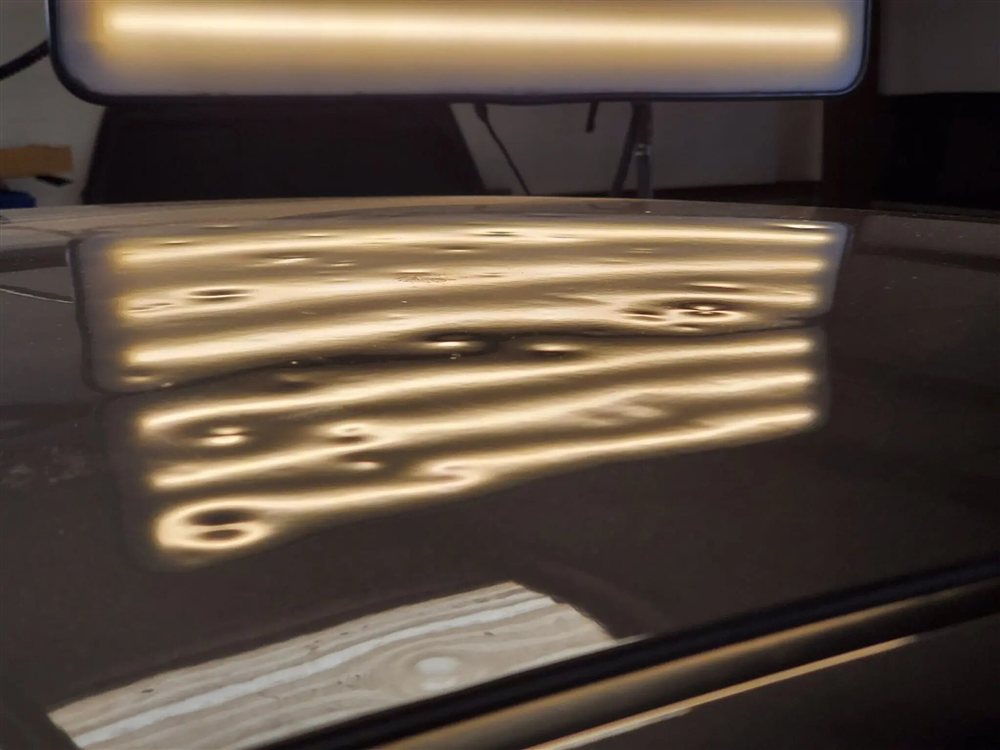
Central Texas gets serious hail, and when it lands the market around Austin fills up quickly with people offering to fix it. Some of those offers come from established local shops. Some come from operations that arrived the week of the storm, set up in a shopping-center lot, and will be in another state by the time your paint tells the truth about the work.
Sorting them out is not about local reputation alone, because after a big event the local shops are full and the newcomers are the ones with availability. It is about verifying a specific short list of things that hold up regardless of who is asking for your claim.
The verification checklist
Work through these before you authorize anything. Any provider that cannot answer clearly is answering clearly enough.
- A fixed, permanent physical address. Not a parking lot, not a canopy, not a PO box in the paperwork. Ask where the vehicle will physically be while it is repaired, and whether you could visit it there.
- Who is actually doing the work, and where. If the vehicle is going somewhere other than where you hand it over, that should be stated plainly and in writing, including how it travels.
- How the damage will be counted. Under reflection lighting, panel by panel — or with a flashlight in a lot? This determines whether your claim reflects the real damage.
- Which panels are paintless work and which need refinishing. A provider that answers "all PDR" or "we'll just repaint it" without reading the car has not assessed anything.
- The warranty, in writing, with terms. What it covers, how long, and — critically — who you would call to use it. A warranty from an operation with no permanent address is a piece of card.
- Who files the claim. You file the claim on your own policy. A provider can help you with photos, meeting the adjuster, filing supplements and the paperwork, and should say so in those terms.
- What happens if more damage is found. Supplements are normal on hail work. Ask how they are documented and filed.
- How you get updates. You should not have to chase for news, particularly if the vehicle is not nearby.
- What "deductible waived" actually means. If someone promises $0 out of pocket as a certainty, be skeptical. On many approved hail claims a deductible can be waived up to $1,000 — a common outcome, never a guarantee.
- Transport and rental arrangements in writing, including who is responsible for the vehicle in transit and how you get around meanwhile.
Verifying an out-of-area provider specifically
Some of the better options after a Central Texas storm are not in Austin at all, because shops outside the affected area are not absorbing the same wave of local vehicles. That can genuinely mean a shorter queue. But it raises questions a local drop-off never has to answer, and you should ask them directly.
Our own arrangement is a worked example of what the answers should look like. DentPicks has one shop: 1915 N Central Expy #800, Plano, TX 75075. There is no DentPicks location in Austin — no office, no drop-off point, no satellite bay. Every vehicle is repaired in that Plano building.
For Austin that means a scheduled trailer service rather than a local shop visit:
| Question | How it works for an Austin vehicle |
|---|---|
| Where is my car repaired? | The Plano shop, roughly 200 miles north. Nothing is repaired in Austin. |
| How does it travel? | On a professional vehicle trailer both ways — loaded, not driven up I-35. Condition is documented with you before it leaves your driveway. |
| What does transport cost? | Trailer pickup and delivery are part of the Austin service on approved hail claims. This is different from the DFW cities, where a driver collects and returns the vehicle. |
| What do I drive meanwhile? | A rental through your own policy's rental coverage. If your policy includes it, we help you arrange a rental locally — Enterprise or similar — before the trailer collects your car. If you are unsure whether you have that coverage, it gets checked with you when the claim is reviewed. |
| How long? | Full-vehicle hail repair generally runs about 5 to 10 business days in the shop depending on severity — a typical range, not a promise. Transport time on each end is confirmed separately when pickup is scheduled. |
| How do I know what is happening? | Live updates through the job, and the finished work is signed off by whoever runs quality control — visible in your customer portal. |
Scheduled trailer service covers the greater Austin metro — Round Rock, Pflugerville, Cedar Park, Leander, Georgetown, Lakeway, Bee Cave, Buda, Kyle and Dripping Springs among them. Because it is a scheduled service rather than a drop-in shop, availability for a specific address is confirmed when the inspection is requested rather than assumed.
Claim basics that do not change by city
Hail is handled under the comprehensive part of a Texas auto policy. Coverage depends on the language of your policy, and your insurer or licensed agent can confirm your specific coverage. The Texas Department of Insurance recommends prompt notice after a hail or windstorm event, and most policies require it — reporting is not the same as committing to a repair, it just opens the file and fixes the date.
You also choose who repairs the vehicle. A carrier may recommend a network shop, and there are conveniences to that, but the decision is yours. Our guide on choosing your own hail repair shop in Texas covers what a direct-repair program does and does not obligate you to, and the Texas hail claim time limits guide covers deadlines.
One thing that surprises people: filing does not automatically mean a rate increase. A Texas comprehensive hail claim is not itself surcharged. But pricing algorithms factor in collision claims, tickets, violations and overall repair costs, and premiums drift upward over time without any claims at all. So the honest answer is no and yes.
What good repair work should look like when it comes back
Whoever you choose, inspect the vehicle before you accept delivery, and do it in good light rather than at dusk in your driveway.
- Sight down each panel at a low angle. Look for waviness, high spots and any dent that was pushed past flat rather than back to flat.
- Check for texture differences. A refinished area often reads slightly differently in reflection than factory paint next to it.
- Look at the trim and headliner. Access work means things were removed. Clips should be seated, panels flush, and no rattles on the drive home.
- Confirm what was replaced. Panel replacements can appear on a vehicle history report; paintless dent repair does not create a record. You should know which category your car is in.
- Get the written warranty in your hand, not promised in the post. Ours is a written lifetime warranty for as long as you own the vehicle, and it does not transfer to the next owner.
Red flags specific to a post-storm market
- An operation that opened the week of the storm. Ask how long they have been at that address. Our guide on how storm-chaser operations work covers the full pattern.
- Signing pressure. Nothing about a hail claim requires a decision within the hour, and any urgency is being manufactured.
- A deductible promise as the opening pitch. When money leads and method never comes up, method is not the strength.
- Vagueness about where the car goes. Particularly if it is leaving town. That is answerable in one sentence.
- Cash discounts for skipping the claim on damage that is plainly a claim.
- DIY suggestions — hot water, plungers, hair dryers. These stretch metal and turn a paintless repair into a repaint. Our guide on why DIY dent methods do not work explains what actually happens to the panel.
What to do next
Photograph the car now — every panel wide, then close at a low angle, plus glass, lamps, mirrors and the odometer. Note the storm date and where the vehicle was parked. Report the claim to your insurer. Then take the checklist above to whoever you are considering and ask the questions plainly; the answers separate the options faster than any amount of reading reviews.
If a trailer-based repair in Plano is worth considering, the details of how scheduling, transport and rental coverage work for Central Texas are on our Austin hail repair page. Send photos first — the review of your damage and your policy happens before anything is scheduled, and it costs nothing to find out whether the arrangement suits your situation.
Frequently asked questions
Does DentPicks have a shop in Austin?
No. There is one shop, at 1915 N Central Expy #800 in Plano, and every vehicle is repaired there. Austin is served by scheduled trailer pickup and delivery — there is no Austin office, drop-off point or satellite bay, and no one should tell you otherwise.
Will my car be driven up I-35 to Plano?
No. Eligible vehicles travel on a professional vehicle trailer in both directions rather than being driven the distance. The condition of the vehicle is documented with you before it is loaded at your address.
What do I drive while my car is in Plano?
A rental arranged through your own policy's rental coverage. If your policy includes it, we help you set up a rental locally — Enterprise or similar — before the trailer collects your vehicle. Unlike the DFW cities, there is no loaner handed over at pickup, because there is no local shop. Coverage depends on the language of your policy.
How far outside Austin does the trailer service reach?
It covers the greater Austin metro, including Round Rock, Pflugerville, Cedar Park, Leander, Georgetown, Lakeway, Bee Cave, Buda, Kyle and Dripping Springs. Because it is a scheduled service rather than a walk-in shop, availability for a specific address is confirmed when you request an inspection.
Is an out-of-area repair riskier than a local one?
It is riskier only if you cannot verify it. Ask which building the car goes to, how it travels, who is responsible for it in transit, and how you get updates. A provider that answers all four plainly and in writing is verifiable. One that hedges on any of them is the risk.
Someone offered to cover my deductible entirely. Is that legitimate?
Be careful with any promise of guaranteed zero out of pocket, especially before anyone has looked at the vehicle. On many approved hail claims a deductible can be waived up to $1,000 — a common outcome, not a certainty, and not something honest providers guarantee at the door.
Will filing a hail claim in Texas raise my premium?
No and yes. A Texas comprehensive hail claim is not itself surcharged. But pricing algorithms factor in collision claims, tickets, violations and overall repair costs, and premiums rise over time without any claims at all. Your insurer or licensed agent can confirm how your policy is rated.
Sources and methodology
- After hail or windstorms: consumer tips — Texas Department of Insurance.
- Automobile insurance guide — Texas Department of Insurance.
Repair, cost and timing statements that are not tied to a listed source come from DentPicks' own quoting and repair history at the Plano, TX shop. They are typical ranges and shop-floor observations, not industry statistics or promises — your vehicle, its condition, your policy language and your insurer determine your specific outcome.
Checking out a hail repair option in Austin?
Send photos and we will review the damage and your policy with you — including rental coverage — before anything is scheduled. Repairs happen at the Plano shop; your vehicle is trailered both ways.