
The short answer
For an insurance-approved hail claim, yes — you may never make the drive at all, because pickup and delivery across DFW is complimentary and the quote is usually verbal from photos. For a single small dent you are paying for out of pocket, the math is different and a competent shop closer to home may serve you just as well. Count the visits the job actually requires before you weigh the miles.
 Written by the DentPicks Editorial Team
Technically reviewed by Vytas Kucinskas, Founder & Master PDR Technician
Written by the DentPicks Editorial Team
Technically reviewed by Vytas Kucinskas, Founder & Master PDR Technician
Published: Aug 19, 2026 · Last reviewed: Aug 19, 2026 · 9 min read
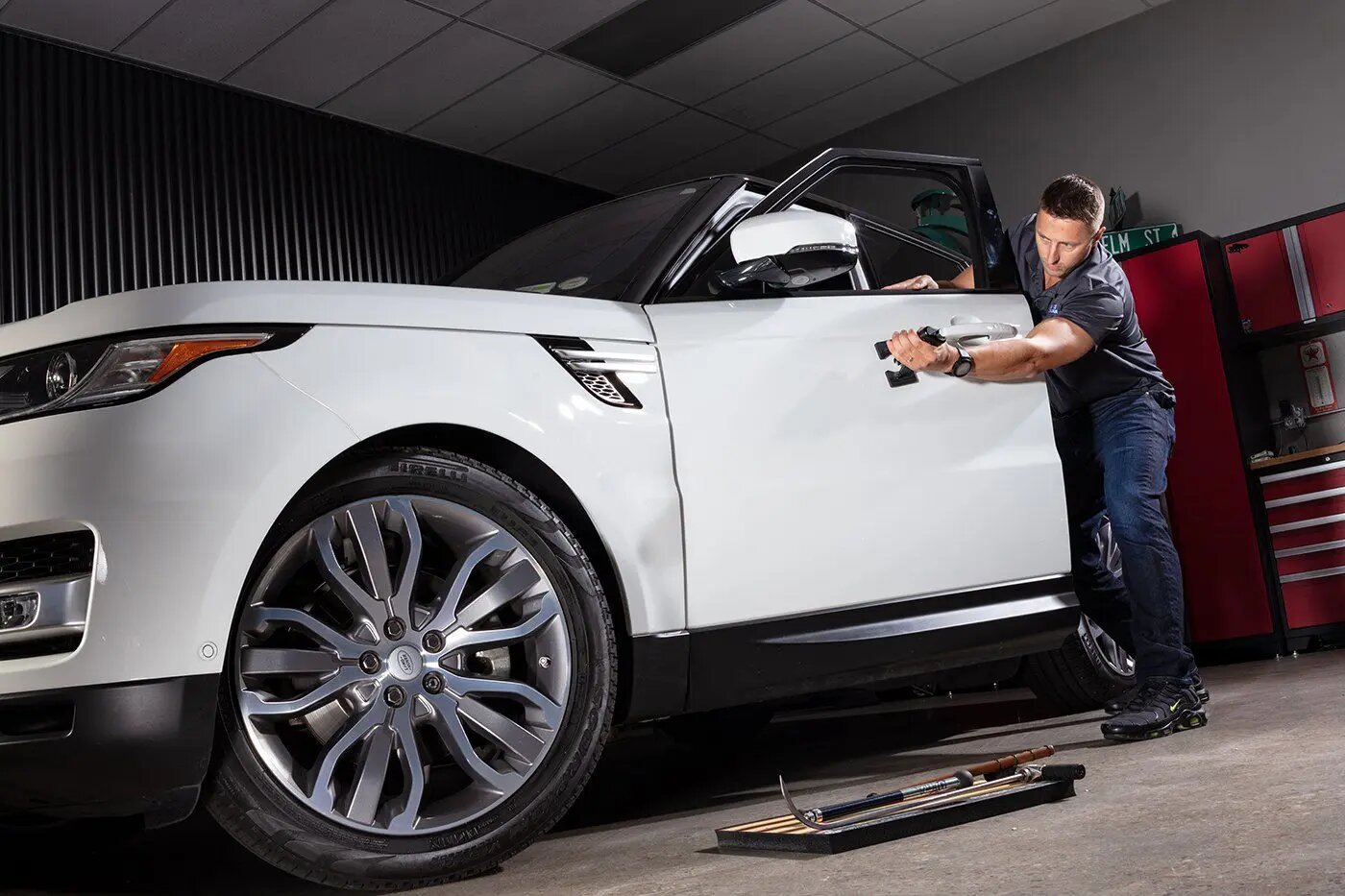
Dallas is not short of places that will fix a dent. So the honest version of this question is not "can I get there" — it is "why would I drive north past twenty body shops to do it?" That deserves a real answer rather than a sales pitch, including the cases where the answer is no.
The useful way to think about it is to count visits. People imagine choosing a repair shop the way they choose a dentist — somewhere they will go back to repeatedly, so proximity compounds. A hail or dent repair is not like that. You go once, or with transport, possibly not at all. Distance is a one-time cost, and it is the one variable in the decision that can be engineered away.
How many times you actually go
For a full hail repair on an insurance claim, the realistic count is zero to two visits:
- The quote: usually zero visits. Send photos, get a verbal quote in about 30 minutes.
- The adjuster inspection: usually where the vehicle already is, or at the shop — either way, not a separate errand for most people.
- Drop-off and collection: zero visits on insurance-approved hail claims, because pickup and delivery across DFW is complimentary.
- Optional shop visit: some people want to see the place and meet whoever is working on the car. That is one trip, by choice.
For a small out-of-pocket repair — a door ding, a shopping-cart crease, a single panel — it is one visit, and often a short appointment rather than a multi-day stay. That is the case where proximity genuinely matters most, and where an honest answer is that a good local option may serve you fine.
What a dedicated PDR shop gives you that a general shop may not
The difference is not effort or goodwill. It is that hail work is a specialization with its own tools, its own lighting and its own failure modes.
- Reading light. Hail damage is read under LED line boards, which project straight lines onto the panel; every dent shows up as a bend in a line. A collision shop reads damage in ordinary shop light, because a torn quarter panel does not need line boards. On a hail vehicle, ordinary light hides a real share of the dents — and an undercounted panel is an undercounted estimate.
- Access tooling. Reaching the middle of a roof between reinforcements, or the leading edge of a hood behind the frame, takes long specialized rods and the experience to use them without stretching the metal.
- Glue-pull systems for panels with no back-side access, which are common on modern bodies packed with braces, wiring and adhesive.
- Volume judgement. Deciding which panels PDR can genuinely restore and which need replacement and refinishing is the part that separates good hail work from bad. Panels do sometimes need to be replaced — the aim is what is best for the vehicle, not defending a method.
Our comparison of paintless dent repair versus a traditional body shop lays out where each approach is the right one. Neither is universally better; they solve different problems.
Nearby general shop versus a PDR shop with transport
| Consideration | Nearby general body shop | Dedicated PDR shop with pickup |
|---|---|---|
| Trips across town | Two or more | Usually none on an approved hail claim |
| How hail is counted | Whatever the shop's lighting reveals | Panel by panel under line boards |
| Single door ding, out of pocket | Often the sensible choice | Worth it only if the panel is tricky or the finish matters |
| Full-vehicle hail | Varies widely by shop | The core of the work |
| Following progress | Phone calls | Live updates and quality control sign-off in the customer portal |
| If a panel needs replacing | In-house paint and body | Handled as part of the repair plan — we do what is best for the vehicle |
The Dallas-specific logistics
The shop is at 1915 N Central Expy #800 in Plano — on the Central Expressway corridor, which is the same road that runs down into central Dallas. There is no second location; DentPicks operates one shop, and everything else in the metroplex is covered by transport rather than by branches.
If you do choose to drive up, the only real advice is scheduling advice: the Central corridor is unpleasant northbound in the late afternoon and southbound in the morning, so a mid-morning or early-afternoon appointment turns a potentially long trip into a short one. And if you are dropping a car for a multi-day hail repair, you need a ride home either way — which is usually the moment people reconsider and take the pickup.
What a repair actually costs you in time
Full-vehicle hail repair typically takes about 5 to 10 business days in the shop. That is a normal range rather than a guarantee, and it moves with the number of panels, the severity, whether the roof needs interior access, and whether anything has to be ordered. Our guide on how long hail repair takes breaks down what pushes a job to the long end of that range.
Small out-of-pocket dent work is a different scale entirely — often measured in hours, not days. Our PDR cost guide covers how those jobs are priced. Repairability depends on paint condition, metal stretch, panel access and prior repairs, which is why any number given before someone has seen the panel is provisional.
When a closer shop is the better call
A guide that never argues against itself is not worth much, so: there are real cases where staying local wins.
- One small dent, paid out of pocket, and you have a technician you already trust. Do not overthink it.
- The damage is not PDR work at all — torn metal, deep creases through a body line, cracked paint over a large area. That may need a collision shop with refinishing capability, near you or otherwise.
- You need the car back the same afternoon and cannot plan around transport.
- Glass, mechanical or structural damage is the main issue, with hail as a secondary matter.
Our guide on how to evaluate a dent repair shop near you covers what to look for wherever you end up going. The questions are the same everywhere: where do they read the panels, who does the work, what does the warranty actually cover, and what happens if a panel needs more than PDR.
Common mistakes Dallas drivers make
- Choosing purely by map distance. On a job you visit once, five miles versus twenty-five is a smaller factor than who reads the panels.
- Assuming an insurer's recommended shop is required. In Texas the choice of repair facility is yours. An insurer can recommend; it cannot require.
- Accepting a parking-lot estimate as final. Estimates written outdoors regularly undercount hail because the light hides it. The number changes once the car is read properly.
- Using a crew that appeared in the neighborhood after the storm. Temporary operations follow every major North Texas hail event, and a bad pull turns a paintless job into a repaint.
- Not asking where the car will physically be. Any shop, near or far, should be able to tell you the address where your vehicle sits and let you come see it.
What to do next
Start with photographs rather than a drive. A verbal quote from photos takes about 30 minutes and tells you whether this is a small local job or a full hail claim — and those two answers point in different directions. If it is the claim, take the pickup and stop thinking about the distance. If it is a single ding, decide with your own time in mind.
You can read how the process runs end to end in our Plano hail repair pages. On approved hail claims the deductible is waived up to $1,000, pickup and delivery across DFW is complimentary, the vehicle comes back with a mini exterior detail, and the work carries a written lifetime warranty for as long as you own the vehicle.
Frequently asked questions
Can my insurance company require me to use a shop it picks?
No. In Texas the choice of repair facility belongs to you. An insurer can recommend a shop or a network, and it does control what it agrees to pay for, but it cannot require you to take the vehicle somewhere. Those are two separate conversations and worth keeping separate.
Can a technician just come to my driveway in Dallas instead?
Some small dents can be worked outside a shop. Hail generally cannot be done well that way, because reading the panels needs line-board lighting and the work needs access tooling, a stable bay and a quality control step. For a full hail vehicle, the car coming to the shop is the point, not an inconvenience.
Is there a DentPicks location in Dallas?
No. There is one shop, at 1915 N Central Expy #800 in Plano. Dallas and the rest of the metroplex are served by complimentary pickup and delivery on insurance-approved hail claims, not by branch offices. If any repair company claims a location in your neighborhood, ask for the street address.
How do I know which storm damaged my car?
Public records settle it. The NOAA Storm Prediction Center storm reports list hail by date, county and estimated size, and NWS Fort Worth covers the DFW forecast area. Hail maps are modelled estimates rather than measurements — useful for narrowing dates, but the inspection of the vehicle is the evidence.
What if some panels cannot be fixed with PDR?
Then they get replaced and refinished, and that is written into the repair plan. Repairability depends on paint condition, metal stretch, panel access and prior repairs. Paintless repair itself creates no vehicle history record, but an adjuster-required panel replacement can be reported.
Is it worth driving to Plano for one door ding?
Only if the panel is genuinely tricky or the finish matters more than the trip. A single small dent is usually a short appointment, and that is the case where proximity counts for most. Be honest with yourself about your own time — a guide that always answers in its own favour is not much use.
Sources and methodology
- Automobile insurance guide — Texas Department of Insurance.
- After hail or windstorms: consumer tips — Texas Department of Insurance.
- Severe weather storm reports — NOAA Storm Prediction Center.
Repair, cost and timing statements that are not tied to a listed source come from DentPicks' own quoting and repair history at the Plano, TX shop. They are typical ranges and shop-floor observations, not industry statistics or promises — your vehicle, its condition, your policy language and your insurer determine your specific outcome.
Weighing a Plano shop against one down the street?
Send photos first. A verbal read takes about 30 minutes and tells you whether this is a quick local job or a full hail claim — which is really the question behind the drive.