

The short answer
Both ends of the trip should produce the same record: date, time and location, a photographed odometer and fuel or charge level, a full walk-around of every panel, all glass and all four wheels, interior shots, and signatures from both people present. Keep your own copy on your phone as well. On delivery, insist on daylight and read each panel by reflection before you sign — a garage at night hides exactly what you are there to check.
 Written by the DentPicks Editorial Team
Technically reviewed by Vytas Kucinskas, Founder & Master PDR Technician
Written by the DentPicks Editorial Team
Technically reviewed by Vytas Kucinskas, Founder & Master PDR Technician
Published: Aug 19, 2026 · Last reviewed: Aug 19, 2026 · 10 min read
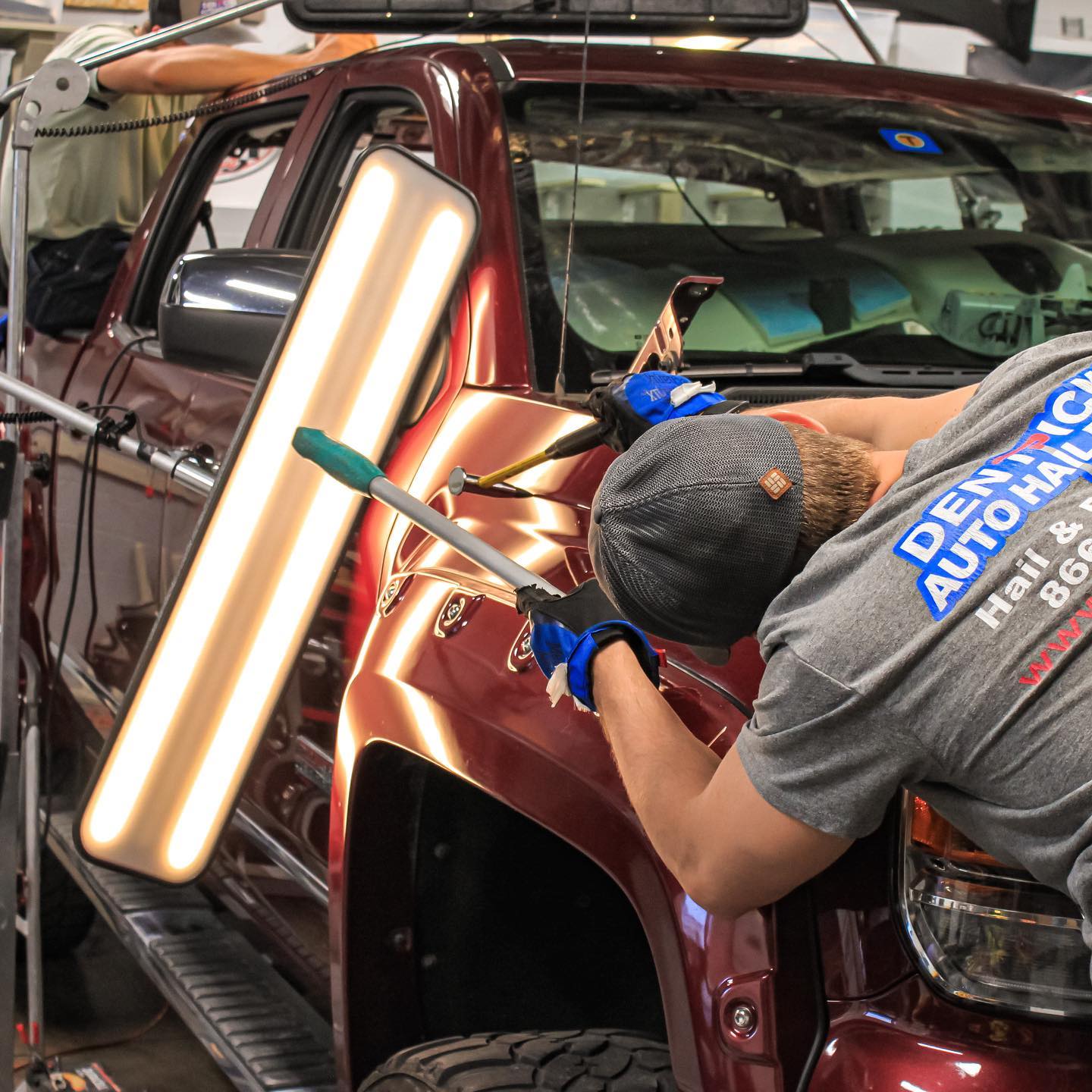
A hail repair that includes pickup and delivery has one feature an ordinary drop-off does not: the vehicle changes hands twice, away from the shop, usually in a driveway or a workplace lot. That is convenient, and it is also the moment where a record either exists or does not. Six weeks later, nobody remembers whether the curb rash on the front wheel was there before, and memory is not evidence.
Good documentation is not about distrust. It is about making the boring answer available instantly, so a five-second question stays a five-second question. Below is what a handover record should contain, what you should keep yourself, and how to actually check a finished paintless dent repair on delivery instead of nodding at it in a dim garage.
What a proper handover record contains
At minimum, both ends of the trip should produce the same six things:
- Date, time and exact location of the collection or delivery, and who was present.
- Odometer reading, photographed rather than written down.
- Fuel level or state of charge, photographed on the cluster.
- A full photographic walk-around — every panel, all glass, all four wheels and tires, front and rear bumpers, mirrors, lamps.
- Interior shots — seats, carpets, dash, cargo area — and a note of anything left in the vehicle.
- Signatures from the person releasing or receiving the vehicle and the person transporting it.
The point of duplicating fuel and odometer at both ends is not suspicion about a joyride. It is that those two numbers date-stamp the record in a way a photo of a fender does not.
The pickup walk-around, in order
Ten minutes, done the same way every time, in this sequence:
- Wide shots from four corners, showing the whole vehicle and the surroundings it is standing in.
- Horizontal panels individually — hood, roof, trunk lid or bed — shot from a low angle so the light rakes across the surface. This is the hail damage, and it is the reason for the trip.
- Vertical panels — doors, fenders, quarters — from the same low angle, plus a straight-on shot of each.
- Glass, individually. Windshield, rear glass, each side window, sunroof. Chips and spidering are the single most common pre-existing item people forget about.
- Wheels and tires. All four faces, plus a shot of each tire sidewall. Curb rash is the classic disputed item.
- Lamps, mirrors, trim and moldings. Any lifted trim gets its own photo.
- Interior and cargo. Including the state of the carpets, which matters if the vehicle took water through a damaged seal.
- Cluster with the ignition on. Odometer, fuel or charge, and any warning lights already showing.
Anything unusual gets called out at the time and noted on the paperwork rather than left in a photo for someone to find later. If the driver's door was already misaligned, or a wheel already had a bent lip, say so out loud during the walk.
What to keep on your own phone
Have your own copy. Not because the shop's record is inadequate, but because a second independent set removes any question of who controls the evidence — and because you may need those photos for the claim itself, not just the transport.
Also photograph the storm-related items while you have the phone out — hail on the ground, damaged fencing, anything that establishes the event. That set belongs with your claim documentation and should be kept with the storm date you confirmed from the public storm records.
Before the vehicle leaves: the practical list
- Remove valuables and personal documents. Garage remotes, toll tags that are not vehicle-mounted, laptops, sunglasses, anything you would not leave in a parked car.
- Decide about toll tags. A windshield-mounted tag will accrue tolls while the vehicle is in transit or being moved. Either accept that or remove it.
- Empty the cargo area and back seat. Panels are worked from the inside on many repairs — headliners come down, trim comes off. A loaded cargo area slows the job.
- Leave the vehicle reasonably clean. A washed panel reads better under line boards. Skip the wash if the paint is chipped or cracked in the dents, where pressure can lift more coating.
- Note anything that already rattles, sticks or warns. Pre-existing faults belong on the record.
- Confirm who has the keys and how many. Including whether a spare stays with you.
Our guide on preparing for a PDR appointment covers the rest of the preparation side.
While the car is out of your hands
Documentation does not stop at the curb. During the repair at the Plano shop, panels are read under LED line boards, worked, and then signed off by whoever runs quality control — and that sign-off is visible in your customer portal, alongside live updates while the vehicle is with us. That matters most for exactly the customer who used pickup, because you are not walking through the shop mid-repair.
If the panels turn out worse than the adjuster's estimate assumed — which happens most often on roofs, where damage over reinforcements is hard to see from outside — the correct route is a supplement, documented with photographs from the shop floor. Our guide on how supplements work in hail repair explains the sequence. You remain the one who files with the carrier; we supply the evidence and walk alongside you.
The delivery inspection — the part most people rush
This is the inspection that actually decides whether you are satisfied, and it is routinely done badly: at dusk, in a garage, with someone standing next to you waiting for a signature. Insist on the conditions instead.
- Daylight, or nothing. Move the vehicle out of the garage. Overcast daylight is ideal; direct sun is second best; artificial light is worst.
- Read each panel by reflection. Crouch so you can see a long straight edge — a roofline, a building edge, a light pole — reflected across the panel, then move your head. A remaining dent shows as a wobble in that reflected line. Staring straight down at a panel tells you almost nothing.
- Check the horizontal panels first. Hood, roof, trunk. They took the most impacts and they are where any missed dent will be.
- Look at panel edges and body lines. These are the hardest areas in paintless work, and they are where quality shows.
- Confirm reassembly. Trim, moldings, headliner, roof rails, interior panels — everything that came off should sit flush and not rattle. Close every door and the hatch.
- Repeat the odometer and fuel photos, and compare with the pickup record.
- Ask for anything you see now. It is much easier to address on the spot than after you sign and drive off.
If you are not sure what a finished repair should look like, our explanation of how paintless dent repair works covers what the process can and cannot achieve — and it is honest about the fact that some panels do genuinely need replacement and refinishing rather than PDR. Vehicles arrive back with a mini exterior detail, which makes the reflection read easier, not harder.
Pickup record versus delivery record
| Recorded at | What it captures | What it protects |
|---|---|---|
| Pickup | Existing damage, wheels, glass, odometer, fuel, interior contents | Both sides, against a later dispute about pre-existing condition |
| Pickup | The hail damage itself, panel by panel | Your claim, if the estimate later has to be revisited |
| During repair | Panel readings, supplement photos, quality control sign-off in the portal | The accuracy of what was actually approved and paid |
| Delivery | Finished panels read by reflection, reassembly, odometer, fuel | Your acceptance of the work — and the starting point for any warranty question |
Common mistakes
- Signing the delivery paperwork in a garage at night. You cannot read a panel in that light. Nobody can.
- Relying entirely on the shop's photo set. Take your own. It costs three minutes.
- Forgetting the wheels. Wheel damage is the most disputed item in any vehicle transport, in every industry.
- Leaving the car loaded. Interior access is part of the repair on most panels.
- Not photographing the cluster. Odometer and fuel are the two numbers that anchor a record to a moment.
- Treating delivery as the end of the claim. Keep the estimate, supplements and photos together — they matter if a warranty question comes up later, and the written lifetime warranty runs for as long as you own the vehicle.
What to do next
If you have transport scheduled, put ten minutes aside before the driver arrives and shoot your own walk-around. On delivery day, ask for daylight and read the horizontal panels by reflection before you sign anything. Those two habits cover almost every problem that documentation is supposed to solve.
You can see the full sequence, from photos and verbal quote to collection, repair and delivery, in our hail repair process, and finished panels in the before and after gallery.
Frequently asked questions
How should vehicle pickup and delivery be checked and documented?
Run the same walk-around at both ends: four wide corner shots, one low-angle shot of each panel, every piece of glass, all four wheels, the interior, and the cluster showing odometer and fuel. Note anything pre-existing out loud and get it written on the paperwork. Keep your own photo set alongside the shop's, and repeat the odometer and fuel photos at delivery so the two records line up.
Who is liable if the car is damaged in transit?
That is exactly what the handover record settles. With photographs and signatures at collection and delivery, a new mark is either clearly new or clearly not. Raise anything you see before you sign at delivery — it is far easier to resolve on the spot than after the vehicle has left again.
Should I remove my toll tag before pickup?
A windshield-mounted tag will register tolls while the vehicle is being moved. Either remove it or accept the charges. The same logic applies to garage remotes, gate fobs and anything else in the car that operates something at your home.
How do I tell whether a dent was actually removed?
Read the panel by reflection in daylight. Crouch until a long straight edge — a roofline, a light pole, a building edge — reflects across the panel, then move your head. A remaining dent bends that reflected line. Looking straight down at a panel will not show you a shallow dent no matter how hard you stare.
How do I see what is happening while the car is at the shop?
Live updates run in your customer portal during the repair, and the final quality control sign-off — by whoever runs quality control — is visible there too. For a customer who used pickup and never walked the shop floor, that portal record is the substitute for standing in the bay.
Do I need to empty the car before it is collected?
Take out valuables and clear the cargo area and back seat. Many panels are accessed from the inside, so trim, headliners and interior panels come off during a hail repair. A loaded vehicle slows the work and puts your belongings in the way of it.
What if damage turns out to be worse than the estimate once the car is at the shop?
That is normal, especially on roofs where damage over reinforcements does not show from outside. The route is a supplement, documented with photographs from the shop floor. You remain the person filing with the carrier; the shop supplies the evidence and walks alongside you through it.
Sources and methodology
- After hail or windstorms: consumer tips — Texas Department of Insurance.
- Automobile insurance guide — Texas Department of Insurance.
Repair, cost and timing statements that are not tied to a listed source come from DentPicks' own quoting and repair history at the Plano, TX shop. They are typical ranges and shop-floor observations, not industry statistics or promises — your vehicle, its condition, your policy language and your insurer determine your specific outcome.
Scheduling pickup for a hail repair?
Ask us for the handover checklist before collection day. It takes ten minutes at each end and settles nearly every question that comes up afterwards.