The short answer
It depends entirely on documentation. A shop may lawfully discount its own price, and that discount belongs on the invoice with the true repair cost reported to the insurer. What is not acceptable is inflating the estimate to cover a deductible, paying cash back out of claim proceeds, or paying for signatures and referrals. DentPicks waives the deductible up to $1,000 on many approved hail claims, written on the invoice, with nothing added to the insurer's estimate.
 Written by the DentPicks Editorial Team
Technically reviewed by Vytas Kucinskas, Founder & Master PDR Technician
Written by the DentPicks Editorial Team
Technically reviewed by Vytas Kucinskas, Founder & Master PDR Technician
Published: Aug 19, 2026 · Last reviewed: Aug 19, 2026 · 9 min read
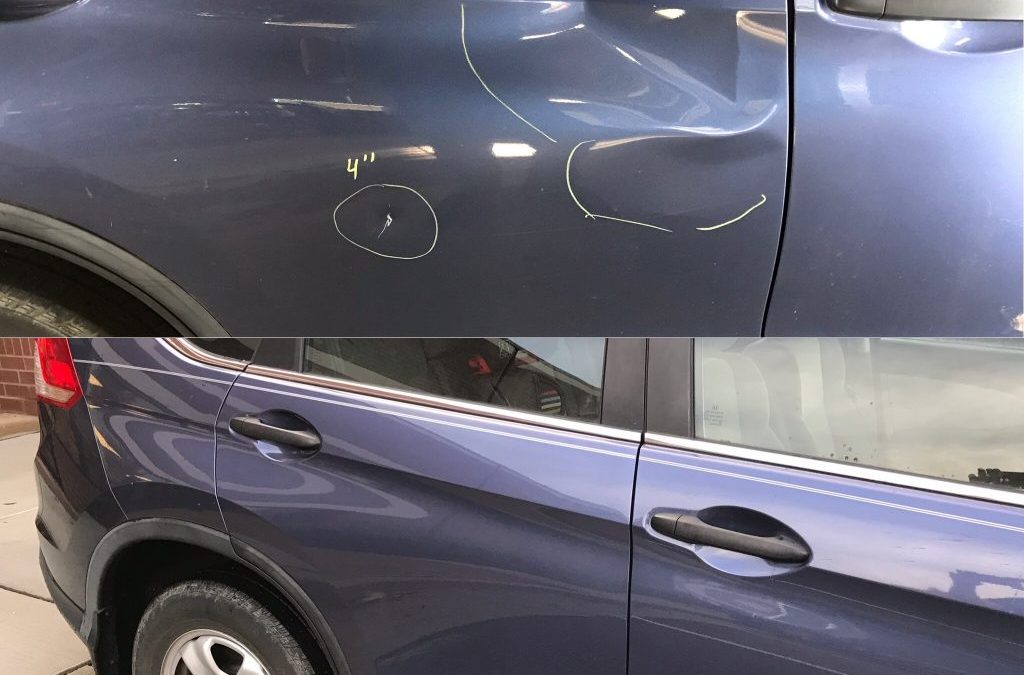
After a big North Texas storm, the offers arrive fast: we'll cover your deductible, we'll pay you cash back, we'll give you a rebate for signing today. Some of those offers are ordinary, properly documented discounts. Some of them are quietly asking you to participate in insurance fraud. From the driver's seat they can sound identical, and the person taking the risk is you — your name is on the claim.
We should say plainly where we stand before explaining the difference: DentPicks waives the deductible up to $1,000 on many approved hail claims. We do it as a discount that appears on the invoice, with the true repair cost reported to the insurer. The rest of this guide is about how to tell that kind of arrangement apart from the version that gets people in trouble.
What a deductible actually is
Your deductible is the part of the loss you agreed to carry yourself in exchange for a lower premium. On a Texas comprehensive hail claim, the insurer pays the repair cost minus that amount. It is a real obligation, not a formality, which is why the way a shop handles it matters so much. Our guide on how the hail deductible works covers the mechanics.
A shop can lawfully choose to charge you less than the full repair price — businesses discount all the time. What no one may do is tell the insurer the repair cost one thing while the actual transaction is another. That single distinction — is the insurer being told the truth about what this repair cost? — separates almost every legitimate offer from almost every bad one.
What a properly documented offer looks like
- It is on the invoice. The discount appears as a line item, in writing, on the document the customer signs and the insurer can see. Not a handshake at the counter.
- The estimate is not inflated to fund it. No phantom panels, no labor hours that were never worked, no "R&I" of parts that were never removed. The repair billed is the repair performed.
- The customer receives no cash. A discount reduces what you owe. A payment back to you out of claim proceeds is a different animal entirely.
- Nothing is contingent on signing today. Legitimate discounts are not doors that slam shut in twenty minutes.
- It is not payment for a referral or a signature. Money for putting a sign in your yard, or for each neighbor you bring in, is compensation, and it has tax and claim implications people rarely think about.
- The final invoice reconciles. What the insurer paid, what was discounted, what you paid — three numbers that add up on one page.
What a sketchy offer looks like
- "We'll write the estimate a little high so it covers your deductible." This is the classic. It is a misrepresentation to the insurer, and the policyholder who signs the paperwork is part of it.
- Cash back after the claim pays. Money returning to you from claim proceeds, in an envelope or a Zelle transfer, with nothing on the invoice.
- A "rebate" that only exists verbally. If it is real, it can be printed.
- Payment for signing the authorization. A gift card, a check, a "storm bonus" for booking on the spot.
- Per-neighbor referral bounties paid in cash during a neighborhood canvass.
- "Free" upgrades billed to the claim. Wheels, tint, accessories or unrelated bodywork added to a hail estimate so the numbers work out.
- An invoice for one amount and a payment plan that quietly forgives the rest. Two sets of books, one of which the insurer sees.
These pitches cluster around post-storm canvassing operations, which is why the patterns in our guide on spotting storm-chaser repair operations overlap so heavily with the list above. The offer and the operating model usually travel together.
Documented discount vs inflated claim
| Properly documented | Problem arrangement | |
|---|---|---|
| Where it appears | On the invoice, as a discount | Nowhere in writing |
| What the insurer is told | The true repair cost | An inflated cost, or a scope that was not performed |
| Money flow | You owe less | Cash comes back to you |
| Timing pressure | None | "Today only" |
| If the adjuster audits | Numbers reconcile | Numbers do not |
| Who is exposed | Nobody | The shop and the policyholder whose name is on the claim |
Why the exposure lands on you too
People assume the shop carries the risk of an inflated estimate. In practice the claim belongs to the policyholder. You sign the authorization, you often endorse the payment, and your signature sits on the paperwork the carrier reviews. When a carrier audits a storm season and finds a pattern, it works backwards through the claims — and the policyholder is the person the letter goes to.
The realistic consequences are not dramatic on day one. They are things like a denied supplement, a reopened claim, a demand for repayment, non-renewal at the next term, or a repair the shop never finishes because it left the market. That last one is common enough to matter: the operations that offer the loudest rebates are frequently the ones with no address to return to when your clear coat fails.
There is also a quieter cost. An estimate padded to cover a deductible sets a false baseline for that vehicle. If a second storm comes through the same year, the overlapping documentation gets messy fast.
How the DentPicks waiver works, in detail
On many approved hail claims we waive the deductible up to $1,000. It is not automatic and it is not a blanket promise on every claim — the amount and the eligibility depend on the claim, so we confirm it before you commit rather than after.
Mechanically it is a discount on our side of the ledger. The estimate we submit reflects the panels we actually repair and the labor we actually perform. Nothing is added to make the arithmetic work. The waiver shows on the invoice, so what the insurer paid, what we discounted, and what you paid appear as three reconcilable numbers on one page. No cash goes back to you, nothing is paid for a signature, and nothing is paid for a referral.
The same discipline applies to supplements. When panels come under reflection lighting indoors and reveal dents the parking-lot estimate missed — routine on full-vehicle hail — that goes back to the insurer as a documented supplement with photographs, not as padding on the original estimate. Our explainer on how hail supplements work covers what actually gets submitted.
Everything else we include is a service, not a claim line: complimentary pickup and delivery across DFW on insurance-approved hail claims, a mini exterior detail at delivery, live updates in your customer portal, and a final quality-control sign-off recorded there by whoever runs quality control. Austin is trailer pickup and delivery, with any rental running through your own rental coverage. None of it is billed to the insurer as repair work.
Six questions to ask any shop making an offer
- Will the discount appear on the invoice I sign?
- Is the estimate you submit exactly the work you will perform?
- Does any money come back to me personally? (The right answer is no.)
- What happens if the insurer approves less than you expected — does the offer change?
- Are you paying me for a referral, a sign or a signature? (The right answer is no.)
- Can I have the warranty terms in writing before I decide?
A shop that answers all six comfortably and in writing is not the risk in your storm season. One that gets vague on questions one and three is telling you what you need to know.
What to do next
Get the offer in writing before you agree to anything, and check it against the invoice at the end. If the two do not match, that is the conversation to have before the car leaves — not after. If you are unsure whether an offer you have been given is documented properly, bring the paperwork and we will read it with you plainly.
You can send photos for a quote — usually verbal, in about 30 minutes — or see finished work in our gallery. Our hail repair process lays out how a claim runs from inspection to delivery, including where the waiver sits in the paperwork, and contacting us costs nothing whether or not you file.
Frequently asked questions
Is it illegal for a shop to cover my deductible?
The problem is rarely the discount itself — it is misrepresentation. A business may charge less than its list price, but telling the insurer the repair cost one thing while the actual transaction is another is fraud, and the policyholder whose name is on the claim is part of it. If the arrangement is on the invoice and the estimate is honest, there is nothing to hide.
What is the difference between a discount and a rebate?
A discount reduces what you owe and is visible on the invoice. A rebate returns money to you personally after the claim pays — often with nothing in writing. The first is an ordinary commercial decision; the second is claim proceeds flowing to the insured on top of a repair the insurer paid full price for.
How does the DentPicks deductible waiver work?
On many approved hail claims we waive the deductible up to $1,000. It is not automatic and not every claim, so eligibility is confirmed before you commit. It is applied as a documented discount on the invoice, and the estimate submitted to the insurer reflects only the panels and labor actually worked.
A shop offered me cash back for putting a sign in my yard. Is that a problem?
Payment for a sign or a referral is compensation, not a repair discount, and it becomes a problem when it is funded out of an inflated claim. Ask whether the estimate submitted changes because of it. If the answer is anything other than a flat no, walk.
What happens if a padded claim is discovered later?
Realistic outcomes include a denied supplement, a reopened claim, a demand for repayment, or non-renewal. Because the claim belongs to the policyholder, the correspondence goes to you rather than to the shop — which may no longer be in the market by then.
Will filing a hail claim raise my rates?
No and yes. A Texas comprehensive hail claim itself is not surcharged, but pricing algorithms factor in collision claims, tickets, violations and overall repair costs, and premiums rise without claims too. Your insurer or licensed agent can confirm your specific coverage.
Should I ask for the offer in writing?
Always, and then check it against the final invoice. If the offer you were given and the invoice you are handed do not match, raise it before the car leaves the shop — that is when it is still a conversation rather than a dispute.
Sources and methodology
- Automobile insurance guide — Texas Department of Insurance.
- After hail or windstorms: consumer tips — Texas Department of Insurance.
Repair, cost and timing statements that are not tied to a listed source come from DentPicks' own quoting and repair history at the Plano, TX shop. They are typical ranges and shop-floor observations, not industry statistics or promises — your vehicle, its condition, your policy language and your insurer determine your specific outcome.
Want the deductible question answered in writing?
Send photos or bring the estimate in. We will tell you whether the waiver applies to your claim and show you exactly where it lands on the invoice.