The short answer
Verify the claim rather than the word. Texas does not license PDR technicians, so any certification comes from a private training organization, tool vendor, association, insurer or the business itself. Ask what the credential actually certifies, who issued it, and whether you can check it anywhere. Then weigh things you can confirm yourself: a physical address, finished panels you can inspect, written warranty terms, and who signs off on the repair.
 Written by the DentPicks Editorial Team
Technically reviewed by Vytas Kucinskas, Founder & Master PDR Technician
Written by the DentPicks Editorial Team
Technically reviewed by Vytas Kucinskas, Founder & Master PDR Technician
Published: Aug 19, 2026 · Last reviewed: Aug 19, 2026 · 9 min read
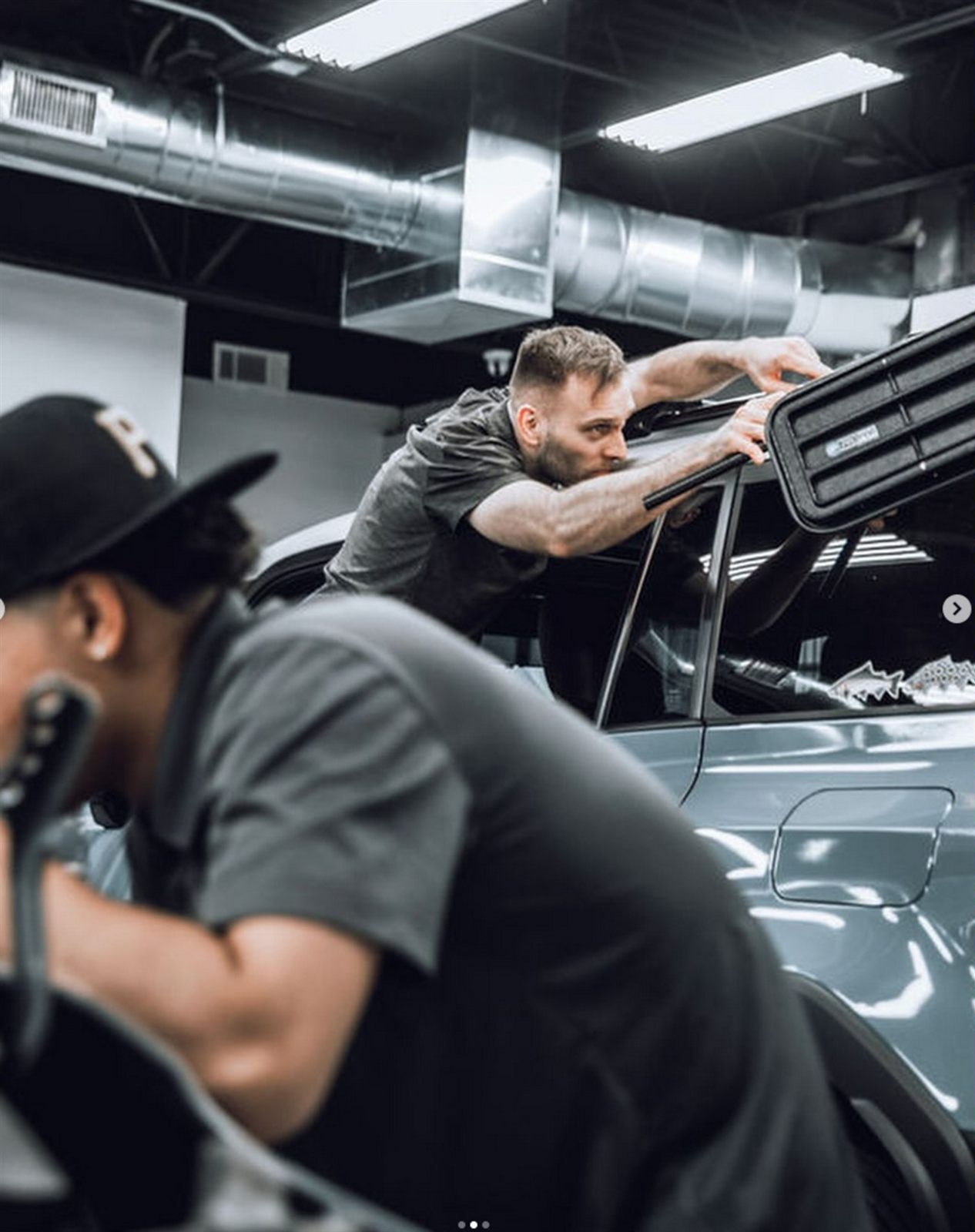
Search for dent repair in North Texas and you will be told, repeatedly, that someone is certified. The word appears on trucks, yard signs, business cards and websites. It is worth knowing what it is doing there, because paintless dent repair has no single licensing authority the way plumbing or electrical work does, and "certified" on its own carries no fixed meaning.
That is not an accusation. Plenty of the people using the word have completed genuine training and are good at their jobs. But a claim you cannot check is not a reason to hand over your car, and the useful skill for a customer is not memorizing acronyms — it is knowing the three questions that turn any credential claim into either a fact or a bit of marketing.
There is no state license for paintless dent repair
Texas does not license PDR technicians. There is no exam, no registry and no number you can look up to confirm someone is legally qualified to work metal. Repair businesses have the same obligations any Texas business has — registration, tax registration, whatever local permits apply, and liability coverage if they are sensible — but none of that is a skill credential.
So every certification claim in this trade comes from a private source. That does not make it worthless. It makes it something you have to trace.
The three questions that test any credential
Ask these in order, in a normal conversational tone, and you will learn more in ninety seconds than from an hour of reading review stars.
- What does it actually certify? A course attended? A skills assessment with a pass mark? Training on one specific tool or adhesive system? Familiarity with a particular manufacturer's repair procedures? These are very different things, and a straightforward operator will tell you which one it is without hedging.
- Who issued it? A training organization, a tool vendor, a trade association, an insurer, a manufacturer, or the business itself. Self-issued credentials exist, and they are not inherently dishonest — but they are not third-party verification either.
- Can I verify it? Is there a certificate with a date and an issuing body, a public directory, a name to search? A credential that cannot be checked anywhere is functionally a claim about a claim.
What the common claims tend to mean
| Claim you will hear | What it can mean | What to ask |
|---|---|---|
| "Certified PDR technician" | Anything from a multi-day assessed course to a weekend class | Issued by whom, in what year, assessed how? |
| "Factory trained" / "manufacturer approved" | Training or program membership tied to specific brands and procedures | Which manufacturer, and does it cover my model? |
| "Insurance approved" / "preferred shop" | Usually a network arrangement with one or more carriers | Which carriers, and does it change what I pay? |
| "Master technician" | Often an internal title with no external standard behind it | Who awards it and what is the standard? |
| "20 years of experience" | Could be the business, the owner, or a technician who left last year | Whose experience, and who is working on my car? |
| "Lifetime warranty" | Meaningful only with written terms | What is covered, for how long, and is it transferable? |
Notice that none of the questions in the third column are aggressive. They are the sort of thing a genuinely qualified person enjoys answering, because the answer is their actual work history.
Experience claims deserve the same treatment
"Insurance approved" is the claim most often misread. Being in a carrier network says a shop meets that insurer's administrative requirements; it is not a quality ranking, and in Texas you are not required to use a network shop in the first place. We cover that in our guide on whether you can choose your own hail repair shop in Texas.
Years of experience are worth asking about specifically. Twenty years of door dings is not the same background as regular full-vehicle hail work, and hail work is not the same as aluminum. If your vehicle has aluminum panels, that is a fair thing to raise directly — the metal behaves differently under a rod, holds shape differently and is less forgiving of aggressive work, which we explain in our guide to aluminum dent repair.
The most practical version of the experience question is simply: have you done this specific repair, on this kind of panel, recently? Repairability depends on paint condition, metal stretch, panel access and prior repairs, and manufacturer procedures vary by model year and configuration — so the useful expertise is narrow and current, not a round number on a sign.
Ask who will actually touch your car
This is the gap most credential conversations leave open. In busy hail seasons it is common across the industry for shops to bring in additional technicians, and a credential held by the owner does not necessarily describe the person working your roof at eight o'clock on a Thursday night. The question is not hostile: who will be doing the work on my vehicle, and will the same people finish it?
A related question is what happens when a panel turns out not to be a PDR candidate. Sometimes metal is stretched too far, paint has cracked, or an adjuster requires a panel be replaced and refinished — and a shop that only talks about paintless work should still have a clear answer for that case. We do what is best for the vehicle, which occasionally means replacement and refinishing rather than a rod. Our guide on deep creases and large dents covers where that line usually falls.
What is actually verifiable
Credentials are hard to check. These are not, and they tell you more:
- A physical address you can visit. Not a P.O. box, not "serving all of DFW." Look at the bays and the lighting while you are there.
- Finished work you can inspect in person. Photographs are a starting point; a repaired panel in daylight is proof. Ask to see one.
- Written warranty terms before the work. Ours is a written lifetime warranty for as long as you own the vehicle, and it is not transferable to the next owner — that limitation is exactly the sort of detail that should be on paper rather than in a conversation.
- Who signs off on the finished repair. At our Plano shop, work is signed off by whoever runs quality control and that sign-off is visible in your customer portal, along with live updates while the car is with us.
- Business registration and liability coverage. A legitimate operator will not be offended by the question.
- A local footprint that predates the last storm. Search the business name plus the city and see how far back it goes.
Storm season is when credential claims get loudest
After a major North Texas hail event, temporary operations arrive with impressive-sounding badges, pressure to sign immediately, and offers to handle everything for you. The Texas Department of Insurance publishes consumer tips for exactly this period, and the practical advice lines up with everything above: verify who you are dealing with, get terms in writing, and do not pay large sums up front. We go through the pattern in detail in our guide to storm-chaser hail repair operations.
One more note specific to hail claims: you file the claim, not the shop. A shop can help you gather photos, meet the adjuster, document supplements and handle paperwork — that is what we do, walking alongside you — but any operator claiming they will file the claim for you, or promising a particular payout, has told you something useful about themselves.
Red flags worth walking away from
- A credential that gets vaguer when questioned. "It's an industry thing" is not an issuing body.
- Certification logos with no name attached. If you cannot search it, it is decoration.
- Guaranteed outcomes. Nobody can promise every dent comes out perfectly before reading the panel under proper light.
- Pressure to decide today. Real shops have schedules; they do not have expiring credentials.
- Large cash deposits before any work. Especially from an operator with no permanent local address.
- A verbal warranty. If the terms are not written down, there are no terms.
What to do next
Treat certifications as one input among several, and a weak one. Ask what a claimed credential means, who issued it and whether it can be verified — then spend most of your attention on things you can confirm yourself: the address, the lighting, the finished panels, the written warranty and who is accountable after delivery.
At DentPicks we would rather be judged on the repairs than on a badge. Come look at the shop, look at cars we have finished, and ask us the three questions. Quotes are usually verbal, often from photos, in about 30 minutes, and looking at your vehicle costs nothing. You can browse finished work in our before-and-after gallery, read about who we are, or see how dent repair in Plano actually runs from inspection to sign-off.
Frequently asked questions
Is there a state license for dent repair in Texas?
No. Texas does not license paintless dent repair technicians, and there is no exam or public registry of qualified PDR hands. Repair businesses still have ordinary obligations such as business registration and liability coverage, but none of that is a skill credential.
Does DentPicks hold PDR certifications?
We do not advertise certifications. We would rather you judge the finished panels, the written lifetime warranty for as long as you own the vehicle, and the quality-control sign-off visible in your customer portal. Ask us the same three verification questions you would ask anyone else.
Does "insurance approved" mean a shop is better?
It usually means the shop meets a carrier's administrative requirements for its network, not that its repairs are ranked higher. In Texas you are generally not required to use a network shop, so treat the label as an arrangement rather than a quality rating.
How do I check a shop's actual experience with my vehicle?
Ask whether they have done this specific repair, on this panel material, recently. Aluminum, large creases and full-vehicle hail are different skill sets from door dings. Repairability depends on paint condition, metal stretch, panel access and prior repairs.
What should a written warranty actually say?
What is covered, for how long, what voids it, and whether it transfers if you sell the car. Ours runs for as long as you own the vehicle and is not transferable — that kind of limitation belongs on paper before the work, not in a conversation afterwards.
Someone showed me a certificate. Is that enough?
It is a start. Look for the issuing organization's name and a date, then search that organization. A certificate from a body that has no findable existence, or a logo with no name attached, tells you the claim was designed to be seen rather than checked.
Why do certification claims spike after a hailstorm?
Because storm season brings temporary operations into DFW that need instant credibility. The Texas Department of Insurance publishes consumer tips for that period; the practical version is to verify who you are dealing with, get terms in writing, and avoid large up-front cash payments.
Sources and methodology
- After hail or windstorms: consumer tips — Texas Department of Insurance.
- Automobile insurance guide — Texas Department of Insurance.
Repair, cost and timing statements that are not tied to a listed source come from DentPicks' own quoting and repair history at the Plano, TX shop. They are typical ranges and shop-floor observations, not industry statistics or promises — your vehicle, its condition, your policy language and your insurer determine your specific outcome.
Ask us the three questions
Visit the Plano shop, look at panels we have finished, and read the warranty terms before anything starts. Inspecting your vehicle costs nothing.