

The short answer
Because they answer different questions. Storm data — radar swaths, spotter reports, verification reports — establishes that hail occurred near a location on a date, at neighborhood resolution. Only a panel-by-panel inspection under controlled lighting shows which panels were hit, how deep the dents are and whether they are repairable. A good claim file uses storm data for the date and the inspection for the scope.
 Written by the DentPicks Editorial Team
Technically reviewed by Vytas Kucinskas, Founder & Master PDR Technician
Written by the DentPicks Editorial Team
Technically reviewed by Vytas Kucinskas, Founder & Master PDR Technician
Published: Aug 19, 2026 · Last reviewed: Aug 19, 2026 · 8 min read
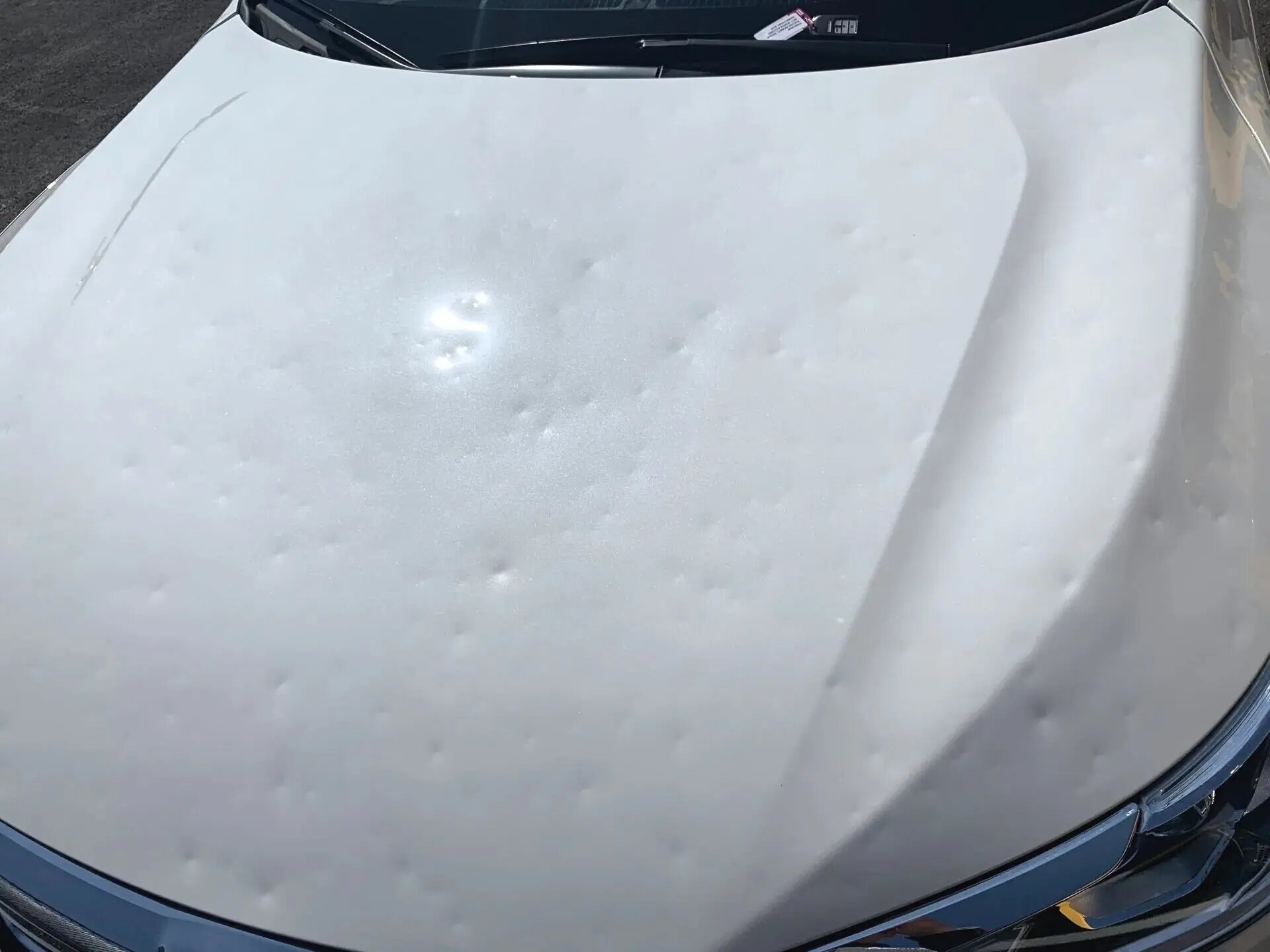
After a North Texas hailstorm, two very different kinds of evidence get produced. One is about the weather: radar imagery, spotter reports, hail swath maps, the third-party storm verification reports that insurers buy. The other is about your car: what the panels actually look like when someone reads them under proper lighting.
Both are useful. They answer different questions, and almost every argument that goes badly in a hail claim comes from someone treating one as a substitute for the other — in either direction.
Two questions, two kinds of evidence
| Storm data | Vehicle inspection | |
|---|---|---|
| Answers | Did hail occur near this location, on what date, roughly what size | What happened to this specific vehicle |
| Resolution | Neighborhood to several miles | Panel by panel |
| Basis | Radar estimates and human reports | Direct observation under controlled lighting |
| Good for | Confirming the event and the date, separating two storms | Scope, repairability, cost, timeline |
| Cannot tell you | Whether your car was hit, or how badly | Which storm date the damage belongs to |
What storm data actually is
The public record most people encounter first is the NOAA Storm Prediction Center's severe weather reports, which log hail, wind and tornado events by date and location. Those entries come from trained spotters, law enforcement, emergency management and members of the public who called something in. They are a record of what somebody reported, not a survey of every street.
The other layer is radar-derived. Weather radar can estimate the likely maximum hail size within a storm cell, and commercial vendors turn that into the swath maps and verification reports carriers use. These are models. They are genuinely useful models, built by people who know what they are doing, but they estimate what the atmosphere was probably producing over an area rather than what landed on one driveway in Plano.
Neither layer was ever designed to appraise a car, and neither claims to. The National Weather Service Fort Worth office publishes local event summaries for the region, and they are excellent for establishing that a storm happened and when.
Why two cars in the same zip code come out differently
This is the part that surprises people. Hail swaths are narrow and violently uneven — one side of a street can take a beating while the other side is untouched. On top of that, several things about the vehicle itself change the outcome:
- Shelter. A garage, a carport, a tree line, or simply the lee side of a building. Partial shelter produces the lopsided damage patterns we see constantly.
- Orientation. Hail rarely falls straight down. Driven at an angle by wind, it hits the windward side hard and may leave the other flank nearly clean.
- Panel geometry. A flat horizontal roof takes near-perpendicular impacts. A steeply raked hood or a curved quarter panel deflects more energy.
- Panel material and thickness. Aluminum panels behave differently from steel under impact, and different vehicles use different gauges in different places. Manufacturer construction varies by model year and configuration.
- Whether the vehicle was moving. A car driven through the storm meets hail with added relative velocity, usually on the windshield and leading edges.
So a report of large hail three miles away tells you a claim is plausible. It does not tell you that your roof has damage, and it certainly does not tell you the vehicle is a total loss.
Where storm data genuinely helps your claim
Used for the job it is good at, storm data is valuable:
- Establishing the date. Claims attach to events. If you are not sure whether the damage came from the March storm or the April one, the public record narrows it down.
- Separating overlapping storms. North Texas gets multiple hail events in a season and they cross the same suburbs. Two events on one vehicle is a real complication, and dates are how it gets untangled.
- Supporting a questioned claim. If a carrier queries whether hail occurred in your area at all, an independent public record of the event is exactly the right response.
- Timing your filing. Texas has deadlines tied to the date of loss — see our guide on how long you have to file a hail claim in Texas.
What only the inspection can settle
Everything that determines the actual repair comes from the vehicle. At the Plano shop we read hail damage under LED line boards, because a straight bright line reflected across a panel bends at every dent — shallow dents that are genuinely invisible in daylight show up immediately. That reading is where the real numbers come from: which panels are affected, how many impacts on each, how deep and how sharp they are, whether paint is intact over them, and whether a tool can reach behind the panel at all.
Repairability depends on paint condition, metal stretch, panel access and prior repairs. No storm report contains any of those four. It is also where the honest answers live: sometimes a panel needs replacement and refinishing rather than paintless repair, and we say so, because the goal is what is best for the vehicle.
The carrier's own inspection works the same way, and our guide on how the adjuster inspection works covers what happens at that appointment.
Common mistakes with storm data
- "Radar showed baseball hail at my zip, so my car must be totaled." Estimated maximum size across a cell is not what landed on your roof. Whether a vehicle is a total loss is a repair-cost calculation against its value, not a weather reading.
- "There is no report for my street, so I have no claim." Public reports come from whoever called in. Sparse coverage in a neighborhood is not evidence that no hail fell there. The dents on your hood are better evidence than the absence of a phone call.
- Letting a stranger tell you what the radar showed. After every storm, temporary operations work DFW neighborhoods with a printed swath map and a lot of confidence. Our guide on spotting storm-chaser operations covers the pattern.
- Guessing the date rather than checking it. A wrong date on a claim is a real problem, and it is a five-minute problem to avoid.
- Skipping the inspection because the storm data looks convincing. The swath map does not repair panels, and it will not tell you whether your damage is worth a deductible.
Putting both to work
The sequence that works is straightforward. Photograph the vehicle first, while it is closest to the storm condition — every panel, low angle, with a straight reflection running across the surface. Then pin the date using the public record. Then get the car read under proper lighting, and let that determine the scope.
If a second storm rolls through before you have finished, the photographs and the date you already pinned are what keep the two events separable. That is worth more than any amount of arguing later. Our guide on what to do after hail damage covers the full first-week sequence, including when the North Texas waves typically arrive.
What to do next
Treat the weather record as your date evidence and the shop inspection as your damage evidence, and keep them in separate mental boxes. Look up the event, note the date, and then let a technician tell you what the panels say.
Inspections at DentPicks in Plano are free and carry no obligation. Quotes are usually verbal, from photos or in person, in about 30 minutes. On many approved hail claims we waive the deductible up to $1,000 and arrange complimentary pickup and delivery across DFW; Austin-area vehicles travel by trailer pickup and delivery, since there is no shop there. See finished work in the before and after gallery, or read how our hail repair process runs from inspection to delivery.
Frequently asked questions
My zip code shows large hail on the radar map. Does that mean my car is damaged?
Not necessarily. Hail swaths are narrow and uneven, and shelter, wind angle, panel geometry and material all change what a specific vehicle takes. Radar estimates the maximum size a storm cell was likely producing over an area, not what landed on your driveway.
There is no hail report for my street. Can I still file a claim?
Yes. Public severe weather reports come from spotters, officials and members of the public who called something in, so coverage is naturally sparse. The absence of a report near your address is not evidence that no hail fell. The damage on the vehicle is the stronger evidence.
Can radar data tell me if my car is a total loss?
No. A total loss is a calculation comparing repair cost against the vehicle's value, and repair cost comes from the panel-by-panel read. Estimated hail size tells you nothing about whether that threshold is crossed on your particular vehicle.
How do I find the date of the storm that hit my car?
The NOAA Storm Prediction Center publishes severe weather reports by date and location, and the National Weather Service Fort Worth office posts local event summaries for the DFW region. Both are free and public, and they usually pin the date within minutes.
What if two storms hit my area before I filed?
Overlapping events are common in North Texas and they complicate a claim, because each claim attaches to one date of loss. Photographs taken close to the first storm, plus the public record of both dates, are what keep the two events separable.
Why does the shop find more damage than the drive-through estimate did?
Lighting. Shallow hail dents are read from how they bend a straight reflected line, which flat outdoor light does not provide. Under LED line boards those dents become obvious, which is why supplements are routine on hail rather than exceptional.
Sources and methodology
- Severe weather storm reports — NOAA Storm Prediction Center.
- NWS Fort Worth forecast office — National Weather Service.
- After hail or windstorms: consumer tips — Texas Department of Insurance.
Repair, cost and timing statements that are not tied to a listed source come from DentPicks' own quoting and repair history at the Plano, TX shop. They are typical ranges and shop-floor observations, not industry statistics or promises — your vehicle, its condition, your policy language and your insurer determine your specific outcome.
Pin the date, then let the panels speak
Bring the vehicle to the Plano shop and we will read it under line boards, free and with no obligation. The weather record sets the date; the inspection sets the scope.