

The short answer
Yes. A good photo set supports a verbal range in about 30 minutes, which is usually enough to decide whether the damage is worth a claim. Photos cannot show true dent count, depth or panel access, so the number stays a range until the vehicle is read under controlled lighting. Shoot low, with a straight reflection across each panel, and cover every panel including the roof.
 Written by the DentPicks Editorial Team
Technically reviewed by Vytas Kucinskas, Founder & Master PDR Technician
Written by the DentPicks Editorial Team
Technically reviewed by Vytas Kucinskas, Founder & Master PDR Technician
Published: Aug 19, 2026 · Last reviewed: Aug 19, 2026 · 8 min read
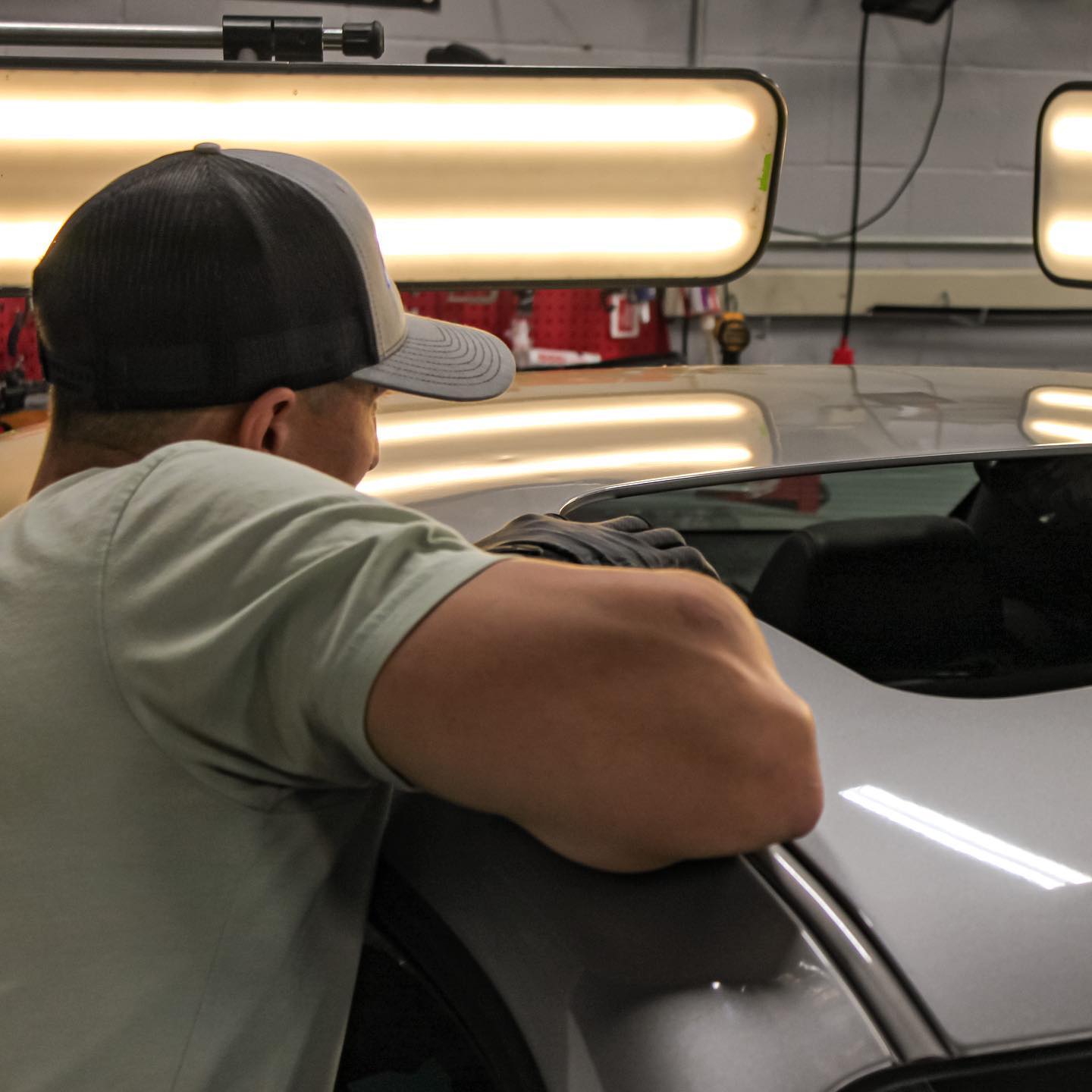
Yes, and for most people it is the sensible way to start. Driving a hail-damaged car across the Metroplex to find out whether the damage is worth a claim is a lot of effort for a question that photographs can usually answer in half an hour. What photographs cannot do is finish the job — a hail estimate that never gets verified under proper lighting is a guess wearing a number.
Understanding exactly where the photo stage stops is what keeps you from being surprised later, whether the photos were taken by you, by an app your carrier sent you, or by an estimator in a parking lot.
What photographs can tell you
A decent set of photos, shot properly, supports a real conversation about:
- Scope. Which panels were hit and which were sheltered. Damage on a car parked beside a building is often wildly uneven, and that shows up clearly.
- Severity band. Light peppering, moderate hail, or the kind of impact that starts breaking paint and creasing edges.
- Paint integrity. Chipped or cracked paint inside a dent is visible in a close-up and it changes everything — it moves the panel out of straightforward paintless dent repair territory.
- Obvious deal-breakers. Cracked glass, broken lamp lenses, dented roof rails, torn trim, a creased hood edge.
- Whether a claim is worth filing. Compared against your deductible, that is often the only decision you actually need on day one.
From that, quotes are usually verbal and come back in about 30 minutes. A range, honestly labeled as a range, is far more useful early on than a precise-looking number that is wrong.
What photographs cannot tell anyone
Hail dents are shallow. Most of them are read not by seeing the dent but by seeing what the dent does to a reflected line of light. A camera flattens that. Three things get lost:
- The true count. Shallow dents disappear entirely in diffuse daylight and in most phone photos. The count from a photo set is a floor, not a total.
- Depth and sharpness. A dent's diameter photographs fine; how deep and how sharp it is does not. Sharpness is what decides whether a dent is workable with paintless dent repair or whether the metal has been stretched too far.
- Access. Whether a tool can reach the back of the panel is a physical question about braces, intrusion beams, foam, sound deadening and bonded structures. No photograph of the outside answers it.
Repairability depends on paint condition, metal stretch, panel access and prior repairs. Two of those four are essentially invisible from the outside.
How the two stages compare
| Photo estimate | In-shop inspection under line boards | |
|---|---|---|
| Time | About 30 minutes, verbal | About 30 minutes on site, free |
| Effort | Ten minutes with a phone | A trip to Plano, or complimentary pickup on approved claims |
| Dent count | Conservative — shallow dents hide | Accurate — reflection lines expose them |
| Panel access and depth | Not assessable | Assessed panel by panel |
| Good for | Deciding whether to file at all | Deciding what the repair actually is |
How to shoot hail damage so the photos are worth something
This is the part almost everyone gets wrong, and it costs them. The trick is to photograph the reflection, not the panel.
- Wash the car first, unless the paint is chipped or cracked in the dents. Road film scatters light and hides shallow dents.
- Find a hard-edged reflection. A garage door opening, a building edge, a line of overhead fluorescent lights, or the horizon at dusk. A straight bright line reflecting across the panel is what makes dents visible.
- Get low and shoot along the panel, not down at it. Crouch so the reflection stretches away from you across the surface. The dents appear as ripples in that line.
- Avoid direct midday sun. Overcast light or open shade with a hard reflection beats bright sun, which blows out the highlights that carry the information.
- Cover every panel: roof, hood, deck lid or tailgate, both quarters, all doors, roof rails, and the pillars. Roof shots need a step or a phone held high — the roof usually takes the worst of it.
- Add close-ups of anything with broken paint, plus the glass, lamps and any lifted trim.
- Include the VIN plate and the odometer. Year, model and configuration change what panels are made of, and mileage matters if a lease or a trade is in the picture.
Why carrier photo estimates so often come in light
Many insurers now open hail claims through a photo-estimating app, and the same physics applies to them. An app-generated estimate is built from images shot by a customer in a driveway, usually straight-on, often in flat light. Catastrophe-unit estimates written outdoors in a temporary tent lot have the same limitation, plus time pressure.
This is not usually anyone acting in bad faith. It is that hail is genuinely hard to count without controlled lighting. It is also the single most common origin of supplements: the shop reads the vehicle under line boards, finds panels and dents the first pass could not see, and files the difference. Our explainer on how hail supplements work covers what happens from there.
The practical implication is that you should treat any photo-derived number — ours included — as a starting point rather than a settlement. If the eventual in-person read matches it, good. If it does not, that gap is what the supplement process exists for.
When photos are enough, and when they are not
Photos alone are usually sufficient to decide whether to file a claim, to compare a shop's read against an estimate you already have, and to book the right amount of shop time. They are not sufficient to authorize a repair, to determine whether a panel needs replacement rather than repair, or to promise a final price.
A few situations always need eyes on the vehicle: broken paint over a significant number of dents, sharp creases or dents on a panel edge, aluminum panels, prior bodywork on an affected panel, and any vehicle where a panel may need replacing and refinishing rather than PDR. Panels sometimes do need replacement, and that call is not made from a phone screen — we do what is best for the vehicle. Our PDR cost guide explains what moves the number in either direction.
Common mistakes at the photo stage
- Shooting straight down at the panel in bright sun. Produces beautiful pictures of a car and almost no visible hail.
- Sending three photos. Every panel, or the estimate is guesswork on the panels you skipped.
- Treating a photo number as final. It is a range. Anyone who gives you a guaranteed final price from photographs alone is telling you something they cannot know.
- Letting a door-knocker photograph the car for you after a storm. Temporary operations move through DFW neighborhoods after every hail event — see our guide on spotting storm-chaser operations.
- Deleting the originals. Keep the full-resolution photos with their timestamps. They are your record of the vehicle's condition on the storm date.
What to do next
Spend ten minutes with a phone and a hard reflection, cover every panel, and send the set in. You will get a verbal range back, usually within about 30 minutes, along with an honest read on whether this is worth a claim. If it is, the in-person inspection at the Plano shop is free and it is where the number gets real.
On insurance-approved hail claims we arrange complimentary pickup and delivery across DFW, so the in-person stage may not cost you a trip at all; Austin-area vehicles come to Plano by trailer pickup and delivery. Repairs carry a written lifetime warranty for as long as you own the vehicle, and you can see finished work in the before and after gallery or read how the hail repair process runs.
Frequently asked questions
How many photos do you need for a hail estimate?
Enough to cover every panel: roof, hood, deck lid or tailgate, all doors, both quarters, roof rails and pillars, plus close-ups of any broken paint, glass, lamps or lifted trim. A VIN plate and odometer shot help too. Three photos of the hood is not an estimate.
Why does my carrier's photo app estimate look lower than the shop's?
Shallow hail dents are read from how they bend a reflected line of light, and that information is largely lost in flat driveway lighting. App and catastrophe-unit estimates are conservative for that reason, which is why supplements are routine on hail rather than exceptional.
Is a photo quote binding?
No, and nobody should present one as final. Quotes are usually verbal and given as a range from photographs in about 30 minutes. The number firms up once panels are read under line boards and depth, sharpness and access can actually be assessed.
What time of day should I photograph hail damage?
Overcast light or open shade with a hard-edged reflection available beats direct midday sun, which blows out the highlights that carry the information. Dusk with a horizon line across the panel works well. A garage door opening indoors works year round.
Can you tell from photos whether a panel needs replacing?
Rarely with confidence. Broken paint is visible, but metal stretch, dent sharpness and whether a tool can reach behind the panel are not. Panels sometimes do need replacement and refinishing, and that call is made with the vehicle in front of us — we do what is best for the vehicle.
Should I keep the original photos after sending them?
Yes. Keep full-resolution copies with their timestamps. They are your record of the vehicle's condition close to the storm date, which matters if a second storm crosses the same area or if the damage has to be separated from later parking-lot dings.
Sources and methodology
- After hail or windstorms: consumer tips — Texas Department of Insurance.
Repair, cost and timing statements that are not tied to a listed source come from DentPicks' own quoting and repair history at the Plano, TX shop. They are typical ranges and shop-floor observations, not industry statistics or promises — your vehicle, its condition, your policy language and your insurer determine your specific outcome.
Send photos, get a range in about 30 minutes
Crouch low, put a straight reflection across each panel, and send the set in. We will tell you honestly whether it is worth a claim before you drive anywhere.