
The short answer
Start by documenting it: wash the panel and photograph the area against a straight reflected line, not in flat midday sun. Then raise it with the shop in writing the same day, naming the exact panel and location, and ask for a re-inspection plus the quality-control record. If that does not resolve it, get an independent written second opinion, and use the Texas Department of Insurance consumer channels for claim-side disputes.
 Written by the DentPicks Editorial Team
Technically reviewed by Vytas Kucinskas, Founder & Master PDR Technician
Written by the DentPicks Editorial Team
Technically reviewed by Vytas Kucinskas, Founder & Master PDR Technician
Published: Aug 19, 2026 · Last reviewed: Aug 19, 2026 · 9 min read
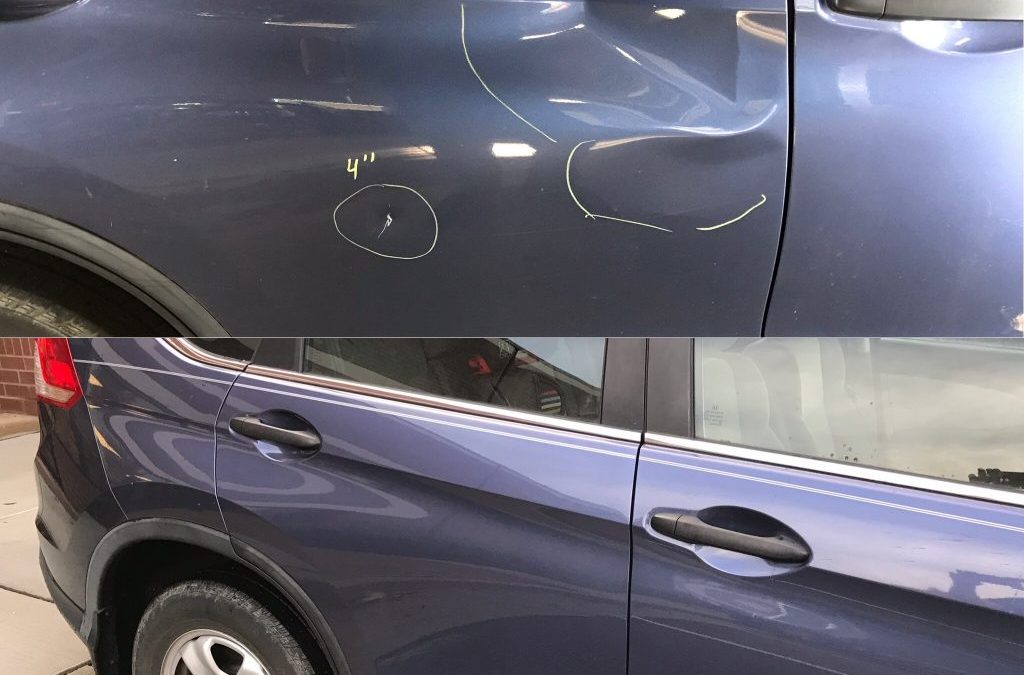
You pick the car up, drive it home, and the next morning in daylight you see it: a shadow that was not there before, a wave in the reflection along the door, a spot on the hood where the light bends the wrong way. Or the panel looks fine but a piece of trim rattles, or a clip is missing, or the headliner does not sit flush after the roof was worked.
This is a fixable situation far more often than people expect, and the way you handle the first 48 hours matters more than how loudly you complain. Almost every legitimate shop would rather bring a car back in than have a customer unhappy in public, and most of these issues are correctable. The goal of this guide is to give you an orderly path: document, raise it properly, escalate only if you have to.
First, work out what you are actually looking at
Not every complaint after a dent repair is a defect, and knowing which category you are in changes what you should ask for.
- An unfinished dent. The low spot is still there, or a high spot was left where the metal was pushed slightly past flat. This is the most common and the most fixable.
- A ripple or oil-canning. A broad, gentle wave across a panel, usually visible only in reflected light. Often a sign the panel was worked hard.
- Paint disturbance. A crack, a chip, a shine difference, or a texture mismatch where a panel was refinished.
- Assembly issues. Loose or misaligned trim, missing clips, a rattle, a wind noise that was not there before, a seal that no longer sits down.
- Something unrelated. A rock chip picked up on the way home, or damage that was on the car before and was never in scope.
- Scope confusion. A dent you assumed was included but which was never on the estimate — a very common and entirely avoidable dispute.
Before you make the call, pull up the estimate and the intake photos. If the dent you are unhappy about was never listed, that is a conversation about scope and cost, not about workmanship, and it goes much better if you know that going in.
Document it properly — lighting is the whole game
A photograph of a dent taken in flat, overcast light or under a parking-lot lamp almost always looks like nothing. Shops read panels under fluorescent or LED line boards because a shallow imperfection only reveals itself as a bend in a straight reflected line. You can approximate that at home.
Early morning or late afternoon sun works well outdoors, because low-angle light rakes across the surface. Direct midday sun is the worst light for this — it flattens everything.
Raise it with the shop, in writing
Call first if you like, but follow up in writing the same day. Email or a message in the shop's customer portal creates a dated record without turning the conversation adversarial. Keep it factual and specific.
- Identify the vehicle and the job. Repair order number, date of delivery.
- Name the panel and the location. "Driver's rear door, roughly centred, about eight inches below the window line." Vague complaints get vague responses.
- Attach the photos and video. Say what lighting you shot them in.
- State what you would like. A re-inspection is the normal ask. You do not need to demand a remedy on day one.
- Ask for the QC record. A shop with real quality control has a sign-off on the file. At DentPicks, work is signed off by whoever runs quality control and that record is visible in your customer portal, so you can see what was checked and when.
- Ask about the warranty terms. Ours is a written lifetime warranty valid for as long as you own the vehicle, and it is not transferable. Know what yours actually covers before you argue about it.
Bring the car back clean, and if you can, bring it back during daylight so the shop can look at it in the same conditions you did — and then again under their lighting.
What a reasonable shop response looks like
| Sign | Good practice | Poor practice |
|---|---|---|
| Getting the car looked at | Books a re-inspection quickly and looks with you present | Diagnoses over the phone and declines to see it |
| Lighting | Re-reads the panel under reflection boards indoors | Glances at it outside and says it looks fine |
| Records | Shows intake photos, the estimate and the QC sign-off | Cannot produce any record of what was inspected |
| Explanation | Explains in plain terms why a spot did or did not fully release | Blames the customer or the weather with no detail |
| Warranty | States clearly what the written warranty covers and for how long | Refers vaguely to a guarantee with no document |
| Outcome | Corrects it, or explains honestly why the metal will not go further | Repeated rescheduling with no inspection |
That last row matters. Sometimes the honest answer is that a panel has reached its limit. Metal that has been stretched, previously repaired, or filled will not always return to a perfect reflection, and pushing further risks cracking paint. A shop telling you "this is as far as this panel goes, and here is why" is being straight with you — the follow-up question is what the alternative would involve.
The strongest position in any repair dispute is not anger. It is dated photographs, a clear description of the panel, and a copy of what you were promised in writing.
If the shop will not resolve it
Escalate in steps rather than jumping to the end.
Get an independent second look
Have another qualified shop inspect the panel under proper lighting and put their observations in writing. An independent read carries far more weight than your description of the problem, and it also protects you from pursuing something that turns out not to be a defect. Our guide on PDR versus conventional body work explains why some outcomes are method limits rather than mistakes.
Put a clear written request to the shop
Summarize the timeline, attach the independent opinion, state the specific remedy you are asking for, and give a reasonable date. Keep copies of everything. Payment records, the estimate, the final invoice and the warranty document are the four things you will be asked for at every later stage.
If the dispute is claim-side
When the disagreement involves your insurer — a supplement that was not approved, damage that was excluded from the estimate, or a repair the carrier directed — the Texas Department of Insurance publishes consumer information on auto claims and operates a consumer help line for policyholders. That route addresses the claim, not the workmanship. Coverage depends on the language of your policy, and your insurer or a licensed agent can confirm your specific terms. Our guide on how supplements work is worth reading before you make that call.
Beyond that, consumer complaint channels and, in some circumstances, small claims or legal advice may be options. That is genuinely outside what a repair shop can advise on, and it is worth talking to someone qualified rather than acting on general information.
Mistakes that weaken your position
- Waiting months. The longer you drive, the harder it is to separate the repair from everything the road added afterwards.
- Having someone else work the panel first. This usually ends any warranty claim against the original shop.
- Photographing in midday sun only. Your evidence will show a flawless panel.
- Leading with a public review. It rarely speeds up a repair and it makes a calm re-inspection less likely. Post it afterwards if you still want to.
- Assuming everything visible was in scope. Check the estimate before you decide you were shortchanged — see our PDR cost guide for how scope is normally written.
- Discarding paperwork. No estimate, no invoice, no warranty document, no leverage.
What to do next
Wash the panel, photograph it against a straight reflected line, write to the shop the same day with the specifics, and ask for a re-inspection plus the QC record. Most complaints end there. If it does not, get an independent written opinion before escalating, and keep every document.
If you are unsure whether what you are seeing is a defect or the limit of the metal, DentPicks will look at it. We inspect free of charge at the Plano shop under PDR lighting and will tell you plainly what we see, including when the answer is that the panel was done correctly. You can compare against finished work in our before and after gallery, or read how our dent repair process handles inspection, QC sign-off and delivery.
Frequently asked questions
How long do I have to raise a problem with a completed repair?
Raise it as soon as you see it. Warranty terms vary by shop, and the practical problem grows with time: after weeks of driving it becomes hard to separate the repair from road damage. Ours is a written lifetime warranty for as long as you own the vehicle, and it is not transferable.
Can a dent be re-worked after it has already been repaired once?
Often yes, particularly when a low spot was left or a high spot needs relieving. It depends on paint condition, how far the metal was already worked and whether the area has prior repairs. Sometimes the honest answer is that the panel has reached its limit.
Should I pay the invoice if I am not happy with the work?
Withholding payment tends to end the conversation rather than improve it, and it can complicate a warranty claim. A better first move is to pay as agreed and immediately request a documented re-inspection in writing, so the record shows you raised it right away.
What is a QC record and why should I ask for it?
It is the shop's internal sign-off confirming the vehicle was checked before delivery. At DentPicks that sign-off is done by whoever runs quality control and is visible in your customer portal. Asking for it tells you what was actually inspected, and whether the shop keeps records at all.
Does taking the car to another shop void my warranty?
Letting someone else work the same panel usually does end a warranty claim against the original shop, because nobody can then tell which work caused what. Getting a second shop to inspect and document the panel without touching it is a different thing and is generally safe.
Who handles it if the problem is really an insurance dispute?
If the issue is unapproved supplemental damage or work excluded from the estimate, that is a claim matter rather than workmanship. The Texas Department of Insurance publishes consumer information on auto claims and runs a consumer help line. Coverage depends on the language of your policy.
Is a ripple in the panel always a mistake?
No. A gentle wave visible only in reflection can be the result of metal that was already stretched, previously filled, or worked to its limit. A shop should be able to explain in plain terms why the panel behaved that way and what the alternative would involve.
Sources and methodology
- Automobile insurance guide — Texas Department of Insurance.
Repair, cost and timing statements that are not tied to a listed source come from DentPicks' own quoting and repair history at the Plano, TX shop. They are typical ranges and shop-floor observations, not industry statistics or promises — your vehicle, its condition, your policy language and your insurer determine your specific outcome.
Not sure if it is a defect or the limit of the metal?
Bring it to the Plano shop and we will read the panel under PDR lighting and tell you plainly what we see — including when the answer is that the work was done correctly.