

The short answer
Compare the things a shop cannot change on the spot. Ask where the car will physically be repaired and go look at it, ask what lighting the panels are read under, read the written warranty before committing, ask who signs off quality control, and ask how supplements and progress updates are handled. A deductible offer is a sales decision, not evidence of workmanship.
 Written by the DentPicks Editorial Team
Technically reviewed by Vytas Kucinskas, Founder & Master PDR Technician
Written by the DentPicks Editorial Team
Technically reviewed by Vytas Kucinskas, Founder & Master PDR Technician
Published: Aug 19, 2026 · Last reviewed: Aug 19, 2026 · 9 min read
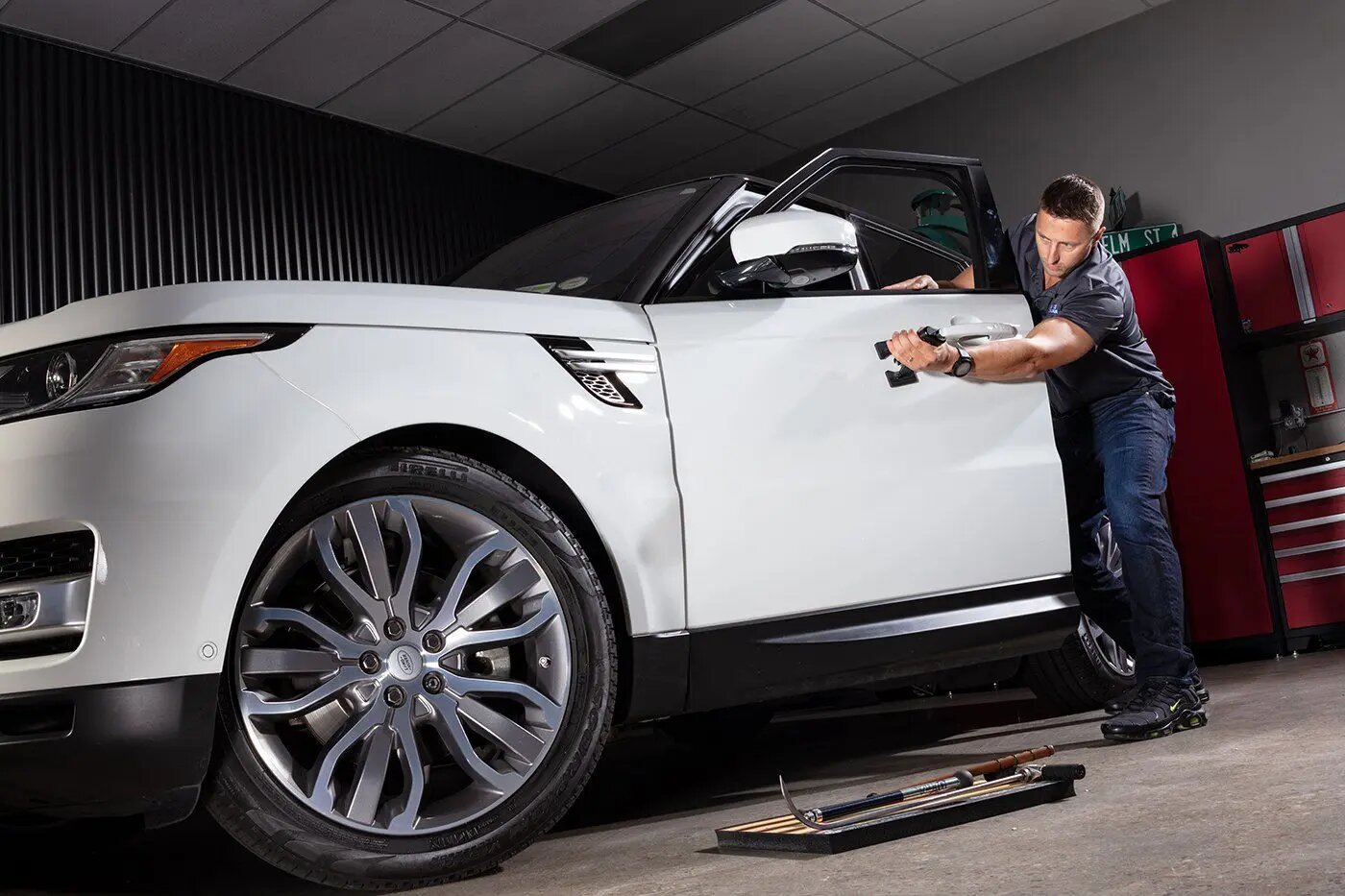
After a North Texas storm, the two things every hail repair operation leads with are price and the deductible. Both are easy to say and neither tells you much. On an insurance-approved hail claim, the carrier's estimate largely sets what the work is worth, which means the number a shop quotes is a weaker signal than most people assume — and a deductible offer is a marketing decision, not a measure of workmanship.
What actually separates two shops is how they read the damage, what happens to your car for the days it is in their building, who is accountable when something is wrong six months later, and whether they are still going to exist then. Those are all things you can check before you hand over the keys.
Start with the one question that filters hardest
Ask where the vehicle will physically be repaired, and ask to see that place.
A fixed shop with controlled lighting, a lift, and somewhere secure to park overnight is a different proposition from a tent, a rented bay, or a trailer parked behind a shopping centre for storm season. Both can produce good work in the moment. Only one is reachable next spring when a panel needs a second look. Our guide on how storm-chasing operations work covers the pattern in detail; the short version is that permanence is the single most predictive thing you can verify.
While you are there, look at how panels are read. Hail work lives or dies on lighting. A shop that reads panels under LED line boards indoors will find dents that a parking-lot walk-around simply cannot see, because a shallow impact only reveals itself as a bend in a straight reflected line. At our Plano facility every vehicle is read that way before a number is given, which is also why our counts sometimes come in higher than an outdoor estimate.
The comparison that matters
| Area | What good looks like | What to be wary of |
|---|---|---|
| Premises | A permanent address you can visit, indoors, secure overnight | A tent, a borrowed lot, or an address that is only a phone number |
| Inspection | Vehicle read indoors under reflection lighting, panel by panel | A five-minute outdoor walk-around, or a number given sight unseen |
| Method honesty | Says clearly which panels need refinish or replacement and why | Claims paintless repair fixes everything, on every panel |
| Warranty | A written document you can read before you commit | A verbal "lifetime guarantee" with nothing on paper |
| Quality control | A named sign-off on the file before delivery | No record of who checked the car or what they checked |
| Communication | Live updates while the car is in the shop | You chase them for status and get vague answers |
| Claim handling | Helps you document damage and meets the adjuster with you | Offers to "handle the whole claim" so you never speak to your insurer |
| Paperwork | Estimate, supplement documentation and invoice all provided | Pressure to sign a blank authorization or assignment on the spot |
Price is the easiest thing for a shop to change and the hardest thing for you to verify. Premises, lighting, records and a written warranty are the opposite.
Why the deductible offer is not a discount
"We'll cover your deductible" is the most common closing line in hail season, and it deserves a clear-eyed reading. The deductible is your share of the claim. When a shop absorbs it, that money comes from somewhere — usually from the same estimate the carrier approved. It is a sales concession, and the relevant question is what got traded for it: fewer dents counted, faster passes over the panels, less R&I labor, or a warranty that turns out to be verbal.
It is not automatically a red flag. DentPicks waives the deductible up to $1,000 on many approved hail claims, and we say so plainly. What matters is whether that offer sits alongside the other things on the list — a permanent shop, indoor lighting, a written warranty, a QC sign-off — or whether it is the only reason to choose the shop. If the deductible is the entire pitch, it is standing in for everything the shop cannot demonstrate. Our deductible guide explains how it works within a Texas claim.
Ask about the claim process specifically
Hail repair is mostly an insurance workflow, and shops differ more here than anywhere else.
- Who files? You do. The policy is yours and the claim is yours. A good shop helps and walks alongside you — photographs, adjuster meetings, supplement documentation, paperwork — but a shop that wants to file for you is taking control of something that should stay with you.
- How are supplements handled? Hidden damage found during teardown is normal on hail work. Ask how they document it and how often supplements get approved. See how supplements work.
- Do I choose the shop? In Texas you generally do, regardless of a carrier's preferred network. Read choosing your own hail repair shop.
- What if the vehicle totals? A shop should tell you early if the numbers are heading that way rather than discovering it after teardown.
Coverage depends on the language of your policy, and your insurer or a licensed agent can confirm your specific coverage. The Texas Department of Insurance also publishes consumer guidance on auto claims and post-storm repair, which is worth reading before you sign anything.
Logistics: the part people forget until it matters
A full-vehicle hail repair typically takes about 5–10 business days in the shop — a normal range, not a guarantee, and it stretches when a supplement is pending or parts are involved. That is a week or more without your car, so how the shop handles the gap is a real part of the comparison.
Across DFW we offer complimentary pickup and a loaner on insurance-approved hail claims, so a car in Dallas, Fort Worth or Frisco does not have to be driven to Plano twice. Austin works differently: there is no shop there, so it is trailer pickup and delivery, with any rental going through the customer's own rental coverage. Ask any shop the same questions — do they collect, is there a loaner, and does that change if the claim is not approved?
Also ask what happens at delivery. Every vehicle we return gets a mini exterior detail, and we prefer daylight handovers so you can look at the panels properly before you leave.
Questions to bring to both shops
- Where exactly will my car be repaired, and can I see the building?
- How do you read the panels, and under what lighting?
- Which panels do you expect to need refinish or replacement, and why?
- Can I read the warranty document before I commit? Is it transferable?
- Who signs off the car before delivery, and can I see that record?
- How will I hear about progress while it is here?
- How do you handle a supplement if you find more damage during teardown?
- What is your realistic timeline, and what would extend it?
- Is there pickup and a loaner, and on what conditions?
- If I am not happy at delivery, what is the process?
Ask both shops the same ten questions in the same order. The differences will be obvious, and they will not be about price.
Common mistakes
- Deciding in the driveway. Storm-season door knocks are designed for on-the-spot signatures. Nothing about hail damage requires a decision that day.
- Signing an authorization you have not read. Understand what you are assigning before you sign.
- Comparing a parking-lot estimate to an indoor one. They are not measuring the same damage.
- Ignoring the warranty wording. Length matters less than whether it is written down and whether it survives a sale.
- Assuming the fastest quote is the best-informed one. Speed of quoting is not speed of repair.
What to do next
Shortlist two shops, visit both, ask the ten questions, and read both warranty documents. Weigh premises, lighting, records and communication above price — on an approved claim, the price gap between two legitimate shops is usually small anyway.
At DentPicks we inspect free of charge at the Plano shop, quote verbally from a panel-by-panel read in about 30 minutes, and back repairs with a written lifetime warranty for as long as you own the vehicle — not transferable. You can see finished work in our gallery or read how our hail repair process runs from inspection through QC sign-off to delivery.
Frequently asked questions
If both shops work from the same insurance estimate, does price matter at all?
Less than most people expect on an approved hail claim, because the carrier's estimate largely sets the value of the work. Price becomes meaningful on out-of-pocket repairs. On a claim, spend your attention on scope, lighting, warranty and records instead.
Is a shop that waives my deductible doing something wrong?
Not by itself. We waive the deductible up to $1,000 on many approved hail claims and say so plainly. The concern is when the deductible is the entire pitch, standing in for a permanent address, a written warranty and a documented quality-control process.
Does my insurer get to pick the repair shop?
In Texas you generally choose where your vehicle is repaired, even when a carrier suggests a preferred network. Coverage and process depend on the language of your policy, and your insurer or a licensed agent can confirm your specific terms.
How long should a full-vehicle hail repair take?
About 5 to 10 business days in the shop is a typical range, not a guarantee. A pending supplement, parts availability, or a panel that turns out to need refinishing all extend it. Be sceptical of anyone promising a full hail repair in a day or two.
What should I ask about the warranty specifically?
Whether it is written, what it covers, how long it lasts and whether it survives a sale. Ours is a written lifetime warranty valid for as long as you own the vehicle, and it is not transferable. A verbal guarantee with no document is worth exactly what it is written on.
Do both shops have to offer pickup and a loaner?
No, and it varies. We offer complimentary pickup and a loaner across DFW on insurance-approved hail claims. Austin is trailer pickup and delivery only, with any rental going through the customer's own rental coverage. Ask each shop what applies if the claim is not approved.
Should I let a shop handle the whole insurance claim for me?
The claim is yours and should stay with you. A good shop helps and walks alongside you — documenting damage, meeting the adjuster, preparing supplement paperwork — but you file and you stay in the conversation with your insurer.
Sources and methodology
- After hail or windstorms: consumer tips — Texas Department of Insurance.
- Automobile insurance guide — Texas Department of Insurance.
Repair, cost and timing statements that are not tied to a listed source come from DentPicks' own quoting and repair history at the Plano, TX shop. They are typical ranges and shop-floor observations, not industry statistics or promises — your vehicle, its condition, your policy language and your insurer determine your specific outcome.
Bring us your other quote
Come see the Plano bays, watch how the panels are read under PDR lighting, and read our warranty document before you decide anything. Inspections are free either way.