
The short answer
Bring the vehicle reasonably clean, your claim number if you have filed, your insurance card or policy number, any estimate already written on the car, and all key fobs plus the wheel lock key. Know the storm date, where the car was parked, whether it is leased or financed, and whether the panels have had prior bodywork. Inspections are free and nothing is authorized on the day.
 Written by the DentPicks Editorial Team
Technically reviewed by Vytas Kucinskas, Founder & Master PDR Technician
Written by the DentPicks Editorial Team
Technically reviewed by Vytas Kucinskas, Founder & Master PDR Technician
Published: Aug 19, 2026 · Last reviewed: Aug 19, 2026 · 9 min read
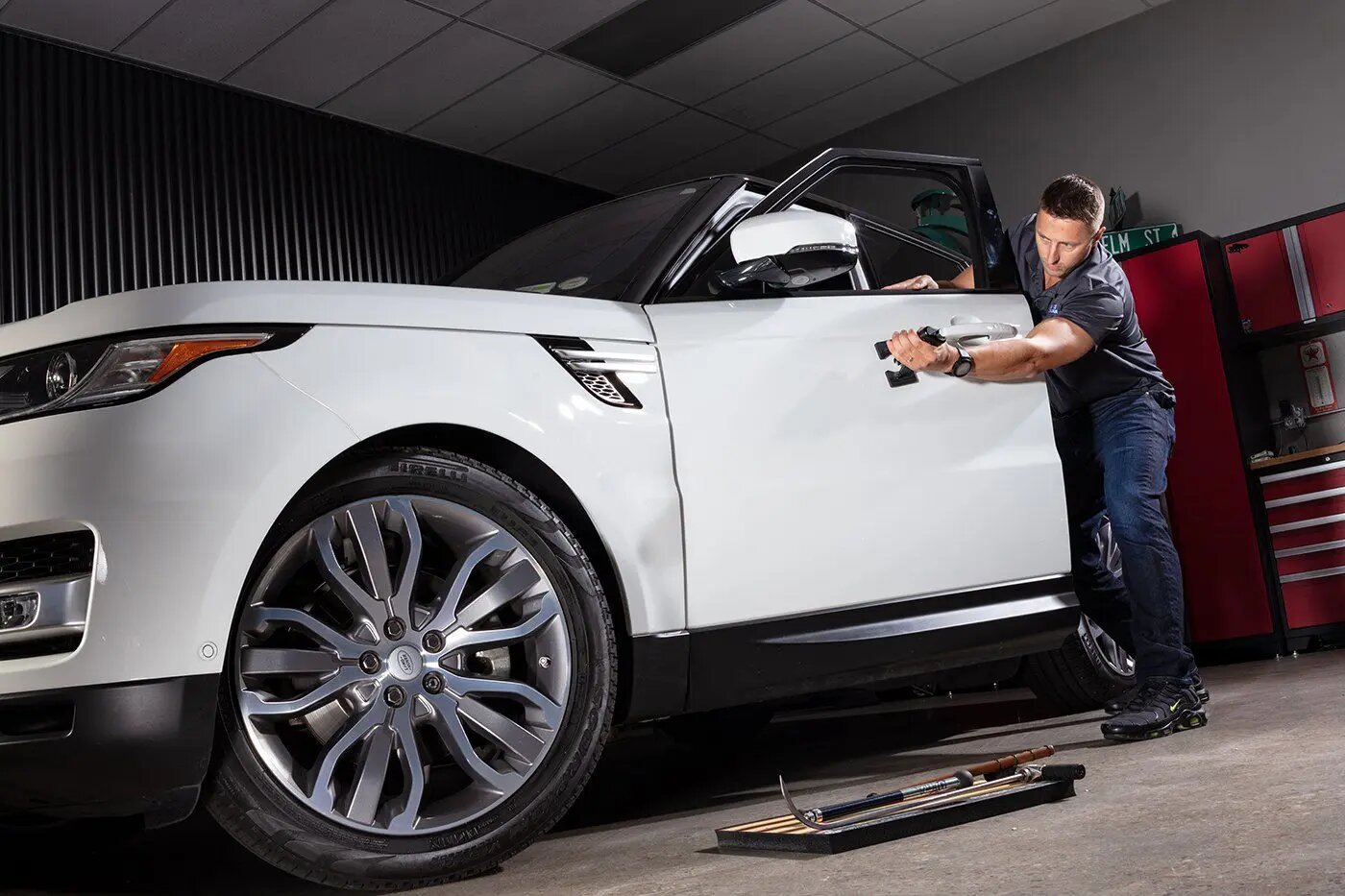
A hail inspection is a short appointment, and almost all of the frustration in it comes from missing information rather than from the damage itself. A customer who arrives with a claim number, a storm date and both key fobs walks out thirty minutes later knowing what the repair involves. A customer who arrives with none of those gets a look at the panels and a promise to talk later.
The list below is short on purpose. Nothing here is bureaucratic box-ticking — each item exists because it changes something we can tell you on the day.
The five things that actually matter
- The vehicle, reasonably clean. Dust and road film scatter reflected light and hide shallow dents. A basic wash the day before makes the panels readable. Skip it if paint is chipped or cracked in the dents — pressure washing broken paint edges lifts more coating.
- Your claim number, if you have already filed. This is the single most useful thing you can bring. With it we can talk to the right file, see what has been written, and tell you whether a supplement is likely.
- Your insurance card or policy number. Needed if you have not filed yet, and useful for confirming whether you carry rental reimbursement.
- Any estimate already written on the vehicle. A catastrophe-unit estimate, a drive-through appraisal, a photo estimate from an app — printed or on your phone, it does not matter. Comparing it against what the panels actually show under shop lighting is the most valuable half hour of the whole process.
- All key fobs and the wheel lock key. Two fobs, not one. If your wheels have locking lugs, the key lives in the glovebox or the trunk well — check that it is there.
The information worth having in your head
None of this needs paperwork, but each answer changes the conversation:
- The storm date. Or the closest you can get. Claims are tied to events, and Texas has deadlines — our guide on how long you have to file a hail claim in Texas covers them.
- Where the car was parked when it was hit. Uncovered driveway, office lot, under a tree, partially covered. It explains uneven damage patterns and it is a question adjusters ask.
- Owned, financed or leased. A lease changes what "acceptable" means at the end of the term. If you are near a turn-in date, say so — our lease return dent repair guide explains why.
- Any previous bodywork, repaint or dent repair. Prior repairs affect what paintless dent repair can do on that panel. Filler, thin paint or a previous pull all change the answer, and finding out mid-repair is worse than knowing on day one.
- Whether this is a second hail event. Overlapping storms are common in North Texas and they need to be separated before an estimate means anything.
What happens during the inspection
The inspection is free and carries no obligation. It runs in a controlled-lighting bay rather than in the parking lot, because that is the only way to count hail accurately. Under LED line boards, the reflection of a straight bright line across a panel bends at every dent — dents that are genuinely invisible in daylight show up immediately. This is the reason shop counts and outdoor counts differ so often, and why the difference usually runs in the customer's favor.
A technician reads the vehicle panel by panel: roof, hood, deck lid, quarters, doors, and the pillars and roof rails that outdoor estimates most often skip. Alongside the count, three things get assessed that a dent tally alone cannot capture — whether the paint is intact over each dent, whether any dent is sharp or creased enough to be beyond paintless dent repair, and whether panel access allows a tool behind the metal at all. Roofs with fixed glass, doors with intrusion beams and quarters with limited access all change the method.
Repairability depends on paint condition, metal stretch, panel access and prior repairs, so the honest outcome of some inspections is that a panel needs replacement and refinishing rather than PDR. We say that when it is true. The goal is what is best for the vehicle, not what is fastest for us. Our comparison of paintless dent repair versus a traditional body shop explains where each one wins.
What you get before you leave
| You will leave knowing | Why it matters |
|---|---|
| Whether the damage is worth a claim at all | Light damage below or near your deductible may not be |
| Whether PDR handles it, or panels need replacement | Changes cost, timeline and whether anything is reportable |
| A verbal quote, usually in about 30 minutes | Enough to decide, without waiting days for paperwork |
| How your existing estimate compares | Tells you whether a supplement is likely |
| A realistic repair window | Full-vehicle hail repair typically runs about 5–10 business days in the shop |
Quotes are usually verbal, given from the panels or from photographs in about 30 minutes. If you would rather not drive to Plano first, photographs are a legitimate starting point — clear shots of each panel from a low angle with a reflection visible let us give a useful range before anyone commits to an appointment.
What you do not need to bring
- Your adjuster. The inspection is independent of the carrier's. If a re-inspection is needed later, that gets scheduled separately — see how the adjuster inspection works.
- A decision. Nothing is authorized at an inspection. Plenty of people look, take the number home and file a week later.
- Payment. Inspections are free.
- A cleaned-out car, unless you are leaving it that day. Then clear the trunk, the rear parcel shelf and the roof — roof access sometimes needs the headliner dropped.
Common mistakes people make on the day
- Arriving with a freshly waxed car. Heavy wax and ceramic coatings can soften reflection lines slightly. Clean is the goal, not glossy.
- Leaving the estimate at home. Without it, we can only tell you what we see, not what is missing from what the carrier already wrote.
- Guessing the storm date wildly. "Sometime in spring" is not enough when two storms crossed the same suburb three weeks apart.
- Not mentioning old bodywork. It always surfaces during the repair, and it surfaces at a worse moment.
- Bringing only one key fob when leaving the car. Modern vehicles need a fob on site for the whole repair.
- Booking during a downpour. The inspection is indoors, but loading and unloading a wet vehicle wastes everyone's time. Reschedule.
When to book it relative to the storm
Sooner is better, but not for the reason most people assume. The urgency is not that dents get worse — a dent with intact paint is stable and can be repaired months later. The urgency is documentation. The longer you wait, the harder it becomes to separate storm damage from everything the road adds afterwards, and the more likely a second North Texas storm crosses the same suburb and muddies which damage belongs to which date.
There is a scheduling reason too. After a significant DFW hail event, every shop in the region is working through the same wave at the same time, and so are the carriers' desks and the part suppliers. Getting inspected and into the queue early is worth more than getting inspected at a convenient moment three weeks later. Our DFW hail season guide covers when those waves typically arrive.
The exception is a vehicle with cracked glass, broken lamps or a wet interior. Those are safety and water-intrusion problems rather than cosmetic ones, and they should not wait for a convenient appointment slot. Mention them when you book so the right people are available on the day.
Getting to the Plano shop, or not having to
The shop is in Plano and serves the whole Metroplex. On insurance-approved hail claims we arrange complimentary pickup and delivery across DFW, so Frisco, McKinney, Allen, Dallas, Irving, Garland, Arlington and Fort Worth customers can skip the drive entirely once the claim is moving. Austin-area vehicles come to Plano by trailer pickup and delivery; there is no shop in Austin.
What to do next
Take a set of photographs before you book — each panel from a low angle, with a straight edge or a doorway reflecting across the surface. Send those in, get a verbal range, and bring the claim number and any existing estimate to the appointment. That sequence turns a hail inspection into a thirty-minute conversation with real numbers instead of a look and a shrug.
Inspections at DentPicks are free and carry no obligation. On many approved hail claims we waive the deductible up to $1,000, repairs carry a written lifetime warranty for as long as you own the vehicle, and the quality control sign-off at the end is recorded in your customer portal by whoever runs quality control. See how the hail repair process runs from inspection to delivery.
Frequently asked questions
Do I need to file a claim before the inspection?
No. Plenty of people get inspected first to find out whether a claim is worth filing at all. If the damage is light relative to your deductible, that is useful to know before you open a file. You file the claim when you decide to; we walk alongside you through it.
How long does a hail inspection take?
Usually about 30 minutes for a full-vehicle read under LED line boards, including a verbal quote. Heavily damaged vehicles or ones with prior bodywork on several panels take longer, because each affected panel has to be assessed individually.
Should I wash the car before bringing it in?
A basic wash helps, because dust and road film scatter reflected light and hide shallow dents. Skip it if paint is chipped or cracked in the dents, and skip heavy wax or a fresh ceramic top-up, which can soften the reflection lines slightly.
Does the inspection cost anything or commit me to a repair?
No to both. Inspections are free and carry no obligation. Nothing is authorized on the day, and many customers take the number home and decide later, or use it to see whether their existing estimate missed panels.
Can I get a quote from photos instead of driving to Plano?
Yes. Quotes are usually verbal and can be given from photographs in about 30 minutes. Shoot each panel from a low angle with a straight reflection visible across the surface — a doorway, a garage edge or a line of overhead light works.
What if my car has had bodywork on a panel before?
Tell us at the inspection rather than letting it surface mid-repair. Filler, thin paint or a previous pull all affect what paintless dent repair can do on that panel. Repairability depends on paint condition, metal stretch, panel access and prior repairs.
Do I need to bring my adjuster or wait for their inspection first?
No. Our inspection is independent of the carrier's and often happens first. If the carrier later wants a physical re-inspection, that gets scheduled separately and we can be present for it.
Sources and methodology
- After hail or windstorms: consumer tips — Texas Department of Insurance.
Repair, cost and timing statements that are not tied to a listed source come from DentPicks' own quoting and repair history at the Plano, TX shop. They are typical ranges and shop-floor observations, not industry statistics or promises — your vehicle, its condition, your policy language and your insurer determine your specific outcome.
Book a free hail inspection in Plano
Bring the claim number and any estimate you already have. We read the panels under PDR lighting and give you a verbal quote in about 30 minutes, with no obligation either way.