The short answer
It covers every repaired panel under reflection lighting, read both close up and from several steps back, looking for residual lows, high spots, tool rings, glue residue, cracked paint and distorted body lines. It also covers the reassembly: clips, trim, seals, headliner, lamps and electrics, plus a test drive for new noises. The sign-off should be by someone other than the technician who did the work, and it should be recorded.
 Written by the DentPicks Editorial Team
Technically reviewed by Vytas Kucinskas, Founder & Master PDR Technician
Written by the DentPicks Editorial Team
Technically reviewed by Vytas Kucinskas, Founder & Master PDR Technician
Published: Aug 19, 2026 · Last reviewed: Aug 19, 2026 · 9 min read
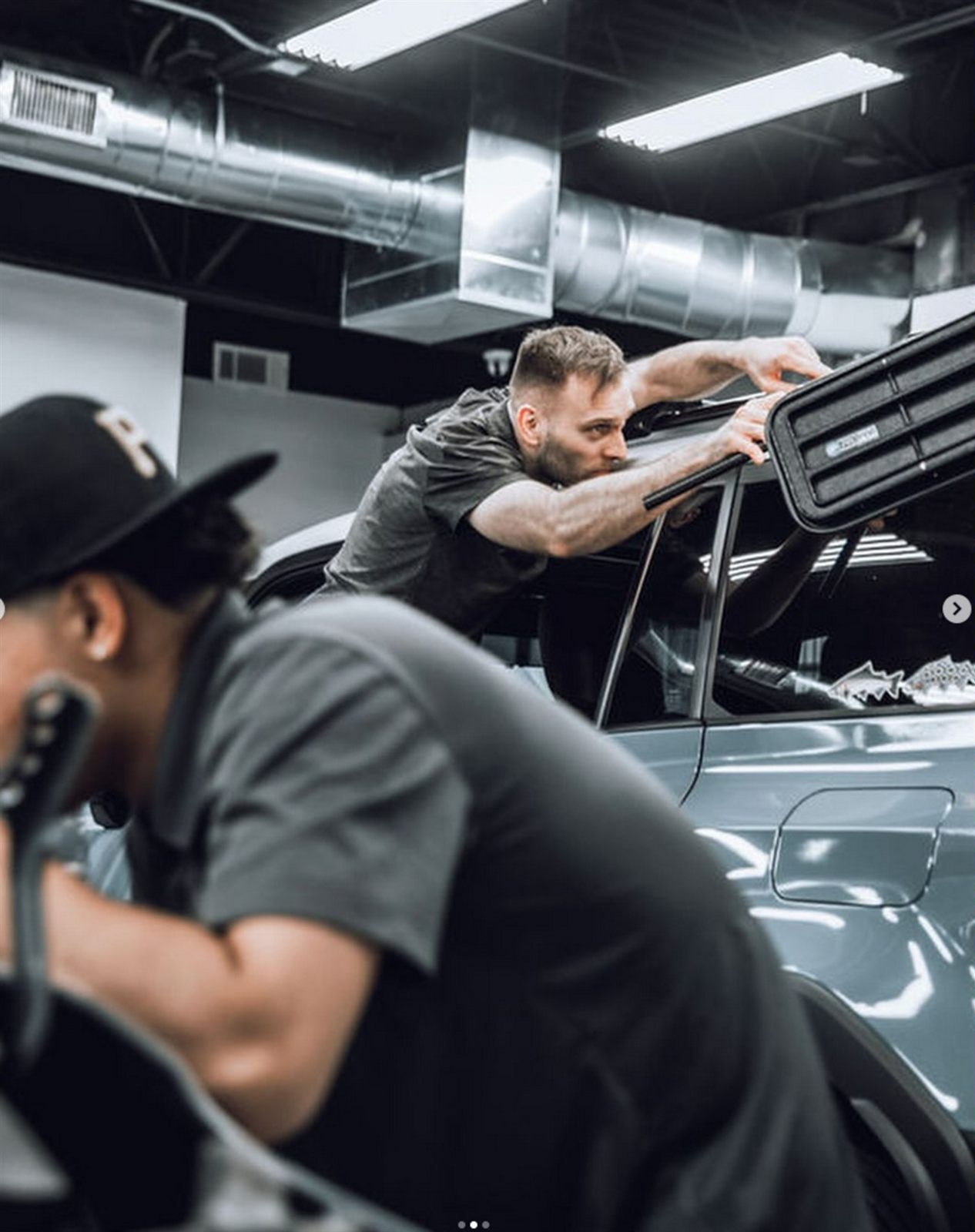
In collision repair, quality control usually means checking a finish that has already covered everything underneath it. Paintless dent repair has no such cover. There is no filler smoothing the metal and no fresh clear coat leveling the surface, so whatever the technician left behind is what you will see in the reflection of a parking-lot light for the rest of the car's life.
That makes the inspection at the end of a PDR job more consequential than most people realize — and it makes "we looked it over" an inadequate description of it.
Why PDR quality control is a lighting problem
A dent is not visible because of shadow. It is visible because of distortion: a straight line reflected off a curved panel bends where the metal is out of shape. That is the whole basis of the craft, and it is why work is read under a line board or an LED bar rather than daylight. Overhead shop fluorescents scatter light in every direction and hide exactly the shallow defects you are trying to find.
The consequence matters to customers: a repair that looks perfect outdoors at noon may show clearly under a straight reflection, and a repair that reads clean under a line board will read clean everywhere. So a genuine QC check happens under the harder light, not the flattering one. Our explainer on how paintless dent repair works covers the reading side of the technique in more detail.
What the inspection actually covers, panel by panel
Real quality control is not one look at the car. It is a pass across each repaired panel, moving the light or moving the eye, checking for a specific list of defects:
- Residual low spots. The dent is mostly out but the center still sits below the surrounding metal.
- High spots and crowns. Over-pushing leaves a raised area that reads as a bright bulge in the reflection. These are subtle and are the most common thing missed by a quick look.
- Tool marks and rings. A halo of small pushes around the repair, usually from working too aggressively with the wrong tip.
- Glue-pull residue and haze. Adhesive left in the texture, or a dulled patch where residue was removed carelessly.
- Cracked or crazed paint. Checked specifically at the dent center and along any body line, since that is where coating is stressed most.
- Body-line integrity. A character line that has been pushed off its original path is more obvious to the eye than a small dent and is much harder to correct afterwards.
- Metal stretch. Where a dent was deep or sharp, the panel may not return fully flat. Repairability depends on paint condition, metal stretch, panel access and prior repairs — see our guide on deep creases and large dents for where the limits sit.
- Backside evidence. On panels where access required tool contact behind the skin, the reverse side gets checked for marks, disturbed sound deadening or damaged brace adhesive.
The reassembly half of the check
Hail repair, especially on roofs and quarter panels, often requires removing trim, moldings, headliners, lamps or interior panels to get tool access. Half of what goes wrong on a hail job goes wrong here rather than in the metalwork, and it is the part customers notice first.
- Every removed clip accounted for. Broken clips get replaced, not reused with hope.
- Headliner sits flat with no sag, no fingerprints and no crushed edge at the pillars.
- Trim and moldings flush along their full length, with even gaps against glass and panels.
- Seals seated properly — a weatherstrip that was lifted for access and not reseated is a future water leak, and water costs more than dents.
- Lamps and sunroof reinstalled and functional, including that the sunroof still tracks and closes without a new noise.
- Interior electrics tested where a panel came off: dome lights, grab handles, sun visors, sensors, anything unplugged.
- Nothing left in the car. No rods, no tape, no shop towel under a seat.
A test drive at the end catches the rest: new rattles, wind noise at highway speed, or a warning message that appeared after trim came off.
Light sources and what each one reveals
| Light | What it shows | What it hides |
|---|---|---|
| PDR line board or LED bar | Lows, highs, tool rings, body-line distortion | Very little — this is the honest light |
| Direct sunlight | Larger defects, paint cracks | Shallow lows and subtle crowns |
| Overcast daylight | Almost nothing subtle | Most shallow hail work |
| Overhead shop fluorescents | Obvious damage only | The defects QC exists to catch |
| Reflection of a building edge or pole | A useful field check anyone can do | Depends on the surface angle you find |
Who signs it off — and why that matters
The most important structural feature of a QC process is that it is somebody else's job. A technician who has spent six hours on a roof has an eye trained to the work and a natural blind spot for it. An inspection performed by the same person who did the repair is a second look, not quality control.
At DentPicks the finished repair is signed off by whoever runs quality control, and that sign-off is recorded in your customer portal along with live updates while the car is with us. Panels are read under reflection lighting in the bay, one at a time, before the vehicle is released for delivery. If something needs to go back for another pass, it goes back before you are called — which is one of the reasons full-vehicle hail repair typically runs about 5–10 business days in the shop rather than two.
The written lifetime warranty backs it for as long as you own the vehicle. It is not transferable, and it exists precisely because the honest measure of PDR quality is not how a panel looks at delivery but how it looks a year later under a straight reflection.
Your own five-minute check at delivery
You do not need PDR training to do a useful inspection. You need a reflection and a bit of patience.
- Find a straight line. A building edge, a light pole, a garage door frame. Position yourself so it reflects across the panel.
- Move your head, not just your eyes. Distortions appear and disappear with angle. A static stare hides them.
- Run a flat hand across the repair. Fingertips exaggerate texture; a flat palm reads shape.
- Check body lines along their length, crouching to sight down them like a rifle barrel.
- Look at the trim, seals and headliner, not just the metal.
- Ask what was found and what was done. A shop with a real QC process can tell you which panels went back for a second pass.
Anything you are unsure about is worth raising in the lot rather than in a phone call next week. Our guide on PDR appointment preparation and aftercare covers what to expect in the first days after the car comes home.
Red flags in a shop's quality control
- Delivery in the dark or in a hurry. If you cannot see the car in useful light, come back when you can.
- Nobody can name who inspected it.
- The only inspection was by the technician who did the work.
- "That will settle out." Metal does not settle out. A high spot is a high spot.
- No record of what was repaired — panel counts and photographs should exist, especially on an insurance claim.
- Reluctance to let you inspect under the shop's own lighting. That lighting exists for exactly this purpose.
- A dirty car at delivery. Dust and film hide reflections. Our vehicles go back with a mini exterior detail so the panels can actually be read.
What to do next
Before you choose a shop, ask two questions: who performs the final inspection, and can I see it documented? The answers tell you more about the finished result than any estimate comparison will.
If you want to see the standard we hold work to, look at finished repairs in our gallery, or read how the process runs end to end in dent repair at our Plano shop and hail repair. You are also welcome to bring a vehicle another shop repaired and have it read under our lighting — that is a free look, whatever you decide afterwards.
Frequently asked questions
Why can't a repair be inspected outside in daylight?
Sunlight and overcast sky scatter light in all directions, which hides shallow lows and subtle crowns — exactly the defects the check exists to catch. A dent is visible because it distorts a straight reflection, so the honest light is a line board or LED bar, not the sky.
What is a high spot, and why does it matter?
It is metal pushed slightly past flat, leaving a raised area that reads as a bright bulge in a reflection. High spots are the most common defect missed by a quick look, and they do not settle out on their own — they are corrected by tapping down, not by waiting.
Should the technician who did the repair be the one to inspect it?
No. After hours on the same panel, an experienced eye develops a blind spot for its own work. An inspection by the same person is a second look, not quality control. At DentPicks the finished repair is signed off by whoever runs quality control, and the sign-off is visible in your customer portal.
How do I check a PDR repair myself?
Find a straight reflection — a building edge, a light pole, a garage door frame — position it across the panel, and move your head rather than just your eyes. Then run a flat palm over the area and sight down the body lines. Do it in the lot, not next week.
Does quality control include the trim and interior?
It should. Hail work on roofs and quarters often requires removing moldings, headliners, lamps and interior panels, and much of what goes wrong on a hail job goes wrong at reassembly. Clips, flush trim, reseated weatherstrips and working interior electrics are all part of the check.
What if I spot something after I get home?
Bring it back. A repair backed by our written lifetime warranty — for as long as you own the vehicle, and not transferable — is meant to be looked at again. Panels get re-read under the same lighting, and anything that needs another pass gets one.
Why does hail repair take 5–10 business days if PDR is fast?
A full-vehicle hail job is dozens of dents per panel plus disassembly, and panels that fail the final read go back for another pass before anyone calls you. That is a typical range rather than a guarantee, and supplements found under indoor lighting can extend it.
Sources and methodology
Repair, cost and timing statements that are not tied to a listed source come from DentPicks' own quoting and repair history at the Plano, TX shop. They are typical ranges and shop-floor observations, not industry statistics or promises — your vehicle, its condition, your policy language and your insurer determine your specific outcome.
Have a finished repair read under proper lighting
Bring the car — ours or another shop's — and we will read the panels under reflection lighting and tell you plainly what we see. There is no charge for the look.