

The short answer
A claim can, the repair usually does not. Paintless dent repair creates no vehicle-history record because no parts, paint or title event are involved. The insurance claim is a separate data trail: it is routinely visible to carriers through loss-history reporting and may appear on a buyer-facing report. An adjuster-required panel replacement can be reported, and a hail total loss produces a permanent title brand.
 Written by the DentPicks Editorial Team
Technically reviewed by Vytas Kucinskas, Founder & Master PDR Technician
Written by the DentPicks Editorial Team
Technically reviewed by Vytas Kucinskas, Founder & Master PDR Technician
Published: Aug 19, 2026 · Last reviewed: Aug 19, 2026 · 9 min read
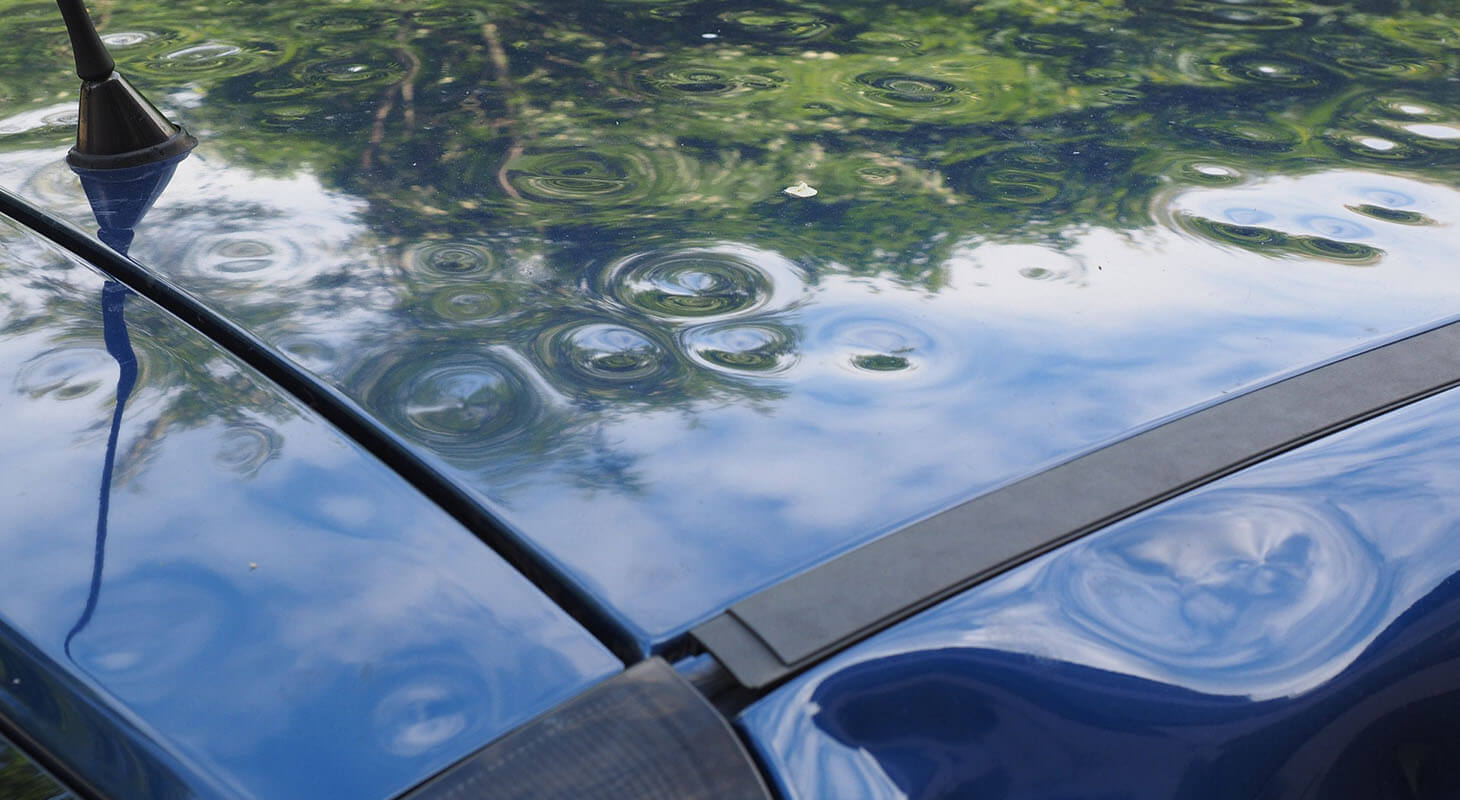
This question comes up in the driveway, usually with a phone in one hand and an insurance app open on it. The storm rolled through, the hood is dimpled, and before filing anything you want to know whether the claim will follow the car forever.
The answer requires separating two things that people routinely blur together. There is a repair record, and there is a claim record, and they live in different systems, are fed by different organizations and are read by different audiences. A hail claim can create the second without creating the first.
Two different databases, two different readers
When someone says "will it show on Carfax," they are usually thinking of one report. In practice there are two families of record that matter after a storm.
| Vehicle history reports | Insurance claim history | |
|---|---|---|
| Examples | Carfax, AutoCheck and similar services | Loss-history reports such as C.L.U.E., compiled from carrier data |
| Who reads it | Buyers, dealers, appraisers | Insurance carriers, when quoting or underwriting |
| Typical contents | Title records, registration events, reported service and repair entries, auction records, title brands | Claims filed, dates, loss types and amounts paid, generally over a multi-year window |
| Where hail lands | Sometimes — depends on what the carrier and any participating facility report | Routinely — a filed claim is the exact event these reports exist to record |
So the accurate short answer is: a hail claim is very likely to be visible to insurers, and may or may not appear on a report a buyer pulls. Neither outcome is under a repair shop's control, and any shop promising to keep a claim off a report is promising something outside its authority.
What paintless dent repair does and does not generate
Paintless dent repair on its own creates no collision or repair record. The metal is worked back to shape from behind the panel — no parts ordered, no panel removed, no paint mixed or sprayed. There is no reporting mechanism attached to a technician massaging a panel on a Tuesday afternoon, and nothing about it is a title event.
Two things can still appear, and they are separate from each other:
- The insurance claim itself. Filing generates claim data on the carrier's side regardless of how the vehicle was ultimately repaired. This is why a car can show a comprehensive claim while every panel on it retains factory paint.
- An adjuster-required panel replacement. Sometimes an adjuster determines a panel must be replaced and refinished rather than repaired — badly stretched metal, damage on a panel edge, or failed paint. That is a parts-and-paint repair, and it can be reported.
There is a third case worth naming because it is the most permanent of all. If storm damage exceeds the threshold where the insurer decides repair is uneconomic, the vehicle can be declared a total loss, and the resulting salvage or branded title is a state record that follows the VIN for life. Our guide on hail damage and total loss in Texas covers how that call gets made.
What a hail entry actually says
Sellers often imagine a scarlet letter. In practice, when a comprehensive hail loss does appear on a buyer-facing report, it typically reads as a weather or comprehensive event on a date, sometimes with a general damage description. It is not a collision, it is not an accident, and it does not report a frame or airbag event.
Most experienced buyers understand this. In North Texas, hail is not an exotic misfortune — it is a normal seasonal fact, and a large share of the used inventory on any DFW lot has seen a storm. Our DFW hail season guide puts the pattern in context. A documented, properly repaired hail claim is a far easier conversation than visible dimples across a hood, which need no report at all to cost you money.
Does a hail claim raise your rates?
The honest answer is no and yes. A Texas comprehensive hail claim is not itself a surcharge item the way an at-fault collision is — it is weather, not driving behavior. But insurance pricing algorithms factor in collision claims, tickets, violations and overall repair costs across a book of business, and premiums in hail-prone regions rise for people who never file at all. Attributing a renewal increase to one comprehensive claim is usually more confident than the evidence supports.
Coverage depends on the language of your policy, and your insurer or licensed agent can confirm your specific coverage and how a comprehensive claim is treated. The Texas Department of Insurance publishes consumer guidance on how auto coverage works and what to do after a hail or windstorm event, which is a better starting point than a forum post.
How to check what is on your own record
- Pull your own loss-history report. Insurance claim history is a consumer report under federal law, and you are entitled to request your file and dispute inaccurate entries. If you believe a claim is recorded wrongly, that is the channel to correct it.
- Buy a history report on your own VIN before you list the car. Knowing what a buyer will see is worth the price of one report, and it removes the possibility of being surprised mid-negotiation.
- Ask your carrier what was recorded. Claim number, date of loss, loss type and amount paid. Write them down while the file is fresh.
- Keep the itemized repair order. A panel-by-panel document showing which surfaces were repaired without paint is the single most useful piece of paper you can hand a buyer.
Deciding whether to file at all
For small damage, the arithmetic is simple. If the repair costs less than your deductible, filing accomplishes nothing except adding a claim to your history. Our own quoting ranges at the Plano shop run roughly $75–$200 for a typical door ding, $150–$450 for a mid-size dent, and $400 and up for large or complex panel work — our figures from our own quoting history, not published industry data. Against a $500 or $1,000 comprehensive deductible, small jobs are usually cash jobs.
Full-vehicle hail is different. Storm damage across a roof, hood, trunk and every horizontal surface is priced per panel by dent count, dent size and access, and it does not reduce to a single number. On many approved hail claims we waive the deductible up to $1,000, which changes the comparison considerably. Our guide on how the hail deductible works spells out the mechanics when the number sits near the line.
Common mistakes
- Leaving damage unrepaired to protect a clean report. The deduction on appraisal is usually larger than anything the record costs you, and cracked paint in a dent is a corrosion path on top of it.
- Believing a shop can suppress a claim entry. Nobody controls what a carrier reports. Treat that promise as a warning sign.
- Accepting panel replacement without asking whether paintless repair is possible. Sometimes replacement is genuinely correct — but it is the version most likely to be reported, so it deserves a conversation and, where appropriate, a supplement request through your adjuster.
- Filing without documenting. Photograph every panel before repair, note the storm date, and keep the estimate. Our guide on what to do after hail damage lists the photo set.
- Waiting through a second storm. Overlapping events make it harder to attribute damage to a date, and that ambiguity rarely works in your favor.
What to do next
Get a real repair number before deciding anything, because the record question only matters once you know what filing would buy you. Send photos and we will usually come back with a verbal range in about 30 minutes, with a written estimate after an in-person inspection under proper lighting.
You file the claim; we walk alongside you through it — photos, adjuster meetings, supplements and paperwork. Full-vehicle hail repair takes about 5–10 business days in the shop, a typical range rather than a guarantee, and every job is signed off by whoever runs quality control, visible in your customer portal. See how our hail repair process runs, or look at finished panels in the before and after gallery.
Frequently asked questions
Is a hail claim reported as an accident?
No. Hail is handled under the comprehensive part of a Texas auto policy and, where it appears, generally reads as a weather or comprehensive loss on a date. It is not a collision entry and does not report frame or airbag events.
Can a repair shop keep a hail claim off my record?
No, and any shop that promises it is promising something outside its control. What a carrier reports is the carrier's decision. A shop can only control the repair method, which is why keeping the work paintless matters more than any assurance about databases.
How do I see what claims are recorded against my vehicle?
Insurance loss history is a consumer report under federal law, so you can request your own file and dispute entries you believe are inaccurate. It is also worth buying a history report on your own VIN before you list the car, so nothing surprises you mid-negotiation.
Will a hail claim raise my premium?
No and yes. A Texas comprehensive hail claim is not surcharged the way an at-fault collision is, but pricing algorithms factor in collision claims, tickets, violations and overall repair costs, and premiums in hail-prone areas rise for people who never file. Your insurer or licensed agent can confirm your specific coverage.
Does a hail claim hurt resale value?
Less than most owners assume, and usually far less than visible unrepaired damage. A documented claim on a car with factory paint is an easy conversation. Hail dimples across a hood need no report at all to cost you money, because appraisers decondition visible damage at retail rates.
What if the adjuster wants a panel replaced instead of repaired?
Sometimes replacement genuinely is the right answer for the vehicle — stretched metal, edge damage or failed paint. It is also the version most likely to be reported, so ask whether paintless repair was considered and whether a supplement is appropriate before signing off.
Should I skip the claim to keep my record clean?
If the repair costs less than your deductible, paying cash makes sense on its own terms. For full-vehicle hail it rarely does — the repair cost is substantial, and on many approved hail claims the deductible is waived up to $1,000, which changes the comparison.
Sources and methodology
- Automobile insurance guide — Texas Department of Insurance.
- After hail or windstorms: consumer tips — Texas Department of Insurance.
Repair, cost and timing statements that are not tied to a listed source come from DentPicks' own quoting and repair history at the Plano, TX shop. They are typical ranges and shop-floor observations, not industry statistics or promises — your vehicle, its condition, your policy language and your insurer determine your specific outcome.
Deciding whether the claim is worth filing?
Get the repair number first. Send photos and we will usually give you a verbal range in about 30 minutes, then you can compare it against your deductible with real figures.