The short answer
A proper pre-return inspection reads every exterior panel under reflection lighting and records size, depth and paint condition per item, then covers glass, wheels and tires, lamps, trim, interior, warning lights and equipment such as both key fobs. It should end with an itemized list, each item marked repair or leave, with a cost attached and a schedule that clears your turn-in date. Book it two to three months out.
 Written by the DentPicks Editorial Team
Technically reviewed by Vytas Kucinskas, Founder & Master PDR Technician
Written by the DentPicks Editorial Team
Technically reviewed by Vytas Kucinskas, Founder & Master PDR Technician
Published: Aug 19, 2026 · Last reviewed: Aug 19, 2026 · 8 min read
A pre-lease-return inspection has one job: to find, before you are standing at the dealership, everything the turn-in inspector will find. It is not a valuation, it is not a detailing appointment, and it is not a sales visit. Done properly it produces a list of items, each one marked as worth repairing or worth leaving, with a cost attached.
The reason to have one at all is timing. Every option you have — repair, negotiate, dispute, or accept — needs runway. Discovered at handover, none of them are available.
When it should happen
Roughly two to three months before the turn-in date is the workable window. Earlier than that and ordinary parking-lot life undoes some of the work before you hand the car back. Later and you lose the ability to schedule anything that needs parts or paint.
A sensible sequence looks like this:
- Around 90 to 60 days out: full assessment, photographs, quotes on the questionable items.
- Around 60 days out: run your leasing company's own pre-return self-inspection if one is offered, and compare its list against yours.
- Around 45 to 30 days out: complete the repairs that clear the arithmetic. Keep every invoice.
- Final week: one daylight walk-around for anything new, plus a wash so the car can actually be inspected.
- Handover day: be present for the walk-around, with your invoices and photographs to hand.
What the inspection must actually cover
A real pre-return inspection goes well past dents, because so does the turn-in inspection. The exterior read is the part a PDR shop performs; the rest is a list you can work through yourself in an afternoon.
Exterior panels, under proper light
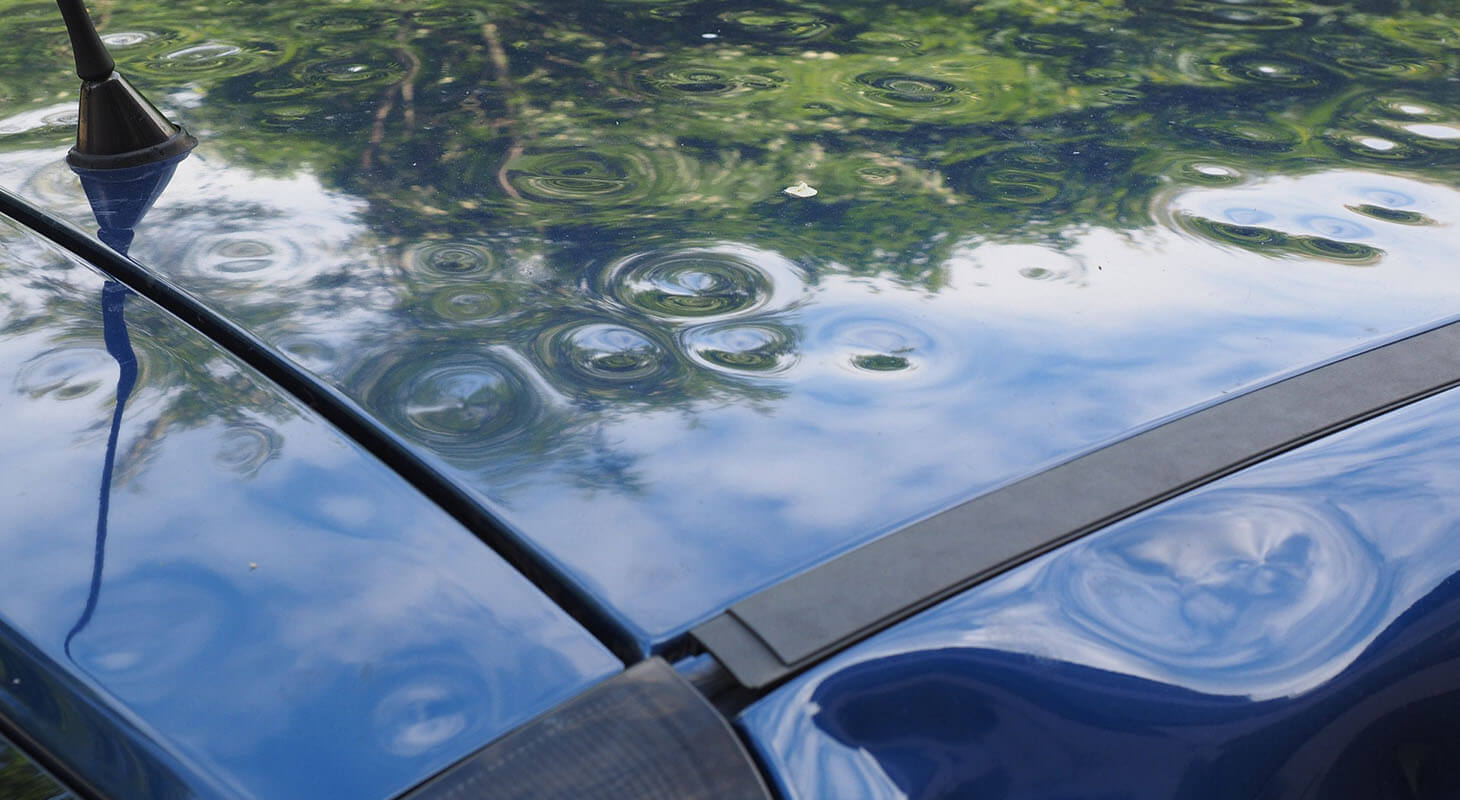
Every exterior surface gets read with a reflection running across it, not glanced at in flat light. Hail dents and shallow dings are close to invisible outdoors and obvious under a straight bright line. At the Plano shop that means LED line boards in a controlled-light bay — the same method used for hail work, because it is the only reliable way to see what is actually on a panel.
The read covers hood, roof, deck lid, doors, quarters, fenders, rocker panels, bumper covers, and the areas fast walk-arounds skip: roof rails, A-pillars, door edges, fuel door and the shoulder line where angled impacts land. Each item is recorded with size, depth, whether it sits on a body line or an edge, and whether the paint is intact.
Everything else that gets assessed at turn-in
- Glass. Windshield, rear glass, side windows and any sunroof, checked at an angle so chips do not hide. If a windshield needs replacing, ask whether your vehicle requires a forward-camera calibration afterward — many vehicles mount the driver-assistance camera behind the glass, and manufacturer procedures vary by model year and configuration.
- Wheels and tires. Curb rash on each wheel face and lip; tread depth against the standard in your agreement; matching tire sizes and types across axles.
- Lamps and lenses. Cracks, moisture inside a housing, and every bulb working.
- Trim, moldings and seals. Anything lifted, split or no longer flush.
- Interior. Burns, tears, stains, missing trim pieces, non-factory accessories or holes from a phone mount or dash camera.
- Electronics and warning lights. Start the car and read the dash; unresolved faults are noted at turn-in.
- Equipment. All key fobs, wheel lock key, cargo cover, floor mats, charge cable on an electrified vehicle, and the owner's literature.
- Maintenance records. Many agreements expect scheduled servicing to have been performed.
What you should leave with
| Deliverable | Why it matters |
|---|---|
| An itemized list, panel by panel | A lump figure cannot be compared, prioritized or disputed |
| Each item marked PDR, refinish or replace | Method drives cost, timeline and whether anything becomes reportable |
| A repair-or-leave recommendation per item | The whole point is spending only where it prevents a larger charge |
| Dated photographs of the vehicle as found | Your evidence if an assessment later lists damage you already fixed |
| A verbal quote, usually in about 30 minutes | Enough to decide without waiting days |
| A schedule that clears your turn-in date | Paint and parts need runway; paintless work usually does not |
Inspections at DentPicks are free and carry no obligation, and quotes are usually verbal, given from the panels or from photographs. Repairability depends on paint condition, metal stretch, panel access and prior repairs, so expect some items to come back as refinish or replace rather than paintless dent repair — we do what is best for the vehicle and say so plainly.
The judgement call on each item
Finding damage is the easy half. The useful half is deciding what to do about it, and that is arithmetic: what your lessor would likely assess against what the repair costs. Lease-end damage is normally assessed at retail body-shop rates — panel labor, refinishing materials and blending into adjacent panels — which is why a dent that can be pushed out rather than painted usually costs a fraction of the charge it prevents.
The broader lease return dent repair guide works through that comparison and the process around it. For what individual repairs typically cost, see our paintless dent repair cost guide.
What one shop can and cannot cover
Be realistic about scope. A PDR specialist reads panels, glass condition, trim and paint, and prices dent work accurately. Wheel refinishing, tire replacement, upholstery repair and mechanical faults are separate trades, and a shop that claims to handle all of them under one estimate is worth a second look. A useful pre-return inspection tells you which items belong elsewhere rather than quietly absorbing them into a number.
Common mistakes
- Inspecting in a garage or in shade. Flat light hides shallow damage. Daylight with a reflection across the panel, or proper shop lighting, is the minimum.
- Skipping the leasing company's own self-inspection. It is the closest thing to a preview of the turn-in standard applied to your car.
- Fixing everything. Restoring the car is not the goal; avoiding chargeable items is.
- Booking the inspection three weeks out. That eliminates every option except accepting what you are told.
- Attempting a DIY pull beforehand. Stretched metal or lifted paint moves an item into the more expensive column.
- Not photographing anything. Without dated photos and invoices, a repaired item and an unrepaired one look identical on a dispute form.
- Forgetting the second key fob. Missing equipment is a routine and entirely avoidable charge.
If the car has hail damage
Storm damage is a different conversation from parking-lot dings and should be separated out at the inspection. Hail is normally handled under the comprehensive portion of a Texas auto policy, and lease agreements typically require the vehicle to be insured, so the first question is a coverage question rather than a repair-versus-charge comparison. Coverage depends on the language of your policy, and your insurer or licensed agent can confirm your specific coverage. The Texas Department of Insurance publishes consumer tips for after hail or windstorms that are worth reading before you file.
What to do next
Pull up your lease agreement and find the wear-and-tear section. Walk the car in daylight, photograph every item you find, and note the turn-in date. Then book the inspection with enough runway that repairs are still a choice rather than a scramble.
At DentPicks in Plano, pre-return inspections are free, the panels are read under PDR lighting rather than in the lot, and you leave with an itemized list and a recommendation on each item. Finished work is signed off by whoever runs quality control — visible in your customer portal — and carries a written lifetime warranty for as long as you own the vehicle. See how lease return dent repair works, or look at finished panels in our before and after gallery.
Frequently asked questions
How far in advance should I book a pre-return inspection?
Two to three months before turn-in is the workable window. Earlier and ordinary parking-lot life undoes some of the work; later and you lose the ability to schedule anything needing parts or paint. Paintless work on a few panels can often still be fitted into a final week if needed.
Does a pre-return inspection cost anything?
At DentPicks it is free and carries no obligation, and quotes are usually verbal in about 30 minutes. Nothing is authorized on the day — many people take the itemized list home and decide which items to act on later.
Should I still run the leasing company's own self-inspection?
Yes. It is the closest thing available to a preview of the turn-in standard applied to your specific car, and comparing its list against a shop's list shows you where the two disagree while you still have time to act.
What documentation should I keep afterward?
Dated photographs of the vehicle as found, the itemized inspection list, and an invoice for every repair describing the vehicle, the date and each panel. Without those, a repaired item and an unrepaired one look identical if you later question an assessment.
Can the inspection be done from photographs?
Photos give a useful starting range — shoot each panel from a low angle with a straight edge or doorway reflecting across the surface. What photos cannot show is metal stretch, panel access or how a dent behaves under moving light, so an in-person read is what produces a firm number.
What if the car has hail damage as well as parking dings?
Separate the two at the inspection. Hail is normally handled under the comprehensive portion of a Texas auto policy, and lease agreements typically require the vehicle to be insured, so it becomes a coverage question first. Coverage depends on the language of your policy, and your insurer or licensed agent can confirm your specific coverage.
Do I need to detail the car before the inspection?
A basic wash helps, because road film scatters reflected light and hides shallow dents. Heavy wax is unnecessary and can soften reflection lines slightly. Skip washing if paint is chipped or cracked in a dent — pressure washing broken paint edges lifts more coating.
Sources and methodology
- After hail or windstorms: consumer tips — Texas Department of Insurance.
Repair, cost and timing statements that are not tied to a listed source come from DentPicks' own quoting and repair history at the Plano, TX shop. They are typical ranges and shop-floor observations, not industry statistics or promises — your vehicle, its condition, your policy language and your insurer determine your specific outcome.
Book a free pre-return inspection
Bring the car to the Plano shop or send photos of each panel. You will leave with an itemized list, a cost on each item, and a straight answer on which ones are worth repairing before turn-in.