The short answer
The claim itself is unchanged: you file it, an adjuster inspects, an estimate is written, and you choose the repair shop. What changes is the money. Your lienholder is generally listed on the policy as loss payee, so larger settlements are commonly made payable to you and the lender jointly, or sent to the lender, and released through their loss-draft process — often in stages against proof of repair. This is typical lender practice under your loan contract, not a statutory rule.
 Written by the DentPicks Editorial Team
Technically reviewed by Vytas Kucinskas, Founder & Master PDR Technician
Written by the DentPicks Editorial Team
Technically reviewed by Vytas Kucinskas, Founder & Master PDR Technician
Published: Aug 19, 2026 · Last reviewed: Aug 19, 2026 · 9 min read
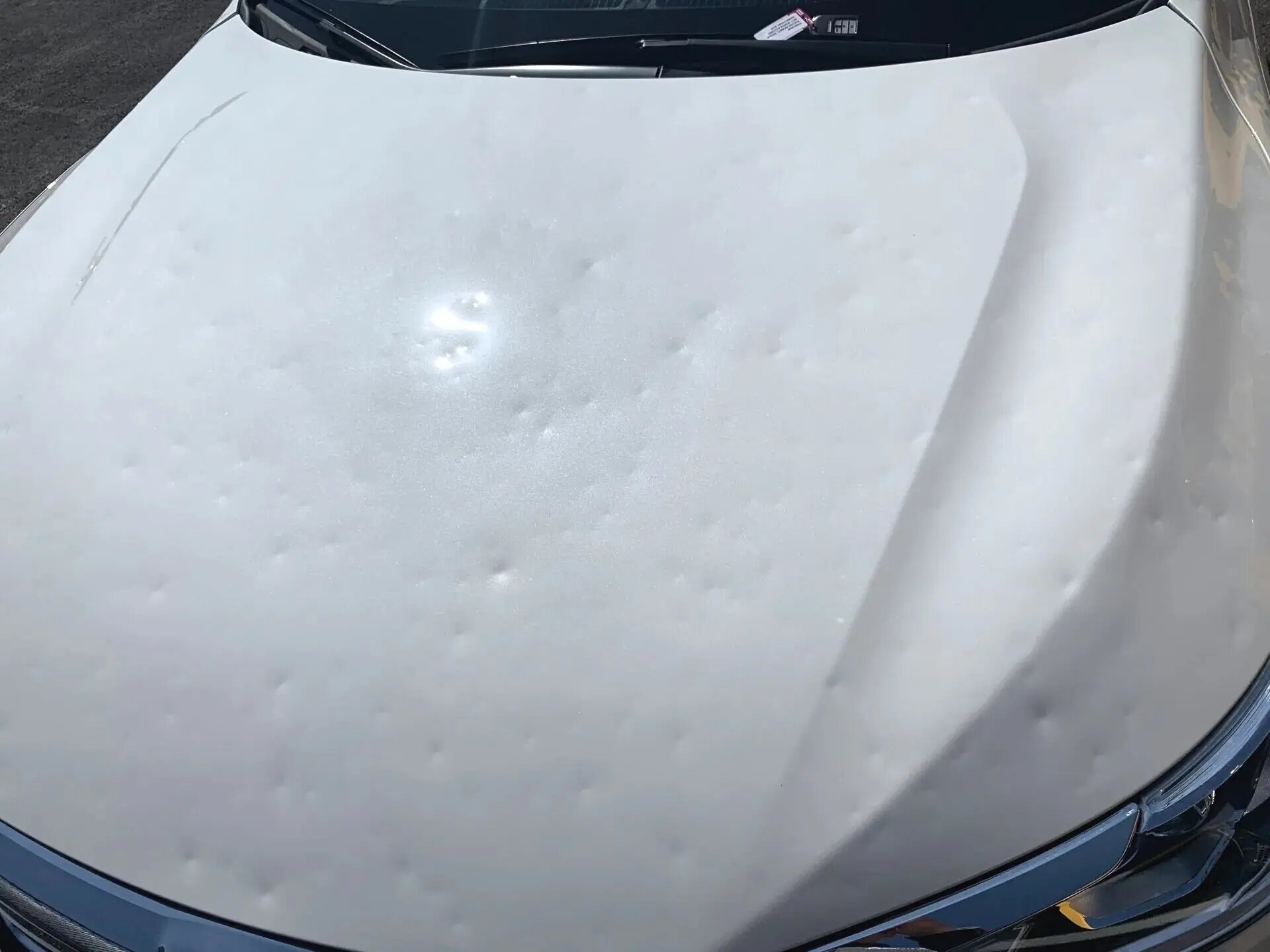
Most vehicles on North Texas roads are financed, so most hail claims involve a third party the driver never thinks about until the settlement stage: the lender. The claim itself works the same way — you report the storm, an adjuster inspects, an estimate is written — but the money moves differently, and the lender has a say in what happens to the car.
None of this is unusual or adversarial. A lienholder holds a security interest in the vehicle because the vehicle is the collateral for the loan. It is entirely reasonable that they want the collateral repaired rather than left dented while the balance is still outstanding. Knowing how that interest is expressed saves a lot of confusion when a check with two names on it arrives in the mail.
What the lienholder actually is on your policy
When you finance a vehicle in Texas, the lender is generally listed on your auto policy as a loss payee or lienholder. That listing does two practical things: the insurer notifies the lender about the policy and about losses, and the lender gets named on physical-damage settlements. Your loan agreement almost certainly also requires you to carry comprehensive and collision coverage for the life of the loan — that is a contract term with your lender, separate from the state's financial responsibility requirements.
This is typical industry practice rather than a matter of law, and the specifics live in two documents: your retail installment contract with the lender and your auto policy. Coverage depends on the language of your policy, and your insurer or a licensed agent can confirm what applies to your specific situation.
How a financed hail claim runs, step by step
- You report the loss to your insurer. You file the claim — it is your policy and your contract. Give the storm date and note that the vehicle is financed.
- The adjuster inspects and an estimate is written. Same as any hail claim. Insist that the panels be read somewhere the light works; hail is read by reflection, and a driveway inspection in midday sun routinely misses dents that show up immediately under LED line boards.
- You choose your repair shop. In Texas you generally have the right to select the shop that repairs your vehicle. A lender does not choose the shop for you, though your loan contract may require that the repair actually be done.
- The settlement issues. If the amount is above the lender's threshold, the check is commonly made payable to both you and the lienholder, or sent directly to the lender.
- Endorsement or fund release. A jointly-payable check needs the lender's endorsement. Lenders typically have a documented process for this — often called a repair draft or insurance loss draft department — and it usually involves sending in the estimate, proof of the repair shop and sometimes photographs.
- Repair, inspection and release. On larger settlements many lenders release the money in stages, with a portion up front and the balance after they receive proof that the work was completed. Our repair documentation and QC sign-off in the customer portal is generally what satisfies that requirement.
Why the check has the lender's name on it
This surprises people every spring. A settlement made payable to you and the lienholder together is not a sign that anything went wrong — it is the insurer protecting the lender's collateral interest, exactly as the policy's loss-payable provision contemplates. You cannot deposit that check alone, and neither can the lender. It has to be routed through the lender's loss-draft process to be endorsed.
Practical implications:
- Build the lender's turnaround into your timeline. Loss-draft departments are not same-day operations. Start the process the day the settlement is issued, not the day the car is finished.
- Ask what documents they need up front. The estimate, the shop's information, sometimes a W-9 or completion photos. Getting the list on the first call avoids a second round trip.
- Do not sign the check until you know where it goes. Endorsing before you understand the lender's process is the most common self-inflicted delay.
Can I keep the money instead of repairing the car?
With a lien on the vehicle, usually not — and this is the single biggest practical difference from an owned-outright vehicle. Loan contracts commonly require that insurance proceeds be applied to repairing the collateral, and the lender's endorsement process exists precisely to verify that happened. A lender is generally within its contractual rights to withhold endorsement until it has proof of repair, or to release funds in stages.
Again: this is typical lender practice, driven by your loan contract, not a statutory rule. If you want to know exactly what your lender permits, the answer is in your loan agreement and from the lender's loss-draft department — not from an insurance agent and not from a repair shop.
What happens if the vehicle is totaled
Heavy hail on an older, lower-value vehicle can push the repair estimate past the insurer's total-loss threshold. When a financed vehicle is declared a total loss, the settlement generally goes to the lienholder first, up to the payoff amount, and anything left over comes to you.
| Situation | Where the money goes | What to watch |
|---|---|---|
| Repairable, settlement below lender threshold | Often payable to you alone | Confirm before assuming — thresholds vary by lender |
| Repairable, larger settlement | Payable jointly, or direct to lender | Lender's loss-draft process and turnaround time |
| Total loss, settlement above payoff | Lender paid first, remainder to you | Get the payoff quote in writing and dated |
| Total loss, settlement below payoff | You may still owe the difference | Whether you carry gap coverage — it exists for exactly this |
That last row is the one that hurts. A vehicle financed with little money down can be worth less than the loan balance, and if a hailstorm totals it, the shortfall is yours unless gap coverage or a similar loan/lease payoff endorsement applies. Whether you have it depends on the language of your policy or your loan agreement. Our guide on when hail damage becomes a total loss in Texas explains how the threshold works and what your options are if you disagree with the valuation.
You still choose the shop
A lienholder's interest is in the vehicle being repaired properly, not in which shop does it. Neither your lender nor your insurer chooses your repair facility in Texas — that is your decision, and it is worth exercising deliberately. See choosing your own hail repair shop in Texas for how that right works in practice and what "preferred shop" language really means.
For a financed vehicle there is an added reason to choose carefully: your lender may want documentation of the completed work. A shop that keeps a proper record — panel-by-panel documentation, live updates through the repair, and quality control signed off by whoever runs QC and visible in your customer portal — makes the fund-release conversation short. A driveway operation with no fixed address makes it long.
Common mistakes on financed hail claims
- Not telling the insurer the vehicle is financed. They will find out from the policy record anyway; volunteering it up front avoids a settlement being reissued.
- Waiting to contact the lender until the check arrives. Call the loss-draft department as soon as the estimate is written and learn their requirements while the car is still being scheduled.
- Assuming a supplement changes nothing. When a supplement is approved and additional money issues, that second check often goes through the same joint-endorsement process. How supplements work covers why they are so common on hail.
- Taking a cash payout and skipping the repair. Beyond likely violating your loan contract, unrepaired hail damage is deconditioned at retail rates whenever the vehicle is appraised, and a car with a lien on it is going to be appraised eventually.
- Letting the deductible stop the repair. On approved hail claims we waive the deductible up to $1,000, which removes the usual out-of-pocket obstacle. Details are in our deductible guide.
What to do next
Pull out your loan paperwork and find the lienholder's legal name and your account number. Report the claim to your insurer with the storm date, mention the lien, then call your lender's insurance loss-draft department and ask what they require to endorse a check and release funds. Doing that in the first week rather than the third is usually the difference between a smooth claim and a frustrating one.
At DentPicks in Plano we inspect hail damage free of charge under proper reflection lighting, give you a straight assessment — usually a verbal quote from photos in about 30 minutes — and walk alongside you through the claim: documenting the damage, meeting the adjuster, writing supplements and supplying the completion paperwork lenders ask for. Repairs carry a written lifetime warranty for as long as you own the vehicle, and full-vehicle hail work typically takes about 5–10 business days in the shop. See finished work in our before and after gallery, or read how our hail repair process runs.
Frequently asked questions
Why is my lender on the insurance check at all?
The vehicle is collateral for the loan, and your policy's loss-payable provision names the lienholder so their interest in that collateral is protected. A jointly-payable check is standard practice on a financed vehicle, not a sign that something went wrong with your claim.
Can my lender stop me from keeping the hail money?
In practice, usually yes. Loan contracts commonly require insurance proceeds to be applied to repairing the collateral, and the lender's endorsement and loss-draft process is how they verify it happened. The controlling document is your loan agreement — read it, or ask the lender's loss-draft department directly.
Does the lender get to pick my repair shop?
No. In Texas you generally choose the facility that repairs your vehicle. Your lender's interest is that the repair is done and documented, not where it is done. Neither a lienholder nor an insurer selects the shop for you.
How long does a lender take to release the funds?
It varies, and it is rarely same-day. Loss-draft departments usually want the estimate, the repair shop's details and often photographs or a completion report before endorsing. Call them the week the estimate is written rather than the week the car is finished, and ask for their document list up front.
What if the hail damage totals my financed car?
The settlement generally pays the lienholder first up to the loan payoff, with any remainder going to you. If the vehicle is worth less than the balance, you may owe the difference unless gap coverage or a loan/lease payoff endorsement applies. Whether you have that depends on the language of your policy or loan agreement.
Does a supplement check go through the lender too?
Often yes. Supplements are common on hail because first estimates written outdoors regularly miss panels, and additional payments frequently follow the same joint-endorsement path as the original settlement. Factor that into your timeline.
What paperwork does my lender usually want after the repair?
Commonly a final invoice, confirmation the work is complete and sometimes photographs. We keep panel-by-panel documentation, live updates during the repair, and quality control signed off by whoever runs QC and visible in your customer portal, which is generally what a loss-draft department is looking for.
Sources and methodology
- Automobile insurance guide — Texas Department of Insurance.
- After hail or windstorms: consumer tips — Texas Department of Insurance.
Repair, cost and timing statements that are not tied to a listed source come from DentPicks' own quoting and repair history at the Plano, TX shop. They are typical ranges and shop-floor observations, not industry statistics or promises — your vehicle, its condition, your policy language and your insurer determine your specific outcome.
Financed vehicle with hail damage?
Bring it to the Plano shop for a free assessment under proper lighting. We document the repair the way loss-draft departments ask for it, and walk alongside you through the claim paperwork.