

The short answer
Most insurers accept an approximate date of loss, so report the claim rather than waiting until you are certain. Reconstruct the date from NOAA Storm Prediction Center hail reports for your area, then match them against where the vehicle was and what your phone photos and doorbell camera show. Label the date as estimated and share the evidence behind it. Never choose a date to fit a policy period.
 Written by the DentPicks Editorial Team
Technically reviewed by Vytas Kucinskas, Founder & Master PDR Technician
Written by the DentPicks Editorial Team
Technically reviewed by Vytas Kucinskas, Founder & Master PDR Technician
Published: Aug 19, 2026 · Last reviewed: Aug 19, 2026 · 9 min read
Almost every hail claim form asks for a date of loss, and a lot of drivers genuinely do not have one. The car sat at an office park during a storm they slept through. The damage only became visible weeks later when the light hit the hood a certain way. Or North Texas produced three hail events in six weeks and nobody can say which one did it.
Not knowing the exact date is normal and it does not, by itself, sink a claim. What it does is make the date something you have to reconstruct rather than recall — and there are public records that make that surprisingly doable. Coverage depends on the language of your policy, and your insurer or licensed agent can confirm what your contract requires.
Why the date matters at all
The date of loss does three jobs on a claim file:
- It places the loss inside a policy period. Comprehensive coverage has to have been in force on the day the damage happened. If you changed carriers during the window, the date decides which policy responds.
- It starts the notice and limitation clocks. Policies require prompt notice, and Texas sets outer limits on how long a policyholder has to act. Our guide on Texas hail claim time limits covers how those run.
- It confirms a hail event actually occurred where the car was. This is the part public weather records handle well.
Note what the date does not do: it does not have to be perfect. Most claim intake accepts an approximate or estimated date of loss, and insurers deal with this constantly after catastrophe events. What matters is that your date is your honest best reconstruction and that you say so.
How to reconstruct the date
Work from public weather records toward your own life, then match the two.
1. Pull the severe weather record for your area
NOAA's Storm Prediction Center publishes daily severe weather storm reports, including hail reports with dates, times, locations and estimated stone sizes. Browsing the dates across your suspected window usually produces a short list of candidate events near you. The National Weather Service Fort Worth forecast office covers the DFW region and publishes event summaries for significant North Texas storms.
Hail is intensely local. A confirmed hail report five miles away is useful supporting context but is not the same as a report on your street, so note the reported locations, not just the dates.
2. Find where the vehicle actually was
The car's location on the candidate dates is often more informative than your memory of the weather. Useful sources include your work schedule, calendar entries, travel records, toll statements, parking receipts, and whether the vehicle was garaged that week.
3. Search your own devices
This is where most people find their answer.
- Photo library. Phone photos carry a date. A picture of hail on the driveway, water in the yard, or the car itself narrows the window immediately.
- Doorbell and security cameras. Many retain footage or event clips for weeks, and a hail event is usually a motion trigger.
- Text and social messages. "Are you seeing this?" texts are dated evidence.
- Neighbors, an HOA or a building manager. Other claims on the same street usually reference the same date, and property managers often log storm events.
- Roof or property claims. If your home was inspected or claimed for the same storm, that file already has a date on it.
4. Match and report
Cross the candidate storm dates against where the car was and what your devices show. Then report the date you believe is correct, describe it as approximate if it is, and tell the adjuster what you used to arrive at it. An adjuster given a reasoned estimate and the evidence behind it has something to work with.
What happens when there are several candidate storms
| Situation | What usually happens | What helps |
|---|---|---|
| Two or three storms, same policy, same carrier | Often straightforward — the same coverage responds either way | Report the most likely date and say it is approximate |
| Storms span a carrier change | The date decides which policy responds; both may need notice | Notify both insurers and provide the evidence to each |
| Storms span a coverage change | Whether comprehensive was in force on the date becomes decisive | Your declarations pages for each period, plus a defensible date |
| Damage may be layered from two events | Adjuster separates new from prior damage | Panel-by-panel documentation under proper lighting |
| No hail report anywhere near the vehicle | The claim gets harder to support | Local evidence: neighbors' claims, camera footage, dated photos |
The layered-damage row is the one worth taking seriously. If more than one storm may have contributed, the adjuster is doing the same separation work described in our guide on how the hail adjuster inspection works — and a documented inspection is what keeps that from becoming guesswork.
Why the damage was invisible until now
Drivers often assume that not noticing for weeks undermines their credibility. It usually does not, because light is the reason.
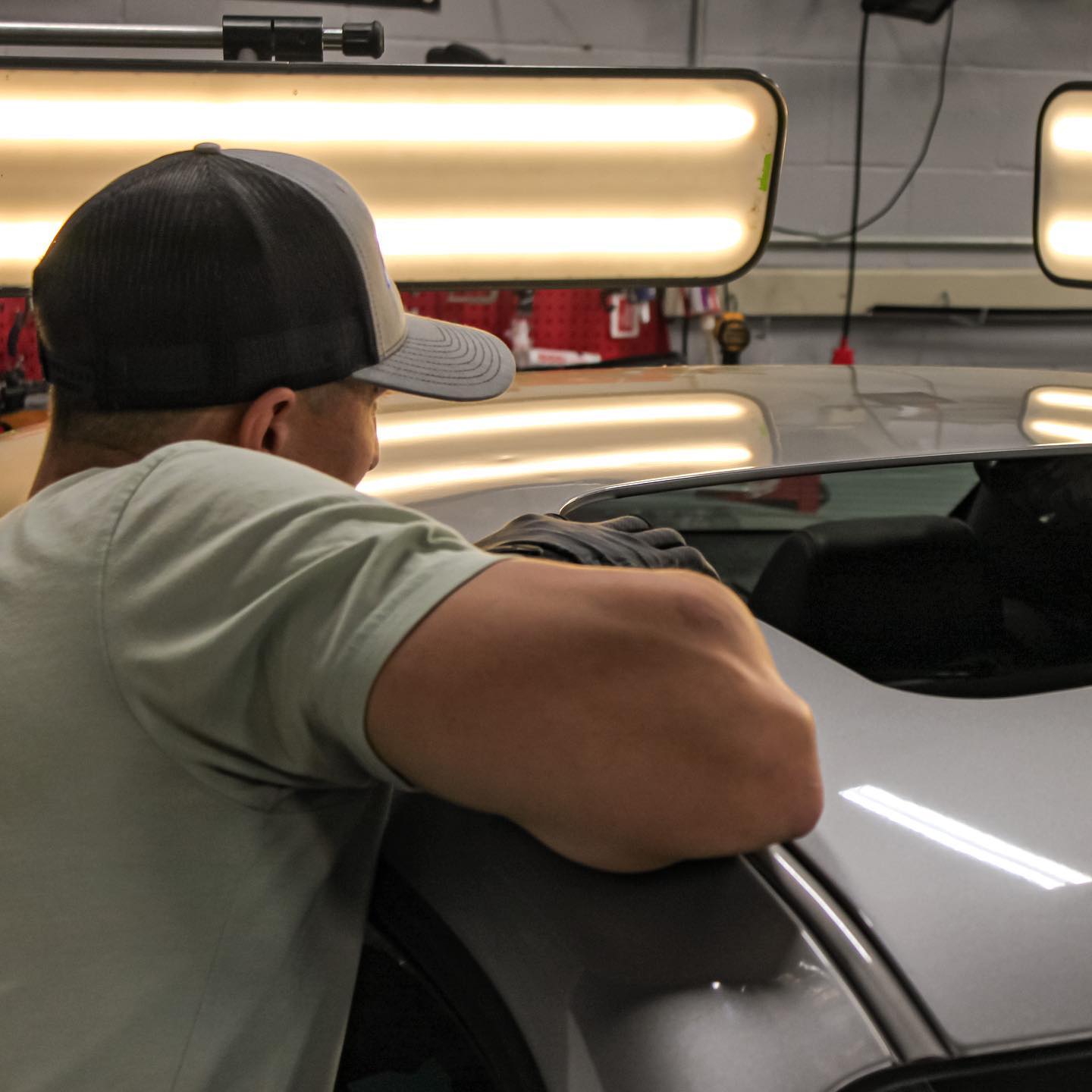
Small hail dents on a horizontal panel are nearly invisible in overcast light, under a carport, or on a dirty car. They appear when direct sun hits at a low angle, or when the panel is clean and reflecting a hard edge. This is exactly why every hail inspection at our Plano shop runs under LED line boards rather than daylight: reflection lighting is the only way to read a dent count on a roof or hood reliably. Adjusters know this too — late discovery of light hail damage is an ordinary pattern, not a suspicious one.
What genuinely does hurt is a long delay between noticing and reporting. Once you can see it, report it.
How we help around it
You file the claim — that is yours, and no shop should do it for you. Where DentPicks helps is the evidence side.
- A free inspection at the Plano shop under LED line boards, with a panel-by-panel read and usually a verbal quote inside about 30 minutes.
- Photo documentation of the damage in a form an adjuster can work from, kept in your customer portal.
- Attending the adjuster inspection so technical questions get answered on the spot.
- Writing and submitting a supplement if the first estimate misses damage.
We can point you at the public storm records, but the date you report is yours to determine honestly.
Common mistakes
- Guessing a round date because the form demands one. Say it is approximate and explain how you got there.
- Choosing the date that fits the coverage. That is misrepresentation, not paperwork.
- Waiting to report until the date is certain. Notice requirements do not pause while you research. Report, flag the date as estimated, and supplement the file as you learn more.
- Ignoring a carrier change. If the window spans two policies, both may need notice.
- Losing the evidence. Camera footage rolls off. If a doorbell camera might have the storm, export the clip now.
What to do next
Spend twenty minutes on the reconstruction: SPC storm reports for your area across the likely window, your photo library, and your calendar. Report the claim with your best-supported date, clearly labeled as approximate, and hand over the supporting material. Then get the vehicle read under proper lighting so the damage itself is documented panel by panel.
DentPicks inspects hail-damaged vehicles free of charge in Plano and walks alongside you through the claim. On insurance-approved hail claims there is complimentary pickup and a loaner across DFW, the deductible is waived up to $1,000 on many claims, and a typical full-vehicle hail repair takes about 5–10 business days in the shop with live updates while it is with us. Austin is served by trailer pickup and delivery, with rental through your own coverage. Our work carries a written lifetime warranty for as long as you own the vehicle, non-transferable. See how our hail repair process works or get in touch.
Frequently asked questions
Will my claim be denied if I give the wrong date?
An honest approximate date, offered as an estimate with supporting evidence, is normal and insurers handle it constantly after catastrophe events. What causes real problems is stating a date you know to be inaccurate in order to fit a policy period, which is misrepresentation rather than a paperwork error.
Where can I look up whether hail fell at my address?
NOAA's Storm Prediction Center publishes daily severe weather storm reports with dates, times, locations and estimated stone sizes, and the National Weather Service Fort Worth office covers North Texas events. Hail is very local, so note the reported locations and not just the dates.
What if two storms could both have caused the damage?
If both fall inside the same policy with the same carrier, it is usually straightforward — report the most likely date as approximate. If the window spans a carrier or coverage change, the date becomes decisive and both insurers may need notice. Your declarations pages for each period matter here.
I only noticed the dents weeks later. Does that look suspicious?
Not particularly. Light hail dents on a roof or hood are nearly invisible in overcast light or on a dirty car and only appear when direct sun hits at a low angle. Adjusters see late discovery routinely. What does hurt is a long gap between noticing and reporting.
Can the shop tell me which storm caused the damage?
No shop can date a hailstorm from a dent. What an inspection under LED reflection lighting can establish is the size, distribution and condition of the impacts, and whether the pattern looks like one event or two. The date itself comes from weather records and your own evidence.
Should I wait to file until I have pinned down the date?
No. Policy notice requirements keep running while you research. Report the loss, flag the date as estimated, and add supporting documentation to the file as you find it. Prompt notice is one of the few things entirely within your control.
What evidence is most useful for fixing a date?
Dated phone photos of hail, water or the car itself; doorbell or security camera clips, which often roll off after a few weeks so export them now; text messages from the day; a home or roof claim on the same storm; and neighbors or a property manager who claimed the same event.
Sources and methodology
- Severe weather storm reports — NOAA Storm Prediction Center.
- NWS Fort Worth forecast office — National Weather Service.
- After hail or windstorms: consumer tips — Texas Department of Insurance.
Repair, cost and timing statements that are not tied to a listed source come from DentPicks' own quoting and repair history at the Plano, TX shop. They are typical ranges and shop-floor observations, not industry statistics or promises — your vehicle, its condition, your policy language and your insurer determine your specific outcome.
Found hail damage but not sure when it happened?
Bring the car to the Plano shop for a free read under LED lighting. We document what is on the panels while you reconstruct the storm date from the weather record.