

The short answer
No and yes. Hail is a comprehensive loss with no fault assigned, so one hail claim is generally not a surcharge event the way an at-fault collision claim can be. But premiums still move: rating plans weigh collision claims, tickets, violations, vehicle repair costs and area-wide storm losses, and rates rise in hail-heavy parts of Texas even for drivers who never file. Ask your insurer or a licensed agent how your own policy treats it.
 Written by the DentPicks Editorial Team
Technically reviewed by Vytas Kucinskas, Founder & Master PDR Technician
Written by the DentPicks Editorial Team
Technically reviewed by Vytas Kucinskas, Founder & Master PDR Technician
Published: Aug 19, 2026 · Last reviewed: Aug 19, 2026 · 10 min read
This is the question that keeps North Texas drivers sitting on hail damage for a full season. The car is dented, the coverage is there, the deductible is manageable — and still the claim never gets filed, because of a worry that the premium will quietly climb at the next renewal and keep climbing for years.
The honest answer is not a clean yes or a clean no. It is no, and yes: a comprehensive hail claim is not treated the way an at-fault accident is treated, and a single weather claim is not a surcharge event on a Texas auto policy. But nobody's premium is frozen either, and it is worth understanding what actually moves the number so you can make the decision on facts rather than on fear.
The "no and yes" answer
No: hail is a comprehensive loss, not a collision loss. Nobody was at fault. You did not cause a hailstorm, and rating systems generally do not treat a weather event the way they treat an at-fault crash or a moving violation. Filing one hail claim does not, by itself, apply a surcharge to a Texas auto policy the way an at-fault collision claim can.
And yes: premiums move anyway. Pricing algorithms weigh many things — collision claims, tickets and violations, the overall cost of repairing modern vehicles, the loss experience across your rating territory, the vehicle you drive, and the coverages you carry. Rates in hail-heavy parts of Texas have moved upward in years when nobody on the block filed anything, simply because repairing a car with cameras, sensors and aluminum panels costs more than it used to. If your renewal goes up after a hail claim, the claim is often not the reason — but people naturally connect the two events because they happened in sequence.
Comprehensive versus collision: why the distinction does the work
Almost everything about this question comes down to which part of the policy pays. Auto physical damage coverage usually splits into two buckets:
- Collision — you hit something, or something hit you while you were driving. Fault is assigned, and at-fault losses are the ones rating systems care about most, because a driver who caused one crash is statistically more likely to cause another.
- Comprehensive — hail, wind, flood, fire, theft, vandalism, falling objects, animal strikes. These are events that happened to the vehicle. There is no fault to assign and, in most rating logic, very little predictive signal about how you drive.
Hail sits squarely in comprehensive. That is why the same storm can produce hundreds of claims on one street with no individual driver having done anything wrong. It is also why the surcharge worry that travels with collision claims does not transfer cleanly to hail. If you are unsure which coverages you actually carry, that is a two-minute call to your agent — plenty of Texas drivers discover they carry liability only and have no hail coverage at all, which changes the whole conversation. Coverage depends on the language of your policy.
What actually moves a Texas auto premium
| Factor | Typical influence on your rate |
|---|---|
| At-fault collision claims | Strong — this is the classic surcharge category |
| Tickets and moving violations | Strong |
| A single comprehensive hail claim | Generally not a surcharge event on its own |
| Territory-wide storm losses | Real, and applies to everyone in the area whether or not they claimed |
| Rising repair and parts costs | Real and steady — sensors, aluminum, calibration and paint all cost more than they did |
| Vehicle year, model and repair cost | Real — two identical drivers pay different premiums for different cars |
| Coverage and deductible choices | Direct — raising or lowering a deductible changes the price immediately |
Notice how much of that list has nothing to do with you. A renewal increase after a storm season is usually a territory story, not a personal one. The neighbor who never filed often opens the same envelope with the same increase.
Claim frequency: the one place a hail claim can matter
A single weather claim and a pattern of claims are not the same thing to an underwriter. Some insurers look at total claim count over a period — of any type — when they evaluate a policy at renewal, and a file with several claims in a short window can draw attention that one storm claim would not. That is a general underwriting reality, not a rule that applies uniformly, and it varies from company to company. We do not publish carrier-by-carrier rules here, because they change and because the only answer that binds is the one your own insurer gives you in writing.
The practical takeaway: if you have already had two or three claims recently, ask your agent directly how another one would be viewed before you file. If this is your first claim in years and it is hail, the question is much simpler.
Cancellation and non-renewal
Texas regulates when and how an auto insurer can cancel a policy mid-term and what notice it must give at non-renewal, and TDI's consumer materials describe the general framework. Weather losses are not typically the trigger people imagine them to be — but this is exactly the sort of question where general information is no substitute for your own paperwork. Read your declarations page and the notice provisions in your policy, and if you get a non-renewal notice you believe is unfair, TDI operates a consumer help line for complaints.
What we can say from the shop floor is unremarkable and consistent: most DFW customers who file one hail claim renew normally afterward and go on with their lives.
The other side of the ledger: what not filing costs
Drivers who skip the claim to protect a renewal rarely run the numbers on the other side. Unrepaired hail damage is deconditioned when the vehicle is appraised for trade or private sale, and that deduction is applied at retail rates rather than at repair cost. On a car you plan to keep for a decade, that may not matter. On a lease return or a car you will trade inside two or three years, the deduction usually exceeds what the repair would have cost you out of pocket — our guide on repairing dents before selling or trading in walks through how that appraisal deduction is applied.
There is also a deadline dimension. Policies generally require prompt notice of a loss, and hail claims get harder to substantiate the further you get from the storm date — a parking-lot ding in month four muddies an otherwise clean claim. See how long you have to file a hail claim in Texas for how those timelines work in practice.
Where the deductible fits
For many DFW drivers, the real financial question is not the premium at all — it is the deductible. On approved hail claims we waive the deductible up to $1,000, which removes the out-of-pocket cost that stops most people from filing. That waiver applies to many approved hail claims, not all of them, and it is worth confirming against your own numbers before you decide. The mechanics are explained in our hail repair deductible guide.
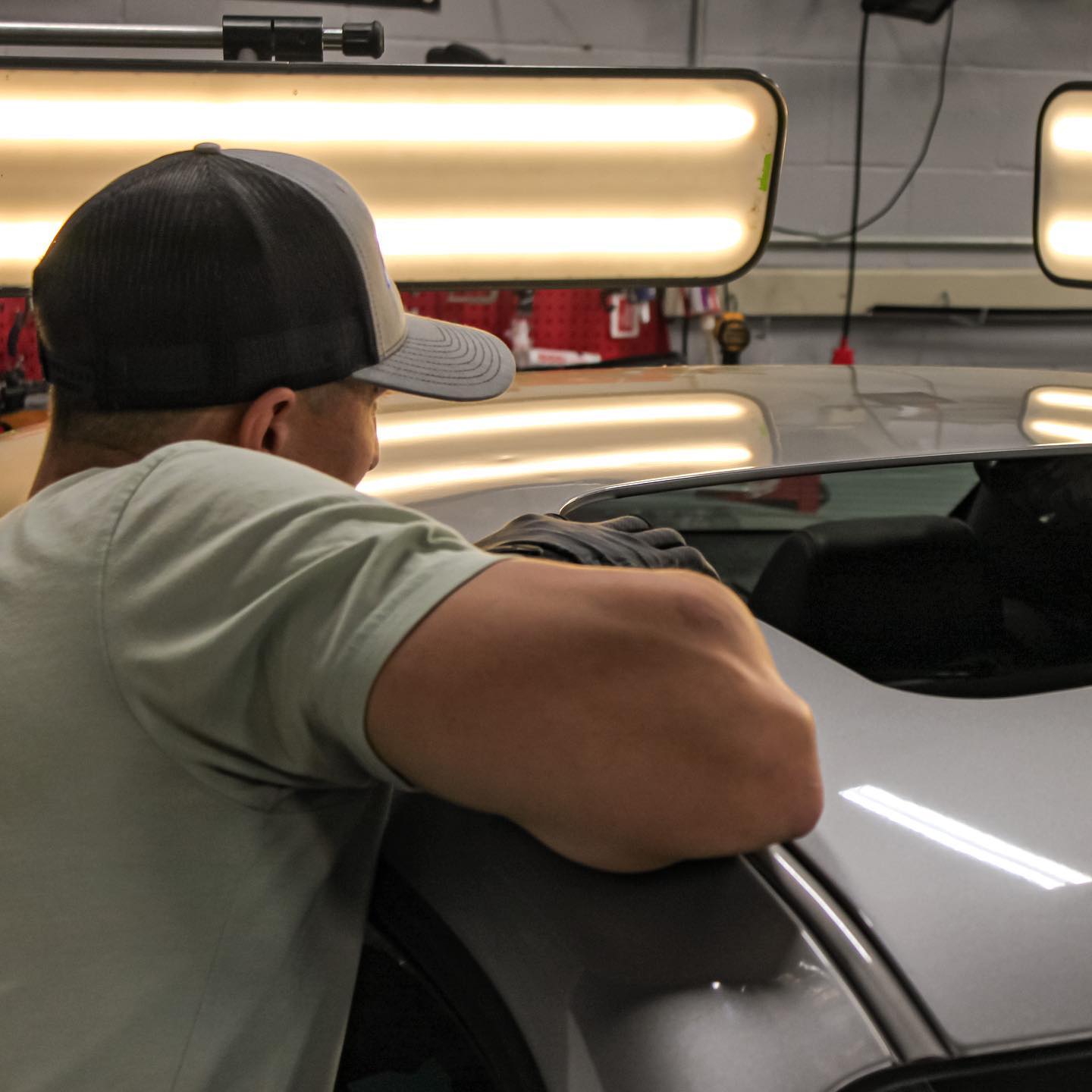
Two things we will not do: we will not file your claim for you, and we will not tell you what your claim will pay. You file with your insurer — it is your policy and your contract. What we do is walk alongside you: the photo set that documents the damage properly, meeting the adjuster at the vehicle, writing the supplement when the first estimate misses panels, and handling the paperwork that follows. Estimating a hail claim starts with a look at the car, usually a verbal quote in about 30 minutes from photos, and a proper panel read under LED line boards at the Plano shop, where dents that are invisible in a parking lot show up immediately.
Common mistakes
- Assuming a renewal increase proves the claim caused it. Compare your renewal to what neighbors with the same carrier and no claim received before you conclude anything.
- Not asking the direct question. "Will this hail claim surcharge my policy?" is a fair question to put to your agent, and you are entitled to a straight answer.
- Letting a driveway crew handle it "off the books" to avoid the claim. Temporary operations follow storms through DFW every spring; a bad pull stretches metal and can turn a paintless job into a repaint. Our guide on spotting storm-chaser operations covers the warning signs.
- Sitting on damage with cracked paint. Dents with intact paint are stable for years. Dents with broken paint are the ones that genuinely get worse in Texas heat.
What to do next
Call your agent and ask two questions: do I carry comprehensive coverage, and is a hail claim a surcharge event under my policy. Those two answers settle most of the anxiety. Then get the damage assessed properly so you know what you are deciding about — a car with eleven dents and a car with four hundred are very different decisions.
At DentPicks in Plano we inspect hail damage free of charge under proper reflection lighting, tell you honestly what is there, and walk alongside you through the claim if you choose to file one. Every repair carries a written lifetime warranty for as long as you own the vehicle, quality control is signed off by whoever runs QC and visible in your customer portal, and full-vehicle hail repair typically takes about 5–10 business days in the shop. You can see finished work in our before and after gallery or read how our hail repair process runs from inspection to delivery.
Frequently asked questions
Will one hail claim raise my rate at renewal?
Not by itself, in most cases — a comprehensive weather claim is not an at-fault loss and is generally not surcharged. Your renewal can still rise for unrelated reasons, including area-wide storm losses and higher repair costs. Coverage and rating depend on the language of your policy, so ask your insurer or a licensed agent about your specific plan.
Is hail damage covered under collision or comprehensive?
Comprehensive, on a typical Texas auto policy. Collision covers what happens when you hit something or are hit while driving; comprehensive covers hail, wind, flood, fire, theft, vandalism and animal strikes. If you carry liability only, hail damage generally is not covered. Check your declarations page or ask your agent.
Can my insurer drop me for filing a hail claim?
Texas regulates mid-term cancellation and non-renewal notice for auto policies, and weather losses are not the usual trigger people fear. Multiple claims of any type in a short period are viewed differently from one storm claim. Read your policy's cancellation provisions, and contact the Texas Department of Insurance if you believe a non-renewal is improper.
Does it matter that everyone in my neighborhood filed after the same storm?
For your individual rating, no — a hailstorm is a single event affecting everyone under it. Area-wide losses can influence what an insurer charges across a rating territory at future renewals, but that applies to drivers who filed and drivers who did not alike.
Should I pay out of pocket instead of filing to protect my premium?
Sometimes that makes sense for a handful of small dents. On full-vehicle hail damage it rarely does, because the repair cost is usually far above a deductible. On approved hail claims we waive the deductible up to $1,000, which removes most of the out-of-pocket reason for skipping the claim. Run both numbers before deciding.
Does a hail claim show up on a vehicle history report?
Paintless dent repair itself creates no repair record, because no panels are replaced and no paintwork is done. If the adjuster requires a panel to be replaced and refinished, that work can be reported. We do what is best for the vehicle and tell you up front which panels fall into which category.
Who files the hail claim — me or the shop?
You file it. It is your policy and your contract with your insurer. DentPicks walks alongside you: documenting the damage in photographs, meeting the adjuster at the vehicle, writing supplements when the first estimate misses panels, and handling the paperwork that follows.
Sources and methodology
- Automobile insurance guide — Texas Department of Insurance.
- After hail or windstorms: consumer tips — Texas Department of Insurance.
Repair, cost and timing statements that are not tied to a listed source come from DentPicks' own quoting and repair history at the Plano, TX shop. They are typical ranges and shop-floor observations, not industry statistics or promises — your vehicle, its condition, your policy language and your insurer determine your specific outcome.
Want to know what the claim is actually worth before you file?
Send photos or bring the car to the Plano shop. We read the panels under proper lighting, give you a straight assessment of the damage, and walk you through the claim if you decide it is worth filing.