
The short answer
Plan on removing it and replacing it rather than reinstalling it. Film and wrap block the reflection reading and the glue-pull methods PDR relies on, and neither material reliably survives removal. Sequence the work as document, inspect, strip, repair, then re-install — and never film or wrap over damage you intend to fix. Whether your policy covers the covering itself depends on your policy language; ask your insurer before the adjuster appointment.
 Written by the DentPicks Editorial Team
Technically reviewed by Vytas Kucinskas, Founder & Master PDR Technician
Written by the DentPicks Editorial Team
Technically reviewed by Vytas Kucinskas, Founder & Master PDR Technician
Published: Aug 19, 2026 · Last reviewed: Aug 19, 2026 · 10 min read
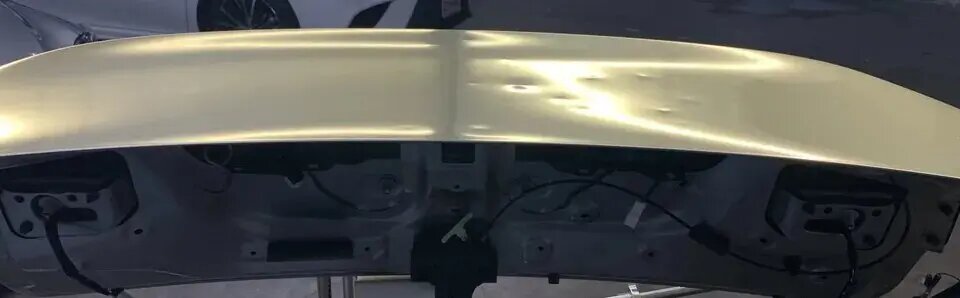
Paint-protection film and vinyl wrap are excellent at their job, which is stopping rock chips, road rash and UV from reaching your paint. What neither of them stops is a hailstone. Impact energy travels straight through a few thousandths of an inch of urethane and deforms the metal underneath exactly as it would on a bare panel — the film simply keeps the paint from chipping while it happens.
That creates a sequencing problem rather than a repair problem. The dent is fixable; the question is what happens to the covering over it, who pays for that covering, and in what order the work has to be scheduled. Getting that order right before anything is booked saves the most money and the most time.
Why film and wrap usually have to come off
Paintless dent repair depends on two things film interferes with. The first is reading the panel. A technician judges progress by watching a straight line of light reflected in the surface, and film — especially matte, satin or textured wrap — scatters that reflection or hides it entirely. Working metal you cannot read accurately is how a repair ends up with high spots.
The second is method. A great many modern repairs, particularly on panels with limited rear access, are finished by adhering a tab to the outside of the panel and pulling the dent out, then tapping the crown down. That approach needs adhesive contact with the paint itself. Pulling on film pulls the film, not the metal, and the heat used to release the adhesive afterwards is more than most film and vinyl tolerate.
There is a narrow exception. Very light, shallow damage on a panel with good rear access can sometimes be worked from behind with a gloss film left in place, if the film is clear and in good condition. It is a case-by-case judgement made with the panel in front of you, not a general rule, and it should be assessed under proper lighting rather than promised over the phone.
Reusability: the honest answer
Assume replacement, not reinstallation. Both materials are adhesive-backed and both are cut to shape at installation, and once lifted they generally do not go back the way they came off.
- Paint-protection film stretches during removal, particularly at wrapped edges, and its adhesive is not designed to re-bond. Older film that has been through several Texas summers often comes off in sections rather than sheets.
- Vinyl wrap distorts even more readily, and colour-matching a newly printed panel to wrap that has been fading on a car for two years is difficult. Whole-panel or whole-side replacement is a normal recommendation for exactly that reason.
- Colour-change wrap with a batch-specific finish may no longer be available in the same production run. If the film matters to you, ask the installer about material availability early, not at the end.
- Recently installed film in good condition is the one case worth a conversation with the original installer before removal, because they know the material and the cut files.
The order of operations
| Situation | Sequence | What to watch |
|---|---|---|
| Hail damage, car fully wrapped | Document → adjuster inspection → wrap off → PDR → new wrap | Damage count must be established properly, not through the wrap |
| Hail damage, PPF on front end only | Film off those panels → PDR everywhere → new film on front end | Only the covered panels need film work |
| Single door ding under film | Assess in person → film off that panel or section → PDR → re-film | Ask whether a partial panel section can be replaced |
| Panel needs refinishing, not PDR | Covering off → refinish → cure per refinisher → new film or wrap | Installers will not apply over fresh paint immediately |
| Planning new film on an already-dented car | PDR first, always → then film | Never cover damage you intend to fix |
| Ceramic coating plus film | Repair → film → coating per installer | Coatings for film differ from coatings for paint |
The only sequence that reliably goes wrong is filming or wrapping a panel that still has damage in it. Film follows the contour of what is beneath it, so a dent under film is a dent you can still see — and you have now paid to cover it.
Hail claims with film or wrap on the car
This is where the money question lives, and it splits into two parts.
Getting the damage counted correctly
A wrapped or filmed panel is harder to assess. Matte and satin finishes in particular flatten the shadows an adjuster relies on outdoors, and light hail under film can be substantially undercounted. If your car is covered, say so early and make sure the inspection happens somewhere the panels can be read properly rather than in a driveway. Our guide on what happens at an adjuster inspection covers how those appointments run and what to have ready.
Getting the covering itself addressed
Film and wrap are aftermarket additions to the vehicle, and how a policy treats them is a policy question rather than a repair question. Some policies address added or customized equipment specifically, sometimes with a separate limit or endorsement; others do not. Coverage depends on the language of your policy, and your insurer or licensed agent can confirm your specific coverage. The Texas Department of Insurance publishes a consumer guide to how automobile policies are structured, which is a useful starting point before the conversation.
Practically, what helps is documentation. Photograph the film or wrap before anything is removed, keep the original installation invoice, and get a written figure from the installer for removal and replacement. That package is what gets submitted if the work is added to the repair as a supplement — our guide on how supplements work on hail repairs explains that process. You file the claim yourself; DentPicks documents the damage, submits what the shop can support, and walks alongside you through the back and forth.
Photograph the film before anyone touches it. Nobody has ever regretted having the pictures.
What it does to your timeline
A full-vehicle hail repair typically runs about 5–10 business days in the shop — a typical range, not a guarantee. Film and wrap sit outside that window on both ends.
- Removal is its own appointment, often at a separate specialist, and old adhesive takes longer than fresh.
- The repair runs as normal once the panels are bare and readable.
- Any refinishing adds its own cure period before a covering can go back on, set by the refinisher.
- Installation needs a clean, dust-controlled environment and installer scheduling, which after a large DFW storm can be the longest wait in the chain.
Plan the whole sequence at the start. Booking the repair without booking the film work simply moves the delay to the end, when you are already expecting the car back.
How the panels are handled once the covering is off
A stripped panel is often the first honest look anyone has had at the paint underneath. Adhesive residue is cleaned before reading, then panels are read under LED line boards at our Plano shop, where a straight line of light across the surface shows the real depth and sharpness of each dent. That matters more than usual on a filmed car, because the film may have been protecting paint that is otherwise aged — and paint condition, along with metal stretch, panel access and prior repairs, is what determines repairability.
Every vehicle is signed off by whoever runs quality control before release, and that sign-off is visible in your customer portal alongside the live updates posted while the car is in the shop. Delivery includes a mini exterior detail. If new film or wrap is going on afterwards, tell us — a freshly detailed panel is what an installer wants, and any dressings or sealants they need avoided can be skipped.
Common mistakes
- Wrapping over existing dents. The contour comes through. It looks worse in satin than in gloss, and you have paid twice.
- Letting someone pull dents through film to "save the wrap." The reading is unreliable and the heat is not film-friendly. It usually costs the wrap anyway, plus a compromised repair.
- Assuming the insurer will replace the wrap automatically. It depends entirely on your policy language, and finding out at the end of the job is the worst time.
- Removing film yourself with a heat gun. Uncontrolled heat over aged clearcoat is how a film removal turns into a refinish job.
- Pressure-washing a fresh film edge. Lifted edges are the most common self-inflicted failure on new installations.
- Not telling the shop the car is wrapped. It changes the estimate, the sequence and the schedule, and it is the single most useful sentence in the first phone call.
What to do next
Photograph the covering as it is now, dig out the original installation invoice, and call the installer for a removal-and-replacement figure. Then bring the car in for an assessment under proper lighting so the damage under the film is counted accurately rather than estimated through it. If a claim is involved, ask your insurer or licensed agent directly how your policy treats added equipment before the adjuster appointment.
You can bring a filmed or wrapped vehicle to the Plano shop for a free inspection, and if the damage came from a storm see how our hail repair process runs from inspection to delivery. Broader preparation and aftercare, including what to do with the car before you drop it off, is covered in our guide on PDR appointment preparation and aftercare.
Frequently asked questions
Can dents be pulled without removing the film?
Occasionally, on very light damage under clear gloss film where the panel has good rear access. It is a judgement made with the panel in front of you under proper lighting, not a promise made over the phone. Matte, satin and coloured wrap effectively rule it out because they hide the reflection a technician reads.
Can my existing PPF be put back on afterwards?
Usually not. Film stretches during removal, especially at wrapped edges, and the adhesive is not designed to re-bond. Aged film often comes off in sections rather than sheets. Budget for new material and treat reinstallation as the unlikely outcome.
Will insurance pay to replace my wrap after hail?
It depends on the language of your policy. Some policies address added or customized equipment specifically, sometimes with a separate limit or endorsement; others do not. Your insurer or licensed agent can confirm your specific coverage — ask before the adjuster inspection, not after the repair.
Does film hide hail damage from an adjuster?
It can reduce what gets counted, particularly matte and satin finishes that flatten the shadows an outdoor inspection depends on. Say up front that the vehicle is covered and make sure the panels are assessed somewhere they can be read properly rather than in a driveway.
Should I get PPF installed before or after dent repair?
After, without exception. Film follows the contour of whatever is beneath it, so a dent under new film is a dent you can still see and have now paid to cover. Fix the metal first, then protect it.
How much time does film work add to a hail repair?
It sits outside the repair window on both ends. A full-vehicle hail repair typically runs about 5–10 business days in the shop, a typical range rather than a guarantee, and removal and reinstallation are separate appointments. After a large DFW storm, installer scheduling is often the longest wait in the chain, so book the whole sequence at the start.
Can I remove the film myself to save money?
It is a poor trade. Uncontrolled heat over aged clearcoat is how a film removal becomes a refinishing job, and paint damage caused during a DIY strip is not repair-related work anyone else can absorb. If cost is the concern, ask the original installer for a removal-only quote.
Sources and methodology
- Automobile insurance guide — Texas Department of Insurance.
Repair, cost and timing statements that are not tied to a listed source come from DentPicks' own quoting and repair history at the Plano, TX shop. They are typical ranges and shop-floor observations, not industry statistics or promises — your vehicle, its condition, your policy language and your insurer determine your specific outcome.
Wrapped or filmed car with hail damage?
Tell us before you book anything else. We will read the panels under proper lighting, count the damage honestly, and help you sequence the removal and reinstall around the repair.