

The short answer
Expect an update whenever the status genuinely changes, and no more than two business days of silence even when it has not. On a typical 5–10 business day hail repair that means messages at check-in, after the panels are read, when a supplement goes to the adjuster and comes back, when parts are ordered, if any panel changes method, at quality control sign-off, and when the car is ready.
 Written by the DentPicks Editorial Team
Technically reviewed by Vytas Kucinskas, Founder & Master PDR Technician
Written by the DentPicks Editorial Team
Technically reviewed by Vytas Kucinskas, Founder & Master PDR Technician
Published: Aug 19, 2026 · Last reviewed: Aug 19, 2026 · 9 min read
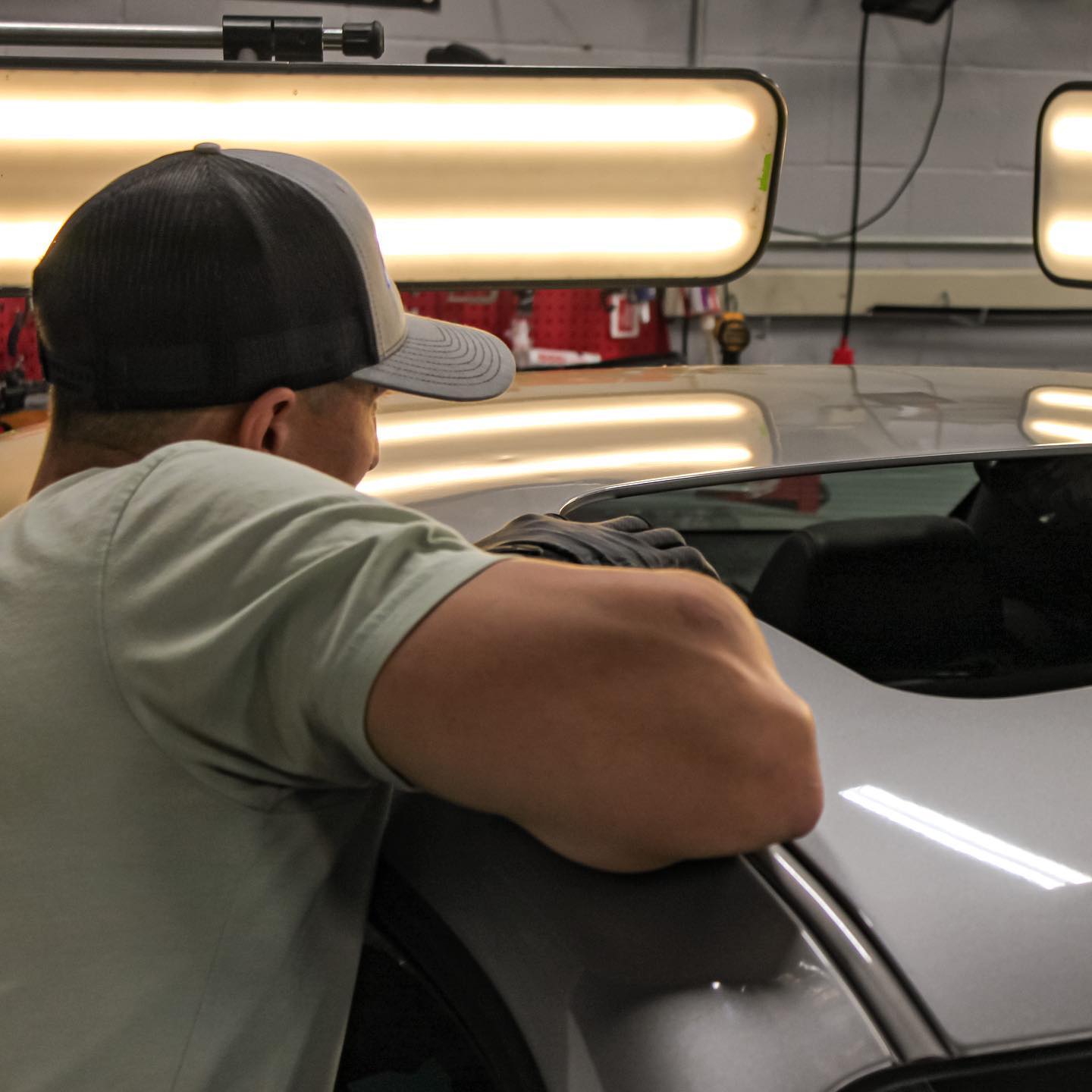
A full-vehicle hail repair typically runs about 5–10 business days in the shop. That is not long in absolute terms, but it is long enough for silence to become uncomfortable — especially when the car is your only one, when a rental clock is running, or when you handed the keys to a shop you had never used before.
The useful way to think about updates is not "how many times a week should someone call me." It is: which events in a hail repair genuinely change your situation, and does the shop tell you when one happens? A daily message saying "still working on it" is noise. A message saying "your supplement went to the adjuster this morning, we expect a response in two to three business days" is information.
The milestones that deserve a message
Almost every hail repair passes through the same sequence. Each of these points changes either the timeline or the plan, which is what makes them worth communicating.
| Milestone | Why it matters to you |
|---|---|
| Vehicle received and checked in | Confirms custody, mileage and condition on arrival |
| Panels read under proper lighting | This is when real damage count is known, and it is often higher than the outdoor estimate |
| Supplement submitted to the insurer | The clock now belongs to the carrier, not the shop |
| Supplement approved, revised or denied | Decides both the scope and whether the timeline moves |
| Parts ordered, with an ETA | The most common single cause of a hail repair running long |
| Method change on any panel | PDR becoming push-to-paint or replacement changes days and paperwork |
| Repair underway, panel progress | Reassurance that the car is being worked, not parked |
| Quality control sign-off | The work has been checked, not just finished |
| Ready for delivery | Time to arrange collection or return the rental |
A shop that hits those nine points has communicated well even if you never once had to chase it. A shop that checks in cheerfully every morning but never mentions that a supplement has been sitting unanswered for a week has not.
A reasonable baseline
Two things usually cause long quiet stretches, and neither is mysterious. The first is insurer response time on a supplement. The second is parts. Both are outside the shop's control, but explaining them is entirely within it. A shop that goes quiet during an insurer delay is not protecting you from bad news; it is leaving you to imagine worse.
What "live updates" should actually mean
We use live updates rather than a fixed call schedule, and the difference is deliberate. Status is posted as it changes and sits in your customer portal, so you can look at any hour instead of waiting for someone to be free to phone you. The teardown findings, the supplement status, the panel progress and the final sign-off all land in the same thread, in order, with the dates attached.
That last item matters more than it sounds. The finished job is signed off by whoever runs quality control before the vehicle moves to delivery, and that sign-off is visible in your customer portal. You are not taking the shop's word that the panels were checked — you can see when it happened and who cleared it. Before hand-back the car gets a mini exterior detail, which is also the point at which most people finally see the roof properly.
What you should be told, not just how often
- The found damage count versus the estimate. Outdoor and photo estimates miss shallow dents. The number after the panels are read under LED line boards is the real one.
- Whether any panel changed method. If a panel quoted for paintless repair has cracked paint, stretched metal or damage on a hem, the honest answer is refinishing or replacement — and that changes your timeline, your paperwork and potentially your vehicle history report.
- Who is waiting on whom. Shop, insurer, or parts supplier. This single sentence removes most of the anxiety in a hail repair.
- A revised completion date, not a repeated one. A date that keeps being restated without changing is a red flag.
- Anything found that is not hail. Prior repairs, filler under a panel, or old damage discovered under lighting should be reported, not quietly worked around.
Longer-distance and out-of-area repairs
Communication matters more when you cannot drop by. Across DFW we arrange complimentary pickup on insurance-approved hail claims, so the car leaves your driveway and you may not see the shop at all — which makes the update thread the only window you have into the work.
Austin works differently again: there is no shop there, so vehicles move by trailer pickup and delivery to Plano and back, and rental arrangements go through the customer's own rental coverage rather than through us. On those jobs the transport legs are part of the timeline, and they should be communicated as their own milestones — collected, arrived, in repair, signed off, on the trailer home.
Why the "waiting on the insurer" gap is so common
After a widespread North Texas storm, one adjuster may be carrying hundreds of open files at once. A supplement that would clear in a day in a quiet month can sit for a week in the middle of a season. Nothing about that is unusual, and no shop can push it faster by wanting to. What a shop can do is tell you the submission date, tell you what was asked for, and tell you when it follows up — so the wait is a known quantity rather than an unexplained silence.
Red flags in how a shop communicates
- No named point of contact. "Someone will call you" is not a contact.
- Updates only when you chase. If every piece of information came from a call you made, that is the pattern, not a coincidence.
- The same completion date repeated for a week. Either it is not being tracked, or it is not true.
- Vague blame on "the insurance." Ask for the date the supplement was submitted and the name of the adjuster it went to. A real submission has both.
- No mention of extra damage at all. On a genuine hail car, a teardown that finds exactly the estimate's dent count is unusual.
- Refusal to show you the panels under shop lighting at hand-back. This is the one to take seriously — see our note below on final inspection.
What to do at hand-back
Whatever the update cadence was, the last five minutes are the ones that decide whether the repair was good. Ask for the vehicle to be shown under the shop's reflection lighting rather than in the sun, and walk each repaired panel yourself. You are looking for straight, unbroken reflection lines, no bright high spots at old dent centers, no low spots that swallow the line, and no waviness across an area that should read flat. Check the panel edges and body lines, where poor work shows first.
Also confirm the warranty in writing. Ours is a written lifetime warranty for as long as you own the vehicle, and it is not transferable — that distinction is worth knowing before you sell the car rather than after.
What to do next
Set the expectation at drop-off rather than complaining about it on day six. Ask who your contact is, how updates arrive, and what the two most likely reasons for a delay would be on your particular car. Then hold the shop to that, politely, in writing.
If your repair has gone quiet and you are not getting straight answers, a second opinion costs nothing. We inspect free of charge at the Plano shop and quotes are usually verbal, from photos, in about 30 minutes. Our guide on how long hail repair takes explains where the days actually go, and how supplements work covers the most common source of delay. You can also see finished panels in our before and after gallery or read how hail repair in Plano runs end to end.
Frequently asked questions
Is it normal to hear nothing for several days during a hail repair?
A few quiet days can be legitimate, but the reason should not be a mystery. The two usual causes are an insurer sitting on a supplement and a part on backorder. Both are outside the shop's control; explaining them is not. Three business days with no answer to a message is worth escalating.
What is the difference between live updates and a fixed call schedule?
A fixed schedule sends something whether or not anything happened. Live updates post the status as it changes and leave it in your customer portal with dates attached, so you can check at any hour and see the full sequence — teardown findings, supplement, panel progress, quality control sign-off.
Who should tell me if more damage is found?
The shop, before the extra work is done. Hail estimates written outdoors or from photos routinely miss shallow dents, so a higher count after the panels are read under reflection lighting is normal. What is not normal is finding out about it on the final invoice.
Should the shop tell me if a panel can't be repaired paintlessly?
Yes, and before it is touched. Cracked paint in the dents, stretched metal or damage across a hem can push a panel to refinishing or replacement. That changes days, paperwork, and possibly your vehicle history report — PDR creates no record, but an adjuster-required panel replacement can be reported.
How do updates work if my car was picked up rather than dropped off?
They matter more, because the update thread is your only view of the work. Across DFW pickup is complimentary on insurance-approved hail claims. Austin vehicles travel by trailer to Plano and back, so the transport legs should appear as their own milestones — collected, arrived, in repair, signed off, on the trailer home.
What should I check when I collect the car?
Ask to see it under the shop's reflection lighting rather than in daylight, and walk each repaired panel. Reflection lines should run straight and unbroken, with no bright high spots at old dent centers, no low spots swallowing the line, and no waviness where the panel should read flat.
The shop keeps repeating the same completion date. Is that a bad sign?
Usually yes. A date restated unchanged for a week is either not being tracked or not accurate. Ask specifically who the job is waiting on right now — shop, insurer or parts supplier — and what the next dated event is. A vague answer to that question tells you a lot.
Sources and methodology
- After hail or windstorms: consumer tips — Texas Department of Insurance.
Repair, cost and timing statements that are not tied to a listed source come from DentPicks' own quoting and repair history at the Plano, TX shop. They are typical ranges and shop-floor observations, not industry statistics or promises — your vehicle, its condition, your policy language and your insurer determine your specific outcome.
Repair gone quiet on you?
A second opinion costs nothing. Bring the car or send photos to the Plano shop and we will tell you plainly what the panels need and what a realistic timeline looks like.