

The short answer
Often, yes. Missed shallow dents, high spots from over-pushing and mild waviness can usually be improved substantially by a more experienced technician. What cannot be undone is stretched metal, cracked or chipped paint inside a dent, or filler applied over damage — in those cases refinishing or panel replacement is the correct next step. The panel has to be read under reflection lighting in person before anyone can tell you which situation you are in.
 Written by the DentPicks Editorial Team
Technically reviewed by Vytas Kucinskas, Founder & Master PDR Technician
Written by the DentPicks Editorial Team
Technically reviewed by Vytas Kucinskas, Founder & Master PDR Technician
Published: Aug 19, 2026 · Last reviewed: Aug 19, 2026 · 9 min read
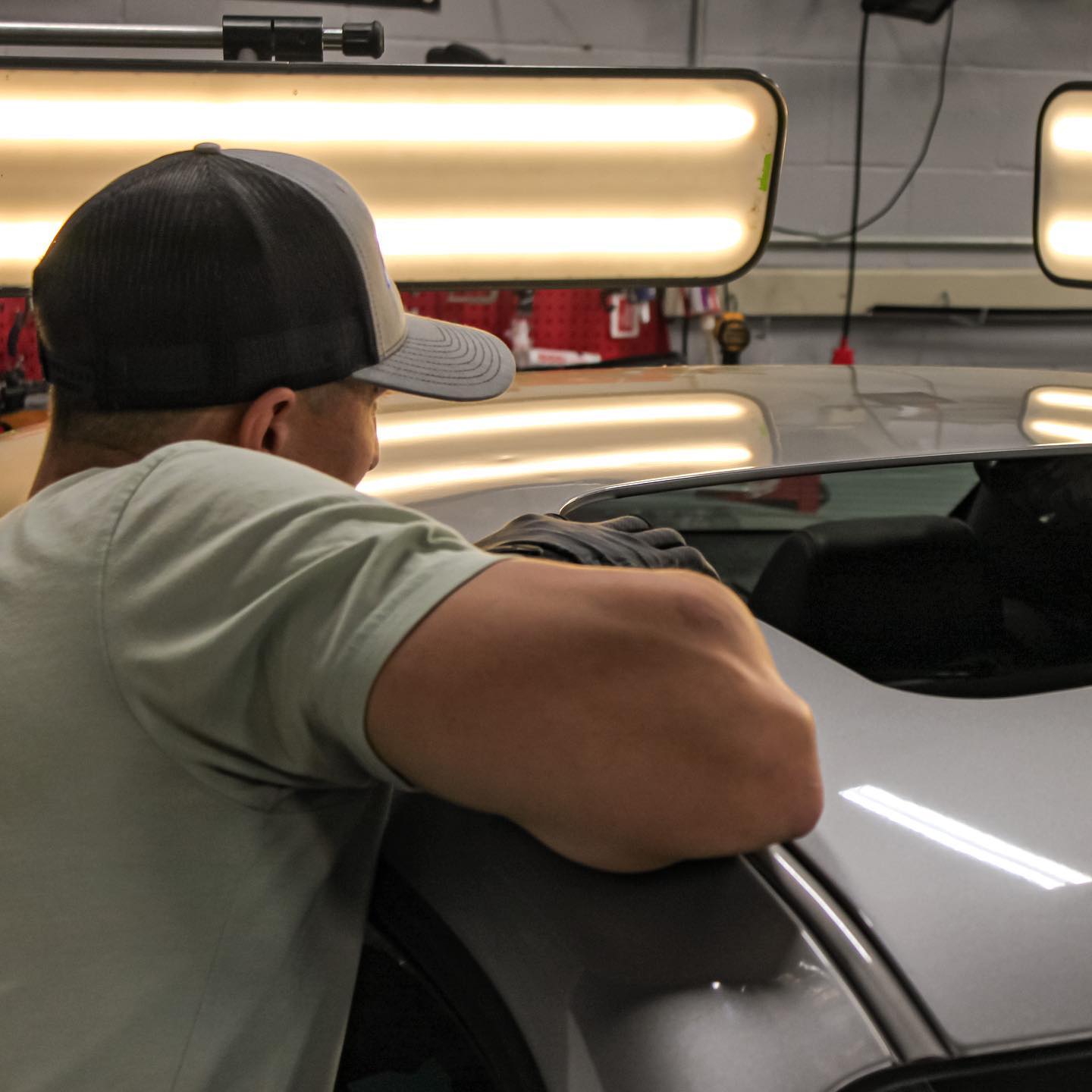
Usually yes — and sometimes no. That is the honest answer, and anyone who gives you a confident guarantee before looking at the panel is selling rather than assessing.
Paintless dent repair is a craft with a wide skill range. A panel worked by someone with limited experience, poor lighting or too much hurry can end up better than it started but well short of what the metal was capable of. Most of the time a second technician can take that panel considerably further. Occasionally the first attempt did something that cannot be undone by pushing — stretched the metal, cracked the paint, or created a repair shape that no longer has anywhere to go. Knowing which situation you are in requires reading the panel, not describing it over the phone.
What "not up to expectations" usually turns out to be
When a customer brings us a repair they are unhappy with, it almost always falls into one of these categories:
- Dents left behind. The obvious impacts were removed and the shallow ones were missed — typically because the panel was worked in daylight or under overhead shop fluorescents instead of a reflection board.
- High spots and crowns. The metal was pushed past flat. These read as bright pinches in a reflection and are the most common complaint after a rushed hail job.
- Waviness or "orange-peel" texture in the metal. Many small pushes too close together leave a rippled surface that looks fine outdoors and terrible under a light board.
- Damage around the repair. Broken trim clips, torn liners, scratched paint at a tool entry point, or a headliner that no longer sits flush after roof access.
- Glue-pull scars. Aggressive tab pulling can leave residue, dull the clearcoat, or lift paint at the edges of a tab.
- Cracked or chipped paint inside the dent. Sometimes present before the repair; sometimes created by pushing a sharp dent too fast.
- Filler where none was disclosed. Occasionally a "PDR" job turns out to have a skim of filler over a dent that was never actually worked.
The first three are workmanship and are usually improvable. The last three are where re-repair gets complicated.
Why a second attempt is harder than the first
A virgin dent is the easiest thing a PDR technician will work on that day. The metal is in its original temper, the damage has a predictable shape, and the technician can choose the approach. A previously worked panel gives up several of those advantages:
- The metal has been worked. Steel and aluminum both work-harden. Metal that has been pushed, pulled and tapped is stiffer and less forgiving than metal that has not.
- The damage shape is no longer natural. Instead of one clean depression, there may be a low area surrounded by several small crowns, each of which has to be relieved in the right order.
- Access may already be compromised. If a bracket was bent, a liner torn or a drainage plug removed and lost, the second technician inherits that.
- Stretched metal cannot be un-stretched. Surface area that has been permanently increased has to go somewhere. That is the one condition where more PDR makes the panel worse, not better.
This is why an experienced technician spends real time on assessment before quoting a re-repair. The question is not "can this be pushed?" — almost anything can be pushed. The question is what the metal will actually give back.
How we assess a previously repaired panel
- Read the panel under a reflection board. LED lines are drawn across the surface at multiple angles. Low spots bow the lines inward; high spots pinch and brighten them; work-hardened waviness produces a shimmer that is unmistakable once you have seen it.
- Feel the surface. A gloved hand across the paint finds crowns the eye will argue about, and finds the difference between a soft low and a hard, tight low.
- Inspect the back side. The inner panel tells the truth about what was done — tool marks, bent bracing, tab residue, missing clips, damaged sound deadening.
- Check the paint closely. Cracked clearcoat, micro-fractures at the base of a crease and dulled areas from heat or glue all change the recommendation.
- Check thickness where it matters. An unexpectedly thick reading over a dent usually means filler, which means the panel is not a PDR candidate at all in that area.
- Say what is achievable, in plain terms. Not "we'll make it perfect" — an actual description of the likely end state, including anything the metal will not give back.
What can usually be improved — and what cannot
| Condition of the first repair | Realistic outcome of a re-repair |
|---|---|
| Shallow dents missed entirely | Normally full removal — these were never worked, so the metal is untouched |
| High spots and crowns from over-pushing | Usually corrected well; a small residual mark can remain on sharp body lines |
| Minor waviness across a flat area | Often improved substantially, sometimes not to factory flat |
| Damaged trim, clips, liners | Replaced or reseated — a parts and labor question, not a metal question |
| Glue residue or dulled clearcoat from tabs | Frequently corrected with proper cleaning and polishing |
| Stretched metal in the repair area | Limited improvement at best; refinishing or replacement is often the right call |
| Cracked or chipped paint inside the dent | PDR cannot restore broken paint — refinish the panel |
| Undisclosed filler over the damage | Not a PDR candidate; the area must be stripped and refinished |
Notice the pattern: the metal problems that come from doing too little are easy to fix, and the ones that come from doing too much are the hard ones. That is exactly why we would rather assess a panel before anyone else touches it. Our guide on deep creases and large dents covers where the limits of the technique genuinely sit.
When refinishing is the better answer
Paintless dent repair is the right tool for most hail and door-ding damage, but it is not a religion. Where paint is cracked, where metal has been stretched, or where a previous attempt has left a shape the panel cannot recover, continuing to push is not craftsmanship — it is stubbornness at the customer's expense.
In those cases the correct next step is conventional repair and refinishing, or occasionally panel replacement. We will tell you that plainly, because we do what is best for the vehicle rather than what keeps the job in-house. Our guide on PDR versus a traditional body shop lays out how the two approaches compare on cost, time and finish.
Before you book a re-repair
- Go back to the original shop first if you can. If they wrote a workmanship warranty, they owe you the correction, and letting a second technician work the panel usually ends any claim you had.
- Do not let anyone "try something" in a parking lot. Storm-season crews are how many of these panels got this way — see our guide on spotting storm-chaser operations.
- Skip the suction cups and glue kits. Consumer tools are the fastest route from a fixable dent to a stretched one, as covered in our DIY dent repair guide.
- Bring the paperwork. The original estimate tells us which panels were supposedly repaired, which is often more informative than what the panels look like now.
- Have the assessment done indoors. A quote given in a sunlit driveway is a guess. Panels are read under boards for a reason.
What to expect on timing
At our Plano shop, a single-panel corrective session — a few high spots, a handful of missed dents — is typically a half day and often same-day. A vehicle where several panels were rushed usually needs two to four days, because corrective work is slower per dent than fresh work. Full-vehicle hail repairs run about 5–10 business days in the shop, and a re-repair of a full hail job sits at the longer end of that. Whatever the panel needs, the finished result is read again under lighting and signed off by whoever runs quality control — visible in your customer portal.
What to do next
Bring the vehicle in and have the panels read properly before you make any decision, including the decision to live with it. An assessment costs nothing and it will tell you three things: what the first attempt actually did, what a second pass can realistically achieve, and whether any panel has crossed into refinishing territory.
You can see finished panels in our before and after gallery or read how our process runs on the Plano dent repair page. Work we complete carries a written lifetime warranty for as long as you own the vehicle — it is not transferable, but for as long as the car is yours, the panel is our responsibility.
Frequently asked questions
Does a failed PDR attempt make the panel harder to fix?
Usually somewhat. Metal work-hardens when it is pushed and pulled, so a previously worked panel is stiffer and less forgiving. The damage shape is also less natural — often one low area ringed by small crowns that have to be relieved in the right order. It is harder work, not impossible work.
How can I tell if metal has been stretched?
Stretched metal typically shows as an area that will not stay flat — push it down and it oil-cans or bulges nearby, because the surface area has permanently increased. Under a light board it reads as a soft, unstable region rather than a defined dent. It is diagnosed by hand and eye, on the vehicle.
Should I go back to the shop that did the original repair?
If they wrote a workmanship warranty, yes — start there. They owe you the correction, and once a second technician works the metal, the workmanship trail is broken and any claim you had generally ends. If the original operation cannot be reached, a second opinion is the sensible move.
Will insurance pay for a re-repair?
Typically not as a new claim, since the damage was already paid once. Where the original work was performed under a claim, the conversation is usually between you and the shop that did it. Coverage depends on the language of your policy — your insurer or licensed agent can confirm your specific coverage.
Can polishing fix the dull marks left by glue tabs?
Frequently, yes. Adhesive residue and light clearcoat dulling from tab pulling usually respond to proper cleaning and machine polishing. Where a tab actually lifted paint at its edge, that is a paint repair rather than a polish.
How long does a corrective PDR job take?
At our Plano shop a single panel with a few high spots or missed dents is usually a half day and often same-day. Several rushed panels typically take two to four days, because corrective work is slower per dent than fresh work. A full-vehicle re-repair sits at the long end of the usual 5–10 business day range.
Will a re-repair show up on a vehicle history report?
Paintless dent repair itself creates no record. That changes if a panel has to be replaced — an adjuster-required panel replacement can be reported. If a history record matters to you, ask for that distinction to be made clear before work is authorized.
Sources and methodology
Repair, cost and timing statements that are not tied to a listed source come from DentPicks' own quoting and repair history at the Plano, TX shop. They are typical ranges and shop-floor observations, not industry statistics or promises — your vehicle, its condition, your policy language and your insurer determine your specific outcome.
Unhappy with a dent repair someone else did?
Bring it to the Plano shop and we will read the panels under proper lighting at no charge, then tell you honestly what a second pass can and cannot achieve.