

The short answer
Call the shop that did the work — do not live with it and do not let another shop open the trim first. A rattle after door or roof repair is almost always a clip, weatherstrip or foam pad that did not fully reseat, and reseating is usually quick, covered work. Before you call, check the carpet and headliner for damp: wind noise or water means a seal is the issue, and that moves ahead of the noise.
 Written by the DentPicks Editorial Team
Technically reviewed by Vytas Kucinskas, Founder & Master PDR Technician
Written by the DentPicks Editorial Team
Technically reviewed by Vytas Kucinskas, Founder & Master PDR Technician
Published: Aug 19, 2026 · Last reviewed: Aug 19, 2026 · 10 min read
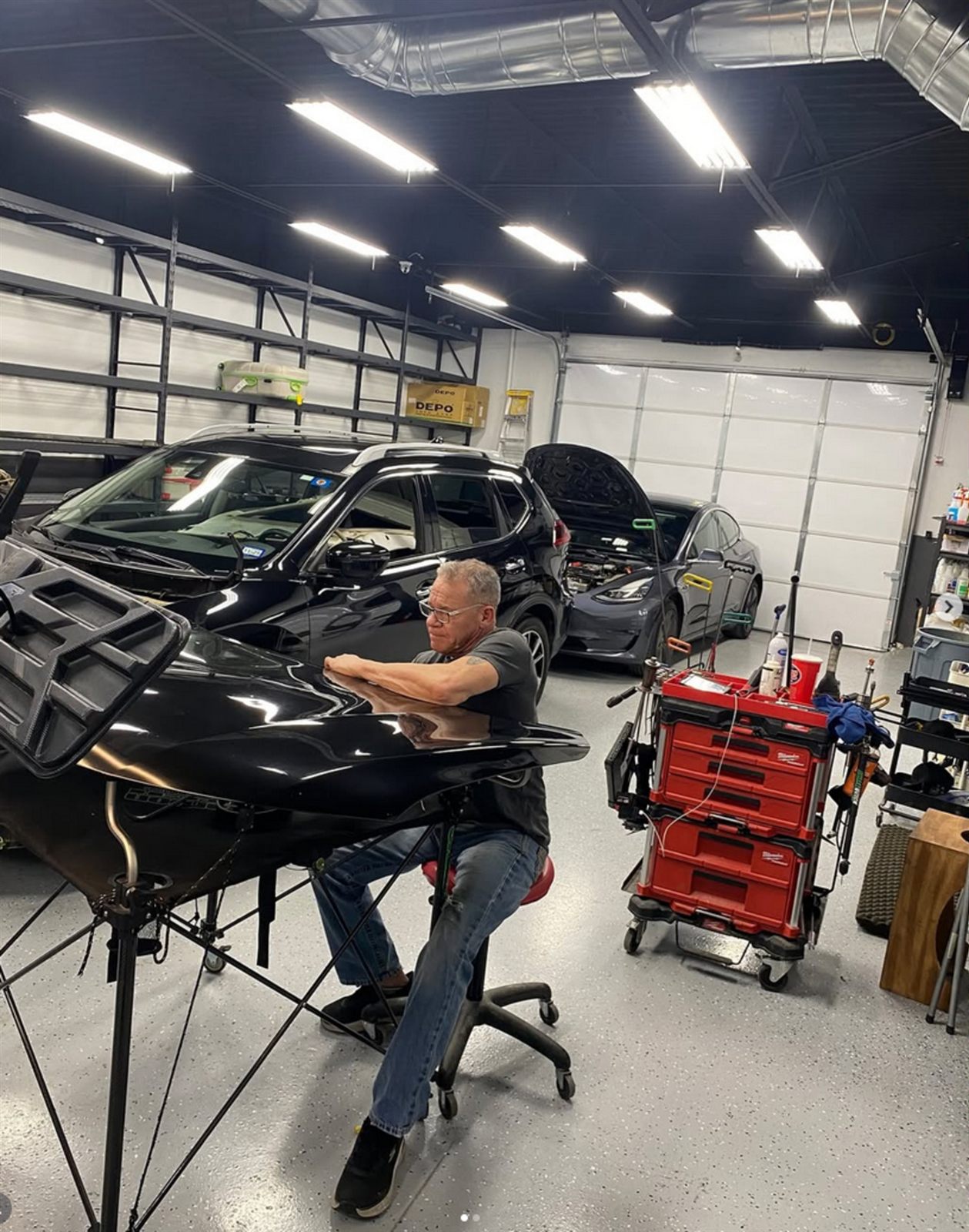
A new rattle after a dent repair is annoying out of all proportion to what causes it. The panel looks perfect, the metalwork is done, and then a plastic clip the size of a fingernail turns a finished job into a noise you cannot stop hearing on the Dallas North Tollway. The good news is that trim rattles are almost always a fastener issue rather than a metal issue, they are quick to correct, and they are covered work rather than a new expense.
The important part is not to live with it. A rattle is a symptom that a piece of trim is not seated the way it was, and on doors and roofs some of those pieces are also doing a sealing job. Noise you can ignore; water you cannot.
Why trim comes off during a dent repair at all
Paintless dent repair works from behind the panel. To reach the back of a door skin or a roof skin, a technician needs an access path, and the car does not come with one — so trim, seals and liners come out and go back in.
On a door, that typically means the interior door card, the moisture barrier behind it, sometimes the window run channel, the belt-line weatherstrip along the bottom of the glass, and any exterior molding covering the access area. On a roof, it usually means dropping or partially lowering the headliner, releasing the pillar trim that holds its edges, releasing grab handles and visor mounts, and removing roof rails or the trim strips along the drip rails. Sunroof-equipped cars add drain tubes and a sunroof cassette to work around, which is one reason roof repairs take longer than their dent count suggests.
Every one of those parts is held by clips, tabs, foam pads or butyl sealer. Reassembly is where rattles are born — and where they are prevented. Our guide on how paintless dent repair works covers the access side of the process in more detail.
What is actually rattling
| Symptom | Usual cause | Typical fix |
|---|---|---|
| Buzz from a door on rough pavement | Door card clip not fully seated, or a broken clip barrel | Reseat or replace the clip |
| Click near the top of the door glass | Belt-line weatherstrip not fully engaged | Press the strip back onto its flange along its length |
| Rattle inside the door when it closes | Loose hardware, or a fastener left in the cavity | Open the card and retrieve or retighten |
| Creak or tap from the headliner | Headliner edge not tucked, or a pillar clip missing its retainer | Reseat the edge and replace the retainer |
| Wind noise at speed, not a rattle | Weatherstrip or molding sitting proud of its seat | Reseat — and check the seal, not just the noise |
| Grab handle or visor knock | Mount not fully torqued back down | Retighten to spec |
| Noise only when hot or only when cold | Foam anti-rattle pad displaced or compressed | Replace the pad, reseat the panel |
| Slosh or gurgle after rain | Sunroof drain kinked or disconnected | Immediate attention — this is a water path, not a rattle |
Two of those entries are not really rattles. Wind noise means a seal is sitting wrong, and a slosh after rain means water is going somewhere it should not. Both should move to the front of the queue.
The Texas variable nobody mentions: clip brittleness
Interior and exterior trim clips are plastic, and plastic that has spent five or ten summers in a North Texas parking lot is not the same material it was when it left the factory. Heat-cycled clips lose flexibility, and a percentage of them break on removal no matter how carefully anyone works. That is normal and expected on older vehicles.
The difference between a shop that produces rattles and one that does not is whether replacement clips are stocked and used rather than a broken barrel being pushed back into the hole to hold "well enough." At our Plano shop, replacement fasteners are treated as consumables on the job, not as an upsell — a car that goes out with three-quarters of its door card retention is a car that comes back.
What to do when you hear a rattle
- Locate it roughly. Front or rear, left or right, high or low. Have a passenger press lightly on the door card, the pillar trim and the headliner edge while you drive a rough stretch — pressure that stops the noise identifies the panel.
- Note the conditions. Speed, road surface, temperature, windows up or down, doors just closed or after a while. "It buzzes on concrete seams above 45 and stops if I press the top of the door card" gets fixed in one visit. "It rattles sometimes" does not.
- Record it if you can. Thirty seconds of phone audio from the passenger seat is worth a paragraph of description.
- Check for water before you check for noise. Feel the carpet under the door, the headliner near the pillars and the trunk or cargo well. Damp anywhere changes the priority completely.
- Call the shop that did the work first. Another shop opening the same trim makes it harder to establish what happened, and it complicates warranty coverage.
- Do not force anything back yourself. Prying a door card without a trim tool breaks more clips than it seats, and a headliner creased at the edge does not recover.
Roof repairs have their own list
Roofs are the panel most often damaged by hail and the panel with the most attached to the other side of it. When a roof repair is done well, reassembly is a longer job than the dent removal was. The parts that generate post-repair complaints are consistent:
- Headliner edges. They tuck under the pillar trim and behind the weatherstrip. An edge that is not fully tucked will drop slightly and tap.
- Pillar trim and curtain airbag covers. These are safety-related components on most modern vehicles and have specific retention hardware. They are not general-purpose clips and should not be substituted. Manufacturer procedures vary by model year and configuration.
- Sunroof drains. Four tubes running down the pillars. A tube pulled off its nipple during headliner work turns the next storm into an interior repair.
- Roof rails and antenna bases. These pass through the roof skin with their own gaskets. Reinstalled without the gasket seated, they leak and whistle.
- Overhead consoles, mirrors and sensors. Rain sensors, interior cameras and dome lights all sit in the roof area on many vehicles, and their connectors need to go back exactly as they came out.
On a roof, the dents are the short part of the job. Everything attached to the underside of that panel is the part that decides whether the car is quiet afterwards.
What should have happened before you got the car
A rattle that reaches the customer is a QC miss, and it is worth knowing what the check is supposed to catch. Reassembled vehicles are checked with doors opened and closed firmly, glass cycled up and down, trim pressed along its length for movement, and the interior walked for missing fasteners before the vehicle is released. Every job is signed off by whoever runs quality control, and that sign-off is visible in your customer portal alongside the live updates posted while the car is in the shop. Delivery includes a mini exterior detail, which is also when a molding sitting proud tends to get noticed.
None of that is a claim that a rattle can never slip through. Some noises only appear on a specific road at a specific temperature, which no shop-floor check reproduces. That is precisely what the warranty is for.
Common mistakes
- Waiting months to mention it. A clip reported in week one is a five-minute fix. The same clip reported in month eight has usually worn the panel it was tapping against.
- Assuming a rattle means the metal moved. Repaired sheet metal does not un-repair itself. Noise from the door area is almost always retention hardware.
- Confusing an old rattle with a new one. Cars over about five years old often already have one. Note whether it existed before the repair — an honest "this was there when I dropped it off" saves everyone time.
- Ignoring wind noise because it is "just noise." Wind noise is a seal that is not sealing, and seals keep water out of the cabin.
- Running it through an automatic wash to test for leaks. Brushes catch loose trim and turn a rattle into a missing molding. Use a garden hose at low pressure instead.
What to do next
Note when and where the noise happens, check the carpets and headliner for damp, and call the shop that performed the work. Trim reseating is short work — most rattles are resolved while you wait rather than requiring the car overnight — and it is covered under the written lifetime warranty that DentPicks repairs carry for as long as you own the vehicle. The warranty is not transferable and covers the repair rather than new damage, but a clip that was disturbed to reach a dent is squarely our responsibility.
If the vehicle came in on a hail claim and the noise turns out to be a component that needs replacing rather than reseating, that can be documented and submitted to the carrier as part of the repair. Bring it back to the Plano shop, or if the car came to us through a storm claim see how our hail repair process handles follow-up. Preparation and aftercare for the whole visit is covered in our guide on what to do before and after a PDR appointment.
Frequently asked questions
Does a rattle mean the metal repair failed?
No. Repaired sheet metal does not move back on its own. Noise from a door or roof area after PDR is retention hardware — a door card clip, a belt-line weatherstrip, a headliner edge, a grab handle mount or a displaced foam anti-rattle pad.
Why do clips break during disassembly?
Plastic that has heat-cycled through several North Texas summers loses flexibility, so a share of clips break on removal regardless of technique, especially on older vehicles. What matters is whether the shop replaces them with new fasteners rather than pushing a broken barrel back into the hole.
How do I describe the noise so it gets found in one visit?
Give conditions, not adjectives: speed, road surface, temperature, windows up or down, and whether pressing on a specific piece of trim stops it. Thirty seconds of phone audio recorded from the passenger seat is worth more than a paragraph of description.
Is wind noise the same problem as a rattle?
No, and it is more urgent. Wind noise means a weatherstrip or molding is sitting proud of its seat, which means it is not sealing. Rattles are an annoyance; a seal that is not sealing lets water into the cabin, and water damage costs far more than dents.
Why do roof repairs generate more trim issues than door repairs?
Because far more is attached to the underside of a roof skin: headliner, pillar trim, curtain airbag covers, grab handles, visors, overhead consoles, sunroof drains, antenna bases and roof rails. Reassembly is often the longer half of the job, and manufacturer procedures vary by model year and configuration.
Can I just push the trim back myself?
Better not to. Prying a door card without proper trim tools breaks more clips than it seats, and a headliner creased at the edge does not recover. It also makes it harder to establish what happened if a warranty question comes up later.
Is the fix covered?
Yes. Trim disturbed to reach a dent is our responsibility, and DentPicks repairs carry a written lifetime warranty for as long as you own the vehicle. The warranty is not transferable and covers the repair rather than new damage. If a part needs replacing rather than reseating on a hail claim, it can be documented and submitted to the carrier.
Sources and methodology
Repair, cost and timing statements that are not tied to a listed source come from DentPicks' own quoting and repair history at the Plano, TX shop. They are typical ranges and shop-floor observations, not industry statistics or promises — your vehicle, its condition, your policy language and your insurer determine your specific outcome.
Hearing something you did not hear before?
Bring it back to the Plano shop. Most trim rattles are traced and reseated the same visit, and it is covered work — no need to schedule it around a big appointment.