The short answer
It gives the shop written permission to perform the repairs described in a specific estimate, and to move and test drive your vehicle while doing so. Most forms also direct your insurer to pay the shop directly. It does not authorize work beyond that estimate, does not settle your claim, and does not transfer your right to choose where the car is repaired. Read the supplement and storage clauses before signing.
 Written by the DentPicks Editorial Team
Technically reviewed by Vytas Kucinskas, Founder & Master PDR Technician
Written by the DentPicks Editorial Team
Technically reviewed by Vytas Kucinskas, Founder & Master PDR Technician
Published: Aug 19, 2026 · Last reviewed: Aug 19, 2026 · 9 min read
The repair authorization is the shortest document in a hail repair and the one most people sign without reading. It is usually handed over at drop-off, sometimes on a tablet, often while someone is explaining the timeline. It is also the document that decides what a shop may do to your car, who gets paid, and what happens if the job turns out to be bigger than the estimate.
None of that is sinister. Shops need written permission to work on a vehicle — that is the whole point of the form. But an authorization is a contract, and the version you sign at one shop can be materially different from the version at the shop across the road.
What the form is actually doing
A typical repair authorization does four separate jobs, and it helps to see them as four rather than one:
- Permission to work. You are authorizing the shop to perform the repairs described in an attached or referenced estimate, and to move and test drive the vehicle in the course of that work.
- Scope definition. It ties the work to a specific document. If the estimate is not attached or clearly identified, the scope is whatever anyone later says it was.
- Payment direction. Many forms include a direction to pay, letting your insurer send repair proceeds straight to the shop. That is convenient and common. It does not transfer your claim, and it does not settle anything.
- Terms and conditions. Storage, personal property, sublet work, dispute handling, and how additional work is approved. This is the part in small type and the part worth reading.
Three different authorizations, often confused
| Type | What it allows | What it does not |
|---|---|---|
| Inspection or teardown authorization | Disassembly and assessment so real damage can be documented | Repair. It also may make you liable for reassembly if you then decline |
| Repair authorization | The repairs described in the identified estimate, at the identified price | Work outside that estimate |
| Supplement authorization | Additional work found once panels are read or opened | Anything already declined or outside the supplement |
Hail repair almost always involves the third one, because hail estimates written outdoors or from photos routinely miss dents. That is not a failure of anyone's honesty — it is what happens when shallow damage on a curved panel is assessed in ambient light instead of under reflection lighting. Our guide on how supplements work on a hail repair covers the process in detail.
What an authorization does not give a shop
- Open-ended scope. Finding more damage does not authorize repairing it. It authorizes telling you about it.
- A method choice you were not told about. If a panel quoted as paintless repair turns out to need refinishing or replacement, that is a change to the plan, not a detail.
- Your settlement. A direction to pay routes money. It does not make the shop your claim representative. In Texas the policyholder files the claim; a good shop helps and walks alongside you with photos, adjuster meetings, supplements and paperwork.
- Your right to choose. Signing a carrier's referral paperwork does not oblige you to use that shop — see our guide on choosing your own hail repair shop in Texas.
- Unlimited time. Most forms are silent on duration, which is exactly why an agreed timeline matters more than the paperwork.
The clauses worth reading before you sign
The supplement threshold is the most useful of the six. A form that says the shop may perform additional necessary work without further approval is not automatically a problem — hail jobs genuinely need that flexibility to keep moving — but you should know whether the ceiling is a hundred dollars or unlimited, and how you will be told.
Storage language matters if a claim stalls. If your insurer takes two weeks to approve a supplement and your car is sitting in a shop with a daily storage clause, you want to have known that on day one.
How this runs at our shop
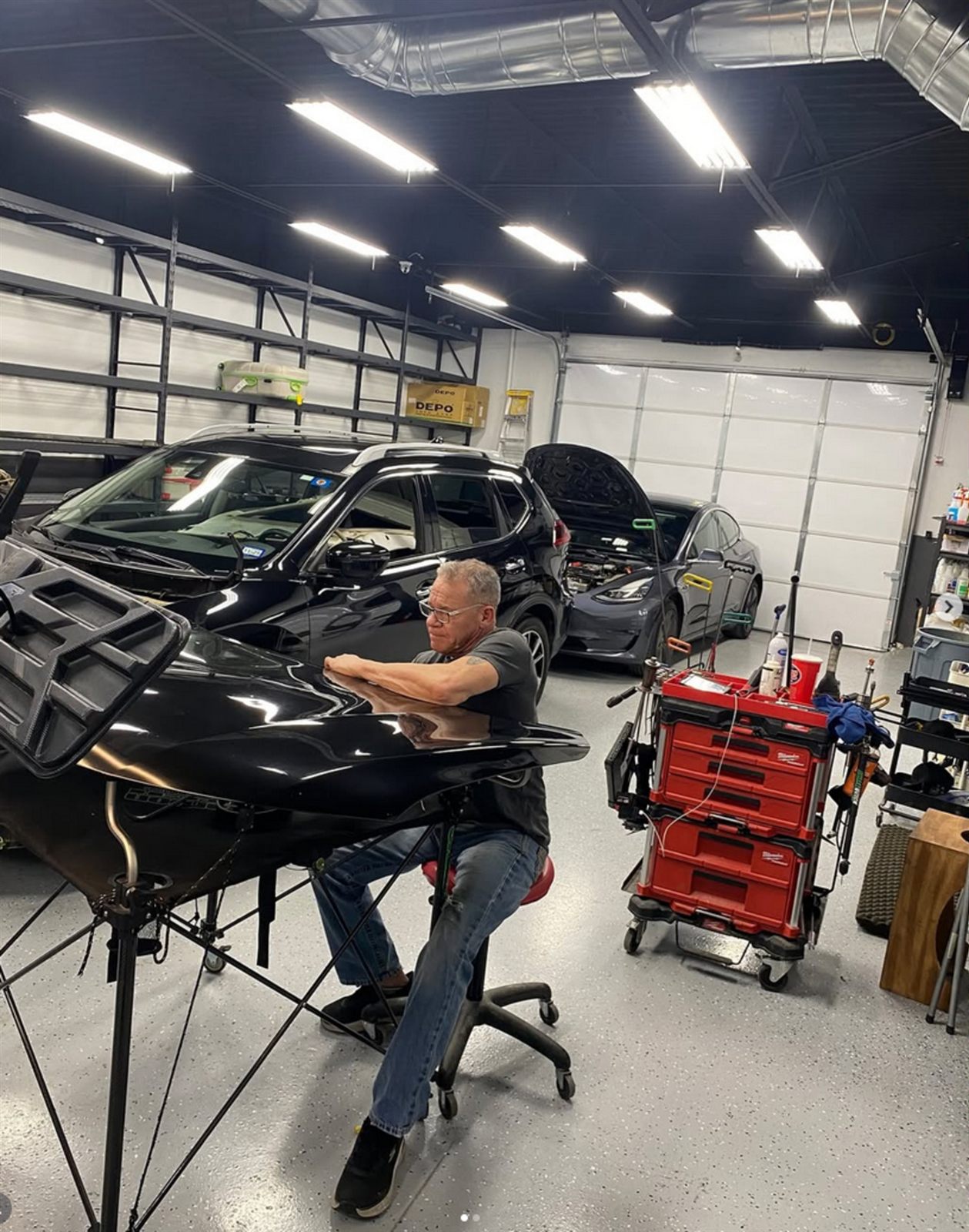
The authorization at DentPicks is tied to the estimate the vehicle was checked in on, and the practical rule is simple: if the plan for a panel changes, you hear about it before the panel is touched. Hail cars come in, get washed and read under LED line boards, and the found damage is documented panel by panel — which frequently means more dents than the outdoor estimate showed. That difference goes to your adjuster as a supplement.
Where a panel turns out to be past paintless repair — cracked paint in the dents, stretched metal, damage across a body line or a hem — the honest answer is push-to-paint, refinishing or replacement, and that is a conversation with you and your adjuster, not a decision made quietly. Panels sometimes do need replacement, and we do what is best for the vehicle rather than defending one method. It is also worth knowing that paintless repair itself creates no vehicle history record, while an adjuster-required panel replacement can be reported.
While the car is in the shop you get live updates, and the finished job is signed off by whoever runs quality control before it moves to delivery — that sign-off is visible in your customer portal. Every repair carries a written lifetime warranty for as long as you own the vehicle; it is not transferable.
Common mistakes
- Signing a blank or estimate-free authorization. If nothing defines the scope, the scope is undefined. Ask for the estimate to be attached or referenced.
- Assuming the deductible is handled because a form was signed. Deductible treatment is a separate conversation — ours is waived up to $1,000 on many approved hail claims, which is not the same as always $0. Our deductible guide explains how it works.
- Authorizing teardown while still shopping around. A disassembled car is an expensive thing to move.
- Leaving valuables and toll tags in the car. Most forms disclaim liability for personal property, and they mean it.
- Not keeping a copy. Photograph the signed form and the estimate before you hand the keys over.
- Treating a verbal "should be about a week" as a term. Ask for the timeline in the update thread, where it is written down.
Questions to ask at drop-off
- What exactly am I authorizing today — inspection, or the full repair?
- Which estimate does this reference, and can I have a copy?
- If you find more damage, at what point do you stop and call me?
- If a panel turns out to need paint or replacement, who tells my adjuster and when?
- Is any of this work being sublet, and to whom?
- Are there storage fees, and what triggers them?
A shop that handles hail work regularly will answer all six without needing to check. If the answers are vague, that is information about the shop, not about the paperwork.
What to do next
Read the form before the keys change hands, take a photo of it, and make sure you know the supplement rule. The Texas Department of Insurance publishes a plain-language consumer guide to auto coverage that is worth a look if you are unsure what your policy owes on the repair side. Coverage depends on the language of your policy, and your insurer or licensed agent can confirm your specific coverage.
At DentPicks in Plano we inspect free of charge, quotes are usually verbal, from photos, in about 30 minutes, and nothing is authorized until you know what the plan for each panel is. On insurance-approved hail claims we arrange complimentary pickup across DFW, and a full-vehicle repair typically runs about 5–10 business days in the shop. If you want to talk it through before signing anything, get in touch or read how dent repair in Plano works from check-in to hand-back. Our guide on preparing for a PDR appointment covers what to do with the car before drop-off.
Frequently asked questions
Is a repair authorization the same as accepting the insurance settlement?
No. They are separate. The authorization is a contract between you and the shop about work on your vehicle. The settlement is between you and your insurer. A direction-to-pay clause only routes the money — it does not mean you have agreed the claim amount is correct or final.
Can the shop do extra work without asking me again?
It depends on the form. Many include a threshold below which additional necessary work can proceed. Ask what that threshold is and how you will be notified. Hail jobs genuinely find more damage once panels are read under proper lighting, so some flexibility is normal — an unlimited ceiling is not.
What happens if I authorize a teardown and then decline the repair?
You are usually responsible for the disassembly and reassembly time, and sometimes for storage. This is the clause most worth reading if you are still comparing shops. Get a straight answer on the teardown cost before authorizing it, not after.
Does signing a shop's authorization mean I can't use a different shop?
Signing an authorization commits you to that shop's terms for that job, but insurer referral paperwork does not oblige you to use a recommended shop in the first place. In Texas the vehicle owner chooses the repairer. Ask any shop what it costs to walk away before work starts.
Should the estimate be attached to the authorization?
Yes, or clearly identified by number and date. An authorization with no defined scope is the single most common paperwork problem in collision and hail work. Photograph both documents before you hand over the keys.
Can I be charged storage while my insurer decides on a supplement?
Some forms allow it. If a supplement stalls for a week or two — which happens — a daily storage clause matters. Ask whether storage applies, when the clock starts, and whether it pauses while approval is pending.
What if a panel quoted for PDR turns out to need paint or replacement?
That is a change to the plan and should come back to you and your adjuster before the panel is touched. Repairability depends on paint condition, metal stretch, panel access and prior repairs, so some reassessment is normal — but the decision should not be made quietly.
Sources and methodology
- Automobile insurance guide — Texas Department of Insurance.
- After hail or windstorms: consumer tips — Texas Department of Insurance.
Repair, cost and timing statements that are not tied to a listed source come from DentPicks' own quoting and repair history at the Plano, TX shop. They are typical ranges and shop-floor observations, not industry statistics or promises — your vehicle, its condition, your policy language and your insurer determine your specific outcome.
Want the paperwork explained before you sign it?
Bring the estimate to the Plano shop, or send it over. We will walk you through what is being authorized, what is likely to change once the panels are read, and what happens next.