

The short answer
Photograph every panel the same day, note the storm date and the street where the car was parked, and check glass, lamps, mirrors and seals before worrying about dents. Report to your insurer promptly even if the damage looks minor — driveway dent counts are almost always low. Then have the panels read under reflection lighting before deciding whether the claim is worth filing.
 Written by the DentPicks Editorial Team
Technically reviewed by Vytas Kucinskas, Founder & Master PDR Technician
Written by the DentPicks Editorial Team
Technically reviewed by Vytas Kucinskas, Founder & Master PDR Technician
Published: Aug 19, 2026 · Last reviewed: Aug 19, 2026 · 9 min read
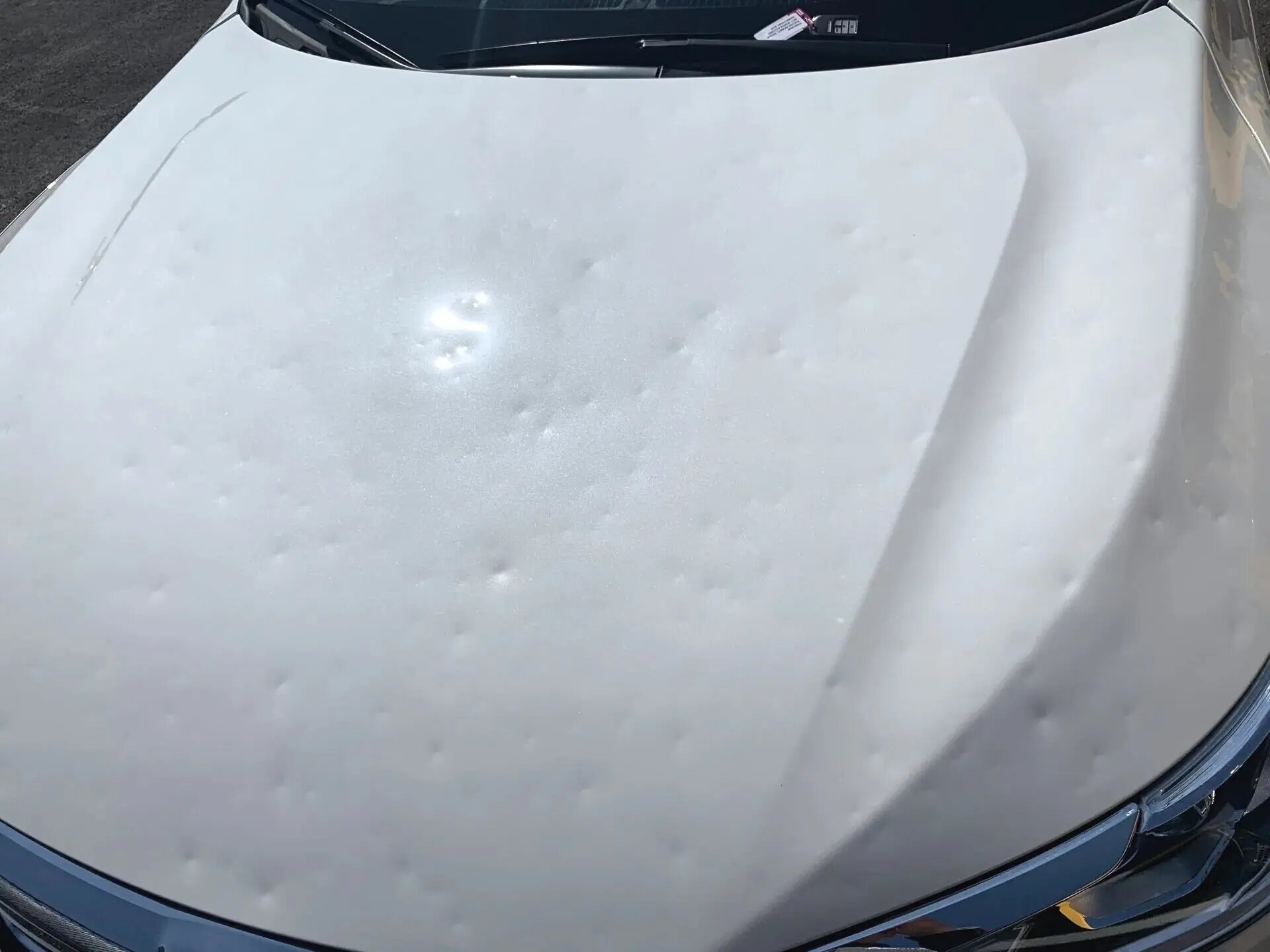
Hail does not fall evenly on a city. It falls in ribbons — a core a few miles wide that can hammer one subdivision while leaving the next one over with nothing but wet driveways. Allen and Plano drivers see this every spring: one street in Twin Creeks has every hood speckled and the street behind it looks untouched. That pattern is exactly why a neighborhood hailstorm needs handling differently from a headline-making regional event.
When a storm is city-wide, everyone knows to check their car. When the core clipped six blocks, half the affected owners never look closely, notice the damage two months later, and then have to reconstruct which storm did it. The first 48 hours are worth more than anything you can do afterward.
The first hour: document while the evidence is fresh
Before you think about insurance, shops or anything else, get the car recorded. Do it in daylight if you can, and do it before you move the vehicle if it is safe to stay put.
- Photograph every panel wide, then close. Hood, roof, both quarter panels, deck lid or tailgate, all four doors, the pillars and the roof rails. For the close shots, crouch and shoot along the panel rather than straight at it — a low angle puts shadow in the dents and makes them visible.
- Shoot the glass, lamps and mirrors separately. These are the safety items, and they are the ones that get missed on a dent-focused walk-around.
- Capture the odometer and the plate. They date and identify the vehicle in the same set.
- Photograph the hail itself if any is left. Stones next to a coin or a ruler are useful corroboration of storm size at your address.
- Write down where the car was parked and when. Not just "Allen" — the street. Neighborhood storms are argued about at street level.
Cell phone timestamps and location data do a lot of quiet work here. A photo set taken in a Star Creek driveway an hour after the storm is far stronger than the same photos taken in a parking lot three weeks later.
Check the safety items before the cosmetic ones
Dented sheet metal is almost always cosmetic — hail deforms the outer skin, not the frame, brakes or drivetrain. The items that actually decide whether you should keep driving are elsewhere.
Why the roof and hood matter more than what you can see
From the driver's seat you see the hood. You almost never see the roof, and on a truck or SUV you cannot see it at all without standing on something. Those two panels take the most impacts in a vertical hail event, and they are also the panels a quick driveway look consistently under-counts.
The reason is light. Outdoor light — bright Plano sun included — scatters across a panel and flattens shallow dents into invisibility. Under controlled reflection lighting the picture changes completely. In our Plano bays panels are read under LED line boards: straight lines reflect off the paint, and every dent shows as a break or a bend in the line. It is routine for a car whose owner counted a dozen dents in the driveway to come back with a panel map running into the hundreds.
That gap is not academic. The number that goes onto a claim is the number someone counted, and if it was counted in a driveway it is probably low.
How a neighborhood storm changes the insurance side
Hail is handled under the comprehensive part of a Texas auto policy. You file the claim — that part is yours and it is quick — and from there we help and walk alongside you: photos, meeting the adjuster, filing supplements when opened panels reveal more than the first estimate covered, and the paperwork in between.
A localized storm has two specific wrinkles worth knowing about.
- Your insurer may not have a storm flag for your address. After a regional event, carriers pre-stage catastrophe teams. After a six-block core, your claim may be handled as a routine file. That makes your own documentation — the storm date, the street, the stone photos — matter more, not less.
- Late discovery is common. If nobody in your cul-de-sac talked about it, you may not look at the roof for weeks. Dents with intact paint remain repairable, but claim deadlines are a separate question. Our guide on Texas hail claim time limits covers how those work, and your insurer or licensed agent can confirm your specific coverage.
The Texas Department of Insurance recommends prompt notice to your insurer after a hail or windstorm event, and most policies require it. Reporting is not the same as committing to repair — it opens the file and fixes the date.
Allen and Plano logistics: you are close, which changes your options
Our shop is at 1915 N Central Expy #800 in Plano, on US-75 at the President George Bush Turnpike. That puts it inside Plano itself and roughly ten miles and twelve minutes from Allen, straight down US-75. There is no other DentPicks location — everything is repaired in that building — but proximity means Allen and Plano drivers rarely have to think about logistics at all.
| Situation | Practical route |
|---|---|
| Storm hit last night, car drives fine | Photograph, report to your insurer, bring it in on a weekday for a free inspection under line lighting. No appointment needed. |
| Claim already approved, you cannot lose a half day | Book complimentary pickup and delivery — included on insurance-approved hail claims across DFW. |
| One or two dents, no claim | Send photos through the form. You will usually get a verbal quote back in about 30 minutes, and these are often finished the same day. |
| Glass, lamp or seal damage | Handle that first — it is the genuine safety item — then deal with the dents. |
Once the vehicle is in the shop, full-vehicle hail repair generally runs about 5 to 10 business days depending on severity. That is a typical range, not a guaranteed date. You get live updates through the job, the finished work is signed off by whoever runs quality control — visible in your customer portal — and the car gets a mini exterior detail before it goes back. Every repair carries a written lifetime warranty for as long as you own the vehicle; it is not transferable.
The knock at the door
Within a day or two of any Collin County hail event, crews start working the affected streets. Some are legitimate. Many are temporary operations that follow storms, take the claims, do fast work in a tent or a driveway, and are two states away by the time the paint tells on them.
The tells are consistent: pressure to sign something on the spot, an offer to "cover your deductible" framed as a favor rather than a claim outcome, no fixed local address, out-of-state plates on the truck, and a warranty that exists only on a business card. Our guide on how storm-chaser operations work covers the pattern. You are also under no obligation to use anyone your insurer suggests — see choosing your own hail repair shop in Texas.
Common mistakes after a localized storm
- Judging the damage from the driver's seat. The roof is the worst-hit panel and the one you cannot see.
- Deciding it is "not worth a claim" before anyone has counted. That decision is being made on a driveway count, which is the least reliable number available.
- Waiting to see if another storm comes. Overlapping events make claims harder to separate, not easier to combine.
- Washing the car aggressively first. A basic wash helps a panel read cleanly, but pressure-washing dents with cracked paint can lift more coating.
- Ignoring a windshield chip. It is the cheapest item on the list today and the most likely to become expensive by winter.
What to do next
Photograph the car today, note the storm date and the street, report it to your insurer, and get the panels read under proper lighting before you decide anything about cost or method. If you are in Allen, the drive details and local specifics are on our Allen hail and dent repair page; if you are in Plano, the shop is already in your city and the process is on our Plano hail repair page.
The inspection is free either way, and it is the only step that turns guesswork into a real answer. On many approved hail claims the deductible is waived up to $1,000, and pickup and delivery across DFW are complimentary on approved claims. Ask to see finished work before you commit to anything — a shop that repairs hail properly will be glad to show you panels it has already put back.
Frequently asked questions
The storm only hit part of my neighborhood. Will my insurer believe the damage is from that date?
Generally yes, provided you document it. Same-day photos with timestamps, a note of the street the car was parked on, and images of the stones themselves carry the argument. Localized storms are less likely to have a catastrophe team assigned, which makes your own record more important.
How can I tell how bad the roof is without climbing on the car?
You mostly cannot, which is the problem. Shooting the roof from a step stool or a phone held overhead at a low angle helps, but shallow dents disappear in outdoor light. A count under LED line boards routinely finds several times what an owner saw in the driveway.
Is it worth filing a claim for what looks like a handful of dents?
Decide that after someone counts, not before. Full-vehicle hail damage often runs well past a comprehensive deductible once every panel is read properly. On many approved hail claims the deductible is waived up to $1,000 — never guaranteed, but worth knowing before you write the damage off.
Will a hail claim raise my premium in Texas?
No and yes. A Texas comprehensive hail claim is not itself surcharged. But pricing algorithms factor in collision claims, tickets, violations and overall repair costs, and premiums rise over time without any claims at all. Your insurer or licensed agent can confirm how your policy is rated.
Someone knocked on my door offering to fix the hail damage in my driveway. Should I?
Be careful. Temporary crews follow storms through Collin County every spring, work out of tents and driveways, and leave before a warranty means anything. Ask for a fixed local address and a written warranty you can actually use next year, and never sign anything under pressure on your porch.
Does paintless dent repair show up on Carfax?
PDR itself creates no vehicle-history record, because no panel is replaced and no paint work is filed. If an adjuster requires a panel replacement — which sometimes is genuinely the right call for the vehicle — that work can be reported.
Do I have to use the shop my insurer recommends?
No. In Texas you choose who repairs your vehicle. A carrier can recommend a network shop, and there are conveniences that come with that, but the decision is yours and the estimate follows the car rather than the shop.
Sources and methodology
- After hail or windstorms: consumer tips — Texas Department of Insurance.
- Severe weather storm reports — NOAA Storm Prediction Center.
Repair, cost and timing statements that are not tied to a listed source come from DentPicks' own quoting and repair history at the Plano, TX shop. They are typical ranges and shop-floor observations, not industry statistics or promises — your vehicle, its condition, your policy language and your insurer determine your specific outcome.
Storm clipped your street in Allen or Plano?
Bring the car in or send photos. We read the panels under line lighting and tell you honestly what the storm actually did before you decide anything about a claim.