

The short answer
For a single dent in a flat area with intact paint, a photo quote is usually close to the final number. For dense hail damage it can only be a range, because the estimate is built from dent counts and counts cannot be read reliably from a phone picture. Photos also miss depth, prior body filler and whether there is access behind the panel, so anything creased, cracked or previously repaired needs an in-person look.
 Written by the DentPicks Editorial Team
Technically reviewed by Vytas Kucinskas, Founder & Master PDR Technician
Written by the DentPicks Editorial Team
Technically reviewed by Vytas Kucinskas, Founder & Master PDR Technician
Published: Aug 19, 2026 · Last reviewed: Aug 19, 2026 · 9 min read
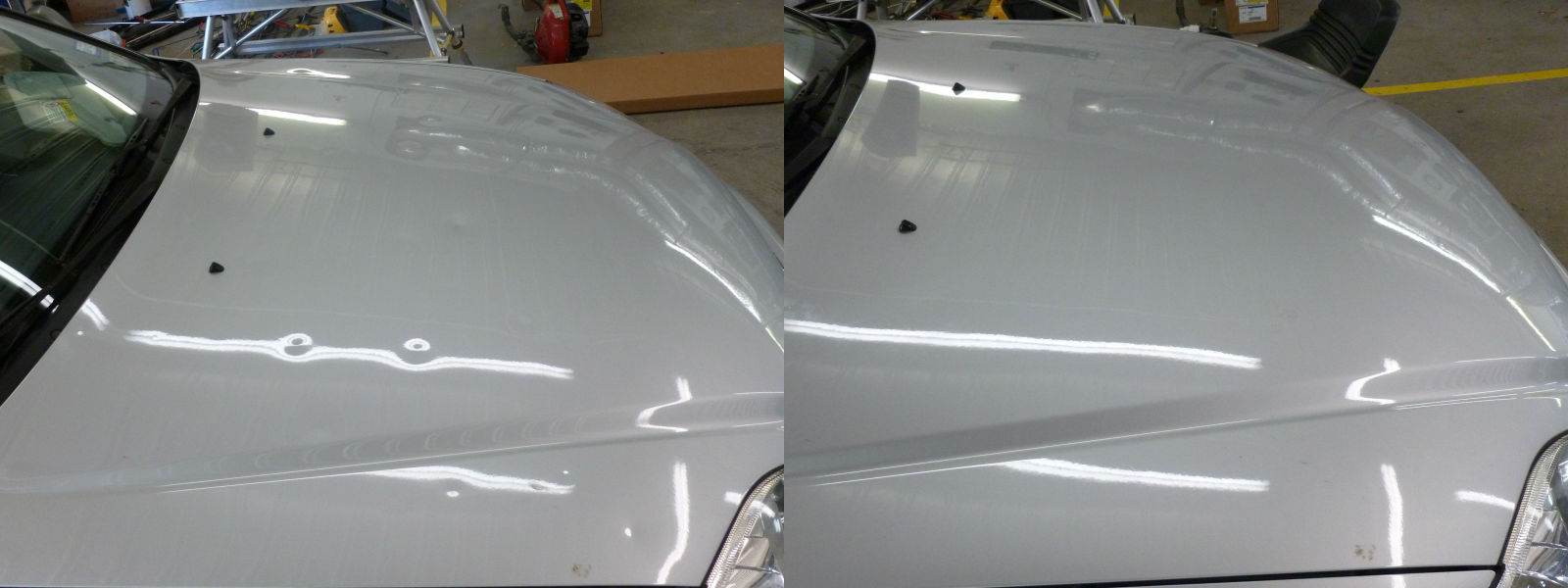
Almost every dent shop will now quote from photos, and for a lot of situations that is genuinely useful: you find out roughly what you are dealing with without giving up an afternoon. But a photo quote and an in-person estimate are not the same document, and treating one as the other is how people end up surprised at drop-off.
The honest answer is that a photo quote is accurate for some kinds of damage and unreliable for others, and the difference is predictable. It comes down to whether a camera can capture the three things that decide a repair: how deep the dent is, what the paint is doing, and what is behind the panel.
What a photo can tell a technician
- Which panel and where on it. Location on the panel is most of the difficulty — an edge, a body line or a brace is a different job from the flat middle.
- Roughly how big. Especially with a coin or a hand in frame for scale.
- Whether paint is broken. A good close-up shows chips, cracks and exposed metal clearly.
- Vehicle and configuration. Which matters for access, materials and trim.
- Whether there is other damage nearby. Which changes scope.
That is enough to answer the questions most people are actually asking: is this repairable without paint, is it worth a claim, and roughly what range am I in?
What a photo cannot capture
Depth
Depth is the single biggest driver of repair time on a large dent, and a photograph flattens it. A shallow twelve-inch dish and a sharp two-inch crater can look similar in a phone picture and behave nothing alike on the bench. Sharpness at the centre matters as much as width, and neither survives a flat image well.
Surface behaviour under moving light
Metal is judged by reflection. Technicians read panels under LED line boards — a straight reflected line that bends wherever the surface deviates. In our Plano bays a panel is read by moving across that line, and shallow imperfections that were invisible in a customer's photo appear immediately. A still image taken in flat daylight or open shade has no line to bend, so it under-reports.
What is behind the panel
Paintless repair works from the back. Whether there is access, whether a brace or a bonded seam sits behind the dent, whether the headliner has to come out — none of that is visible from the outside on any photo.
History
Prior body filler, a previous repair, or a repaint under the damage all change the method, and often the price. Filler does not respond to a push the way metal does. A photo rarely shows it; a hand on the panel and a look at the edges usually does.
Hail counts
Hail is where photo quotes are weakest. Counting shallow dents from a phone picture of a hood is close to guesswork, because the light is wrong and the count is the whole basis of the estimate — see how PDR pricing is built.
How accurate, by damage type
| Damage | Photo quote reliability | Why |
|---|---|---|
| Single door ding, flat area, paint intact | High | Simple, well-understood, little hidden variability |
| Small dent on a body line or panel edge | Moderate | Difficulty depends on exactly where it sits relative to the line |
| Large shallow dent | Moderate to low | Depth and sharpness do not photograph |
| Deep crease | Low | Metal stretch and paint stress need hands-on assessment |
| Full-vehicle hail | Range only | Counts cannot be read reliably from a phone photo |
| Dent with cracked or chipped paint | Direction, not price | Refinish scope depends on blend area and adjacent panels |
| Damage on aluminum or a bonded panel | Low | Material behaviour and access dominate the estimate |
A photo quote answers "is this the kind of problem I think it is." An inspection answers "what will it take."
How to send photos that are actually useful
Add context in writing: year, make, model and trim; whether the panel has ever been repaired or repainted; whether anything is loose, rattling or leaking; and whether this is going through insurance. Those four notes change the answer more often than an extra photo does.
What DentPicks does with a photo quote
We give quotes verbally, usually within about 30 minutes of receiving photos during business hours. On a single dent with good pictures, that figure is often exactly what the repair comes to. On hail we give a range, and we say plainly that it is a range, because the real number comes from reading every panel under lighting.
The in-person inspection is free and takes far less time than most people expect. If the photo estimate and the shop-floor read differ, we walk you through the specific reason — a crease sharper than it looked, filler under the damage, a brace behind the panel — before any work is authorized. Nothing proceeds on a number you have not agreed to.
Why photo quotes move, and by how much
When a photo figure changes after an inspection, it is almost always one of a short list of causes, and knowing them tells you which quotes to trust.
- The dent is sharper than it looked. Sharpness at the centre determines how slowly the metal has to be worked, and it is the detail a flat photo loses first.
- There are more dents than were in frame. Very common on hail, and common on parking-lot damage where a second impact sits just outside the picture.
- Something has to come off. A dent that needs a tail lamp, a trim panel or a headliner removed to reach adds real access labor.
- Prior work is present. Filler or a previous repaint under the damage changes the method entirely.
- Paint condition is worse up close. Micro-cracking inside a dent is often invisible in a photograph and decides whether refinishing is required.
On a single, simple dent with a good photo set, the movement is usually small or none. On dense hail damage the photo figure should never have been treated as firm in the first place — it is a planning number, and any shop giving you a fixed all-in hail price from a phone picture is guessing at the input that matters most.
When to skip the photo quote entirely
- Full-vehicle hail damage. Get it read indoors; the count is the estimate.
- Anything going through insurance. The adjuster's process needs real documentation anyway — see how the adjuster inspection works.
- Deep creases and large dents. Metal stretch has to be assessed by hand — our guide on deep creases explains why.
- A lease return with a deadline. You need a firm scope, not a range, to decide what is worth fixing before turn-in — see the lease return guide.
- Panels with a repair history. Filler changes the method and only shows up in person.
Common mistakes
- Sending one photo, straight on, in midday sun. The worst possible conditions for showing a dent.
- Treating a photo range as a commitment. A range is a range; get it confirmed before you plan around it.
- Choosing the lowest photo quote. The lowest number is often the one that assumed the least damage, and it will move once the car arrives.
- Not mentioning prior repairs. It is the single most common reason a quote changes at drop-off.
- Sending compressed screenshots. Detail is exactly what is being asked for.
- Accepting a firm hail price sight unseen. Nobody can count a roof from a phone picture.
What to do next
Take the five-shot set, add the four context notes, and send it. For a single dent that is often all you need. For hail, treat the reply as a range and book the free inspection, because the count is the estimate and the count needs lighting.
DentPicks quotes verbally from photos, usually in about 30 minutes, and inspects free of charge at the Plano shop under PDR lighting. Repairs carry a written lifetime warranty for as long as you own the vehicle — not transferable — and quality control is signed off by whoever runs quality control, visible in your customer portal. You can compare results in our before and after gallery or read how dent repair in Plano runs from photo to delivery.
Frequently asked questions
How many photos should I send?
Five per damaged area: a wide shot showing where it is on the car, a close shot with a coin or hand for scale, a low raking-angle shot, one where a straight line reflects across the dent, and a slow video pan. Send full-resolution originals, not compressed screenshots.
What lighting should I photograph a dent in?
Early morning or late afternoon, or indoors where a fluorescent tube or straight edge reflects across the panel. Direct midday sun is the worst option because it flattens the surface and hides shallow damage. Wash the panel first so the reflection is clean.
Will the price change when I bring the car in?
On a simple dent with good photos, usually little or not at all. It moves when the dent is sharper than it looked, when trim has to be removed for access, when there is filler or a previous repaint underneath, or when paint is micro-cracked inside the dent.
Can you quote hail damage from photos?
Only as a range, and we say so. Hail estimates are built from counts and sizes per panel, and counting shallow dents from a photograph is unreliable. The accurate figure comes from reading each panel under reflection lighting indoors.
Do I get a written quote from photos?
Our quotes are usually verbal, given in about 30 minutes during business hours from the photos you send. Nothing proceeds on a number you have not agreed to, and if the in-person read differs we explain the specific reason before any work is authorized.
Should I tell the shop if the panel was repaired before?
Yes, and it is the single most useful thing you can add. Body filler and prior repaints do not respond to a push the way factory metal does, and not mentioning them is the most common reason a quote changes at drop-off.
Is a photo quote enough for an insurance claim?
No. A claim needs proper documentation and, in most cases, an adjuster inspection. Photo quotes are useful for deciding whether a claim is worth opening at all. Coverage depends on the language of your policy, and your insurer or a licensed agent can confirm your specific coverage.
Sources and methodology
Repair, cost and timing statements that are not tied to a listed source come from DentPicks' own quoting and repair history at the Plano, TX shop. They are typical ranges and shop-floor observations, not industry statistics or promises — your vehicle, its condition, your policy language and your insurer determine your specific outcome.
Send photos and get a number today
Text or email the five-shot set and we will usually come back with a verbal quote in about 30 minutes. If it needs a proper look, the inspection in Plano is free.