
The short answer
Legitimate exclusions fall into four groups: new damage that happened after the repair, pre-existing conditions such as prior filler or cracked paint, work another party performs on the same panel, and agreed limits documented before the job started. Exclusions outside those four are worth questioning. Ask for the warranty document before booking, and get any expected repair limit written on the estimate.
 Written by the DentPicks Editorial Team
Technically reviewed by Vytas Kucinskas, Founder & Master PDR Technician
Written by the DentPicks Editorial Team
Technically reviewed by Vytas Kucinskas, Founder & Master PDR Technician
Published: Aug 19, 2026 · Last reviewed: Aug 19, 2026 · 9 min read
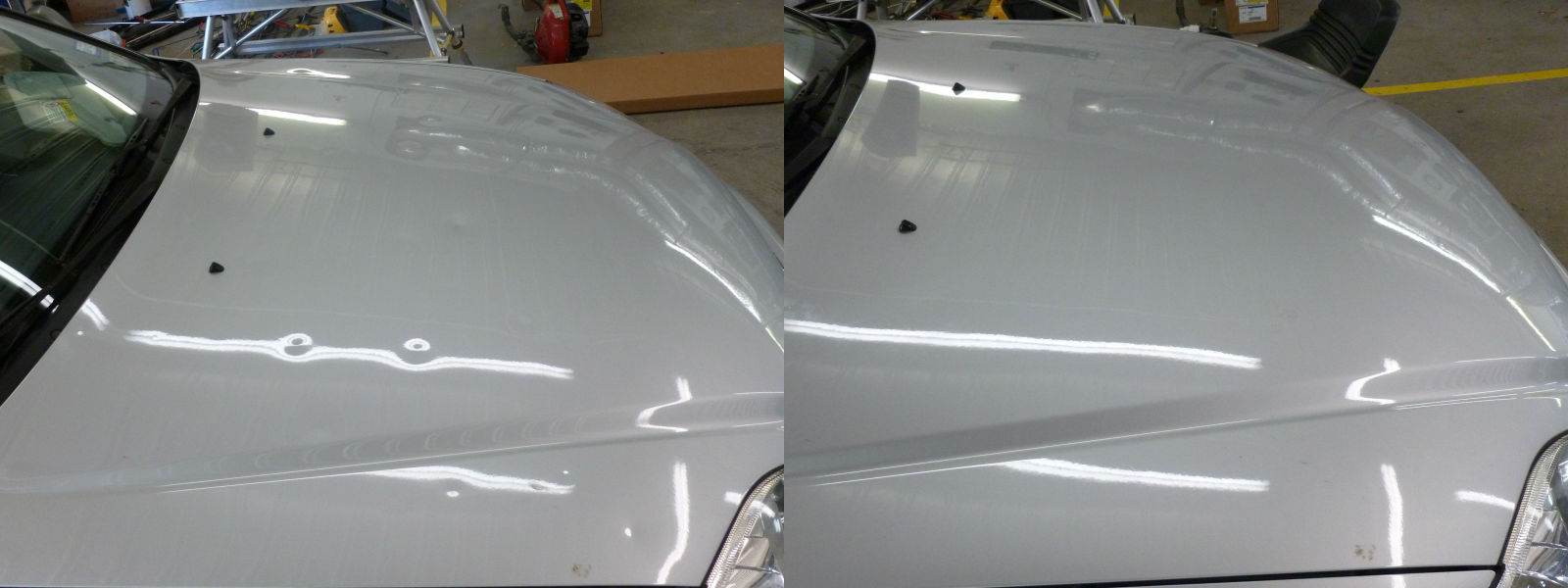
Every warranty has a boundary. The useful question is not whether exclusions exist — they always do — but whether they are written down honestly and whether they are narrow enough to leave the warranty meaning something. A dent-repair warranty with a fair set of exclusions is a real commitment. One with exclusions broad enough to cover any outcome is decoration.
Below is what a workmanship warranty on dent repair legitimately does not cover, why each boundary exists, and the exclusion language that should make you ask a second question before you sign.
The four categories exclusions fall into
Almost every genuine exclusion belongs to one of four groups. Sorting them this way makes an unfamiliar warranty document much faster to read.
- New damage. Anything that happened to the vehicle after it left the shop.
- Pre-existing conditions. Anything that was already true of the panel before we touched it.
- Third-party intervention. Anything anyone else did to the repaired area afterwards.
- Agreed limits of the repair. Outcomes both sides accepted in advance, in writing, before the work started.
An exclusion that does not fit any of those four is worth questioning.
New damage is not a warranty matter
This is the largest category and the one most people bump into. A warranty is not insurance. It stands behind the work performed; it does not underwrite the vehicle's future.
- A new hailstorm. North Texas gets several severe seasons' worth of opportunity. A repaired roof that takes fresh impacts is a new claim, not a warranty claim.
- New parking-lot dings, shopping carts, door strikes, road debris — including on a panel we previously repaired.
- Collision damage, which is a different repair discipline altogether.
- Vandalism, falling branches, animal damage.
- Damage from car washes, particularly automatic brush washes on loosened trim.
Distinguishing new damage from a returning repair is normally straightforward under reflection lighting: a fresh impact has a different signature from a worked area, and the original repair is documented in the file. That documentation is the reason the conversation stays short.
Pre-existing conditions
The second category covers what the panel brought with it. These are documented at inspection, before any work is agreed, precisely so nobody has to argue about them later.
| Condition | Why it sits outside the warranty |
|---|---|
| Previous filler or bondo repair | The panel is no longer bare metal behind the coating. Filler moves independently of the metal, especially through Texas heat cycling. |
| Prior repaint or aftermarket coating | Non-factory finish behaves differently under working. It can also fail on its own timeline for reasons unrelated to the repair. |
| Cracked, chipped or flaking paint in the dent | Broken coating is a corrosion path that already existed. PDR restores the metal, not missing paint. |
| Existing corrosion under the panel | Rust progresses regardless of what happens to the panel's shape. |
| Stretched metal from an earlier bad pull | Metal that has already been over-worked has a lower ceiling — see our guide on why DIY dent kits cause this. |
| Prior structural or collision repair behind the panel | Bracing, adhesive or replaced substructure changes how the panel can be accessed and worked. |
None of these mean the repair cannot be done. They mean the expected result is discussed and recorded up front. Repairability depends on paint condition, metal stretch, panel access and prior repairs, and an honest shop tells you which of those is the limiting factor on your specific panel.
Third-party intervention
If someone else works the same area after us, coverage on that area ends. That includes another PDR shop, a body shop, a mobile technician, a dealer's reconditioning department and — most commonly — a glue-tab kit or suction puller bought online.
The reason is mechanical rather than legal. A second person working the same metal changes the condition we warranted, and nobody can then separate our result from theirs. The same logic applies to aftermarket coatings, wraps and paint protection film applied over a repaired panel: they change what can be assessed and what can be reworked.
Agreed limits of the repair
This is the category people are least aware of, and the one where an honest shop earns trust. Not every dent comes out to invisible. Deep creases, damage on a body line, aluminum panels and impacts with heavy metal stretch sometimes reach a very good result rather than a perfect one — our guide on deep creases and large dents explains where those ceilings sit, and aluminum panel repair covers why that material behaves differently.
When that is the case, we say so before the work is booked, and the agreed outcome goes in the paperwork. The warranty then covers that agreed outcome. What it does not do is convert a documented "90 percent improvement, faint shadow may remain under direct light" into a promise of perfection after the fact.
Where the condition report comes from
Nearly every exclusion in the first three categories is decided at inspection rather than after a complaint, which is why the inspection is worth taking seriously even when the repair looks obvious.
At the Plano shop, panels are read under LED line boards. The reflected line bends over any deformation, which is what makes hail dents countable in the first place, but the same lighting also shows what a walk-around cannot: the slightly different reflection of a previously refinished panel, the faint edge of an old filler repair, the flat spot where somebody already pulled the metal too far. A magnet check and a look behind the panel fill in the rest.
What comes out of that is a condition record tied to the estimate — pre-existing filler, prior repaint, cracked coating, corrosion, restricted access, expected repair ceiling. It is not there to build a list of things to refuse later. It is there so that both sides are describing the same panel, and so that the warranty attaches to a documented starting point rather than to a memory.
The same record is what makes the boundary between new damage and workmanship easy to draw months afterwards. Hail work in particular benefits from this, because a vehicle that spends a North Texas spring outdoors may well pass through more than one storm before anybody looks closely at the paint.
Exclusion wording that should make you pause
- "Excludes environmental factors." In Texas, that phrase can be stretched to cover almost anything. Ask what specifically it means.
- "Excludes heat-related movement." Properly worked metal does not move with temperature. Filler does. This exclusion may be telling you what is actually behind the repair — see what Texas heat does to filler repairs.
- "At the shop's sole discretion," with no defined remedy at all.
- "Void if the vehicle is sold or transferred" presented as an exclusion rather than as the ownership term it is. Our warranty runs for as long as you own the vehicle and is not transferable — that is a duration clause, and it should be stated plainly.
- An exclusion list longer than the coverage list.
- No exclusion list at all. A warranty that excludes nothing in writing has not been thought through, and it will be interpreted against you when it matters.
How to keep yourself inside the coverage
- Get the condition report at inspection. Pre-existing filler, repaints and cracked paint should be noted before work, not discovered afterwards.
- Do not let anyone else work the panel. Not a kit, not a mobile tech in a parking lot, not a dealer recon department.
- Follow the aftercare window. There are a few sensible things to avoid immediately after a repair — our guide on PDR preparation and aftercare covers them.
- Keep the paperwork and check the portal. Finished work is signed off by whoever runs quality control, visible in your customer portal, alongside the estimate and any supplements.
- Report a concern early. A question about a panel is easiest to resolve while the repair is recent and the vehicle has not accumulated new damage.
What to do next
Ask any shop for the warranty document before booking, and read it against the four categories above. If an exclusion does not fit new damage, pre-existing condition, third-party work or an agreed limit, ask why it is there.
At DentPicks, every repair — one door ding or a full hail job — carries a written lifetime warranty for as long as you own the vehicle, with the exclusions stated rather than implied. Inspections and quotes are free; send photos for a verbal range in about 30 minutes or bring the vehicle to the Plano shop. See finished work in our before and after gallery, or read how our dent repair process runs from first inspection to sign-off.
Frequently asked questions
If a new hailstorm dents a panel you already repaired, is that covered?
No. New impacts are new damage, not a workmanship issue, and a warranty is not insurance. Fresh hail on a previously repaired panel is a fresh claim. Under reflection lighting a new impact has a different signature from a worked area, so the two are straightforward to tell apart.
Does cracked paint in the dent void the repair?
It does not void anything, but the paint damage itself sits outside a paintless repair warranty. PDR restores the metal's shape; it cannot replace missing coating. Broken paint is also the one part of dent damage that genuinely worsens in Texas heat, so it should be addressed rather than left.
What happens if I try a DIY dent puller first?
Metal that has already been over-pulled has a lower ceiling, and that gets documented as a pre-existing condition. If a kit is used on a panel we already repaired, coverage on that panel ends — a second person working the same metal changes the condition we warranted.
Can a warranty exclude a dent that did not come out completely?
Only if the limit was agreed in writing beforehand. Deep creases, body-line damage and aluminum sometimes reach a very good result rather than an invisible one. We say so before booking and the expected outcome goes on the estimate — then the warranty covers that agreed outcome.
Is rust covered?
No. Corrosion already present under a panel progresses regardless of the panel's shape, so it is documented at inspection as a pre-existing condition. Where rust is a factor, we will tell you before the work rather than after.
Do paint protection film or a wrap affect coverage?
Applying film, a wrap or an aftermarket coating over a repaired panel changes what can be inspected and reworked, so coverage on that panel is affected. If you plan to apply any of these, do it after the repair and mention it beforehand.
Does selling the car count as an exclusion?
It is a duration term, not an exclusion. Our written lifetime warranty runs for as long as you own the vehicle and is not transferable to a new owner. Any shop should state that plainly rather than tuck it into an exclusions list.
Sources and methodology
Repair, cost and timing statements that are not tied to a listed source come from DentPicks' own quoting and repair history at the Plano, TX shop. They are typical ranges and shop-floor observations, not industry statistics or promises — your vehicle, its condition, your policy language and your insurer determine your specific outcome.
Read the exclusions before you book the work
We will show you the warranty document and note any expected limits on the estimate before work starts. Free inspection and quote at the Plano shop.