

The short answer
A written PDR estimate should identify the vehicle by VIN, list each damaged panel as its own line item, and show the basis for each price: dent count, dent size and access difficulty. It should separate any non-paintless work, state the warranty terms, and say how hidden damage is handled. Quotes are usually verbal from photos in about 30 minutes; a written estimate follows an in-person inspection.
 Written by the DentPicks Editorial Team
Technically reviewed by Vytas Kucinskas, Founder & Master PDR Technician
Written by the DentPicks Editorial Team
Technically reviewed by Vytas Kucinskas, Founder & Master PDR Technician
Published: Aug 19, 2026 · Last reviewed: Aug 19, 2026 · 8 min read
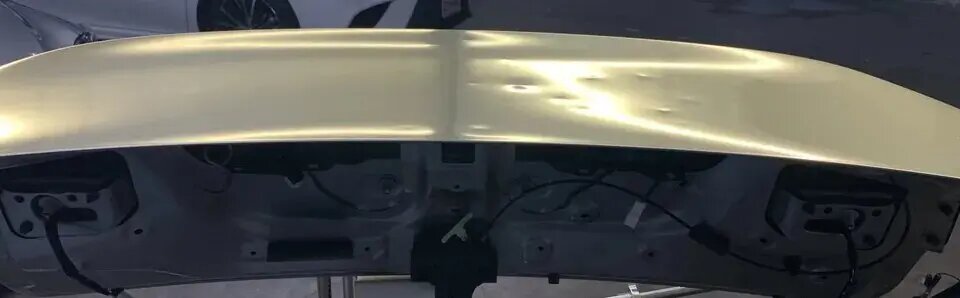
A verbal number over the phone is useful for deciding whether to bother. A written estimate is what you actually make decisions on — whether to file a claim, whether to approve the work, and what you are entitled to argue about later if something changes. The difference between a good estimate and a scribbled total is that a good one shows its reasoning panel by panel.
Here is how we sequence it at DentPicks, and it is worth knowing because most shops work the same way. Quotes are usually verbal, from photos, in about 30 minutes — enough to tell you whether you are looking at a $150 repair or a $3,000 one. A written estimate follows an in-person inspection, because photographs cannot show metal stretch, panel access from behind, or how a dent actually behaves under reflection lighting.
Why photos alone cannot produce a written number
Paintless dent repair is priced on things a camera does not capture. A dent that looks minor in a phone photo may sit directly on a body line, where the metal is stiffest and the repair takes several times longer. A panel that looks straightforward may have a brace, a foam pad or a sensor bracket behind it, and access is most of the labor in PDR. Paint condition matters too — an older repaint or a previous filler repair changes what is possible.
On the shop floor, panels are read under LED line boards. The reflected line bends over any deformation, so a hood that showed six dents in daylight regularly reads at three times that. That is not a sales tactic; it is the reason estimates written in a parking lot are so often wrong. Our guide on how paintless dent repair works explains the reading process in more detail.
What a written PDR estimate should contain
Whether you are looking at ours or somebody else's, work down this list. Anything missing is something to ask about.
- Vehicle identification. Year, make, model, trim, color, VIN and current mileage. The VIN matters because panel material and construction change between model years and configurations.
- Date and the name of the person who wrote it. An estimate with no author is not an estimate.
- Panel-by-panel line items. Not "hail damage — $2,800." Roof, hood, left front fender, left front door, and so on, each with its own line and its own price.
- The severity basis for each panel. For hail work that means dent count band, dent size band and access difficulty. For a single dent it means location, size and whether it sits on a body line.
- Any non-PDR operations, listed separately. Removal and reinstallation of trim, headliners, lamps or interior panels. Glue-pull work. Any panel that needs refinishing or replacement.
- Paint or replacement work called out explicitly, with a clear note that it is not paintless. Panels sometimes do need replacing and refinishing — the estimate should say so rather than bury it.
- The total, and what is and is not in it. Taxes, shop supplies, sublet work such as glass or calibration.
- Whether it is a cash estimate or an insurance estimate, and if the latter, the claim number and the deductible position.
- Warranty terms in writing. Ours is a written lifetime warranty for as long as you own the vehicle. It is not transferable to a new owner, and that should be stated plainly rather than discovered later.
- A supplement note. Every honest estimate acknowledges that hidden damage can appear once trim comes off, and says how that is handled.
How hail work is actually priced
Full-vehicle hail is not a flat rate and it is not a per-dent tally either. It is priced per panel, and each panel is assessed on three things:
- Dent count on that panel, read under proper lighting, grouped into bands rather than counted one by one.
- Dent size — the largest impacts on the panel drive the band, because a single quarter-sized dent takes longer than a dozen pea-sized ones.
- Access — whether a technician can reach the back of the panel, and what has to come off first. A roof with a sunroof and a fixed headliner is a different job from a bare steel hood.
So two cars with identical-looking damage can carry noticeably different estimates because one has an aluminum hood and a panoramic roof and the other does not. That is also why full-vehicle repairs run about 5–10 business days in the shop — a typical range, not a guarantee. Our guide on how long hail repair takes breaks the timeline down stage by stage.
What our own numbers look like
For a sense of scale before you ever see paperwork, this is how DentPicks quoting has tended to run. These are our shop's ranges, not published industry data, and any given vehicle can land outside them:
| Type of damage | Our typical quoting range | What moves it |
|---|---|---|
| Door ding, small parking-lot dent | Roughly $75–$200 | Body-line placement, panel material, whether trim must come off |
| Mid-size dent, visible from ten feet | Roughly $150–$450 | Depth, access from behind, paint condition |
| Large or complex panel work | $400 and up | Creases, metal stretch, aluminum, blocked access, prior repairs |
| Full-vehicle hail | Priced per panel | Dent count, dent size and access on each individual panel |
More detail on what drives each of these sits in our PDR cost guide. Where a panel falls outside what paintless work can achieve, the estimate should say so explicitly rather than leaving you to discover it mid-repair.
Red flags in a written estimate
The deductible-matching estimate deserves its own mention. After a North Texas storm, temporary operations quote to whatever number makes the repair feel free rather than to the damage in front of them. That is the classic pattern described in our guide on spotting storm-chaser operations, and a panel-by-panel written estimate is the simplest defense against it.
Estimate, supplement, final invoice
On insurance work, the first estimate is rarely the last document. The sequence normally runs: your insurer's adjuster writes an estimate, the shop writes its own, and where the two disagree the shop submits a supplement with photographic support for the additional damage. That is a routine part of hail work, not a dispute — our guide on how supplements work covers it properly.
Worth being clear on one point: you file the claim. We help and walk alongside you — documentation, meeting the adjuster, writing supplements, keeping paperwork moving — but the claim is yours, which is also why the choice of shop is yours.
Questions worth asking before you sign
- Which panels, if any, do you expect to need refinishing or replacement?
- What happens to the price if you find more damage once the trim is off?
- Is the warranty in writing, and what exactly does it cover?
- Who signs off on the finished work, and can I see that?
- How long will the vehicle be in the shop?
- Is anything being sublet — glass, calibration, refinishing?
What to do next
Send photos first. Straight-on and angled shots of each damaged panel, plus one wide shot of the vehicle, are usually enough for a verbal range within about 30 minutes. If the number is worth acting on, book an in-person inspection and we will write it up properly — panel by panel, under LED lighting, with the warranty terms attached.
Every finished repair is signed off by whoever runs quality control, and that sign-off is visible in your customer portal alongside the estimate and any supplements. You can see completed examples in our before and after gallery or read how our dent repair process runs from first photo to delivery.
Frequently asked questions
Why is the first quote verbal instead of written?
Because photos cannot show metal stretch, paint condition or what sits behind a panel. A verbal range from photos, usually within about 30 minutes, is accurate enough to decide whether the repair is worth pursuing. The written estimate follows an in-person inspection under reflection lighting.
Should the estimate list every individual dent?
No, and an estimate that claims to is usually guessing. Hail work is priced per panel using dent count bands, dent size and access difficulty — that is the level of detail a real estimate shows, not a dent-by-dent tally.
What if the shop's estimate is higher than my insurer's?
That is common and is handled with a supplement — the shop documents the additional damage photographically and submits it to your adjuster. It is a routine part of hail work. Our supplement guide explains the process.
Can an estimate change after work starts?
It can, and a good estimate says so up front. Damage sometimes appears only once trim, lamps or a headliner come off. The right handling is a documented supplement with your approval before the extra work happens — never a surprise on the final invoice.
Does the estimate have to mention the warranty?
It should. Ours states a written lifetime warranty for as long as you own the vehicle, and that it is not transferable to a new owner. Terms you only learn about after paying are not terms you agreed to.
Is an estimate that exactly matches my deductible a bad sign?
Usually yes. Pricing to the deductible rather than to the damage is a pattern associated with temporary storm-season operations. A panel-by-panel written estimate with the pricing basis shown is the simplest way to check that the number came from the vehicle.
How much does a written estimate cost?
Nothing at our Plano shop. The inspection and the written estimate are free, whether the work ends up going through insurance or being paid in cash.
Sources and methodology
Repair, cost and timing statements that are not tied to a listed source come from DentPicks' own quoting and repair history at the Plano, TX shop. They are typical ranges and shop-floor observations, not industry statistics or promises — your vehicle, its condition, your policy language and your insurer determine your specific outcome.
Get the estimate in writing, panel by panel
Send photos for a verbal range in about 30 minutes, then bring the vehicle in for a free inspection and a written estimate you can actually read.