

The short answer
Hail repair is priced from four inputs: how many dents are on each panel, how large they are, how big and awkward that panel is, and how much trim has to come off to reach the back of it. Panels with cracked paint, stretched metal or prior filler move to refinish or replacement, which costs more. On a covered claim your out-of-pocket exposure is normally the deductible, not the repair total.
 Written by the DentPicks Editorial Team
Technically reviewed by Vytas Kucinskas, Founder & Master PDR Technician
Written by the DentPicks Editorial Team
Technically reviewed by Vytas Kucinskas, Founder & Master PDR Technician
Published: Aug 19, 2026 · Last reviewed: Aug 19, 2026 · 9 min read
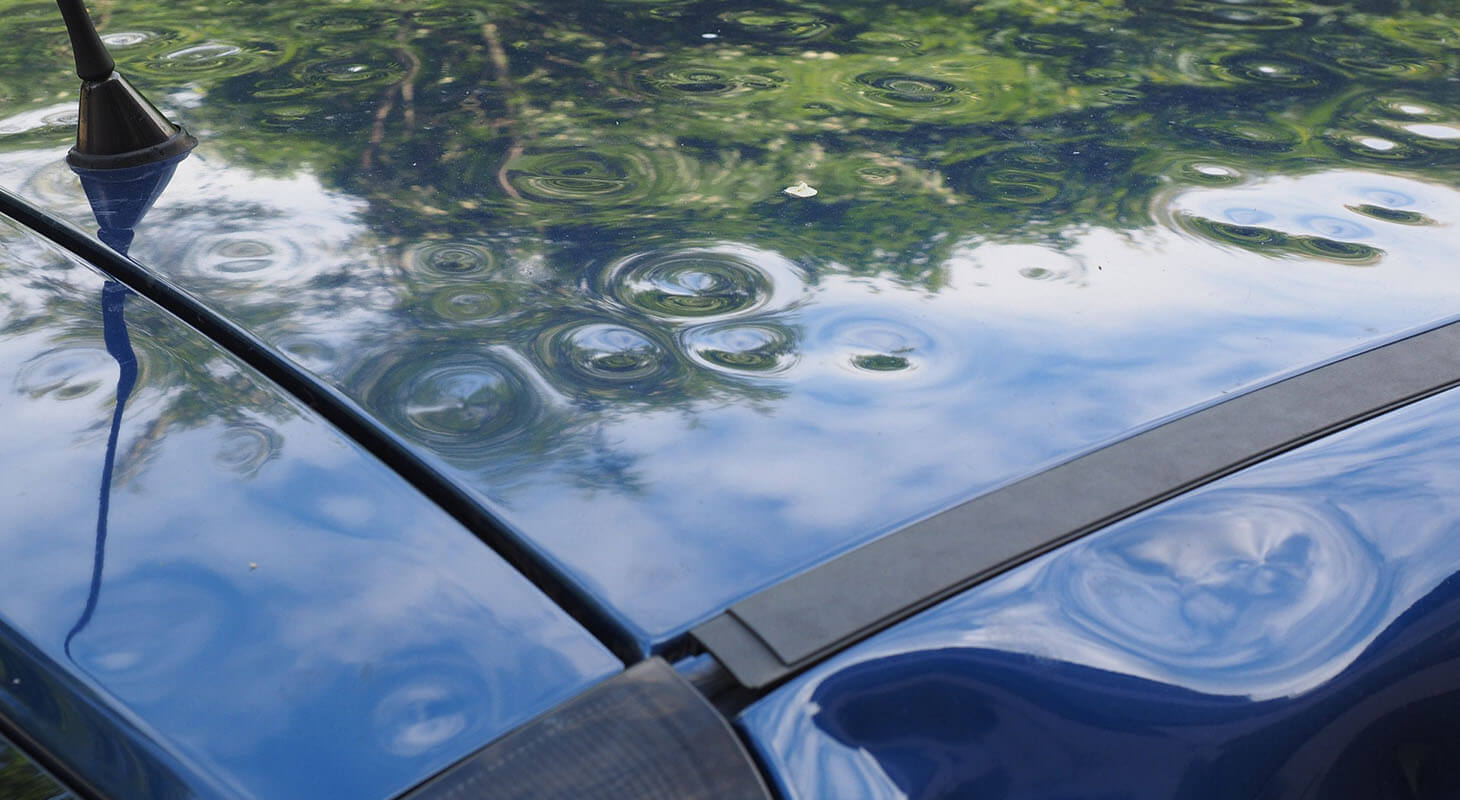
Hail pricing confuses people because it does not work like most repair pricing. There is no flat rate per vehicle and no simple hourly figure. A full-vehicle hail estimate is built the way a survey is built: panel by panel, counting dents and sorting them by size, then applying a matrix that converts those counts into labor. Two identical cars from the same storm can land far apart because one took eighty impacts and the other took three hundred.
Once you understand the inputs, an estimate stops looking arbitrary — and it becomes much easier to tell whether a number is low because the damage is light or low because someone stopped counting.
The four inputs that build the number
1. Dent count, by panel
Every damaged panel is counted separately: hood, roof, deck lid, each fender, each door, each quarter. Counting is the foundation of everything else, and it is the input most affected by conditions. A hood that reads as light damage in a parking lot routinely reads much heavier under reflection lighting indoors, because diffuse outdoor light hides shallow impacts. In our Plano bays panels are read under LED line boards for exactly this reason — the technician works across a straight reflected line and marks every point where the line bends.
2. Dent size
Counts are then sorted into size bands — commonly described in coin terms: dime, nickel, quarter, half dollar and larger. Size drives time. A large shallow dent can take longer than several small ones, and a dent past a certain size may not be a paintless candidate at all.
3. Panel size and difficulty
The same count costs more on a roof than on a fender. Larger panels take longer to work and are harder to access, and some areas are structurally awkward — double-metal seams, braced roof sections, panel edges and body lines all slow the work down. Aluminum panels behave differently from steel and generally take longer, which is why aluminum repair is priced and scheduled differently.
4. Access labor (R&I)
Paintless repair works from the back of the panel, so things have to come off: headliners, interior trim, tail lamps, sometimes bumper covers or glass. This is real, itemized labor and it is one of the most common places a cheap-looking estimate has quietly deleted work. A roof repair with no headliner removal listed is a question worth asking.
How the estimate document is actually structured
| Line type | What it represents | Why it varies |
|---|---|---|
| Panel repair labor | Counts and sizes run through a hail matrix | Storm severity, panel size, metal type |
| R&I labor | Removing and refitting trim, glass, lamps, headliner | Vehicle design and which panels are damaged |
| Refinish labor and materials | Panels that must be painted rather than pushed | Cracked paint, stretched metal, prior repairs |
| Parts | Replacement panels, moldings, clips, broken trim | Availability and vehicle configuration |
| Glass | Windshield, sunroof, backglass | Impact damage; camera-mounted glass may need calibration |
| Supplement lines | Damage found once panels come apart | Almost always some, on a heavy hail car |
On an insurance claim, the carrier's estimate is the starting document, not the final one. Damage that only becomes visible after teardown is submitted as a supplement with documentation — a normal part of hail work rather than a sign that something went wrong. Our guide on how supplements work covers the mechanics.
On hail work the cheapest estimate is very often the one that counted the fewest dents. You do not save money — you get fewer dents fixed.
Where paintless repair stops being the cheaper route
Paintless dent repair is normally the less expensive method because it removes paint materials, booth time and blending from the equation, and it keeps the factory finish. But it is not universal. Panels sometimes genuinely do need replacement and refinishing, and pretending otherwise produces bad repairs.
- Cracked or chipped paint in the dent. Pushing the metal will not repair broken coating.
- Stretched metal. Very sharp or very large impacts can displace metal beyond what it will return from.
- No access to the back side. Some areas are sealed, bonded or braced.
- Prior body filler. Filler does not respond to a push the way metal does.
- Damage density. Past a certain concentration, refinishing a panel can cost less than working several hundred overlapping dents.
Repairability depends on paint condition, metal stretch, panel access and prior repairs, which is why an in-person read matters more than a photo. Our comparison of PDR versus a traditional body shop sets out where the line usually falls.
What changes the total the most
- Storm severity. The difference between pea-sized and golf-ball-sized hail is not incremental — it changes counts, sizes and method all at once.
- Where the car was parked. A vehicle sheltered on one side takes damage on fewer panels, and panel count is a primary multiplier.
- Glass and lamps. These are parts, not labor, and they move a total sharply. Camera-mounted windshields may also require calibration after replacement; manufacturer procedures vary by model year and configuration.
- Vehicle construction. Aluminum panels, large panoramic roofs and sensor-dense trim all add time.
- Prior repairs. Filler and previous work under the damage can convert a paintless panel into a refinish panel.
- Whether it totals. When repair cost approaches the vehicle's value the carrier may declare a total loss instead — see hail damage and total loss in Texas.
What you actually pay
On a covered comprehensive claim, hail repair is settled between the shop and your insurer, and your out-of-pocket exposure is normally the deductible rather than the repair total. That is why the headline repair figure and the amount you personally spend are two different conversations. On many approved hail claims we waive the deductible up to $1,000 — not always, and not guaranteed, but frequently enough to be worth asking about. Coverage depends on the language of your policy, and your insurer or a licensed agent can confirm your specific coverage.
A Texas comprehensive hail claim itself is not surcharged. It is fair to note that pricing algorithms do factor in collision claims, tickets, violations and overall repair costs, and premiums rise for reasons unrelated to any claim you file — but a hail claim is not the same thing as an at-fault collision claim. Our deductible guide goes through the arithmetic.
Paying out of pocket is a different calculation entirely, and it is sometimes the right one for very light damage where the repair cost sits near the deductible.
What a good estimate looks like on paper
At our Plano shop, hail quotes are usually verbal, given after that panel-by-panel read, and typically take about 30 minutes. Photos are enough for a rough range; the accurate number comes from reading the metal under proper light.
Common mistakes
- Comparing an outdoor estimate with an indoor one. They are not measuring the same damage.
- Treating the first insurance estimate as final. Supplements exist because teardown reveals more.
- Choosing on price alone. On an approved claim the carrier's estimate largely sets the value anyway.
- Ignoring R&I lines. Deleting access labor makes an estimate cheaper, not the repair.
- Letting a driveway crew "pop them out" first. A bad pull stretches metal and can turn a paintless panel into a repaint, which raises the cost rather than lowering it.
- Waiting through a second storm. Overlapping events make counts and claim dates far harder to sort out.
What to do next
Get the vehicle read indoors, ask for the breakdown by panel rather than a total, and confirm which panels are proposed for paintless repair and which for refinish. If you are claiming, hand the breakdown to your adjuster and expect a supplement once panels come apart. Budget about 5–10 business days in the shop for a full-vehicle repair — a typical range rather than a promise.
DentPicks inspects hail damage free of charge in Plano under PDR lighting, gives a verbal quote from the panel-by-panel read, and backs the work with a written lifetime warranty for as long as you own the vehicle — not transferable. Quality control is signed off by whoever runs quality control and is visible in your customer portal. See how our hail repair process runs, or start with dent repair in Plano.
Frequently asked questions
Why is there no flat price for hail repair?
Because the work scales with damage, not with the vehicle. A car with eighty impacts on three panels and a car with three hundred across every panel take very different amounts of time, even if they are the same model from the same storm.
Does the shop or the insurance company decide the price?
On a covered claim the carrier's estimate largely sets the value of the work, and the shop documents anything beyond it through a supplement. You file the claim and stay in the conversation; a good shop helps by documenting damage and meeting the adjuster with you.
Is paintless dent repair always cheaper than body shop repair?
Usually, because it removes paint materials, booth time and blending. Not always: past a certain density of damage, or where paint is cracked, metal is stretched or filler is present, refinishing or replacing a panel can be the better and sometimes cheaper answer.
Should I pay out of pocket instead of claiming?
It can make sense on very light damage where the repair cost sits near your deductible. On a full-vehicle hail car it rarely does. A Texas comprehensive hail claim itself is not surcharged, though pricing algorithms factor in collision claims, tickets, violations and overall repair costs.
Why did the estimate go up after the car was taken apart?
That is a supplement, and it is normal on hail work. Damage under trim, on panel edges or behind a headliner is not visible at the first inspection. The shop documents it and submits it to the adjuster for review rather than absorbing or hiding it.
Do broken windows and lights change the price a lot?
Yes, because they are parts rather than labor. Glass in particular moves a total sharply, and a camera-mounted windshield may require calibration after replacement. Manufacturer procedures vary by model year and configuration.
How long will the repair take once it is priced?
About 5 to 10 business days in the shop for a full-vehicle hail repair is a typical range, not a guarantee. Pending supplements, parts availability and any panel that turns out to need refinishing all extend it.
Sources and methodology
- After hail or windstorms: consumer tips — Texas Department of Insurance.
- Automobile insurance guide — Texas Department of Insurance.
Repair, cost and timing statements that are not tied to a listed source come from DentPicks' own quoting and repair history at the Plano, TX shop. They are typical ranges and shop-floor observations, not industry statistics or promises — your vehicle, its condition, your policy language and your insurer determine your specific outcome.
Find out what your hail car actually prices at
We read every panel under PDR lighting in Plano and give you the breakdown, not just a total. Inspections are free and the quote usually takes about 30 minutes.