The short answer
Refinishing is correct when the metal can be brought back to shape but the paint is cracked, chipped or the area was previously filled. Replacement is correct when metal is torn or heavily stretched, when straightening would take longer than fitting a new panel, or when panel edges leave nothing to work with. Repairability depends on paint condition, metal stretch, panel access and prior repairs, so the panel has to be read in person before either path is chosen.
 Written by the DentPicks Editorial Team
Technically reviewed by Vytas Kucinskas, Founder & Master PDR Technician
Written by the DentPicks Editorial Team
Technically reviewed by Vytas Kucinskas, Founder & Master PDR Technician
Published: Aug 19, 2026 · Last reviewed: Aug 19, 2026 · 9 min read
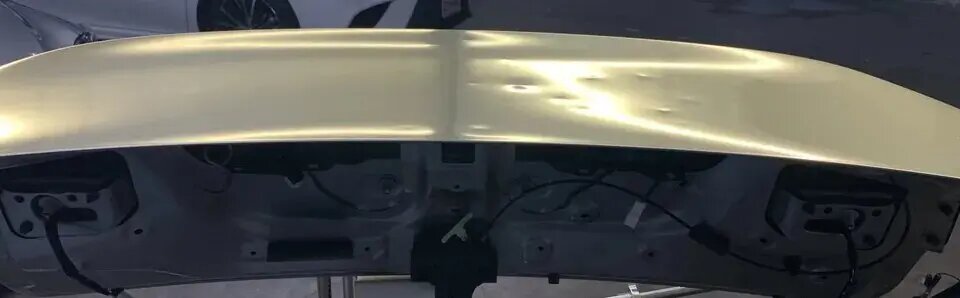
Paintless dent repair keeps the factory finish, which is why it is the first thing any good shop reaches for. But it is a technique with real limits, and pretending otherwise does the vehicle no favors. When a panel is ruled out for PDR, the next decision is not automatic — sometimes the right answer is conventional repair and refinishing, sometimes it is replacing the panel outright, and the two are not interchangeable.
This guide explains what pushes a panel out of PDR territory, how the repair-or-replace call is actually made, and what each path means for time, cost, color match and your vehicle's record.
What rules PDR out in the first place
Repairability depends on paint condition, metal stretch, panel access and prior repairs. Any one of the following typically ends the paintless conversation:
- Cracked, chipped or flaking paint in the damage. PDR moves metal; it cannot restore a broken coating. Once paint is open, the panel needs refinishing regardless of how well the metal comes back.
- Stretched metal. A deep, sharp impact permanently increases the surface area. The metal can be brought close to shape but it will not sit true without shrinking work, which is body-shop territory.
- Torn, split or punctured metal. Nothing to push against.
- Damage on a panel edge or a double-walled area. Hem flanges, door skin edges, roof rails and areas backed by bracing often have no tool access at all.
- Existing filler or a previous refinish. Filler does not move with the metal, and a repainted panel does not behave like factory paint under a PDR tool.
- Very large, very deep creases across body lines. Our guide on deep creases and large dents covers where the line genuinely falls.
The three roads, honestly described
| Path | What happens | Trade-off |
|---|---|---|
| Paintless dent repair | Metal massaged back to shape from behind and with tabs; factory paint untouched | Best outcome when it applies; strictly limited by paint condition and access |
| Conventional repair and refinish | Metal worked, filled if needed, primed, painted and blended into adjacent panels | Handles damage PDR cannot; the panel is no longer wearing factory finish |
| Panel replacement and refinish | Old panel removed, new panel fitted, sealed, corrosion-protected, painted and blended | Correct for torn or heavily stretched panels; longest, most expensive, and may be reported |
Most shops, ours included, will exhaust the first before the second and the second before the third — but only where the vehicle actually benefits. Forcing PDR onto a panel that needs paint produces a wavy result and a customer who is unhappy six months later.
How the repair-or-replace decision is made
Once refinishing is on the table, the question becomes whether the existing panel is worth saving. The factors that actually decide it:
- Labor hours versus part cost. If straightening and filling a panel takes longer than removing and fitting a new one, replacement is both cheaper and better. This is the most common tipping point on quarter panels and roofs.
- Bolt-on or welded. Hoods, doors, fenders, trunk lids and tailgates unbolt. Quarter panels and roof skins are welded or bonded, which makes replacement a far bigger operation and pushes the decision back toward repair where possible.
- Panel material. Aluminum work-hardens quickly, needs separate tooling and separate space to avoid galvanic contamination, and is less tolerant of repeated straightening. See our guide on aluminum panel repair.
- What is mounted in or behind the panel. Blind-spot radar in a quarter panel, cameras in a tailgate or mirror, parking sensors in a bumper cover, antennas in a roof. Anything that must be removed, refitted and possibly recalibrated adds time and procedure. Manufacturer procedures vary by model year and configuration.
- Corrosion protection. A factory panel carries e-coat and cavity wax that a repaired area has to have properly restored. Poorly sealed repairs are where rust starts years later.
- Part availability. A replacement panel that is on national backorder can add weeks to a repair that was otherwise a few days.
Refinishing done properly
If a panel is going to be painted, the paint work has to be good enough that nobody can find it. That means:
- Color is matched to the vehicle, not to the paint code. Factory finishes fade and shift with Texas sun. A sprayout card checked against the actual panel is the only reliable method.
- Adjacent panels are blended. Painting a door edge-to-edge and stopping there is how you get a car with one slightly different door. Blending into neighboring panels is normal, correct practice.
- Tri-coat and pearl finishes need extra care. Three-stage whites and pearls are the hardest to match and require more blending, more time and more skill.
- Coverage is confirmed under multiple light sources. A match that works under shop LEDs and fails in daylight is not a match.
The comparison between the two approaches, including what each does to the finish, is covered in our guide on PDR versus a traditional body shop.
The insurance side of a refinish or replacement
If the damage is being handled under a claim, moving a panel from PDR to refinish or replacement usually means a supplement. That is a normal part of the process rather than a problem: the estimate is revised, the additional operations are documented with photos, and the carrier reviews it. You file the claim; we help and walk alongside you through the documentation, the adjuster meetings and the supplement paperwork. Our guide on how supplements work explains the mechanics.
Two things are worth knowing before you authorize replacement:
- Records. PDR itself creates no vehicle history record. An adjuster-required panel replacement, on the other hand, can be reported. If resale record matters to you, raise it before the work is approved.
- Total loss math. On older or heavily damaged vehicles, replacing multiple panels can push the repair cost toward the vehicle's value and trigger a total-loss evaluation. Our guide on hail damage and total loss in Texas covers how that assessment works.
Common mistakes at this decision point
- Insisting on PDR because "it's cheaper." On a panel with cracked paint, PDR is not cheaper — it is incomplete, and the panel still needs paint afterwards.
- Accepting replacement without asking whether repair was possible. Ask which operations were considered and why the panel was ruled unrepairable.
- Approving paint without discussing blending. Ask specifically which panels will be blended into.
- Ignoring corrosion protection. Ask how the repaired or replaced area will be sealed and cavity-treated. In Texas humidity, this is the part that shows up in five years.
- Forgetting recalibration. If a sensor, camera or radar was disturbed, ask whether the manufacturer requires calibration and whether it will be performed and documented.
- Assuming one shop's "unrepairable" is final. A second reading under a light board costs nothing and occasionally changes the answer.
What to do next
Get the panel read in person, under reflection lighting, by someone who does paintless work daily — that is the only way to know whether PDR is genuinely out. If it is, ask for the repair-or-replace reasoning in plain language: what is wrong with the metal, what saving the panel would take, and what a new panel involves.
At our Plano shop the assessment is free and the recommendation is whatever is best for the vehicle, including telling you a panel needs paint we would rather not have had to apply. Finished work is read again under lighting and signed off by whoever runs quality control — visible in your customer portal — and our own repairs carry a written lifetime warranty for as long as you own the vehicle, though it is not transferable to a new owner. You can start on our Plano dent repair page or simply get in touch with photos.
Frequently asked questions
Is a repainted panel worse than a factory-finished one?
A properly refinished panel that is color-matched to the vehicle and blended into the adjacent panels is very hard to detect. What it loses is the factory e-coat and paint process, which is why keeping the original finish is preferred when the damage allows it — not because good paint work is inadequate.
Why do adjacent panels get painted when only one was damaged?
Because stopping at a panel edge makes the repair visible. Factory paint has faded and shifted with Texas sun, so new color is blended into the adjoining panels to make the transition invisible. Blending is normal, correct practice rather than a shop padding the estimate.
Will a panel replacement show up on a vehicle history report?
It can. Paintless dent repair itself creates no record, but an adjuster-required panel replacement can be reported. If your resale record matters to you, raise it before the work is approved so the repair-or-replace decision is made with that in mind.
Does replacing a panel affect my driver-assistance systems?
It can, whenever a camera, radar, antenna or parking sensor is mounted in or behind the panel. Anything removed has to be refitted and, in many cases, recalibrated. Manufacturer procedures vary by model year and configuration, so ask whether calibration is required and whether it will be documented.
Why is a roof skin usually the last thing to be replaced?
Because it is welded or bonded rather than bolted. Replacing it means cutting welds and disturbing the headliner, glass, roof rails and anything mounted up there. A hail-dented roof with intact paint is normally excellent PDR work, and that is almost always the better path.
Who decides, me or the insurance company?
You authorize the repair and choose the shop; the carrier decides what it will pay for under the policy. Where those differ, the gap is worked out through documentation and a supplement. You file the claim, and we help and walk alongside you through the photos, adjuster meetings and paperwork.
Could replacing several panels make my car a total loss?
On older or heavily damaged vehicles, yes — replacement costs add up quickly and can push the repair estimate toward the vehicle's value, which triggers a total-loss evaluation. Coverage and the exact threshold depend on the language of your policy and the carrier's assessment.
Sources and methodology
- Automobile insurance guide — Texas Department of Insurance.
Repair, cost and timing statements that are not tied to a listed source come from DentPicks' own quoting and repair history at the Plano, TX shop. They are typical ranges and shop-floor observations, not industry statistics or promises — your vehicle, its condition, your policy language and your insurer determine your specific outcome.
Told a panel cannot be fixed without paint?
Bring it to the Plano shop for a second reading under proper lighting. We will tell you plainly what the metal will give back and which path is genuinely best for the vehicle.