

The short answer
Check three things before cashing out. Confirm whether your lender or leasing company allows it, since financed and leased vehicles often require repair. Ask your insurer how previously paid, unrepaired damage is treated on a future claim, because it is commonly excluded. And check whether any paint is chipped or cracked, which turns a stable dent into a corrosion problem. Coverage depends on the language of your policy.
 Written by the DentPicks Editorial Team
Technically reviewed by Vytas Kucinskas, Founder & Master PDR Technician
Written by the DentPicks Editorial Team
Technically reviewed by Vytas Kucinskas, Founder & Master PDR Technician
Published: Aug 19, 2026 · Last reviewed: Aug 19, 2026 · 10 min read
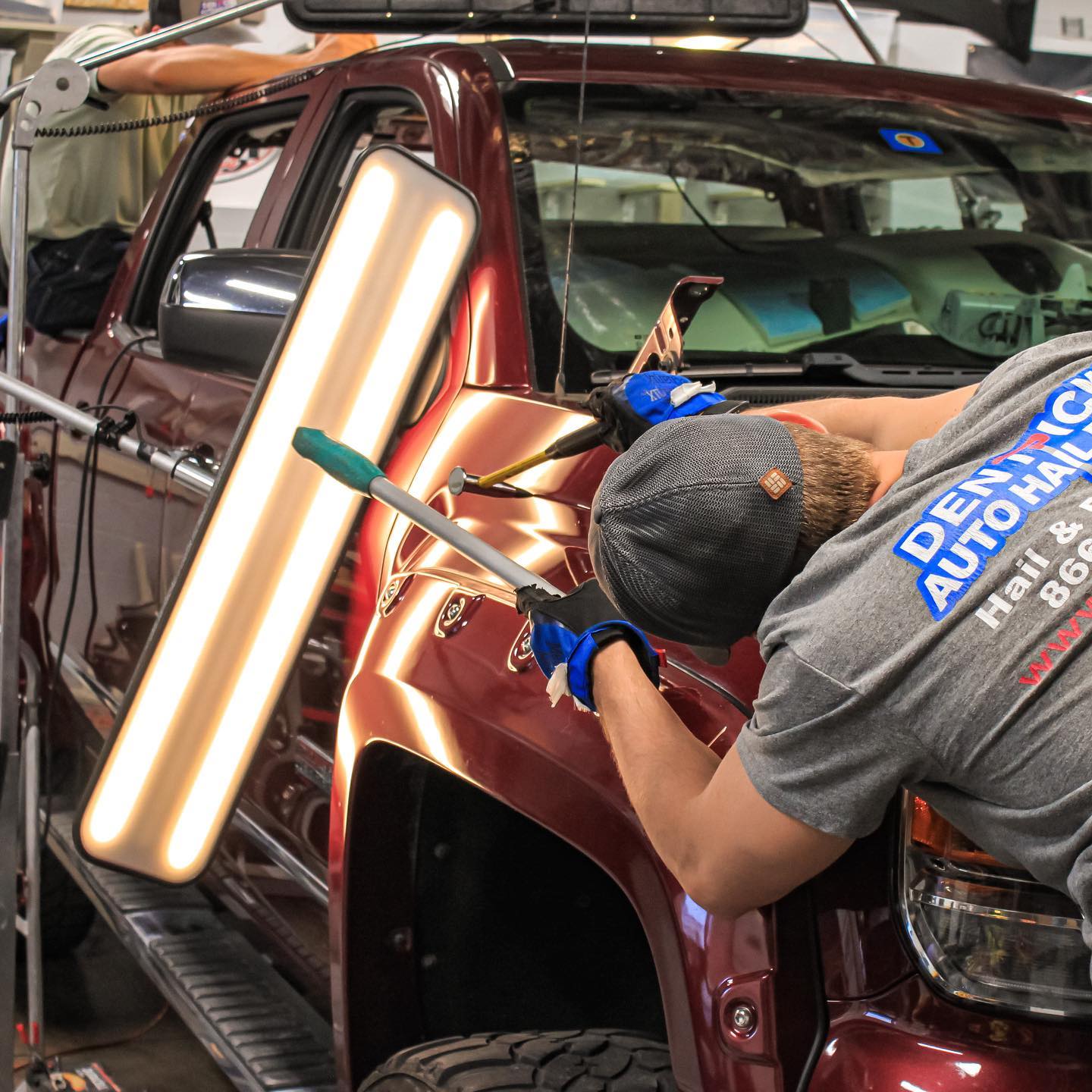
After a North Texas hailstorm, a lot of drivers reach the same fork in the road. The claim is approved, a check is on the way, and the car still drives fine. Why not keep the money and live with the dents? It is a legitimate question, and the honest answer is that it is sometimes a reasonable decision and sometimes an expensive one — the difference comes down to who holds the title, what the paint looks like, and what you plan to do with the vehicle in the next two or three years.
What follows is what actually changes when a hail payout is taken and no repair is made. None of it is a rule your insurer must follow; coverage depends on the language of your policy, and your insurer or licensed agent can confirm how your specific contract handles an unrepaired loss.
First, find out whether the choice is even yours
Plenty of drivers assume the money is theirs to spend. Often it is. But three situations remove or limit that choice, and it is worth confirming which one you are in before you make plans for the check.
- You have a lienholder. If the vehicle is financed, many loan agreements require the collateral to be kept in repaired condition, and insurers frequently issue claim payments jointly to you and the lender. A jointly issued check usually cannot be cashed without the lender's endorsement, and lenders commonly want proof of repair before releasing funds.
- The vehicle is leased. A lease is somebody else's car. Lease agreements typically make you responsible for returning the vehicle without excess wear, and hail damage is normally assessed at turn-in whether or not a claim was ever filed. Taking a payout and returning a dented car often just moves the bill to the end of the lease. Our lease return dent repair guide walks through how turn-in inspections read damage.
- You own it outright. This is the case where cashing out is genuinely your call — and where the rest of this article matters most.
What an unrepaired loss usually changes on the policy side
Insurers keep a record of what they paid for. That has practical consequences on the next claim, and it is the single most common surprise for drivers who cashed a hail check and then met another storm.
Some insurers also inspect a vehicle before continuing or reinstating physical damage coverage after an unrepaired loss, and some exclude the specific unrepaired panels going forward. These practices vary, and this is exactly the kind of thing to confirm in writing with your carrier rather than assume. The Texas Department of Insurance's automobile insurance guide is a useful neutral reference for how the coverage parts fit together.
One thing that is usually not a factor: filing the comprehensive claim itself. A Texas comprehensive hail claim is not surcharged the way an at-fault collision is. That said, pricing algorithms factor in collision claims, tickets, violations and overall repair costs, and premiums rise for reasons unrelated to any claim you file. We covered that in more detail in our guide to hail claims and your deductible.
What an unrepaired car is worth later
This is where most of the real money is. Appraisers, dealers and auction buyers decondition hail-damaged vehicles at retail-facing rates, not at what a PDR shop would charge to fix them. The deduction reflects what a dealer expects to spend, plus the risk and the lot time.
Two patterns show up consistently in DFW after a big storm year. A car that is being kept for another six or seven years absorbs the loss fine — you drive it, you sell it eventually at a stage where cosmetics matter less. A car that will be traded or sold within roughly two years usually gives back more at appraisal than the repair would have cost through the claim, because you paid the deductible either way and then took the deconditioning hit on top of it.
If a sale or trade is anywhere on the horizon, our guide on repairing dents before selling or trading in covers how appraisers actually score hail.
The condition question: is your paint intact?
A dent with unbroken paint is stable. The metal has been displaced, not opened, and the factory coating is still doing its job — which is why paintless dent repair still works on hail damage that is years old. If you cash out today and repair in three years, a car in this condition is normally still a PDR candidate.
A dent with a chip, a crack or exposed metal is a different object. That is a corrosion entry point, and North Texas heat cycling works at the edges of damaged coating every summer. Sharp hail on a hot panel, older cars with thinner clear, and any panel with prior filler work are the usual places we find broken paint. Once corrosion starts, the repair path moves from PDR toward refinishing or panel replacement, and the cost moves with it. Our guide on what Texas heat does to unrepaired dents goes deeper on this.
This is the one genuinely time-sensitive part of the decision. Cashing out on a car with intact paint is a financial choice you can revisit. Cashing out on a car with cracked paint is a choice with a clock on it.
Payout versus repair: the honest comparison
| Factor | Take the payout | Repair the vehicle |
|---|---|---|
| Cash in hand now | Yes, minus your deductible | No — the money goes to the repair |
| Deductible | You still pay it, in the form of a reduced check | On many approved hail claims DentPicks waives it up to $1,000 |
| Next hail claim | Previously paid, unrepaired damage is commonly excluded | Clean slate — new damage is new damage |
| Resale or trade value | Deconditioned at retail rates by appraisers | Normal condition grading |
| Leased or financed vehicle | Often not permitted, or payable jointly to the lender | Straightforward |
| Cracked paint present | Damage progresses; repair path gets more expensive | Addressed before corrosion starts |
| Supplement for hidden damage | Forfeited — nobody is opening the panels | Written and submitted during teardown |
That last row deserves a note. First estimates are written from what an adjuster can see, usually outdoors and often quickly. Once a vehicle is in a shop and trim comes off, additional damage frequently appears — and a supplement is how that gets added to the claim. A driver who cashes the first check is settling on the visible portion only.
How we read the car before you decide
At the Plano shop, hail inspections run under LED line boards rather than shop ceiling light or a parking lot. Reflection lighting is what makes a hail-dent count honest: outdoor light hides a large share of small impacts, and roof and hood panels are the hardest to read from ground level. That matters for this decision in a specific way — if you are weighing a payout against a repair, you need to know whether the estimate in your hand reflects the actual damage on the car.
We inspect hail-damaged vehicles free of charge, give you a verbal quote from the panel read, usually inside about 30 minutes, and tell you plainly if the damage is light enough that living with it is defensible. Whatever we find, whoever runs quality control signs the work off before delivery and that sign-off is visible in your customer portal. You file the claim — we help around it with the photo documentation, the adjuster meeting and the supplement paperwork.
Common mistakes
- Cashing a joint check without asking the lender. Lenders can require repair or proof of repair, and depositing a jointly issued draft without their endorsement causes problems that are much harder to unwind than a phone call.
- Assuming next season's storm starts fresh. It usually does not, on the panels you were already paid for.
- Treating the first estimate as the full damage. It is a starting figure written from what was visible on inspection day.
- Ignoring broken paint. Intact paint buys you time. Broken paint does not.
- Deciding before anyone has read the panels properly. A parking-lot look and an LED-board look produce different dent counts.
What to do next
Before you decide, do three things. Confirm with your lender or leasing company whether repair is required. Ask your insurer, in writing, how they treat previously paid unrepaired damage on a future claim and whether coverage on those panels changes. And have the vehicle read under proper lighting so you know whether the estimate matches the damage and whether any paint is broken.
If you land on repair, DentPicks handles it from there: complimentary pickup and a loaner across DFW on insurance-approved hail claims, deductible waived up to $1,000 on many of them, about 5–10 business days in the shop for a typical full-vehicle hail repair, live updates while it is with us, and a mini exterior detail at delivery. Our work carries a written lifetime warranty for as long as you own the vehicle — it does not transfer to the next owner. Read how our Plano hail repair process runs end to end. Austin customers are served by trailer pickup and delivery, with rental handled through your own rental coverage.
Frequently asked questions
Can my insurer stop me from keeping the money?
If you own the vehicle outright, the choice is usually yours. Some insurers do inspect a vehicle before continuing physical damage coverage after an unrepaired loss, and some limit coverage on the affected panels. Coverage depends on the language of your policy — your insurer or licensed agent can confirm what applies to you.
Why did the check come made out to me and my lender?
Insurers commonly issue claim payments jointly when there is a lienholder on the title, because the lender has an interest in the collateral being kept in repaired condition. The lender generally has to endorse the draft, and many require proof of repair before releasing the funds.
If I take the payout now, can I still get PDR later?
Usually yes, provided the paint is intact. A dent with unbroken coating is stable and remains a paintless dent repair candidate years later. Dents with chips, cracks or exposed metal are the exception — those progress, and the repair path moves toward refinishing. Repairability depends on paint condition, metal stretch, panel access and prior repairs.
Does an unrepaired hail claim show up on Carfax?
Paintless dent repair itself creates no vehicle history record. What can be reported is an adjuster-required panel replacement. An unrepaired claim's bigger practical effect is at appraisal time, where visible hail is deconditioned at retail rates by dealers and auction buyers.
Will filing the hail claim raise my rate if I do not repair?
The answer is no and yes. A Texas comprehensive hail claim itself is not surcharged. But pricing algorithms factor in collision claims, tickets, violations and overall repair costs, and premiums rise for reasons unrelated to your claim history. Your agent can explain how your carrier rates your policy.
What happens if a second storm hits before I repair?
The adjuster then has to separate new damage from damage that was already paid for. Many policies do not pay twice for the same damage, so a second claim can be written smaller than what you can see on the car. Documenting the first storm's damage thoroughly helps, but repair is the cleaner answer.
Is the first estimate the full amount of damage?
Not necessarily. First estimates are written from what is visible at inspection, often outdoors. Once trim comes off in a shop, additional damage frequently appears and is added through a supplement. Taking the first check settles on the visible portion only.
Sources and methodology
- Automobile insurance guide — Texas Department of Insurance.
- After hail or windstorms: consumer tips — Texas Department of Insurance.
Repair, cost and timing statements that are not tied to a listed source come from DentPicks' own quoting and repair history at the Plano, TX shop. They are typical ranges and shop-floor observations, not industry statistics or promises — your vehicle, its condition, your policy language and your insurer determine your specific outcome.
Want to know what the damage really is before you decide?
Bring the car to the Plano shop or send photos. We read the panels under PDR lighting free of charge and tell you honestly whether repair or a payout makes more sense for your situation.