

The short answer
Calibration is normally required when a sensor or its mounting has moved. The usual triggers are windshield replacement on vehicles with a glass-mounted forward camera, removing or replacing any sensor or bracket, replacing a panel that carries a sensor, repairing a mounting surface, ride-height or alignment changes, and any fault after repair. Straightforward paintless work on a sensor-free panel usually does not trigger it. Confirm with a post-repair scan, not the absence of a warning light.
 Written by the DentPicks Editorial Team
Technically reviewed by Vytas Kucinskas, Founder & Master PDR Technician
Written by the DentPicks Editorial Team
Technically reviewed by Vytas Kucinskas, Founder & Master PDR Technician
Published: Aug 19, 2026 · Last reviewed: Aug 19, 2026 · 10 min read
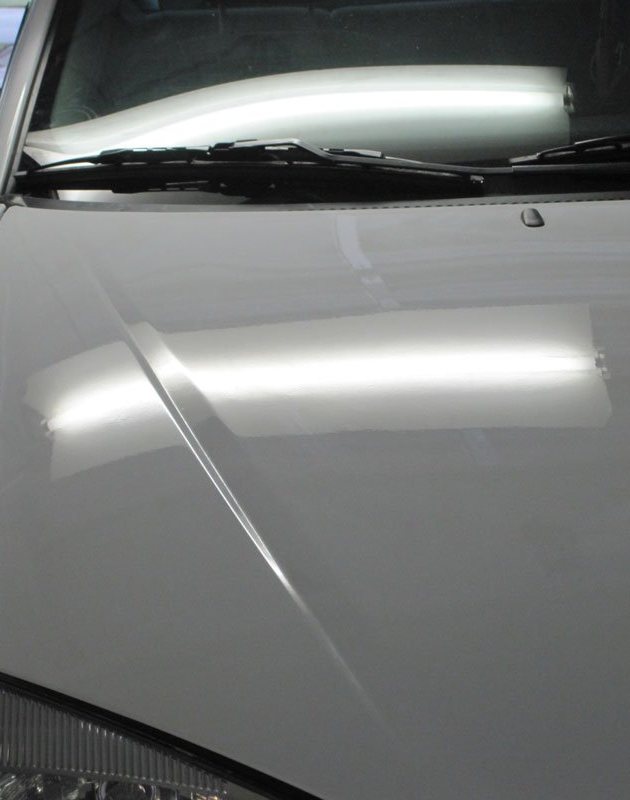
Automatic emergency braking, lane keeping, adaptive cruise, blind-spot monitoring and parking assistance all work the same basic way: a camera, radar unit or ultrasonic sensor sits in a known position on the vehicle, and the software converts what it sees into distances and angles based on where that sensor is assumed to be pointing. Move the sensor, or move the surface it is mounted to, and the math is still perfect — it is just describing a world that is no longer where the vehicle thinks it is.
Calibration is the process of re-teaching the vehicle where its sensors are actually aimed. The useful question is not whether calibration is a good idea in general, but whether your specific repair triggered a requirement for it. Manufacturer procedures vary by model year and configuration, so this guide covers the triggers that recur across the industry rather than a rule for your vehicle.
Why a fraction of a degree matters
The reason calibration requirements exist at all is geometry. A forward camera is trying to identify a lane edge or a vehicle a long way ahead. A very small angular error at the sensor becomes a large lateral error at that distance — the further out the system is looking, the more a tiny aim error is magnified.
That is why the tolerances in manufacturer procedures are tight, why static calibration is done against measured targets rather than by eye, and why "it looks straight" is not an assessment. It also explains the single most misunderstood point in this whole subject.
What usually triggers a calibration requirement
These are the situations that come up repeatedly across manufacturers. Any one of them is a reason to ask the question before the vehicle goes back on the road.
- Windshield replacement. On many vehicles the forward-facing camera mounts to the glass. Replace the glass and the camera has, by definition, been remounted. After hail, this is the most common trigger of all — the dents did not require calibration, but the cracked windshield did.
- Removing, replacing or disturbing a sensor or its bracket. Even taking a sensor off and refitting it to the same bracket is a remount.
- Replacing a panel that carries a sensor. Bumper covers, grilles, mirror housings, tailgates and quarter panels commonly host radar, cameras or ultrasonic sensors.
- Repair to a mounting surface. If the metal or structure a sensor bracket attaches to was deformed and then straightened, the sensor's position relative to the vehicle has moved and come back. Whether it came back to spec is exactly what calibration verifies.
- Changes to ride height, alignment or tire size. Some systems reference vehicle geometry and thrust angle. A suspension repair, an alignment or a wheel and tire change can put the requirement in play.
- Any fault code or system message after repair. Not optional — that is the system telling you something.
- Collision damage in the sensor area, whether or not the sensor itself appears damaged.
What normally does not trigger it
Straightforward paintless dent repair on a panel that carries no sensor, where nothing was removed and no mounting surface was touched, does not normally create a calibration requirement. The metal moved; the sensors did not.
The word doing the work there is "normally." The way to turn that into something you can rely on is not an assumption but a scan.
Static, dynamic, or both
Calibration comes in two forms, and which one applies depends entirely on the manufacturer's procedure for that system on that vehicle.
| Static calibration | Dynamic calibration | |
|---|---|---|
| Where | In the shop, vehicle stationary | On the road, vehicle driven |
| What it needs | A level floor, measured clear space around the vehicle, controlled lighting, the correct targets at specified positions | Clear lane markings, a specified speed range held for a required period, acceptable weather and visibility |
| Common failure | Done in a crowded corner on a sloped floor with improvised targets | Attempted in stop-and-go traffic, so the procedure never completes |
| Evidence it happened | A report naming the vehicle, system, procedure and result | The same report — a drive with no documented completion is not a calibration |
Some vehicles require both, in sequence. Around DFW, the dynamic side has a practical wrinkle worth knowing: the procedure needs steady speed on clearly marked lanes, and the Dallas North Tollway at five in the afternoon does not provide that. A shop doing this properly picks the route and the time of day. If someone tells you they calibrated your vehicle on the drive back from lunch, that is not how it works.
The scan-in, scan-out record
The habit that protects everyone is a pre-repair health scan and a post-repair health scan, saved as documents.
The pre-repair scan establishes what the vehicle already had before anyone touched it — a blind-spot module that was faulty before the storm should not become the repairing shop's problem, and equally, a system that was healthy on arrival should be healthy on departure. The post-repair scan shows the state the vehicle left in. Between them sits any calibration report.
At the DentPicks shop in Plano, ADAS calibration is performed to manufacturer procedure by a qualified calibration provider rather than improvised in-house, and the documentation comes back to you with the vehicle. Finished work is signed off by whoever runs quality control, and that sign-off is visible in your customer portal along with live updates while the vehicle is with us. Where a panel with a sensor genuinely needs replacement rather than paintless repair, we say so — that is part of doing what is best for the vehicle, and it is covered in our comparison of PDR versus a traditional body shop.
A calibration you cannot produce a document for is a calibration you cannot prove happened — to a future buyer, to an insurer, or to yourself.
Who pays for it
Calibration is a recognized operation on a repair estimate, not an upsell invented by shops. When it is required by the repair, it belongs on the estimate as a line item alongside the panel work and the glass.
It is also one of the operations most often missed on a first estimate, because the need only becomes clear once the repair plan is settled — an adjuster writing a hail estimate in a parking lot may not know yet that the windshield will be replaced. When that happens, it goes back to the carrier as a supplement, which is a normal part of the process. Our guide on how hail repair supplements work explains the mechanics, and the adjuster inspection guide covers what to raise at the inspection itself.
Coverage depends on the language of your policy, and your insurer or licensed agent can confirm your specific coverage.
Questions to ask before you collect the vehicle
- Which driver-assistance systems does this vehicle have, and which of them were affected by the repair?
- Does the manufacturer procedure call for static calibration, dynamic, or both?
- Who performed it — in-house or a calibration provider — and to which procedure?
- Can I have the pre-repair scan, the post-repair scan and the calibration report?
- If nothing needed calibration, what confirms that — a scan, or an assumption?
That last question is the useful one. "Nothing was disturbed, and here is the post-repair scan showing a clean system" is an answer. "There is no warning light" is not.
Red flags
- "We cleared the code." Clearing a fault is not calibrating a sensor. The code came back for a reason.
- Calibration billed with no report produced. Ask for it. It should exist.
- Static calibration performed on a sloped floor or in a cluttered bay. The procedure specifies clear measured space and a level surface for a reason.
- A shop that says calibration is never needed after dent work. Often true for pure paintless repair, but it is not a universal rule, and windshield replacement after hail makes it false regularly.
- A shop that says every repair needs calibration. Equally wrong in the other direction. The answer comes from the procedure and what was actually disturbed.
- Systems behaving differently after the repair. Lane keeping tugging at a different point, adaptive cruise following closer or further, parking sensors alerting late. Report it rather than adapting to it.
What to do next
Before repair, ask for a pre-repair scan and ask which systems your vehicle actually has — a surprising number of owners do not know. During the estimate, make sure glass, sensors and calibration are addressed as line items rather than left to be discovered later. After repair, collect the documentation and drive attentively for the first few trips, noting anything that behaves differently.
If your damage is limited to panels with no sensors and nothing needs to come off, calibration probably will not enter the picture — but a scan is what turns "probably" into a record. Bring the vehicle to our Plano shop or send photos for a verbal quote, usually about 30 minutes, and we will tell you up front whether the repair plan touches anything a driver-assistance system depends on. You can see finished panels in our before and after gallery, or read how dent repair in Plano is scheduled and delivered.
Frequently asked questions
My dash shows no warnings after the repair. Isn't that enough?
No. Systems can usually detect a sensor that is missing, blocked or wildly out of range, but not one aimed slightly wrong. A vehicle can drive away clean on the dash with a camera pointing a fraction of a degree off, which at highway distances is a large error. Ask for a post-repair scan instead.
Does paintless dent repair require ADAS calibration?
Usually not, when the panel carries no sensor, nothing was removed and no mounting surface was touched. The metal moved and the sensors did not. The exception is when a repair plan includes glass replacement or the removal of a mirror, bumper cover or tailgate that hosts a sensor.
What is the difference between static and dynamic calibration?
Static happens in the shop with the vehicle stationary, using measured targets on a level floor under controlled lighting. Dynamic happens on the road, holding a specified speed on clearly marked lanes for a required period. Some vehicles need one, some need both, and which applies is set by the manufacturer procedure.
Can calibration be done on any road around DFW?
No. Dynamic procedures need clear lane markings, steady speed and acceptable visibility — conditions a congested tollway at rush hour does not provide. A shop doing it properly chooses the route and the time of day. A drive that never satisfied the conditions is not a completed calibration.
Who should perform the calibration?
Either a shop with the correct equipment, space and procedures in-house, or a qualified calibration provider the shop sublets to. Both are legitimate. What matters is that the manufacturer procedure was followed and a report exists naming the vehicle, the system, the procedure and the result.
Should calibration be covered on an insurance claim?
When the repair requires it, it belongs on the estimate as a line item. It is also one of the operations most often missed on a first estimate, because the need becomes clear only once the repair plan is settled — in which case it goes back to the carrier as a supplement. Coverage depends on the language of your policy.
What documentation should I keep?
The pre-repair health scan, the post-repair health scan and any calibration report. Keep them with your service records. They matter if a system behaves oddly later, and they matter at resale — a buyer or dealer asking what was done to a repaired vehicle gets an answer instead of a shrug.
A system feels different since the repair. What should I do?
Report it rather than adapting to it. Lane keeping intervening at a different point, adaptive cruise holding a different gap, or parking sensors alerting late are all worth raising with the shop straight away. Do not rely on the affected feature until it has been checked.
Sources and methodology
- Vehicle safety information — National Highway Traffic Safety Administration.
Repair, cost and timing statements that are not tied to a listed source come from DentPicks' own quoting and repair history at the Plano, TX shop. They are typical ranges and shop-floor observations, not industry statistics or promises — your vehicle, its condition, your policy language and your insurer determine your specific outcome.
Find out whether your repair touches a sensor
Send photos or bring the vehicle to the Plano shop. We tell you up front whether the repair plan disturbs anything a driver-assistance system depends on, and what documentation you get back.