

The short answer
Aluminum panels are repairable paintlessly, but the work is slower and less forgiving. Aluminum has little spring-back, work-hardens quickly under repeated working, and cracks at sharp creases where steel would flex. Premium multi-stage paint is hard to blend, so keeping the factory finish matters more than usual. Confirm which panels are actually aluminum, ask whether tooling is kept separate from steel work, and have finished panels checked under reflection lighting. Procedures vary by model year and configuration.
 Written by the DentPicks Editorial Team
Technically reviewed by Vytas Kucinskas, Founder & Master PDR Technician
Written by the DentPicks Editorial Team
Technically reviewed by Vytas Kucinskas, Founder & Master PDR Technician
Published: Aug 19, 2026 · Last reviewed: Aug 19, 2026 · 10 min read
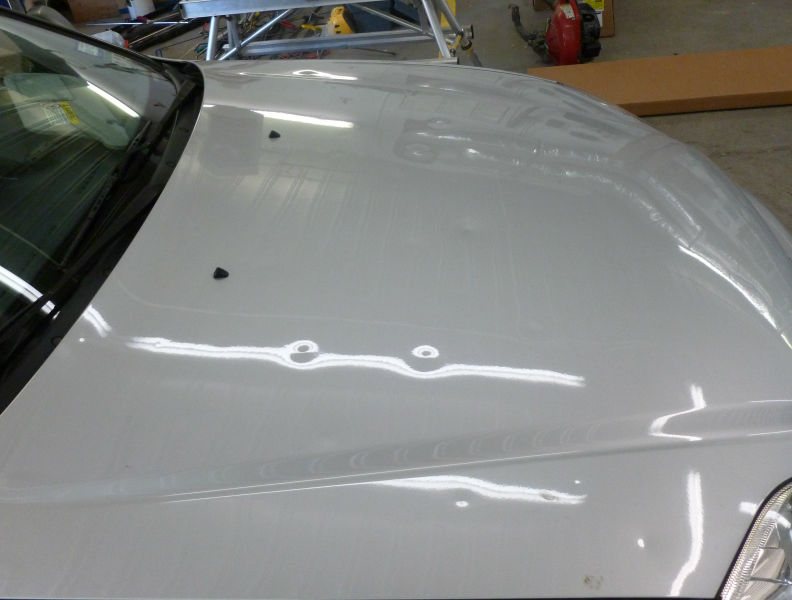
A dent in an aluminum luxury sedan is a different technical problem from the same dent in a steel commuter car, and the difference is not marketing. It is metallurgy. Aluminum does not want to go back where it came from, it stiffens as you work it, and it gives a technician a smaller margin for error on every single push.
Add a premium paint system that is difficult to blend and long, flat body sides that show every imperfection in a reflection, and you get a repair where the incentive to keep the factory finish is much stronger than usual — and where the cost of getting it wrong is much higher.
Why the material is aluminum in the first place
Electric sedans carry a battery pack, and mass costs range. Aluminum body panels are one of the standard ways manufacturers claw weight back. That is a design trade, not a defect — but it does hand the repair side a metal with different habits.
It also does not mean every panel is aluminum. Modern vehicles mix materials across a single body: aluminum in some panels, steel in others, composite or plastic elsewhere. Which is which varies by model year and configuration, so a shop confirms the material panel by panel before writing a plan rather than assuming it from the badge.
What aluminum does under a paintless dent repair tool
Paintless dent repair relies on sheet metal's tendency to return toward the shape it was formed into. Steel does this well. Aluminum does it grudgingly.
- Much less spring-back. Where steel follows a push and carries on a little further on its own, aluminum stops where it is put. Every millimetre has to be placed deliberately.
- Rapid work-hardening. Working aluminum stiffens it. A technician therefore has a limited number of passes before the metal starts resisting instead of moving, which is why the sequence of pushes matters as much as the pressure.
- A narrower heat window. Controlled warming is a normal part of the craft, but aluminum's response is not steel's and the usable range is tighter.
- Greater crack risk at sharp folds. A hard crease in aluminum concentrates strain at the fold, and aggressive correction is how a repairable dent becomes a refinish job.
- More time, always. The same dent size on aluminum reliably carries more hours than on steel. On a hail job with a high dent count, that difference compounds across every panel.
Our guide on what makes an aluminum dent repair specialist different covers the technique side across brands.
Premium paint raises the stakes on both sides
Two features of high-end factory finishes shape the decision.
First, multi-stage, pearl and deep metallic colors are genuinely difficult to match and blend. A refinished panel on a car like this is not a matter of spraying one door; it means blending into adjacent panels to manage color and flake orientation, and even done well it is new coating aging alongside original coating. That is a strong argument for keeping the factory paint wherever the metal allows it.
Second, a high-gloss premium finish over a long flat flank is an unforgiving mirror. Waves and reflection distortions that a textured or heavily contoured panel would disguise are plainly visible on a sedan's door skins under the right light. A repair that would pass on an ordinary car does not pass here — which is exactly why the finished panel has to be read under the same controlled lighting used to assess the original damage, not judged in a parking lot.
Access, sensors and what has to come off
Paintless technique works from behind the panel, so the question of whether there is a tool path matters more than how large the dent looks. Modern sedans use bonded seams, structural reinforcements and double-skinned areas that leave nowhere to place a tool, and where access is genuinely unavailable the alternatives are surface-side glue pulling or a refinish route.
Getting to the back of a panel usually means removing trim, liners or interior panels. Driver-assistance cameras, radar units, parking sensors and wiring harnesses sit near many of those paths, and airbag components live in areas like roof rails on a great many vehicles. None of that prevents repair. It means the manufacturer's documented removal and installation procedure is followed for that specific vehicle, components are protected before anything comes out, and whether calibration is required after sensors or their mountings are disturbed is checked against the documentation rather than assumed. Manufacturer procedures vary by model year and configuration.
Cross-contamination is a real workshop issue
Steel particles left on an aluminum surface can set up galvanic corrosion — a slow electrochemical process that shows up later as bubbling or staining under the finish, long after anyone connects it to the repair. Shops that work both metals seriously keep tooling, abrasives and work areas separated for that reason.
It is a fair thing to ask about. A shop that treats aluminum as "steel but softer" is telling you something about how the rest of the job will go.
What moves the price and the timeline
| Factor | Effect on an aluminum panel |
|---|---|
| Dent count | Compounds harder than on steel, because each dent carries more time |
| Dent depth and sharpness | Sharp folds are the main reason an aluminum panel leaves the paintless route |
| Panel access | Bonded or reinforced areas may force glue pulling or a refinish route |
| Body-line involvement | Character lines in aluminum are slower and less forgiving to restore |
| Prior repairs | Filler or an earlier respray can rule out paintless work in that area entirely |
| Paint color and finish | Multi-stage and pearl colors raise the cost of any route that involves spraying |
| Sensor and trim removal | Adds hours, and may add a calibration step |
Repairability depends on paint condition, metal stretch, panel access and prior repairs, which is why an in-person read decides the route rather than a photo. Panels sometimes do need replacement and refinishing, and a shop should say so plainly when that is the honest answer — we do what is best for the vehicle. For context on timing, full-vehicle hail repair typically runs about 5–10 business days in the shop, and an aluminum vehicle with a high dent count sits toward the longer end of that range.
If the car is leased
Premium electric sedans are frequently leased, and lease-end inspections are where small damage becomes a bill. The general pattern is worth knowing: dent and body damage charged at lease return is billed at dealer retail rates, so the same dent typically costs more assessed at turn-in than repaired beforehand by a shop you chose.
Charge thresholds and what counts as excess wear are set by the specific leasing agreement, so the authority is your own contract rather than any general rule. The practical move is to read the wear-and-use terms a few months before turn-in, get the vehicle looked at while there is still time to act, and decide from real numbers. Our lease-return dent repair guide walks through the sequence, and our lease-return service page explains how the pre-inspection works.
How the work runs at the Plano shop
- Material confirmed panel by panel. Aluminum, steel and composite carry different methods, different tooling and different hours, so the plan starts there.
- Depth readings in a grid. Prior filler or refinishing changes what is possible and is better known before quoting than discovered mid-push.
- Panels read under LED line boards. Outdoor light hides a large share of hail dents, and on a mirror-flat flank the reflection tells you things the eye does not.
- Procedure looked up for the model year. Trim removal paths, protected components and any calibration requirement come from the vehicle's documentation.
- Verbal quote, usually from photos, in about 30 minutes, then revised in person once the panels have been properly read.
- Live updates through the job, with finished panels checked under the same lighting used to read the damage and signed off by whoever runs quality control — visible in your customer portal.
Delivery includes a mini exterior detail, and repairs carry a written lifetime warranty for as long as you own the vehicle — not transferable. On insurance-approved hail claims we arrange complimentary pickup across DFW; Austin is trailer pickup and delivery only, with any rental coming through your own rental coverage.
Red flags on an aluminum repair
- A firm price quoted from photos with no material check. Aluminum and steel are different jobs with different hours.
- Steel and aluminum worked with shared tooling and no separation. Cross-contamination shows up long after the invoice.
- Aggressive correction on a sharp crease. Forcing aluminum is how a repairable panel becomes a refinish.
- A finished panel signed off outdoors. On a premium flat flank, reflection lighting is the only honest check.
- A mobile crew offering to work the car in your driveway after a storm. Temporary post-storm operations move through DFW every season, and stretched aluminum is not undone — see our guide on spotting storm-chaser operations.
- No mention of calibration on a vehicle full of sensors. If a camera, radar unit or its mounting is disturbed, the requirement should at least be checked.
What to do next
Photograph the damage in the flattest light you can find, note whether the paint is broken anywhere, and get the panels read under proper lighting before agreeing to a route. If somebody has told you the panel must be painted, ask which of paint condition, metal stretch, access or prior repair is the reason — one of those four is always the answer.
At DentPicks in Plano we confirm materials before quoting, work aluminum with separated tooling, and read finished panels under the same lighting used to assess the damage. See finished examples in our before and after gallery, or read how our dent repair process runs from inspection to delivery.
Frequently asked questions
Is paintless dent repair possible on aluminum at all?
Yes, routinely. What changes is the method and the time. Aluminum has to be placed rather than persuaded, worked in smaller increments, and given a narrower controlled-heat window. Repairability still depends on paint condition, metal stretch, panel access and prior repairs, exactly as it does on steel.
Why does an aluminum hail repair cost more than the same damage on a steel car?
Because every dent carries more working time. Aluminum work-hardens as it is moved, so the technician uses more, smaller passes and has fewer chances to correct. On a high dent count that difference compounds across every panel, which is where the cost gap comes from.
What is galvanic corrosion and why do shops separate aluminum tools?
Steel particles left on an aluminum surface can set up a slow electrochemical reaction that later appears as bubbling or staining under the finish. Shops working both metals keep tooling, abrasives and work areas separated to prevent it. It is a fair question to ask before you leave the car.
Are all the panels on an electric luxury sedan aluminum?
Not necessarily. Modern vehicles mix aluminum, steel and composite panels across a single body, and which panel is which varies by model year and configuration. A shop confirms the material panel by panel before writing a plan rather than assuming it from the badge.
Can a dent in a body line on an aluminum panel be repaired without paint?
Sometimes, but it is the hardest case. Character lines concentrate strain, and aluminum cracks at sharp folds where steel would flex. Where the paint is already broken along the line, straightening the metal and refinishing usually produces a better long-term result than forcing it.
Will repairing dents before lease return save money?
Usually. Dent and body damage assessed at lease return is billed at dealer retail rates, so the same damage typically costs more at turn-in than repaired beforehand by a shop you chose. What counts as excess wear is set by your specific leasing agreement, so read the wear-and-use terms before deciding.
How can I tell whether a finished aluminum repair is actually good?
Look at the panel under reflection lighting, not in daylight. A long flat flank in high-gloss paint acts as a mirror, and waves that a parking lot hides are obvious under line boards. Ask to see the finished panel under the same lighting used to assess the original damage.
Sources and methodology
Repair, cost and timing statements that are not tied to a listed source come from DentPicks' own quoting and repair history at the Plano, TX shop. They are typical ranges and shop-floor observations, not industry statistics or promises — your vehicle, its condition, your policy language and your insurer determine your specific outcome.
Aluminum panel damage on a premium sedan?
Bring it to the Plano shop and we will confirm the panel material, read the surface under PDR lighting and tell you honestly whether the factory finish can be kept.