

The short answer
Often yes. Thermoplastic bumper covers have a degree of shape memory, so controlled heat and steady pressure from behind can bring many dents back without refinishing. The answer changes if the paint is cracked or the plastic is torn, if the deformation is a sharp crease that has strained the material, or if sensors and brackets behind the cover require removal. Have it read in raking light before deciding.
 Written by the DentPicks Editorial Team
Technically reviewed by Vytas Kucinskas, Founder & Master PDR Technician
Written by the DentPicks Editorial Team
Technically reviewed by Vytas Kucinskas, Founder & Master PDR Technician
Published: Aug 19, 2026 · Last reviewed: Aug 19, 2026 · 9 min read
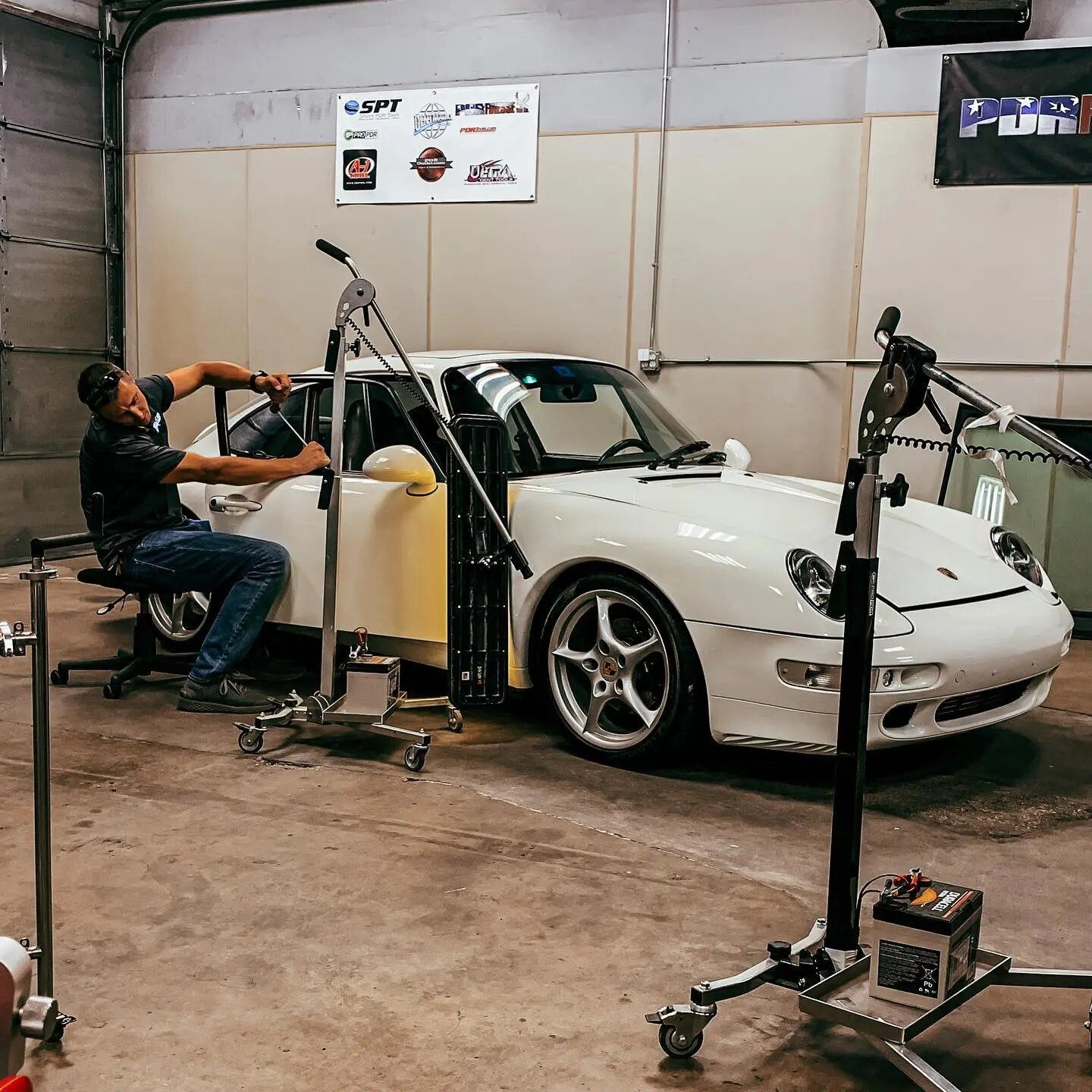
A bumper is the panel most likely to get hit and the panel least likely to behave like the rest of the car. Everything else on the outside of a modern vehicle is a formed sheet of steel or aluminum. The bumper cover is a molded thermoplastic skin — flexible, painted with a finish designed to bend, and hung on brackets and clips rather than welded seams. So the honest answer to "can you pop that out?" is not the same answer you would get for a door or a fender.
Plastic can very often be reshaped without paint, and the techniques overlap with paintless dent repair. But what sits behind the cover, and what happened to the paint on the way in, decide the outcome far more often than the size of the dent does.
Why plastic behaves differently from sheet metal
Sheet metal takes a permanent set. When a hailstone or a shopping cart deforms a steel or aluminum panel, the metal stretches and stays where it was put, and the technician's job is to relieve that stress point by point until the surface reads flat again.
A thermoplastic bumper cover behaves more like a spring with a memory. Deform it and a portion of the dent will often relax on its own within hours. Warm the material to the range the shop works in, apply steady pressure from behind, and much of the remaining distortion can be coaxed back toward the original molded shape. That is why some bumper impacts look dramatic on the day and unremarkable a week later, and why others never come back at all — the plastic passed the point where its memory still works.
Two things limit that memory. Cold plastic is brittle, which matters for a January impact in North Texas more than a July one. And any sharp crease, stretched high spot or blanched white line in the plastic is a sign the material has been strained past recovery in that spot, which changes the repair path.
The paint is usually the deciding factor
Bumper paint is not the same product as the paint on the quarter panel next to it, even when the color code matches. Finishes applied to flexible plastic are formulated to move with the substrate. They still have limits, and a bumper impact rarely arrives cleanly — most bring a scuff, a scrape, or a hairline crack in the clear along the edge of the dent.
The rule is the same as anywhere else on the vehicle: paintless methods keep the factory finish, and they only make sense while that finish is intact. Once the coating is broken, you are choosing between living with the flaw and refinishing the affected area — and bumpers add one wrinkle, because a crack in a flexible finish tends to spread as the panel flexes. Our explanation of how paintless dent repair works covers why an unbroken finish is the whole premise of the method.
Access is the second question
Reshaping plastic requires reaching the back of the deformation, and bumper covers are among the busiest real estate on a modern car. Behind the skin, in some combination depending on the vehicle, sit an energy absorber, a reinforcement beam, ducting, wiring, brackets, and — increasingly — the sensing hardware for parking aids, blind-spot monitoring, adaptive cruise control and automatic emergency braking.
That changes the work in three ways. Getting to the back of the panel often means removing the cover, which is a labor line rather than a quick pull. Anything mounted to or aimed through the cover has to come out and go back correctly. And where a driver-assistance sensor is involved, the manufacturer's documented procedure governs how it is removed, refitted and, where required, aimed or calibrated afterward. Those procedures vary by model year and configuration, and no shop should be guessing at them — NHTSA's vehicle safety material is a reasonable starting point for understanding why a mis-aimed sensor is a real problem rather than a paperwork one.
Plastic clips and mounting tabs are the quiet failure point. They are designed for a limited number of removal cycles, and an impact hard enough to dent a cover has often already snapped a tab behind the wheel arch where nobody looks. A bumper that has been off before, or that already sits slightly proud at the fender gap, is telling you something before the tools come out.
What can and cannot be done without refinishing
| What the bumper looks like | Realistic outcome |
|---|---|
| Soft dent or push, paint fully intact, no crease | Good candidate for reshaping with heat and pressure from behind, factory finish kept |
| Hail dimples across the cover, paint intact | Often workable, though plastic reads differently under lighting than metal and takes longer per dent |
| Dent with a scuff or transfer mark on the high point | Shape can be corrected; the scuff itself needs polishing or refinishing depending on depth |
| Dent with a crack in the paint or clear | Reshaping alone will not resolve it — expect refinishing of the affected area |
| Torn, split or punctured plastic | Plastic repair and refinishing, or replacement, depending on location and sensor mounts |
| Sharp crease with blanching or a stretched high spot | Usually improvable rather than invisible; an honest shop will say so before starting |
| Broken mounting tabs or misaligned gaps | Address the mounting first — the panel cannot read flat if it is hanging wrong |
How we assess a bumper at the Plano shop
Bumper assessments are the ones most likely to change once the car is physically in front of us, so we run them in a fixed order:
- Photos first, verbally quoted. Send clear photos and we will usually give a verbal quote in about 30 minutes. For bumpers we ask for one straight-on shot, one raking-light shot along the panel, and one of the fender gap on that side.
- Read the panel under line boards, not daylight. Plastic hides shape errors outdoors. Under LED reflection boards the difference between a dent that will fully recover and one that will read as a soft low spot is visible before any tool touches it.
- Check the finish before the shape. Scuff, crack or bare substrate — that determines whether this is a paintless job at all.
- Check what lives behind it. Sensors, cameras, brackets and how the cover comes off on that specific vehicle, following the manufacturer's procedure for that model year and configuration.
- Confirm the plan with you before work starts. If the honest outcome is "much better, not invisible," you hear that first, not at pickup.
- Quality control sign-off. Finished work is signed off by whoever runs quality control, and that sign-off is visible in your customer portal along with live updates while the car is with us.
Common mistakes with bumper dents
- Boiling water and a plunger. The internet's favorite bumper fix. Uncontrolled heat distorts the surrounding surface, can lift paint on an already-stressed edge, and does nothing about a broken tab. We covered why these methods keep coming back in our guide on DIY dent repair kits that do not work.
- Assuming a bumper is always cheaper than a metal panel. Sometimes it is. But removal labor, sensor handling and refinishing on a flexible substrate can put a bumper above a door dent — see our PDR cost guide for how the variables stack up.
- Ignoring the gaps. A cover that no longer lines up with the fender or headlight is a mounting problem wearing a dent costume.
- Repainting a bumper to fix a shape problem. Paint hides nothing at this angle. Get the shape right first; that is the whole argument in our comparison of PDR versus a traditional body shop.
- Skipping the sensor question. If the cover comes off, anything aimed through it goes back per the manufacturer's documented procedure. That is not optional trim work.
What to do next
Take three photos, one of them in raking light, and send them over. If the finish is intact and the plastic has not been creased past recovery, there is a good chance the shape can be brought back without touching the paint. If the clear is cracked or the substrate is showing, you will get a straight answer about what refinishing actually involves rather than a hopeful maybe.
Assessment at the Plano shop is free, and we would rather tell you a bumper needs paint than sell you a paintless repair that leaves a shadow you notice every time you park. You can see finished panels in our before and after gallery, or read how our dent repair process runs from assessment to quality-control sign-off.
Frequently asked questions
Will a plastic bumper dent pop back out on its own?
Sometimes partially. Thermoplastic has shape memory, so a soft push can relax over hours or days, especially in warm weather. What is left after a few days is usually what a repair has to address. A sharp crease, a blanched white line or a stretched high spot will not recover on its own.
Does the bumper have to come off to repair a dent?
Frequently, yes. Reshaping needs access to the back of the deformation, and bumper covers sit over absorbers, beams, ducting and wiring. Removal is a labor line rather than a quick pull, which is why bumper quotes are not always cheaper than metal panel quotes.
What happens to parking sensors and radar behind the bumper?
Anything mounted to or aimed through the cover has to be removed and refitted following the manufacturer's documented procedure, and some systems require aiming or calibration afterward. Manufacturer procedures vary by model year and configuration, so this is confirmed for your specific vehicle rather than assumed.
Can hail dents on a bumper be repaired without paint?
Often. Hail dimples on a cover with intact paint are usually workable, though plastic reads differently under reflection lighting than metal and each dent takes longer. Whether it is worth doing as part of a full hail repair is a judgment made panel by panel.
Why did my scuffed bumper still need paint after the dent came out?
Shape and finish are two separate problems. Reshaping restores the contour but does nothing for a scuff that has gone through the clear or a crack along the edge of the impact. Those need polishing or refinishing of the affected area.
Is the boiling water trick safe on a bumper?
Not reliably. Uncontrolled heat distorts the surface around the dent, can lift paint at an already-stressed edge, and does nothing for broken mounting tabs. Shops use regulated heat with pressure applied from behind, which is a different process from pouring hot water and pulling.
My bumper no longer lines up with the fender. Is that part of the dent?
Usually it is a separate mounting problem. Bumper covers hang on plastic tabs and clips that can snap in an impact, often behind the wheel arch where nothing is visible. The panel cannot read flat until it is hanging correctly, so mounting is addressed first.
Sources and methodology
- Vehicle safety information — National Highway Traffic Safety Administration.
Repair, cost and timing statements that are not tied to a listed source come from DentPicks' own quoting and repair history at the Plano, TX shop. They are typical ranges and shop-floor observations, not industry statistics or promises — your vehicle, its condition, your policy language and your insurer determine your specific outcome.
Send three photos of the bumper
One straight on, one along the panel in raking light, one of the fender gap. We will usually come back with a verbal quote in about 30 minutes and tell you honestly whether paint is involved.