

The short answer
Know your wear standard before your inspection. Luxury leases are written by the brand's captive finance company, which publishes what counts as normal wear and what is chargeable excess wear, and its document governs — not the dealership. Charges are typically derived from retail body-shop repair costs, so fixing qualifying dents beforehand usually costs less than the charge. Request the wear-and-use guide from your lender and inspect the car about 60 days out.
 Written by the DentPicks Editorial Team
Technically reviewed by Vytas Kucinskas, Founder & Master PDR Technician
Written by the DentPicks Editorial Team
Technically reviewed by Vytas Kucinskas, Founder & Master PDR Technician
Published: Aug 19, 2026 · Last reviewed: Aug 19, 2026 · 10 min read
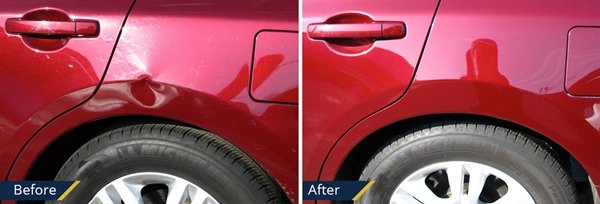
European luxury leases tend to end the same way: a turn-in date on the calendar, a car that looks fine in the driveway, and a nagging sense that the dealer is going to find something. Then a bill arrives four to six weeks after you handed over the keys, and by then the car belongs to someone else and the leverage is gone.
The useful thing to understand is that none of this is decided by the dealership's mood. Lease-end condition is governed by the wear standard written into your lease agreement by the captive finance company behind the brand, and that document is the only authority that matters. Everything below describes how those programs typically work across the industry. Your own contract is the version that binds you, and it is the one to read.
Who actually decides what you owe
A luxury lease is almost always written by the manufacturer's own finance arm rather than by the store that sold you the car. That entity owns the vehicle, sets the wear-and-use standard, orders the inspection and issues the final bill. The salesperson who tells you "don't worry about that" at drop-off usually has no authority over any of it.
Captive-lender programs share a common shape, even though the details differ brand to brand and change over time:
- A published wear-and-use guide. Most captives put out a booklet or web page describing what counts as normal wear versus chargeable excess wear, with photographs of borderline cases.
- A size-based standard for dents and dings. Programs commonly define acceptable damage by a measured diameter, often using a physical template or gauge card the inspector carries. The threshold, how it is measured and what exceptions apply are specific to your program.
- A pre-return inspection window. Turn-in inspections are usually performed by a third-party inspection company, frequently some weeks before the lease matures, giving you a defined period to fix what was flagged.
- An optional wear protection product. Many programs sell a wear waiver or excess-wear coverage at signing or later in the term, with its own dollar cap and exclusions.
- Loyalty provisions. Some programs reduce or waive certain excess-wear charges when the lessee leases or finances another vehicle from the same brand. This is a program term, not a courtesy you can assume.
Because all five of those vary, the single most valuable thing a BMW or Mercedes lessee can do is find the wear-and-use language in the lease packet, or call the finance company directly and ask them to send it. Not the dealer. The lender.
Why luxury panels get flagged more often
Two things push German luxury cars toward more inspection findings than a comparable mainstream car, and neither is about the inspector being harsh.
The first is panel design. Sharply creased shoulder lines, long unbroken door skins and large flat hood surfaces show a dent from further away than a heavily sculpted, textured panel does. Damage that would disappear on a compact crossover reads plainly on a long sedan door in flat light.
The second is materials. Aluminum hoods, doors and fenders have been common on luxury vehicles for years, and aluminum behaves differently from steel under repair: it holds its shape more stubbornly, has less memory, and typically needs more passes and controlled heat. That does not make it unrepairable — it makes it a job for someone who works the material regularly. Our guide on aluminum dent repair covers what changes and why the assessment has to happen in person. Manufacturer procedures vary by model year and configuration, and so does the mix of panel materials on any given trim.
The cost gap that makes pre-return repair worth it
Here is the mechanism that catches most lessees. When a captive lender charges for excess wear, the figure is generally derived from what it would cost a body shop to bring the panel back to standard — a conventional repair estimate, at retail rates, often for the whole panel rather than the individual ding. It is not a negotiation and it is not based on what you could have had it done for.
Paintless dent repair sits at the other end of that scale. Because there is no filler, no paint and no parts, the labor is a fraction of a body-shop cycle. For context, our own quoting ranges at the Plano shop run roughly $75–$200 for a typical door ding, $150–$450 for a mid-size dent, and $400 and up for large or complex panel work. Those are our ranges from our own quoting history, not published industry figures, and a car with several small dents is quoted as a set rather than by adding singles.
The comparison you actually want is between a repair you control and a charge you do not. That is the whole argument for doing the work before turn-in rather than after.
A sensible timeline for a luxury lease turn-in
- 90 days out — read the wear standard. Pull the wear-and-use language out of your lease packet, or request it from the finance company. Note the dent standard, the wheel and tire standard, the glass standard and whether you bought wear coverage.
- 75 days out — inspect the car properly. Wash it, then walk every panel at a shallow angle in indirect light. Photograph anything you find, panel by panel, with something for scale.
- 60 days out — get a repair assessment. Find out what is repairable without paint and what is not. This is also when you learn whether anything needs a body shop, which takes longer to schedule.
- 45–30 days out — do the repairs. Most multi-dent PDR jobs are a day or two, not a week. Doing it now leaves room for the pre-return inspection to happen on a finished car.
- Inspection day — be present if you can. Ask for the written report and a copy of any photographs. Read what was flagged before you leave.
- Turn-in day — document the handover. Photograph all four corners, the roof, the odometer and the wheels, and get a dated receipt for the vehicle.
Our broader lease return dent repair guide walks through the same sequence for any brand, including what to do when the inspection has already happened and the report is in your hand.
Repair before turn-in, or accept the charge?
| Situation | Usually the better move | Why |
|---|---|---|
| A handful of small dents, paint intact | Repair before turn-in | Paintless repair on multiple small dents is the widest gap between repair cost and a retail-rate wear charge. |
| One large or creased dent | Get it assessed first | Repairability depends on paint condition, metal stretch, panel access and prior repairs. The answer changes the math. |
| Cracked or chipped paint in the damage | Assess, expect refinishing | Broken paint is outside what paintless repair addresses. Sometimes a panel genuinely needs refinishing, and we say so. |
| You purchased wear coverage | Read the cap and exclusions first | Coverage limits, per-item caps and excluded categories decide whether repair is still worth doing. |
| You are re-leasing the same brand | Ask the lender what its loyalty terms actually say | Some programs address excess wear on a subsequent lease. Confirm it in writing rather than relying on a verbal assurance. |
| Hail damage across the vehicle | Talk to your insurer | Storm damage is a comprehensive claim question, not a lease-wear question, and the two are handled very differently. |
Common mistakes at luxury lease-end
- Trusting a verbal "that'll be fine." The person inspecting the car at turn-in is usually not the person who writes the bill. Only the finance company's standard decides.
- Waiting for the inspection to tell you what is wrong. By then your repair window is shorter and your options are narrower.
- Letting a body shop repaint a panel that did not need it. A refinished panel is permanent, detectable on inspection and can affect the vehicle's later value. Our comparison of paintless repair versus a traditional body shop explains when each is the right call.
- Assuming a cheap mobile fix is invisible. A stretched or over-pulled panel reads clearly under a reflection board, and lease inspectors use similar lighting logic.
- Ignoring wheels, tires and glass. Dents are only one line on a wear standard. Curb rash and tread depth are frequently the larger items.
- Turning in without photographs. If a charge appears for damage you do not recognize, dated turn-in photos are the only evidence you will have.
How we handle a lease-return car
At our Plano shop, lease vehicles get read under LED reflection boards rather than in daylight, because outdoor light hides a meaningful share of shallow dents — including the ones an inspector with a gauge card will still find. We go panel by panel, note which are aluminum and which are steel, and tell you plainly which dents are repairable without paint and which are not.
Quotes are usually verbal, from photos, in about 30 minutes, with a written estimate after an in-person look. Finished work is signed off by whoever runs quality control and that sign-off is visible in your customer portal, so you have documentation of the car's condition before it goes back. Our workmanship carries a written lifetime warranty for as long as you own the vehicle — worth understanding on a lease, since you will not own it much longer.
What to do next
Start with the document, not the dent. Find the wear-and-use standard for your specific lease and read what it says about damage size, wheels, tires and glass. Then walk the car in good light and photograph what you find.
If you want a second set of eyes, send photos and we will give you a range, or bring the car to our lease return dent repair bay in Plano — convenient from Frisco, McKinney, Allen and most of the north Dallas corridor. Seeing what finished work looks like first is fair too: our before and after gallery shows repairs on panels of the same kind.
Frequently asked questions
Where do I find the wear standard for my lease?
In your lease packet, and on the finance company's website. If you cannot locate it, call the captive lender directly — not the dealership — and ask them to send the current wear-and-use guide for your contract. The dealer's opinion is not the standard that generates your bill.
Is there a dent size that is automatically acceptable?
Programs commonly define acceptable damage by measured diameter, often using a template or gauge the inspector carries, but the exact threshold, how it is measured and what exceptions apply differ by lender and change over time. Read the number in your own contract rather than relying on a figure you heard secondhand.
Can paintless dent repair be used on aluminum luxury panels?
Often yes. Aluminum has less memory than steel and typically needs more passes and controlled heat, so it takes a technician who works the material regularly. Repairability depends on paint condition, metal stretch, panel access and prior repairs, and manufacturer procedures vary by model year and configuration.
Does the excess-wear protection I bought at signing cover dents?
Usually it covers some categories up to a dollar cap with named exclusions. Read the cap, the per-item limits and the exclusion list before you decide to skip a repair — coverage that stops short of your damage total still leaves you paying the difference.
Will leasing another car from the same brand cancel my damage charges?
Some captive programs address excess wear for lessees who lease or finance again with the same brand, but the terms vary and change. Get it confirmed in writing by the finance company before you count on it at turn-in.
Should I repair a dent that needs paint before turning the car in?
Get it assessed first. Cracked or chipped paint is outside what paintless repair addresses, and a refinished panel is permanent and detectable. Sometimes refinishing is genuinely the right answer for the vehicle; comparing the repair cost against the likely wear charge is the only way to decide.
What if a charge appears for damage I do not recognize?
This is what turn-in photographs are for. Photograph all four corners, the roof, the wheels and the odometer on handover day, and keep the dated receipt for the vehicle. Then ask the lender for the inspection report and photographs supporting the charge.
Sources and methodology
Repair, cost and timing statements that are not tied to a listed source come from DentPicks' own quoting and repair history at the Plano, TX shop. They are typical ranges and shop-floor observations, not industry statistics or promises — your vehicle, its condition, your policy language and your insurer determine your specific outcome.
Lease turning in soon?
Send photos of what you found and we will tell you what is repairable without paint, usually with a verbal range in about 30 minutes. Bring the car to Plano and we read every panel under reflection lighting first.