

The short answer
Often yes. Whether you trade the vehicle, buy it out or return it early, damage is priced against you at retail — as an appraisal deduction or an excess wear charge — while paintless dent repair is priced as specialist labor. That spread is usually where repairing pays for itself. Get the payoff or appraisal figure first, then a repair quote, and compare the two before spending anything.
 Written by the DentPicks Editorial Team
Technically reviewed by Vytas Kucinskas, Founder & Master PDR Technician
Written by the DentPicks Editorial Team
Technically reviewed by Vytas Kucinskas, Founder & Master PDR Technician
Published: Aug 19, 2026 · Last reviewed: Aug 19, 2026 · 8 min read
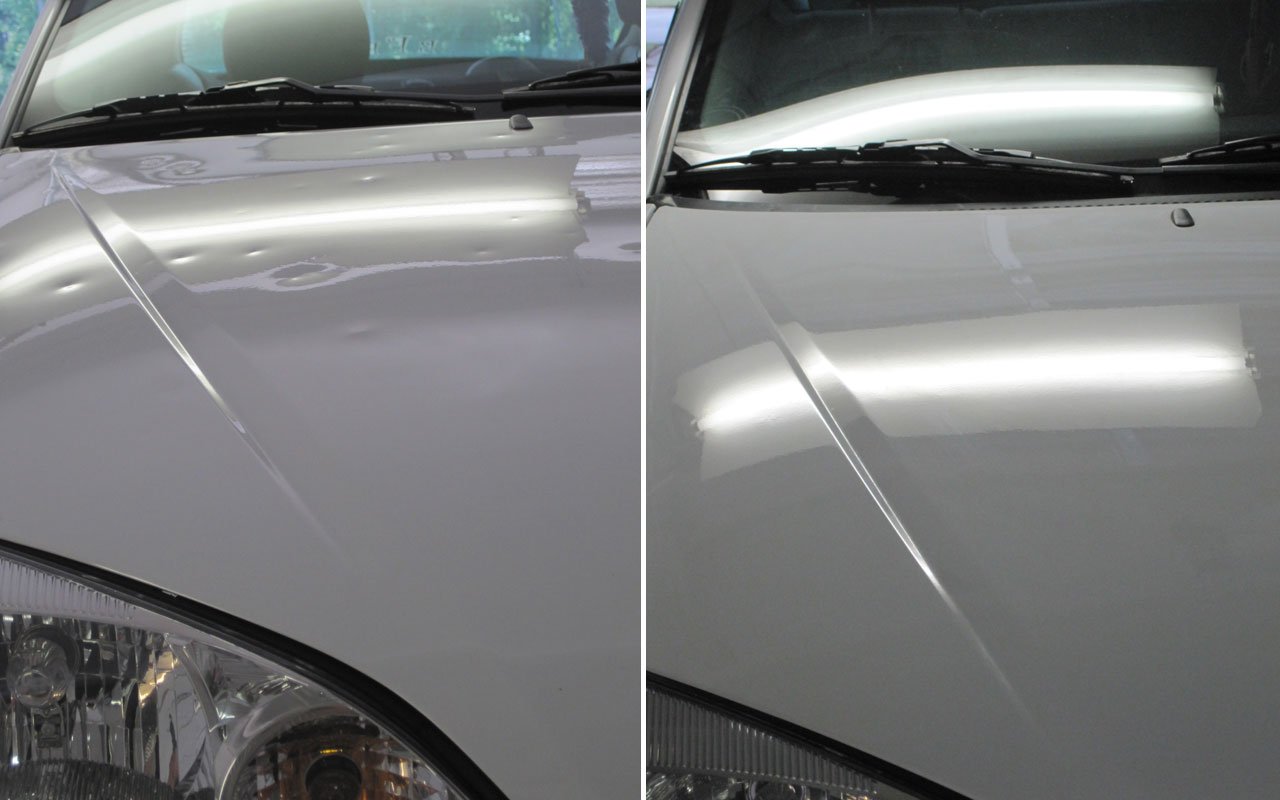
Ending a lease early is a different transaction from riding it out to the scheduled turn-in date, and the way damage is treated changes with it. On a normal return, dents become an excess wear charge. On an early exit, a buyout, or a trade, dents usually become something else: a smaller appraisal number, which quietly moves money out of your pocket at the moment the deal is written.
Paintless dent repair helps in both situations, but for different reasons and with different math. Worth understanding which one you are actually in before you spend anything.
Three ways a lease ends early, and what damage does in each
1. Trading the leased vehicle at a dealer
The dealer appraises the vehicle, pays off your lease balance, and any difference lands in the deal — as equity toward your next car, or as a gap you have to cover. The appraisal is where damage bites. Appraisers decondition a vehicle for dents, scuffs and wheel damage at retail reconditioning rates, because that is roughly what it will cost them to make the car front-line ready.
That deconditioning comes straight off your equity. If your payoff and the market value are close, a few hundred dollars of dents can be the difference between walking away even and writing a check.
2. Buying out the lease
If you exercise the purchase option, the excess wear question usually disappears — you are keeping the car, so the lessor is not reconditioning it for resale. What does not disappear is the damage itself. You now own a vehicle with dents, and every future trade, sale or insurance conversation carries them forward.
The upside is that you regain control of the timing. There is no turn-in date forcing the repair into a two-week window, and you can schedule it when it suits you.
3. Early termination back to the lessor
Return the car ahead of schedule and the lessor still inspects it, still applies the wear-and-tear standard, and still charges for excess damage — on top of whatever early termination amount your contract specifies. Ending early does not soften the condition requirements; if anything it compresses your timeline, because the return date moves toward you rather than away.
Why PDR fits this situation particularly well
Paintless dent repair works the metal back to shape from behind the panel without filling, sanding or spraying, so the factory finish stays intact. Our guide on how PDR works covers the mechanics. Three properties matter when you are trying to protect a number in a deal:
- Cost. Because there is no paint, materials and labor are a fraction of a refinish. That gap is exactly the gap between what you pay to repair and what an appraiser deducts.
- Speed. A modest dent list is often same-day or next-day work, which matters when a deal is live or a return date is close.
- Records. Paintless dent repair on its own creates no vehicle history entry. Refinishing or a panel replacement can be reported, and a history entry follows the car into every future valuation.
For the pricing logic — how dent size, depth, panel and access drive the number — see our PDR cost guide.
The repair-versus-deduction comparison
| How you are exiting | What damage costs you | Priced at | Does repairing usually help? |
|---|---|---|---|
| Trade to a dealer | Reduced appraisal, less equity | Retail reconditioning rates | Yes, when the deduction exceeds the repair |
| Sell or trade after a buyout | Lower offer | Retail reconditioning rates | Yes, and you control the timing |
| Buy out and keep the car | Nothing immediately | Deferred | Optional — repair when convenient |
| Early return to the lessor | Excess wear charge | Dealer retail rates | Usually yes, if damage is outside the wear guide |
| Normal scheduled turn-in | Excess wear charge | Dealer retail rates | Usually yes, same test |
The common thread is that both the appraiser and the lease inspector price damage at retail, while paintless repair is priced as specialist labor. That spread is the entire argument for repairing before the vehicle changes hands — and it is why the same dents can be worth fixing on the way out of a lease and not worth fixing on a car you plan to drive for five more years.
Getting a number before you commit
None of the above is actionable without two figures: what the damage would cost to repair, and what it is likely to cost you if you leave it. The first you can get quickly. At DentPicks a lease or trade quote is usually verbal, built from photos you send, and back in about 30 minutes. Bring the vehicle in and panels are read under LED reflection boards, where light lines bend over every low spot — outdoor light hides a large share of shallow dents, particularly on a hood or roof.
The second figure you can approach from two directions. Ask the appraising dealer what they deconditioned for and by how much — many will tell you. Or, if you are returning to the lessor, compare the damage against the wear-and-tear guide for your contract.
Timing on an early exit
The advice we give for scheduled turn-ins — start 30 to 45 days out so nothing is rushed — still applies, but early exits often come with less warning. If a deal is live now, the practical sequence is:
- Get the appraisal or payoff figure first. You need to know whether there is equity worth protecting before you spend on repairs.
- Photograph the vehicle in daylight and send it for a quote. Thirty minutes, no charge.
- Ask what the deduction was. If the dealer deconditioned by more than the repair costs, repairing and returning for a re-appraisal is straightforward arithmetic.
- Book the repair. A short PDR list is often quick enough to keep a live deal alive.
- Re-present the vehicle. Clean, with the dents gone, to the same appraiser where possible.
For the same logic applied to a car you own outright, see our guide on repairing dents before selling or trading in.
Common mistakes
- Repairing before knowing there is equity to protect. If you are deeply upside down, a nicer appraisal may not change your position enough to matter.
- Assuming a buyout erases the damage. It erases the wear charge, not the dents.
- Accepting a deconditioning number without asking what it covers. Ask for the breakdown; it is often larger than the repair.
- Choosing a filler-based quick fix to save a few dollars. Bondo under a dent shows in a trade appraisal and can move worse in Texas heat — see what heat does to filler repairs.
- Letting hail damage ride. Hail on a leased vehicle has to be repaired before turn-in regardless of how the lease ends, and it is the largest single deduction an appraiser applies.
- Waiting until the deal is signed. After the appraisal is locked, repairing changes nothing.
What to do next
Find out where you stand financially first, then price the damage. If the appraisal deduction or the projected wear charge is larger than a paintless repair, the repair pays for itself — and on a lease exit it usually does, because the other side is pricing at retail while you are buying specialist labor.
DentPicks inspects vehicles free at our Plano shop, quotes from photos in about 30 minutes, and finished work is signed off by whoever runs quality control, visible in your customer portal, with the vehicle delivered after a mini exterior detail. See our lease return dent repair service or the before and after gallery for what finished panels look like.
Frequently asked questions
Does an early lease return skip the wear-and-tear inspection?
No. Returning ahead of schedule still means an inspection against the lessor's wear standard, and excess damage is still charged — usually on top of whatever early termination amount your contract specifies. If anything the timeline is tighter, because the return date moves toward you.
If I buy out my lease, do I still have to fix the dents?
Not for the lessor. Once you purchase the vehicle there is no return inspection and no excess wear charge. The dents remain yours, though, and they will show up in every future trade or sale appraisal. The advantage is that you choose the timing rather than a turn-in date choosing it for you.
Will repairing dents actually raise the trade appraisal?
It removes the deduction the appraiser applied for them. Ask what was deconditioned and by how much — many dealers will tell you. If the deduction is larger than a paintless repair, repairing and returning for a re-appraisal is straightforward arithmetic. If it is smaller, leave the dents.
Does paintless dent repair show up on a vehicle history report?
Not on its own. PDR leaves the factory finish untouched and creates no history entry. What can be reported is a panel replacement — if a panel is beyond repair and gets replaced and refinished, that work can appear. Repairability depends on paint condition, metal stretch, panel access and prior repairs.
How fast can dents be repaired if a trade deal is live?
A modest dent list is often same-day or next-day work, since there is no paint to prepare or cure. Larger jobs and any panel that genuinely needs refinishing take longer. Send photos for a quote before you commit to a deal timeline, so you know which category you are in.
What about hail damage on a lease I am ending early?
Hail damage on a leased vehicle has to be repaired before the car goes back, however the lease ends, and it is typically the largest single deduction an appraiser applies on a trade. It is also usually a comprehensive insurance matter rather than an out-of-pocket one, so check your coverage before assuming the cost is yours.
Sources and methodology
Repair, cost and timing statements that are not tied to a listed source come from DentPicks' own quoting and repair history at the Plano, TX shop. They are typical ranges and shop-floor observations, not industry statistics or promises — your vehicle, its condition, your policy language and your insurer determine your specific outcome.
Exiting a lease early with dents on the car?
Send photos and we will quote the repair in about 30 minutes, free, so you can weigh it against the appraisal deduction before you sign anything.