

The short answer
Treat it as an insurance question before a repair question. Hail is normally handled under the comprehensive portion of a Texas auto policy, and leases typically require the vehicle to be insured, so file promptly, document the storm date, and get the damage repaired before handover. Unrepaired hail is usually assessed at retail body-shop rates at turn-in. Coverage depends on the language of your policy, and your insurer or licensed agent can confirm your specific coverage.
 Written by the DentPicks Editorial Team
Technically reviewed by Vytas Kucinskas, Founder & Master PDR Technician
Written by the DentPicks Editorial Team
Technically reviewed by Vytas Kucinskas, Founder & Master PDR Technician
Published: Aug 19, 2026 · Last reviewed: Aug 19, 2026 · 9 min read
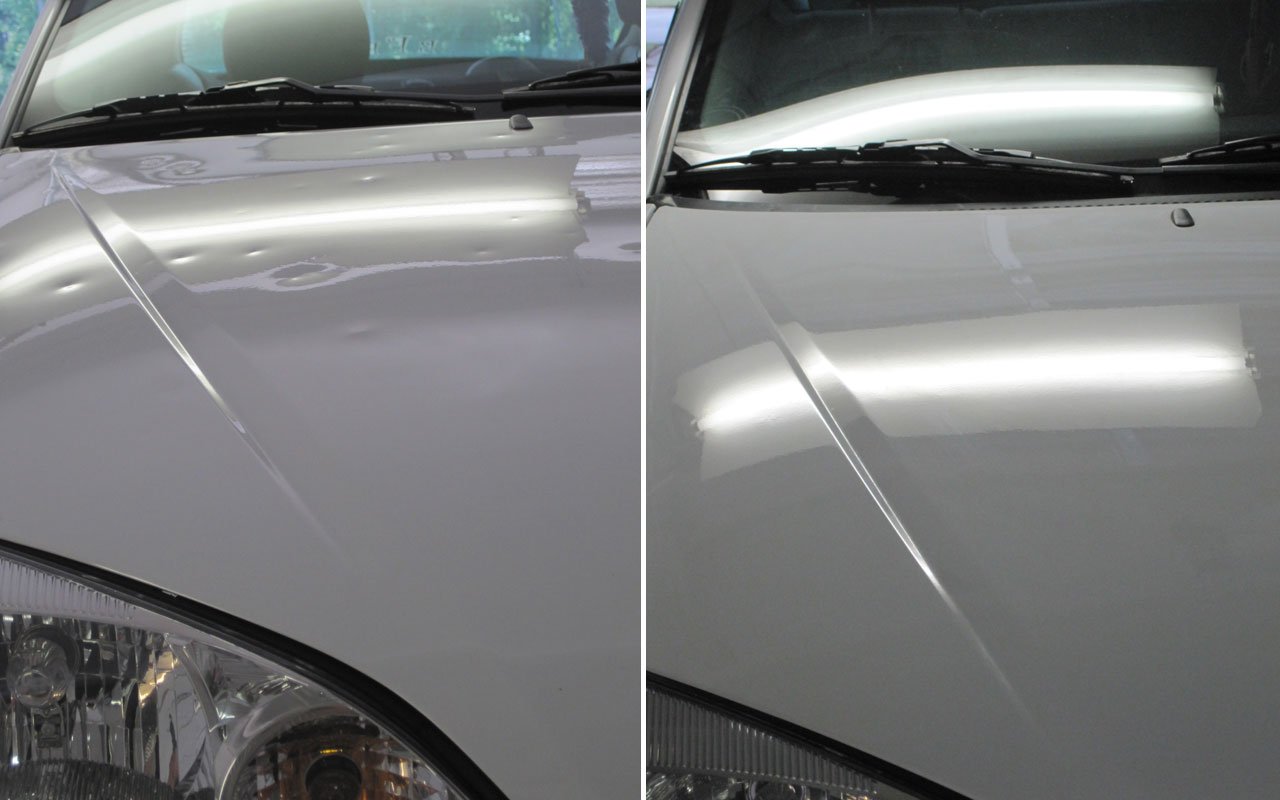
Hail on a leased vehicle is a different problem from hail on a car you own, and the difference is not the damage — it is who ends up deciding what the repair is worth. On your own car you can weigh a claim against paying out of pocket against simply living with the dents. On a lease, the third option quietly disappears: the vehicle goes back to a party that will price the damage on its own terms.
That is why storm damage on a lease is an insurance question before it is a repair question, and why the worst outcome is discovering it at handover.
Start with the two documents that govern this
Two pieces of paper decide almost everything here, and neither of them is a shop's website.
- Your auto policy. Hail is normally handled under the comprehensive portion of a Texas auto policy. If you carry comprehensive, storm damage is generally the kind of loss it exists for; if you dropped it, it is not. Coverage depends on the language of your policy, and your insurer or licensed agent can confirm your specific coverage.
- Your lease agreement. Leases typically require the vehicle to be insured with specified coverages, and set a condition standard for return. Many also name the leasing company or lienholder as a party with an interest in loss payments, which affects how a settlement is issued.
Read both before you make a decision. The Texas Department of Insurance publishes consumer tips for after hail or windstorms that are worth reading alongside them, and it recommends prompt notice to your insurer after a storm — most policies require it.
Do not wait until the turn-in date
The single most common mistake is treating hail as something to deal with "before I hand it back," which in practice means three weeks out. By then several things have already gone wrong.
- Texas has deadlines for filing, and a claim opened late gets harder to support — our guide on how long you have to file a hail claim in Texas covers them.
- The longer you drive, the harder it becomes to separate storm damage from ordinary parking-lot damage.
- If a second North Texas storm crosses the same suburb, overlapping events complicate which damage belongs to which date.
- After a significant DFW hail event, every shop and every carrier's desk is working through the same wave at the same time. Full-vehicle hail repair typically runs about 5–10 business days in the shop once it starts, but the queue in front of it can be longer.
Document the vehicle now even if you do nothing else: photograph each panel from a low angle with a reflection across it, and note the storm date. Our guide on what to do immediately after hail damage covers the photo set worth taking.
Your realistic options
| Option | When it makes sense | What to watch |
|---|---|---|
| File a comprehensive claim and repair before turn-in | Damage across several panels; you carry comprehensive | Settlement may be issued naming the leasing company; repair must be complete before handover |
| Pay out of pocket and repair | Light, localized damage near or below your deductible | Get it quoted first — self-pay hail work spans a wide range |
| Return the car unrepaired | Rarely the cheaper path, but possible if the damage is genuinely minor | Assessed at retail rates by the party collecting; you lose control of the number |
| Buy the lease out and keep the car | You wanted the vehicle anyway | Changes the arithmetic entirely; the damage becomes yours to schedule |
The option that almost never works is repairing cheaply and hoping nobody notices. A poor repair is more visible at inspection than honest damage, and a DIY attempt that stretches metal or lifts paint moves the item into refinish pricing.
How the claim runs when the car is leased
The sequence is the same as on an owned vehicle with one addition: another party has an interest in the vehicle.
- You file the claim. A shop can document damage, meet the adjuster, prepare a supplement and walk alongside you through the paperwork, but the claim is yours to open.
- Have the vehicle read properly. Panels get counted under reflection lighting rather than in a parking lot — at the Plano shop that means LED line boards in a controlled-light bay, because shallow hail dents are close to invisible in flat outdoor light.
- The adjuster inspects and writes an estimate. See how the adjuster inspection works.
- Differences are handled as a supplement. Roof rails, pillars and upper door skins are the items most often missing from a fast estimate — our guide on what a supplement is explains the process.
- Settlement is issued. Where the leasing company is named on the payment, the paperwork routes through them. That is normal and it takes time, which is another reason not to start three weeks before turn-in.
- Repair, then keep everything. The final invoice, the estimate and before-and-after photographs are what you produce if an assessment later lists damage you already fixed.
In Texas you generally choose your own repair shop rather than being assigned one, even when a carrier suggests a preferred network.
What the repair method changes at turn-in
Most hail is a paintless dent repair job: the paint is intact and the metal is displaced rather than opened, so panels can be returned to a factory surface without refinishing. PDR itself creates no vehicle history record. Where an adjuster requires a panel replacement, that can be reported, and it is worth knowing which side of that line your car falls on before work begins.
Repairability depends on paint condition, metal stretch, panel access and prior repairs, and some panels genuinely do need replacement and refinishing. We do what is best for the vehicle rather than defending a method. Panels with cracked paint, torn metal or damage on an edge are the usual candidates.
If the damage is heavy enough that the numbers get close to the vehicle's value, the total-loss question enters — which on a lease also raises gap coverage. How a total loss is assessed, and whether a shortfall between the settlement and the lease payoff is covered, depends on your policy and your lease — your insurer or licensed agent can confirm both.
Common mistakes
- Assuming hail is "normal wear." It is storm damage, and wear guides treat it as damage.
- Not telling the shop it is a lease. It changes the advice, the priorities and the timeline completely.
- Letting a driveway crew work the car after a storm. A bad pull turns a PDR job into a repaint, and temporary operations move through DFW neighborhoods after every significant storm.
- Signing the settlement over without reading it, particularly when the leasing company is named as a payee.
- Skipping the glass. If the windshield is chipped or cracked and needs replacing, ask whether your vehicle requires a forward-camera calibration afterward — many vehicles mount the driver-assistance camera behind the glass. Manufacturer procedures vary by model year and configuration.
- Losing the invoice. Without paperwork, a repaired roof and an unrepaired one are the same thing on a dispute form.
What to do next
Photograph the car today, find the storm date, and read the comprehensive section of your policy alongside the wear-and-tear section of your lease. Then get the damage read under proper lighting so you know the size of the problem before you decide how to pay for it.
At DentPicks in Plano the inspection is free, the panels are read under PDR lighting, and we walk alongside you through the claim if there is one worth filing. On many approved hail claims the deductible is waived up to $1,000, pickup and delivery across DFW is complimentary on insurance-approved hail claims, and every finished repair is signed off by whoever runs quality control — visible in your customer portal. See how lease return dent repair works or how our hail repair process runs from inspection to delivery.
Frequently asked questions
Can I just return a leased car with hail damage?
You can, but it is rarely the cheaper path. Unrepaired storm damage is normally assessed at retail body-shop rates — panel labor, refinishing materials and blending across adjacent panels — and you have no say in the number. Repairing through a comprehensive claim generally costs you a deductible instead.
Who receives the insurance payment when the car is leased?
Many leases name the leasing company or lienholder as a party with an interest in loss payments, so a settlement can be issued in a way that routes through them. That paperwork takes time, which is a practical reason to start well before your turn-in date. Your insurer can confirm how a payment will be issued on your policy.
Does the leasing company have to approve where the repair is done?
In Texas you generally choose your own repair shop rather than being assigned one. Lease agreements usually set a condition standard for the returned vehicle rather than naming shops, but wording varies by leasing company and contract year, so read your own agreement.
Will hail repair show up on a vehicle history report?
Paintless dent repair itself creates no history-report record, because no panel is replaced and no paint is filed. Where an adjuster requires a panel replacement, that can be reported. It is worth knowing which side of that line your repair falls on before work begins.
How long does hail repair take before a turn-in date?
Full-vehicle hail repair typically runs about 5 to 10 business days in the shop, but after a significant DFW event the queue in front of it can add considerably more. Add time for the claim, the adjuster inspection and any supplement, and start months rather than weeks before handover.
What if the hail damage is severe enough to total the car?
A heavily damaged vehicle can be evaluated as a total loss even when the damage is cosmetic, and on a lease that raises whether the settlement covers the payoff. How a total loss is assessed and whether a shortfall is covered depends on your policy and your lease — your insurer or licensed agent can confirm both.
Should I mention the hail on the lease inspection if I have already repaired it?
Keep the paperwork and let the panels speak for themselves. Retain the estimate, the final invoice and dated before-and-after photographs — those are what you produce if an assessment later lists damage that has already been properly repaired.
Sources and methodology
- After hail or windstorms: consumer tips — Texas Department of Insurance.
- Automobile insurance guide — Texas Department of Insurance.
Repair, cost and timing statements that are not tied to a listed source come from DentPicks' own quoting and repair history at the Plano, TX shop. They are typical ranges and shop-floor observations, not industry statistics or promises — your vehicle, its condition, your policy language and your insurer determine your specific outcome.
Hail on a lease you are handing back soon?
Bring the car to the Plano shop or send photos of each panel. The inspection is free, we read the damage under PDR lighting, and we walk alongside you through the claim if filing is the right move.