

The short answer
It is worth doing, but not to help the existing dents. Sheet metal will not relax back in the heat and will not worsen in the sun. Cover the car to keep a second storm from landing on the same panels, since overlapping events are hard to separate on a claim, and to slow UV and moisture anywhere the paint chipped. Skip a fabric cover if trim is loose or clearcoat is cracked.
 Written by the DentPicks Editorial Team
Technically reviewed by Vytas Kucinskas, Founder & Master PDR Technician
Written by the DentPicks Editorial Team
Technically reviewed by Vytas Kucinskas, Founder & Master PDR Technician
Published: Aug 19, 2026 · Last reviewed: Aug 19, 2026 · 9 min read
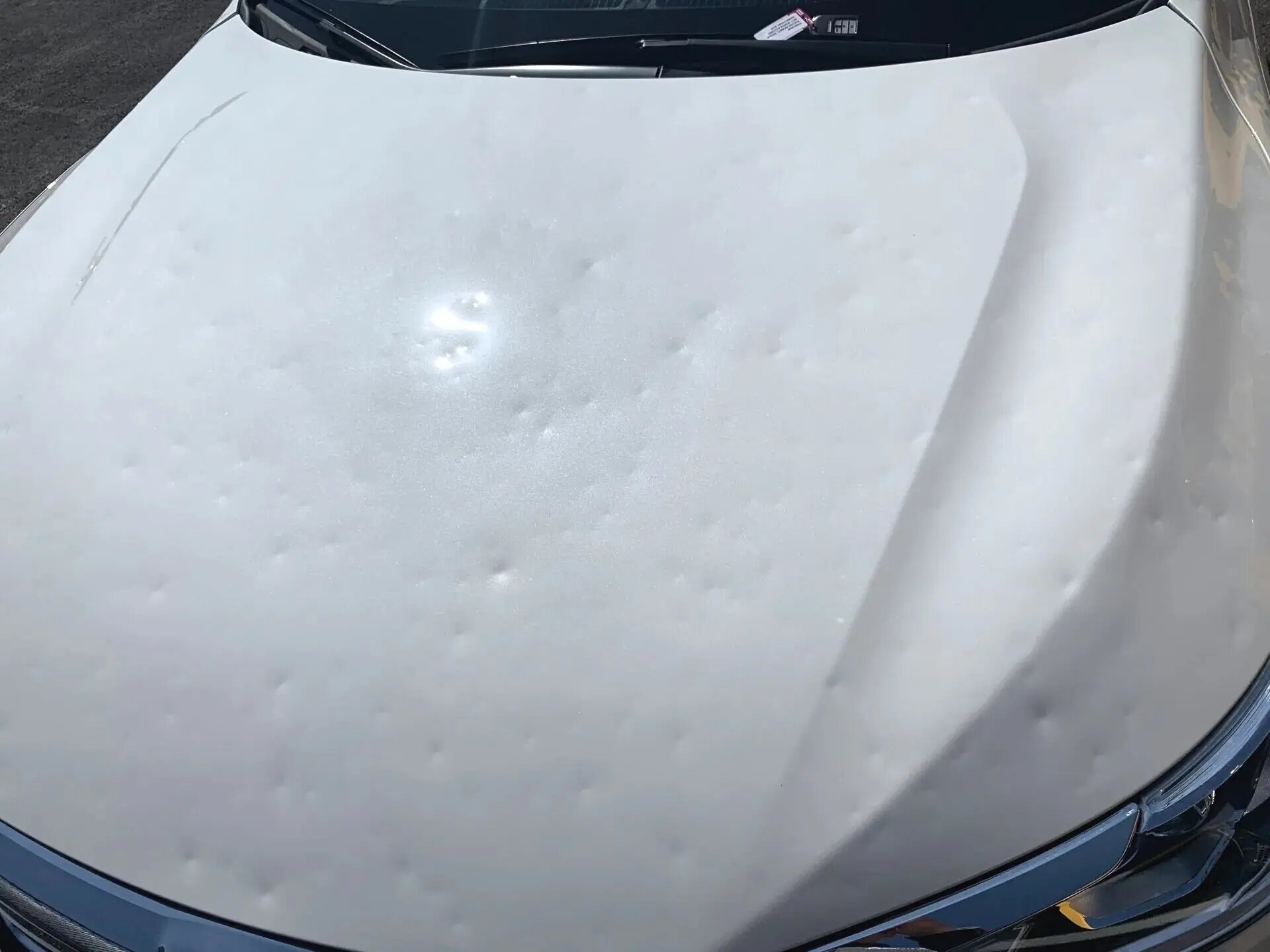
Yes, if it is easy to do — but not for the reason most people have in mind. Covering a hail-damaged car does nothing to the dents that are already there. Sheet metal does not relax back into shape because it spent a week out of the sun, and it does not get worse because it spent a week in it. The panel is deformed, and it stays deformed until someone works it back.
The real arguments for covering or garaging are different, and two of them are genuinely worth acting on: the next storm, and any place where the paint broke. In North Texas, the first one is not hypothetical. Vehicles come through our Plano shop every season carrying damage from two separate storm dates, and that is a messier conversation with an insurer than a single event.
What covering does not do
- It does not reverse existing dents. There is a persistent belief that Texas heat will "pop out" hail dents if you leave the car in the sun. It will not. Steel and aluminum body panels do not self-correct. Very shallow marks in flexible plastic bumper covers can occasionally relax with heat, which is probably where the myth started, but it does not transfer to the roof or hood.
- It does not make existing dents deeper. Heat cycling stresses coatings at the edges of a break, not the shape of undamaged paint. A sealed dent parked outdoors is a sealed dent.
- It does not affect whether PDR will work. Repairability comes down to paint condition, metal stretch, panel access and prior repairs — not where the car slept.
- It does not change your claim. Nothing about parking under cover helps or hurts coverage. Prompt notice and documentation are what matter.
Reason one: the next storm is the real risk
DFW hail season is not a single event. Storms cluster through spring and can return in autumn, and it is common for the same neighborhoods to get hit more than once in a season. Our DFW hail season guide covers the typical pattern.
A second storm on an already-damaged vehicle causes two distinct problems. The obvious one is more damage. The less obvious and more expensive one is attribution: once two events overlap on the same panels, separating which dents belong to which date becomes genuinely difficult, and that complicates the estimate, the supplement conversation and sometimes the claim itself.
Reason two: broken paint responds to exposure
This is where covering has a direct physical benefit. A hail dent with unbroken paint is sealed and stable, and nothing about parking outdoors threatens it. A dent with a chip, a crack or exposed metal is an opening in the coating, and openings care about sun and moisture.
Texas UV makes clearcoat brittle and works at the edges of an existing crack. Overnight humidity supplies the water that corrosion needs. Neither process is fast, but both are real, and both slow down substantially under cover. If you found chipped paint inside any of your dents, a garage is worth more than it is for a car whose finish came through intact. Our guide on what Texas heat does to unrepaired dents covers how this plays out over a season, including on panels with old filler-based repairs underneath.
Reason three: it keeps the damage state stable
Between the storm and the adjuster inspection, the cleanest situation is one where nothing else happens to the car. Parking lot dings, a tree branch, a falling limb in the next thunderstorm — each one adds something an estimator has to separate from storm damage. Keeping the vehicle under cover through that window is a small, free way of keeping the claim tidy. Our guide on how the adjuster inspection works explains what that appointment is looking at.
When a car cover is the wrong choice
A fabric cover is not automatically better than no cover on a car that has just been through hail. Be careful in these situations:
- Lifted or loose trim. Pulling a cover over a molding that is already unclipped will finish the job. Check roof rails, window trim and moldings first.
- Cracked or chipped clearcoat. Grit trapped between a cover and damaged paint acts like sandpaper every time the wind moves the fabric.
- High wind without proper straps. A flapping cover scuffs a whole panel in an afternoon. If it cannot be secured properly, leave it off.
- A wet car. Covering a soaked vehicle traps moisture against paint and against any open chip, which is the opposite of the goal.
- Broken glass or a damaged sunroof. A cover does not seal water out. Get the glass addressed instead.
Cover options compared
| Option | What it genuinely helps with | Watch out for |
|---|---|---|
| Enclosed garage | Everything — next storm, UV, moisture, incidental damage | Nothing, if you have one available |
| Carport or covered parking | Vertical hail is stopped; UV and rain largely stopped | Wind-driven hail still reaches the sides and lower panels |
| Public parking structure during a warning | Effective and free for a specific storm | Only useful if you move the car before the storm arrives, not during |
| Padded hail cover or blanket | Reduces impact energy on horizontal panels | Products vary widely and none stop severe hail; needs securing, and needs a clean, dry car underneath |
| Standard fabric car cover | UV and dust | Minimal hail protection; abrasion risk over cracked paint and loose trim |
| Moving blankets or improvised padding | Better than nothing in an emergency | Blows off easily, holds water, can scuff paint — a last resort, not a plan |
Should you wait out the season before repairing?
This question follows almost every hail claim: if another storm might come in six weeks, why fix it now?
It is a reasonable instinct, and the honest answer is that it depends on your situation rather than on any rule. Filing and documenting should not wait — Texas policies generally require prompt notice, and claim deadlines run from the date of loss, which our guide on Texas hail claim time limits explains. Scheduling the physical repair is a separate decision. If the paint is intact and you have secure covered parking, waiting a few weeks costs the metal nothing. If the paint is broken, if you are selling or turning in a lease soon, or if the car sits outdoors anyway, there is no advantage in waiting and some real downside.
What you should not do is delay reporting because you are waiting to see what the rest of the season does. That is the version of waiting that causes problems.
Common mistakes
- Parking in the sun on purpose to "pop the dents out." It does not work, and on a car with cracked clearcoat it is actively unhelpful.
- Throwing a cover over a wet, dirty car. Trapped moisture and grit are worse than open air.
- Buying a hail blanket after the storm and treating it as full protection. These reduce impact energy on horizontal surfaces; they do not make a vehicle hail-proof.
- Moving the car during a warning rather than before one. Driving into a hailstorm to reach a parking garage is worse than leaving it parked.
- Waiting to report the claim until the season is over. Notice and repair are two separate decisions — treat them that way. Our guide on what to do after hail damage sets out the order.
What to do next
If you have a garage or covered parking, use it — not to help the existing dents, but to keep a second storm off the same panels and to slow UV and moisture at any place the paint broke. If you do not, do not buy a cover in a panic. Check your dents for chipped paint first, since that is what decides whether exposure matters at all, and make a plan for moving the vehicle under a structure when a warning is issued rather than after.
Meanwhile, get the damage documented. At DentPicks the inspection is free and read under LED line lighting at the Plano shop, most quotes are verbal from photos in about 30 minutes, and you file the claim while we help and walk alongside you through the photos, the adjuster meeting, supplements and paperwork. On approved hail claims the deductible is waived up to $1,000 and pickup across DFW is complimentary. You can see how the job runs on our hail repair page.
Frequently asked questions
Will hail dents pop out in the Texas heat?
No. Steel and aluminum body panels do not return to shape on their own, no matter how hot the car gets. Very shallow marks in flexible plastic bumper covers can sometimes relax with heat, which is likely where the belief came from, but it does not apply to a roof, hood or door.
Are hail blankets and padded car covers worth buying?
They reduce impact energy on horizontal panels and can lessen damage in a moderate storm. Products vary a great deal and none of them make a vehicle hail-proof, so treat one as risk reduction rather than protection. It also needs securing properly, and the car underneath should be clean and dry.
What happens if a second hailstorm hits before my repair?
The main problem is attribution — once two events overlap on the same panels, separating which dents belong to which date is difficult, which complicates the estimate and any supplement. Report the new event to your insurer and tell the shop both storm dates. Coverage depends on the language of your policy.
Should I move my car when a hail warning is issued?
Only if you can do it before the storm arrives. Driving toward a parking structure while hail is falling exposes the vehicle to wind-driven stones on the vertical panels as well, which is worse than leaving it parked. Decide in advance where you would move it, and act on the watch rather than the warning.
Can I use a tarp or moving blankets over the car?
As a last resort in an emergency. They blow off easily, hold water against the paint, and can scuff a finish that hail has already cracked. If you cannot secure the covering properly, leaving the car uncovered is usually the lesser risk.
Should I wait until hail season ends before repairing?
Do not wait to report — Texas policies generally require prompt notice and deadlines run from the date of loss. Scheduling the physical repair is a separate call. Intact paint plus covered parking means waiting costs the metal nothing; broken paint, an upcoming sale or a lease return, or outdoor parking all argue for going ahead.
Sources and methodology
- After hail or windstorms: consumer tips — Texas Department of Insurance.
- NWS Fort Worth forecast office — National Weather Service.
Repair, cost and timing statements that are not tied to a listed source come from DentPicks' own quoting and repair history at the Plano, TX shop. They are typical ranges and shop-floor observations, not industry statistics or promises — your vehicle, its condition, your policy language and your insurer determine your specific outcome.
Get the damage documented before the next storm
A free inspection in Plano fixes your storm date and scope in writing, which is what keeps a second event from muddling your claim.