

The short answer
They get handled as two different repairs. Dents with intact paint can usually be worked out paintless, while scratches, scuffs and chips that break the finish need refinishing — more steps, more time, more cost. Metalwork comes first, then paint. Which items are worth repairing depends on your lessor's wear guide and a real quote, since excess damage charges are generally billed at dealer retail rates.
 Written by the DentPicks Editorial Team
Technically reviewed by Vytas Kucinskas, Founder & Master PDR Technician
Written by the DentPicks Editorial Team
Technically reviewed by Vytas Kucinskas, Founder & Master PDR Technician
Published: Aug 19, 2026 · Last reviewed: Aug 19, 2026 · 9 min read
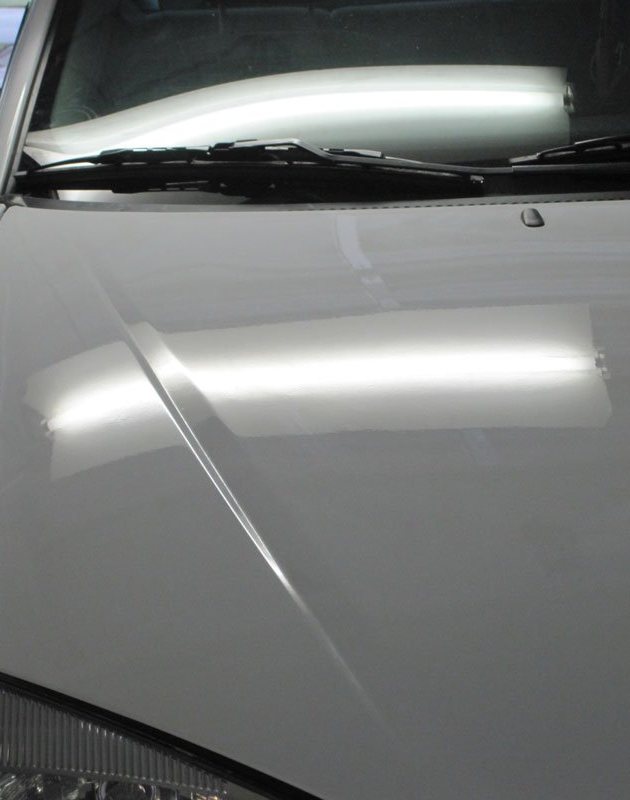
Most lease-return inspections turn up a mixed list. There are dents — door dings, a crease on a fender, dimples across the hood — and there is paint damage: a scuff on the rear quarter, a scratch along a door edge, a chip where a rock hit. Owners tend to treat that as one problem with one price. It is not. The two categories are repaired by different processes, priced on different logic, and they behave differently in a lease assessment.
Understanding the split is what lets you spend money where it actually reduces your charge, rather than spreading it thin across everything the inspector wrote down.
Why dents and paint damage are separate problems
A dent with intact paint is a metal problem. The panel has been pushed out of shape, but the factory finish is unbroken and still sealed. That is the condition paintless dent repair was built for: a technician reaches the back of the panel and works the metal back to its original shape, and because the finish was never disturbed, the panel keeps the paint it left the factory with. Our guide on how PDR works covers the mechanics.
Paint damage is a coating problem. A scratch through the clear coat, a scuff that took color off, a chip down to primer or metal — none of that can be pushed back. Restoring it means preparing the surface, refinishing, and blending to the surrounding panels so the repair is not visible in daylight. That is body-shop work: more steps, more materials, more time, and a permanently different paint history on the panel.
So on a mixed list, the honest breakdown is usually: the dents are the cheap part and the paint is the expensive part — the opposite of what most people assume when they look at the car.
What a lease inspection does with each category
Lease-return inspectors work from the lessor's wear-and-tear guide, which sets out what counts as normal wear and what counts as excess. Those standards vary by lender and by contract — there is no industry-wide rule, and anyone quoting you a universal size threshold is guessing. Pull the wear guide from your own lease packet or your lender's lease-end portal, because it is the only document that governs your car.
What is broadly consistent is the structure of the judgement:
- Dents are typically assessed by size and by whether the paint is intact. Small dents with unbroken paint are the most likely category to fall inside an allowance.
- Scratches are usually assessed by length and by depth — specifically whether the damage breaks through the finish.
- Paint breaks, chips and exposed metal are treated more seriously than dents of comparable size, because they are a corrosion path rather than a cosmetic dimple.
- The number of affected panels matters. Several items on one panel are often priced closer to one repair than to four.
That last point is genuinely useful. If your inspection list shows three separate items on the same door, the repair economics are much better than three items across three panels — and the reverse is also true, which is why a scattered list can cost more than a concentrated one that looks worse.
How the two get sequenced in one repair
When a vehicle needs both, the order of operations matters. Metalwork comes before finish work. Pulling a dent after a panel has been refinished risks the new coating, and refinishing before the shape is corrected means doing the paint twice.
A typical mixed lease-return job in our Plano shop runs like this:
- Read the whole vehicle under reflection lighting. Panels are mapped under LED line boards, where light lines bend over every low spot. Outdoor light hides a large share of dents, so the list from a driveway walkaround is rarely complete.
- Sort the list. Every item is classified: PDR candidate, refinish item, or leave-alone. The customer sees that split before anything is authorized.
- Work the metal. PDR items are pushed and worked back to shape, checked against the light board as the panel comes up.
- Refinish what genuinely needs it. Some panels do need paint, and a few need replacement. We do what is best for the vehicle rather than forcing everything into one process.
- Quality control sign-off. The finished vehicle is signed off by whoever runs quality control, visible in your customer portal, and delivered with a mini exterior detail.
Timelines differ by category, which is the other reason to start early. PDR on a short list is often same-day or next-day work. Refinishing adds preparation, curing and blending time, and a panel replacement adds parts availability on top. A vehicle needing both is not a "swing by on Friday" job.
Deciding what to repair and what to leave
| Inspection item | Repair route | Usually worth repairing before turn-in? |
|---|---|---|
| Small dents, paint intact, inside your wear guide | PDR, or nothing | Often not — check your own guide first |
| Multiple dents or a crease, paint intact | PDR | Usually yes; retail damage charges cost far more |
| Light scuff that polishes out | Paint correction | Often yes; it is the cheapest item on the list |
| Scratch through the clear coat | Refinish | Depends on length and location — get it priced |
| Chip or scratch to bare metal | Refinish | Usually yes; assessed harder than a dent |
| Dent with cracked paint | Repair plus refinish | Yes — it is counted as both |
The pattern worth remembering: dents with intact paint are the category where a wear allowance most often saves you money, and paint breaks are the category where waiting rarely does. For deeper damage that sits at the edge of what PDR can reach, see our guide on creases and large dents.
Why one quote covering both is worth more than two
If you get a PDR quote from one shop and a paint quote from another, nobody is looking at the vehicle as a whole. You may pay to refinish a panel whose dent could have come out paintless, or pay for metalwork on a panel that is going to be refinished anyway and could have been handled in one pass.
On a mixed list, the money is saved in the sorting — deciding which items are metal, which are finish, and which are neither.
A single assessment also produces one honest total to compare against the lessor's likely charge, which is the number that actually matters. Because excess damage is generally billed at dealer retail rates, PDR items in particular tend to cost far less to repair than to be charged for. Our comparison of PDR versus a traditional body shop explains where each process is the right tool.
One note on records: paintless dent repair on its own creates no vehicle history entry. What can be reported is a panel replacement — if a panel is beyond repair and gets replaced and refinished, that work can show up. Repairability depends on paint condition, metal stretch, panel access and prior repairs, which is why an in-person look matters more than a photo on a borderline panel.
Common mistakes on mixed inspection lists
- Treating the list as one price. Sorting it is the first real saving.
- Touch-up paint from a bottle. Inspectors see it immediately, and a bad touch-up can be assessed worse than the original chip.
- Buffing hard on a scratch. Clear coat is thin. Burning through turns a polish job into a refinish.
- Repairing everything reflexively. Some items sit inside the allowance. A quote tells you which.
- Repairing nothing because paint is involved. The dents on the same list are usually still worth fixing.
- Starting two weeks out. Refinishing and parts do not compress.
What to do next
Start 30 to 45 days before turn-in so nothing has to be rushed. Get your lessor's current wear-and-tear guide, then have the vehicle assessed by someone who can price both the metal and the finish work in one pass. Compare that quote against what the lessor is likely to charge, and repair the items where the gap is real.
DentPicks inspects lease-return vehicles free at our Plano shop, reads panels under PDR lighting, and gives you an honest split between what should be pushed, what should be painted and what should be left alone — usually as a verbal quote from photos in about 30 minutes. See our lease return dent repair service or browse finished vehicles in the before and after gallery.
Frequently asked questions
Can paintless dent repair fix a dent that has cracked paint?
The metal can often still be worked back into shape, but the broken paint remains and needs refinishing afterward. That makes it a two-part repair rather than a PDR job, and it is assessed as both a dent and a paint break at a lease inspection. Repairability depends on paint condition, metal stretch, panel access and prior repairs.
Should I use touch-up paint on chips before turning the car in?
Usually not. Inspectors recognize bottle touch-up immediately, and a blob of mismatched paint can be assessed more harshly than the chip it was covering. If a chip is small enough to sit inside your wear allowance, leave it. If it is not, have it refinished properly.
Does repairing paint damage show up on the vehicle history report?
Refinishing a panel does not automatically create a history entry, but a panel replacement can be reported. Paintless dent repair on its own creates no record at all. If a history entry matters to you, ask the shop up front which route each panel is taking.
Is it cheaper to repair the damage or pay the lease charge?
For dents with intact paint it is almost always cheaper to repair, because the lessor prices excess damage at dealer retail rates while paintless repair costs a fraction of that. For paint work the gap is narrower. A quote covering both categories is the only way to know which items pay for themselves.
How long does a mixed dent and paint repair take?
Paintless work on a short list is often same-day or next-day. Refinishing adds preparation, curing and blending time, and a panel replacement adds parts availability on top. That is why 30 to 45 days before turn-in is the window to start rather than the final fortnight.
Do small scratches count as excess wear?
It depends on length, depth and your lessor's own standard, which varies by lender and by contract. Scratches that break through the finish are treated more seriously than surface marks that polish out. Check the wear-and-tear guide in your lease packet rather than relying on a general size rule.
Sources and methodology
Repair, cost and timing statements that are not tied to a listed source come from DentPicks' own quoting and repair history at the Plano, TX shop. They are typical ranges and shop-floor observations, not industry statistics or promises — your vehicle, its condition, your policy language and your insurer determine your specific outcome.
Got a lease inspection list with both dents and paint?
Send photos and we will sort the list for you — what comes out paintless, what genuinely needs refinishing, and what is small enough to leave alone. Free inspection at the Plano shop.