
The short answer
Build a short packet and volunteer it early. Keep an itemized repair order that states the method for each panel, your own before photos, matched after photos, the claim number and date of loss if a claim was involved, the warranty document, and the shop's name and address. Hand it to a dealer before the appraisal walk, not after the offer — documentation that arrives first is an input, not an argument.
 Written by the DentPicks Editorial Team
Technically reviewed by Vytas Kucinskas, Founder & Master PDR Technician
Written by the DentPicks Editorial Team
Technically reviewed by Vytas Kucinskas, Founder & Master PDR Technician
Published: Aug 19, 2026 · Last reviewed: Aug 19, 2026 · 9 min read
Every used car carries a story. The difference between a seller who gets asking price and one who gets talked down is usually not the story itself — it is whether the seller can tell it with paper in hand or has to say "I think it was just a hail thing, a few years back."
Documentation is the cheapest value protection available to a vehicle owner. It costs nothing but attention on the day of the repair, and it changes how three specific audiences read your car: a private buyer deciding whether to trust you, a dealer appraiser deciding how much to decondition, and an inspector deciding what a panel means.
What each audience is actually asking
Presenting documentation well starts with knowing what question it answers. The three readers want different things from the same folder.
| Reader | Real question | What satisfies it |
|---|---|---|
| Private buyer | "Is this seller telling me everything?" | Volunteered records that match what they can see on the car and on the history report |
| Dealer appraiser | "What do I have to spend to retail this?" | Proof that panels were repaired, not filled or repainted, so no reconditioning is needed |
| Pre-purchase inspector | "Was any panel refinished or replaced?" | A method-by-panel breakdown they can verify with a paint gauge and a reflection light |
Notice that none of them is asking "was this car ever damaged." They assume it was; most cars have been. They are asking whether the damage was addressed properly and whether you are being straight about it.
The packet worth building
A useful disclosure packet is short. Six items, assembled once, kept as a PDF or a folder of photos on your phone:
- An itemized repair order showing method by panel. "Hail repair — $2,400" proves you paid someone. "Hood, roof, both front fenders: paintless dent repair, factory finish retained; right rear quarter: refinished" tells a reader exactly what they are looking at. If the shop's default invoice does not break it out, ask before you pay.
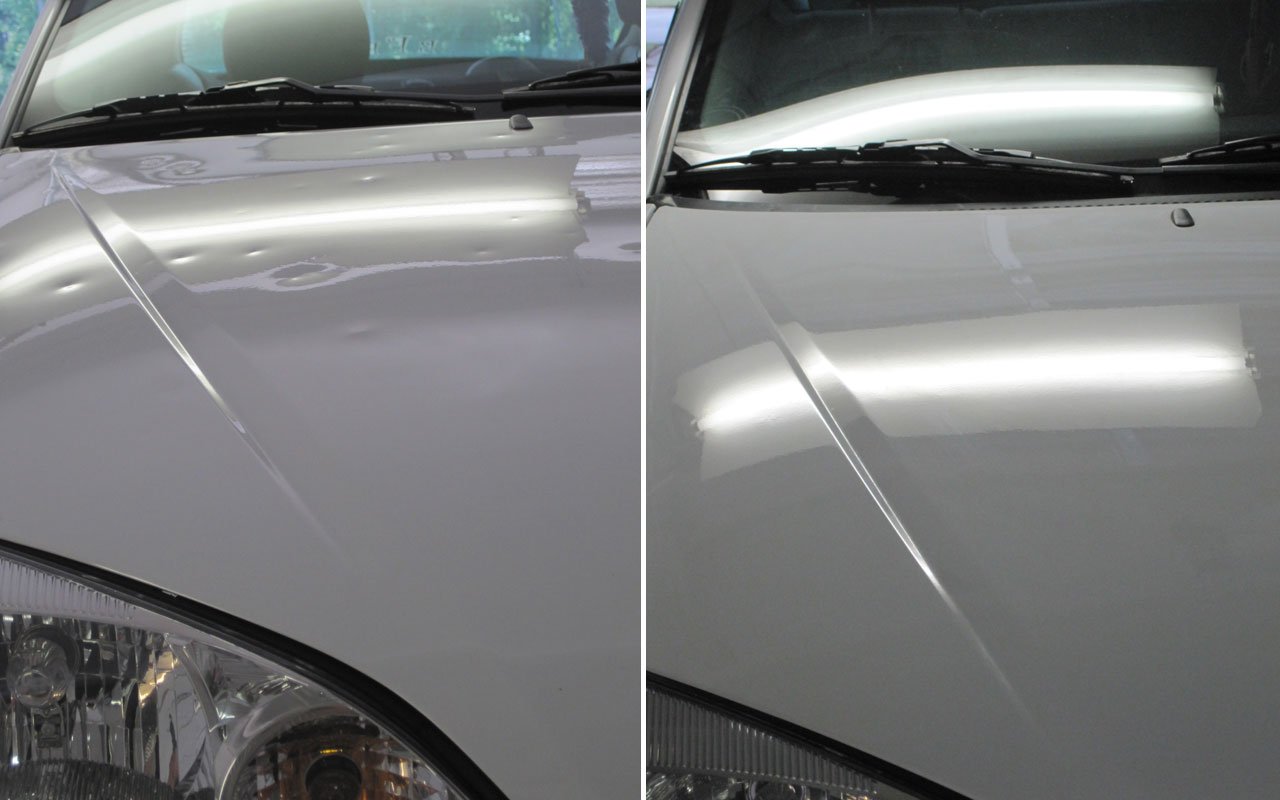
- Your own before photographs. Wide shots of each panel plus close-ups of the worst areas, in daylight, before the car went in. Nobody else can produce these afterward, and they are what makes an after photo meaningful.
- After photographs of the same panels from the same angles. Matched pairs read as evidence. Unmatched pairs read as marketing.
- Claim details, if there was a claim. Carrier, claim number, date of loss, and what the claim was for. Since an insurance claim is a separate data trail from any repair record, having the explanation ready beats being asked about an entry you cannot account for.
- The warranty document. Include it for completeness and be honest about its scope — our written lifetime warranty runs for as long as you own the vehicle and is not transferable, so it is not a benefit to promise a buyer.
- The shop's identity. Business name, address, phone, repair order number. A verifiable shop is worth more to a buyer than a glowing but anonymous receipt.
Why the method line is the valuable one
Of the six, the panel-by-panel method breakdown does the most work, because it maps directly onto what an appraiser can verify.
Appraisers carry a paint depth gauge. Factory coating falls in a consistent band across a vehicle; filler and refinishing usually read thicker. When your paperwork says a panel was repaired with paintless dent repair and the gauge agrees, your document has just been independently confirmed — and everything else in the folder becomes more credible. When the paperwork is vague and the gauge finds a repainted quarter, the reverse happens.
This is also why honesty about refinished panels helps rather than hurts. Panels sometimes genuinely do need replacement and refinishing, and saying so plainly is more persuasive than a document implying the whole car is untouched when a five-minute check says otherwise. Our comparison of paintless repair versus a traditional body shop explains when each is the right answer for the vehicle.
When to hand it over
Timing matters more than people expect, and it differs by channel.
- Private sale: mention the repair in the listing, in one plain sentence, and bring the packet to the viewing. Volunteering it early removes the possibility of the buyer discovering it themselves and re-pricing the car around their suspicion.
- Dealer trade-in: hand it over before the appraisal walk, not after the number comes back. Appraisers build a reconditioning estimate as they walk; documentation that arrives after the number is an argument, while documentation that arrives before it is an input.
- Lease turn-in: the inspection is against a wear standard, not a value estimate, but records still help when a charge appears for something you already had repaired. Our lease return dent repair guide covers that sequence.
- Online buyer or instant-offer service: most offers are conditioned on an in-person verification. Disclose in the intake questionnaire rather than at the inspection, so the offer you receive is one that will actually hold.
How to phrase it without overselling
Two sentences do the job. A version that works for a hail-repaired car:
"Comprehensive hail claim in [month, year], repaired at [shop name] in Plano. All panels repaired by paintless dent repair with the original factory finish retained — itemized repair order and before/after photos available."
That is specific, verifiable and free of adjectives. Avoid "perfect," "like new" and "you'd never know" — every one of those invites a buyer to go hunting for the exception. Say what was done and let the paint gauge do the persuading.
What we hand you, and what to save
At our Plano shop, panels are read under LED reflection boards rather than in daylight, which is how shallow dents get found and documented before a single tool touches the car. That inspection produces the panel list your paperwork is built from.
Through the repair you get live updates rather than a silent week, and at the end the finished vehicle is signed off by whoever runs quality control — that sign-off is visible in your customer portal alongside the job record. Save your own copy on delivery day. Portals are convenient; a downloaded PDF in your own storage is permanent, and it is the version that will still exist when you sell the car in four years.
If your repair is already behind you and the folder is thin, most of it can be rebuilt: shops keep repair orders, carriers keep claim files, and your phone's photo library is organized by date.
Common mistakes
- No before photos. The most valuable document in the packet is the one only you could have created, and only before the work started.
- A one-line invoice. Without method by panel, the paperwork answers none of the questions a reader actually has.
- Photos that hide more than they show. Flat light, square angles and different distances between "before" and "after" make a packet look evasive even when it is honest. Match the angle, the distance and the light between the pair.
- Presenting the warranty as transferable. It is not, and a buyer who checks will discount everything else you told them.
- Waiting for the buyer to ask. Disclosure that arrives under questioning reads as damage control. The same facts offered first read as thoroughness.
- Documenting a repair you have not actually done. Records do not substitute for condition — an appraiser deducts for visible damage regardless of how tidy the folder is.
What to do next
If a repair is still ahead of you, take the before photos today, and ask the shop for a panel-by-panel breakdown before you pay rather than after. If you are preparing to sell, walk the car at a shallow angle in good light and decide what still needs addressing — appraisers decondition visible damage at retail rates, so the folder works best on a car that does not need excuses. Our guide on repairing dents before selling or trading in works through that decision.
Send photos if you want a range before committing to anything; quotes are usually verbal, in about 30 minutes, with a written estimate after an in-person look. You can see finished panels in our before and after gallery or read how the process runs at our Plano dent repair shop.
Frequently asked questions
What single document matters most?
The itemized repair order that names the repair method for each panel. An appraiser with a paint depth gauge can independently confirm that a panel was repaired rather than filled or refinished, and once one claim in your paperwork checks out, the rest becomes more credible.
Am I required to disclose a repaired dent when selling privately?
Disclosure obligations vary and known material facts should always be stated honestly. Practically, volunteering a repair with paperwork almost always nets more than staying quiet, because a buyer who discovers something themselves re-prices the car around their suspicion rather than the actual fact.
How should I photograph a panel so the photos prove something?
Shoot at a shallow angle with a straight edge reflecting in the paint — a doorway, a light bar, a fence line. Reflected straight lines reveal panel shape. Then take the after shot from the same spot, same distance, same light, so the pair reads as evidence.
Can I pass my repair warranty to the buyer?
No. Our written lifetime warranty covers workmanship for as long as you own the vehicle and does not transfer to a new owner. Include the document for completeness, but present it accurately — a buyer who checks and finds it overstated will discount everything else you said.
I never took before photos. Is the packet worth building now?
Yes. Shops keep repair orders, carriers keep claim files with dates of loss, and your phone's photo library is organized by date, so incidental shots from that period may exist. A packet missing one item still answers more questions than no packet at all.
Does documentation help if the car still has visible dents?
Only partially. Appraisers decondition visible damage at retail body-shop rates regardless of how tidy the folder is. Records explain what was done; they do not substitute for condition, so the repair decision comes first and the paperwork supports it.
Sources and methodology
Repair, cost and timing statements that are not tied to a listed source come from DentPicks' own quoting and repair history at the Plano, TX shop. They are typical ranges and shop-floor observations, not industry statistics or promises — your vehicle, its condition, your policy language and your insurer determine your specific outcome.
Want paperwork that survives an appraisal?
Ask for the panel-by-panel breakdown before you pay — we would rather write it out than have you guess in three years. Send photos any time for a range on what still needs doing.