

The short answer
Overlapping storms merge into one damage count, because hail dents carry no date. Insurance works by event, so each storm is normally its own occurrence with its own deductible — which makes separating them the whole problem. The fix is documentation: have the vehicle inspected and photographed under proper lighting after each storm, even if you do not repair, and confirm dates against NOAA or NWS records rather than memory.
 Written by the DentPicks Editorial Team
Technically reviewed by Vytas Kucinskas, Founder & Master PDR Technician
Written by the DentPicks Editorial Team
Technically reviewed by Vytas Kucinskas, Founder & Master PDR Technician
Published: Aug 19, 2026 · Last reviewed: Aug 19, 2026 · 9 min read
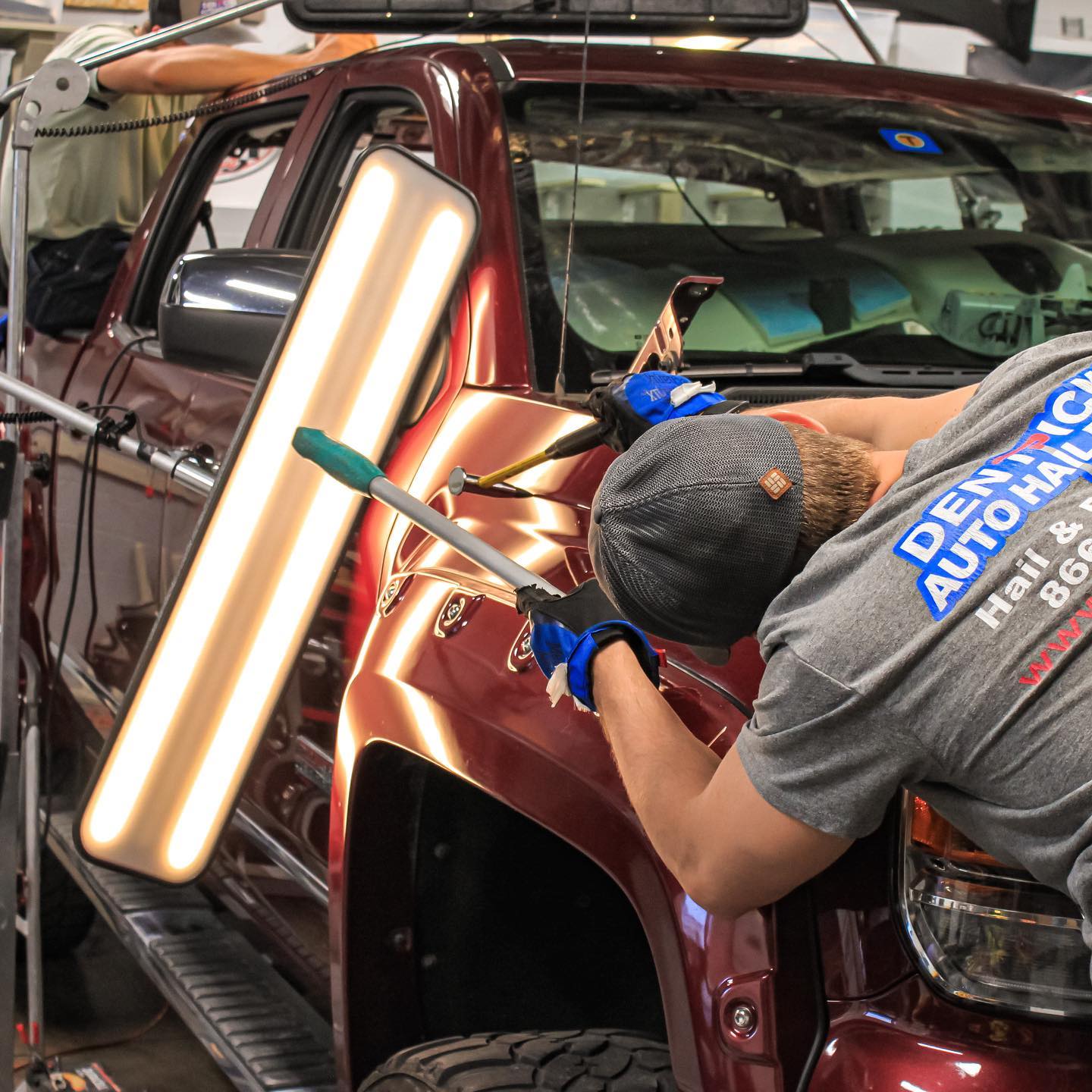
North Texas does not deliver one storm and then leave you alone. A vehicle that took hail in the spring can take more before the first claim is settled, and drivers who put off a repair through one season often arrive at the shop carrying damage from two or three separate events. That creates a genuinely awkward problem: hail dents do not carry date stamps.
Everything downstream depends on separating the events — which claim covers what, which deductible applies, how the estimate is built, and whether a supplement is needed. Getting ahead of it is far easier than untangling it afterwards.
Why overlapping storms are a problem at all
A hail estimate is built panel by panel from how many dents each panel carries and how large they are. When two storms have hit the same roof, the counts merge. There is no reliable way to look at a dished panel and say which impacts arrived in April and which in June — the metal looks the same either way.
That matters because insurance works by event. Each storm is its own occurrence with its own date, potentially its own deductible, and potentially different circumstances — you may have changed carriers, changed coverage, or bought the vehicle in between. When the damage cannot be apportioned, the conversation gets slower and the outcome gets less predictable.
There are a few honest exceptions where events can be partly separated. Fresh damage in a panel that was previously clean is attributable. Damage with cracked paint that has begun to show corrosion is older than damage with clean edges. New damage on a panel already repaired under a prior claim is distinguishable, because the repaired area was documented. Beyond that, most of the separation comes from records rather than from metal.
Documentation is what actually solves this
The whole problem collapses if the vehicle was documented after the first storm. Not repaired — documented.
Storm dates themselves are verifiable independently of your memory. NOAA's Storm Prediction Center severe weather reports archive hail reports by date and location, and the NWS Fort Worth forecast office publishes event summaries for the DFW area. If you are unsure which day your car was hit, those are the sources to check rather than a neighborhood recollection.
What a two-storm inspection looks like
The read itself is the same read, done more carefully. At our Plano shop the vehicle comes inside and every panel is put under LED line boards — banded reflective lighting that distorts where the metal is displaced. Outdoor light is diffuse: it scatters across the panel and fills shallow dents instead of revealing them, which is why parking-lot assessments routinely under-report a roof by a large margin and why they are useless for separating events.
On a suspected multi-event vehicle a few extra things happen, offered as a DentPicks shop-floor observation rather than an industry standard:
- Panels previously repaired are identified first, because a repaired panel is a dated reference point.
- Paint condition inside each dent is noted — clean edges versus chipped, cracked or oxidized coating.
- Dent counts and size bands are written per panel rather than as a vehicle total, so any later apportionment has something to work from.
- Prior estimates and prior damage records, if you have them, are read alongside the new inspection.
- Everything is photographed under the inspection lighting, not outdoors, so the images match what the record says.
Bring any paperwork from the earlier event with you. A previous estimate, even an unrepaired one, is often the most valuable thing in the file.
The three situations, and how each is handled
| Situation | What usually happens | What to do |
|---|---|---|
| First storm never reported, second storm hits | Hardest case. All damage looks like one undated pile. | Report the current event promptly with the storm date; expect questions; provide any dated photos you have |
| First storm reported and documented but not repaired, second storm hits | Most manageable. The prior record is a baseline. | Give both records to the adjuster and let the difference define the new damage |
| First storm repaired, second storm hits | Cleanest. Repaired panels are documented and dated. | Treat it as a normal single-event claim on a known-good vehicle |
| Claim still open when the second storm arrives | The estimate in hand is now out of date. | Tell the adjuster immediately, before repair begins — a supplement is the mechanism |
That last row comes up more often than people expect during an active DFW season. If new hail lands on a vehicle with an approved but unstarted repair, say so straight away. Our guide on how hail repair supplements work explains the process, and the adjuster inspection guide covers how to raise it on the day.
Deductibles, timing and coverage
Separate storms are separate occurrences, which generally means a separate deductible for each. Whether both are worth claiming depends on the size of each event relative to your deductible — sometimes the sensible answer is to claim the larger event and absorb the smaller one. On many approved hail claims the deductible is waived up to $1,000 — a common outcome rather than a guarantee. Our guide on the hail repair deductible covers how that works.
Timing is the other pressure. Texas policies require prompt notice, and there are limits on how long you have to bring a claim — our guide on the Texas hail claim time limit goes through them. Waiting through a second season is the single most common way a legitimate claim becomes a difficult one. The Texas Department of Insurance publishes consumer tips for after hail or windstorms, and coverage depends on the language of your policy — your insurer or licensed agent can confirm yours.
One more effect worth knowing: accumulated damage from multiple events produces a larger estimate than either storm alone, and on an older or higher-mileage vehicle that can push the total toward the carrier's total-loss threshold. Our guide on hail damage and total loss in Texas explains how that evaluation is made.
What overlapping storms do to the repair itself
Technically, repairing two storms at once is not harder than repairing one large one — the technician works the metal that is there regardless of when it arrived. What changes is scale and time. More impacts per panel means more hours, and panels that took hail twice are more likely to have paint damage or stretched metal that moves them out of straightforward paintless repair into conventional repair and refinishing. Repairability depends on paint condition, metal stretch, panel access and prior repairs, and panels sometimes genuinely do need replacement — we do what is best for the vehicle.
Full-vehicle hail repair typically takes about 5–10 business days in the shop, and a heavy multi-event vehicle sits at the longer end of that range. See how long hail repair takes for what moves the number.
Common mistakes and red flags
- Waiting for "one more storm" before filing. This is the mistake that creates the problem. Overlapping events make claims harder, never easier.
- Not photographing after the first storm. Five minutes of phone photos with a date on them is worth more than any argument later.
- Letting a repair start after new hail without telling the adjuster. That is how a supplement gets denied.
- Guessing the storm date. Check NOAA SPC storm reports or NWS Fort Worth instead.
- Accepting a driveway assessment on a multi-event car. If daylight cannot show one storm accurately, it certainly cannot separate two. See our guide on storm-chaser operations, which surge across DFW after every season.
- Assuming a bigger estimate is always better. Accumulated damage can move an older vehicle toward a total-loss evaluation you may not want.
What to do next
If you have damage from more than one storm, act on the current one now rather than waiting again. Photograph the vehicle, confirm the dates from NOAA SPC or NWS Fort Worth records, gather any earlier estimates or claim paperwork, and report promptly. Then get the panels read under proper lighting so the record is per-panel and dated.
At DentPicks in Plano inspections are free, quotes are usually verbal from photos in about 30 minutes, and we will read a multi-event vehicle carefully and write it down in a form an adjuster can use. You file the claim; we walk alongside you through photos, adjuster meetings, supplements and paperwork. On insurance-approved hail claims we offer complimentary pickup across DFW, and every repair is signed off by whoever runs quality control, visible in your customer portal, with a written lifetime warranty for as long as you own the vehicle. See finished work in our gallery, or read how our hail repair process runs.
Frequently asked questions
Can a shop tell which hail dents came from which storm?
Only partly. Fresh damage on a previously clean or previously repaired panel is attributable, and dents with cracked, oxidized paint are older than dents with clean edges. Beyond that, separation comes from dated records rather than from reading the metal, which is why a damage record after the first storm is worth so much.
Do I pay two deductibles for two storms?
Generally yes — separate storms are separate occurrences. Whether both are worth claiming depends on the size of each event relative to your deductible; sometimes claiming the larger and absorbing the smaller makes more sense. Coverage depends on the language of your policy.
New hail hit my car while the first repair was still approved but not started. What now?
Tell the adjuster immediately, before any work begins. The estimate in hand is now out of date, and a supplement is the mechanism for adding the new damage. Starting the repair first is the reliable way to have that supplement questioned.
How do I find out exactly when my car was hit?
Check NOAA Storm Prediction Center severe weather reports, which archive hail reports by date and location, and the NWS Fort Worth office's event summaries for the DFW area. Those are far more reliable than neighborhood recollection and they carry weight in a claim conversation.
Is it worth filing for an old storm I never reported?
It depends on the age of the event and your policy terms. Texas policies require prompt notice and there are limits on how long you have to bring a claim, so an unreported storm from a previous season is a harder case. Report the current event promptly regardless, and let your insurer or licensed agent confirm what applies.
Does damage from two storms make a total loss more likely?
It can. Accumulated damage produces a larger estimate than either storm alone, and on an older or higher-mileage vehicle that can push the total toward the carrier's total-loss evaluation. That is worth knowing before you decide to combine everything into one claim.
Is repairing two storms of damage harder than one?
Not technically — the technician works the metal that is there regardless of when it arrived. What changes is scale and time, and panels struck twice are more likely to have cracked paint or stretched metal that moves them from paintless repair into conventional repair and refinishing.
Sources and methodology
- Severe weather storm reports — NOAA Storm Prediction Center.
- NWS Fort Worth forecast office — National Weather Service.
- After hail or windstorms: consumer tips — Texas Department of Insurance.
- Automobile insurance guide — Texas Department of Insurance.
Repair, cost and timing statements that are not tied to a listed source come from DentPicks' own quoting and repair history at the Plano, TX shop. They are typical ranges and shop-floor observations, not industry statistics or promises — your vehicle, its condition, your policy language and your insurer determine your specific outcome.
Damage from more than one storm?
Bring the car and any earlier paperwork to Plano. We read each panel under the line boards and write the damage down per panel, so your adjuster has something to work from.