

The short answer
It depends which inspection you mean. A photo review gives you a usually-verbal answer in about 30 minutes. A full panel-by-panel read under PDR lighting is the one that produces a usable damage record, and it takes a real block of time — longer on large SUVs, trucks, dirty vehicles or cars with two storms on them. Your insurer's adjuster inspection is separate and scheduled by the carrier.
 Written by the DentPicks Editorial Team
Technically reviewed by Vytas Kucinskas, Founder & Master PDR Technician
Written by the DentPicks Editorial Team
Technically reviewed by Vytas Kucinskas, Founder & Master PDR Technician
Published: Aug 19, 2026 · Last reviewed: Aug 19, 2026 · 9 min read
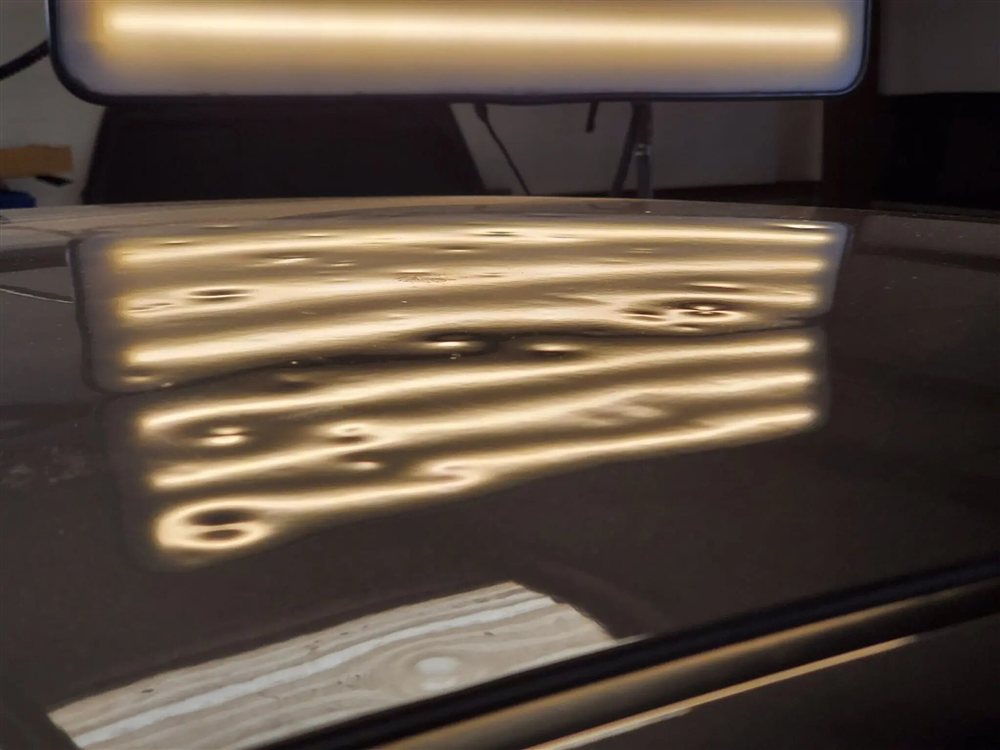
The honest answer depends on which inspection you mean, because "hail inspection" gets used for three different things that take very different amounts of time. A quick look to tell you whether you have damage worth claiming is one thing. A full panel-by-panel read that produces the damage record your repair is built from is another. And your insurer's adjuster inspection is a third, run on their schedule rather than yours.
Confusing them is where most of the frustration comes from. Drivers who were told "it only takes a few minutes" turn up expecting to leave with a complete damage report, and drivers who set aside a whole morning discover they only needed to send photos.
The three inspections, and what each one is for
| Type | Roughly how long | What you get |
|---|---|---|
| Photo review | About 30 minutes for a verbal answer | Whether you have hail damage worth claiming, and a usually-verbal ballpark from the photos |
| Full shop inspection under PDR lighting | A block of your morning or afternoon, most of it waiting | A panel-by-panel damage record used to build the repair and support the claim |
| Insurer's adjuster inspection | Scheduled by the carrier, often short on site | The carrier's estimate, which may or may not match what the panels actually hold |
Most people need the first two. The third is arranged by your insurer once you open a claim — our guide on the hail damage adjuster inspection covers how that appointment runs and what to have ready.
Why a real inspection is not a walk-around
Hail dents are shallow. On a modern clear coat, a dent can be perfectly obvious from one angle and completely invisible from the next, which is why parking-lot assessments miss so much. Sunlight is diffuse and scattered; it washes across a panel and fills the dent with light instead of revealing it. Overhead shop fluorescents are barely better. Under either, a roof that actually holds a hundred impacts can read as "a few small ones."
Paintless dent repair works by reading the reflection, not the metal. A technician looks at a straight, high-contrast line reflected in the paint and watches how that line bends. Where the line kinks, there is a dent. Where it runs straight, there is not. That is the whole basis of the read, and it needs a controlled light source to work.
What actually takes the time
Almost none of the inspection time is spent deciding whether the car has hail damage. That part is instant. The time goes into three things:
- Counting and sizing, panel by panel. A hail repair estimate is built from how many dents are on each panel and how large they are. That means every horizontal surface gets read separately, and vertical panels get read from multiple angles.
- Deciding what each panel needs. Not every dent is a PDR dent. Sharp creases, dents on a body line, stretched metal, cracked paint and previously repaired panels change the plan — sometimes to conventional repair and refinishing. We do what is best for the vehicle rather than forcing everything through one method. Our comparison of PDR versus a traditional body shop explains where the line falls.
- Writing it down properly. A damage record that an adjuster can work with takes longer to produce than the read itself.
A DentPicks shop-floor observation: large SUVs and trucks take noticeably longer than sedans, simply because there is more horizontal surface to read and roofs sit higher than comfortable eye level. Vehicles with roof racks, panoramic glass or heavy trim take longer again, because each of those has to be assessed separately from the sheet metal around it.
What the written record contains
The point of a full inspection is the document it produces. A usable hail damage record includes:
- Vehicle identification, mileage and the date of inspection.
- A panel-by-panel breakdown — roof, hood, deck lid or tailgate, each fender, each door, each quarter panel — with damage noted per panel rather than lumped into one line.
- Dent counts and size bands per panel, which is the basis every hail estimate is built on.
- Repair method per panel: paintless repair, conventional repair, or replacement and refinishing where the panel genuinely needs it.
- Non-metal damage: glass, lamps, mirrors, trim, roof rails, weatherstripping and seals.
- Pre-existing damage and prior repairs, noted honestly so nobody argues about them later.
- Photographs taken under the inspection lighting, not in the parking lot.
That last point matters more than it sounds. Photographs shot outdoors typically under-represent hail damage for exactly the reason the human eye does, and an adjuster reviewing a thin photo set has nothing to work from. When panel counts come in low, this record is what a supplement is built on — see our guide to how hail repair supplements work.
What makes an inspection take longer than expected
- A dirty vehicle. Dust and water spots scatter the reflected line. A basic wash beforehand genuinely speeds up the read — unless the paint is chipped or cracked in the dents, in which case leave it alone.
- A full cabin. Interior access is sometimes needed for panel access, and unloading a car eats time that could have been spent reading it.
- Two storms on one vehicle. Separating older damage from newer damage takes real work, and both dates matter to the claim.
- Aftermarket additions. Wraps, ceramic coatings, roof racks, bed covers and add-on trim all have to be assessed and often removed for panel access.
- Aluminum and mixed-material panels. Aluminum behaves differently under a pick than steel does, and reading it takes more care. Our guide on aluminum dent repair explains why.
Common mistakes
- Treating a parking-lot glance as an inspection. If nobody put the car under controlled lighting, nobody read the panels. A number produced that way is a guess.
- Accepting a "we can do it right here in your driveway" offer after a storm. Temporary operations follow DFW storms every season, and the read is the first thing they skip. Our guide on spotting storm-chaser operations lists the warning signs.
- Waiting until the adjuster comes before getting your own inspection. It is easier to discuss an estimate when you already know what is on the panels.
- Skipping the non-metal walk. Glass, seals and lamps are where the genuine safety items live, and they are quick to check.
- Rushing the appointment. An inspection cut short to make a lunch meeting produces a record that costs you time later.
How to make yours go quickly
- Send photos first. A verbal read from photos, usually in about 30 minutes, tells you whether a full inspection is worth booking at all.
- Wash the vehicle if the paint is intact, and empty the cabin.
- Bring your policy information and the storm date. NOAA's Storm Prediction Center storm reports and the NWS Fort Worth office both archive severe weather events, which helps pin the date if you are unsure.
- Mention prior repairs up front — they change the plan, and finding them mid-read costs time.
- Plan to leave the car if you can. An unhurried read is a better read, and our appointment preparation guide covers what to bring.
What to do next
If you think you have storm damage, start with photos rather than a drive across town. If the photos show hail, book a proper inspection somewhere the panels can be read under PDR lighting, and expect that appointment to take real time — that is the point of it.
At DentPicks in Plano, inspections are free, quotes are usually verbal from photos in about 30 minutes, and the finished work is signed off by whoever runs quality control, visible in your customer portal. Every repair carries a written lifetime warranty for as long as you own the vehicle. You can see the standard of finish in our before and after gallery or read how the whole hail repair process runs from inspection through delivery.
Frequently asked questions
Can I get a hail inspection done from photos alone?
For a first answer, yes. Photos are enough to confirm you have hail damage and to get a usually-verbal ballpark in about 30 minutes. They are not enough to build a repair from, because a camera under daylight under-reports shallow dents for the same reason your eye does.
Do I need to be there for the whole inspection?
No. Most people drop the vehicle and go. A full read is largely quiet work under the light boards, and leaving the car means nobody is rushing the panels to get you back on the road.
Does a hail inspection cost anything?
At DentPicks, inspections are free and carry no obligation. If the read shows the damage is not worth claiming, we will tell you that.
Why do outdoor photos show fewer dents than the shop does?
Daylight is diffuse. It scatters across the panel and fills shallow dents with light instead of casting the sharp reflected line that makes them visible. PDR lighting produces high-contrast bands specifically so the distortion shows up. The dents were always there; the light was hiding them.
Should I get my own inspection before the adjuster comes?
It helps. Knowing what is actually on the panels makes the adjuster conversation a factual one rather than a negotiation from zero, and it gives you a documented starting point if a supplement turns out to be needed.
How long after the inspection does repair start?
That depends on your claim rather than the shop. Once the claim is approved and parts, if any, are in hand, a full-vehicle hail repair typically takes about 5–10 business days in the shop. That is a typical range, not a guarantee.
What if my car has damage from two different storms?
Say so at the start. Separating older damage from newer damage is real work and it changes the record, because both storm dates may matter to how your claim is handled. Coverage depends on the language of your policy.
Sources and methodology
- Severe weather storm reports — NOAA Storm Prediction Center.
- NWS Fort Worth forecast office — National Weather Service.
- After hail or windstorms: consumer tips — Texas Department of Insurance.
Repair, cost and timing statements that are not tied to a listed source come from DentPicks' own quoting and repair history at the Plano, TX shop. They are typical ranges and shop-floor observations, not industry statistics or promises — your vehicle, its condition, your policy language and your insurer determine your specific outcome.
Book a free hail inspection in Plano
Send photos for a quick verbal read, or bring the car in and we will put every panel under the line boards. No charge, no obligation either way.