
The short answer
Paintless dent repair does not extend a manufacturer warranty, but it is the method least likely to disturb one. Because nothing is sanded, filled or repainted, the panel keeps its original factory coating and whatever paint and corrosion coverage came with it. Risk appears when paint is already broken inside the dent, when access holes are drilled, or when a panel is refinished. Warranty terms vary by manufacturer and model year.
 Written by the DentPicks Editorial Team
Technically reviewed by Vytas Kucinskas, Founder & Master PDR Technician
Written by the DentPicks Editorial Team
Technically reviewed by Vytas Kucinskas, Founder & Master PDR Technician
Published: Aug 19, 2026 · Last reviewed: Aug 19, 2026 · 8 min read
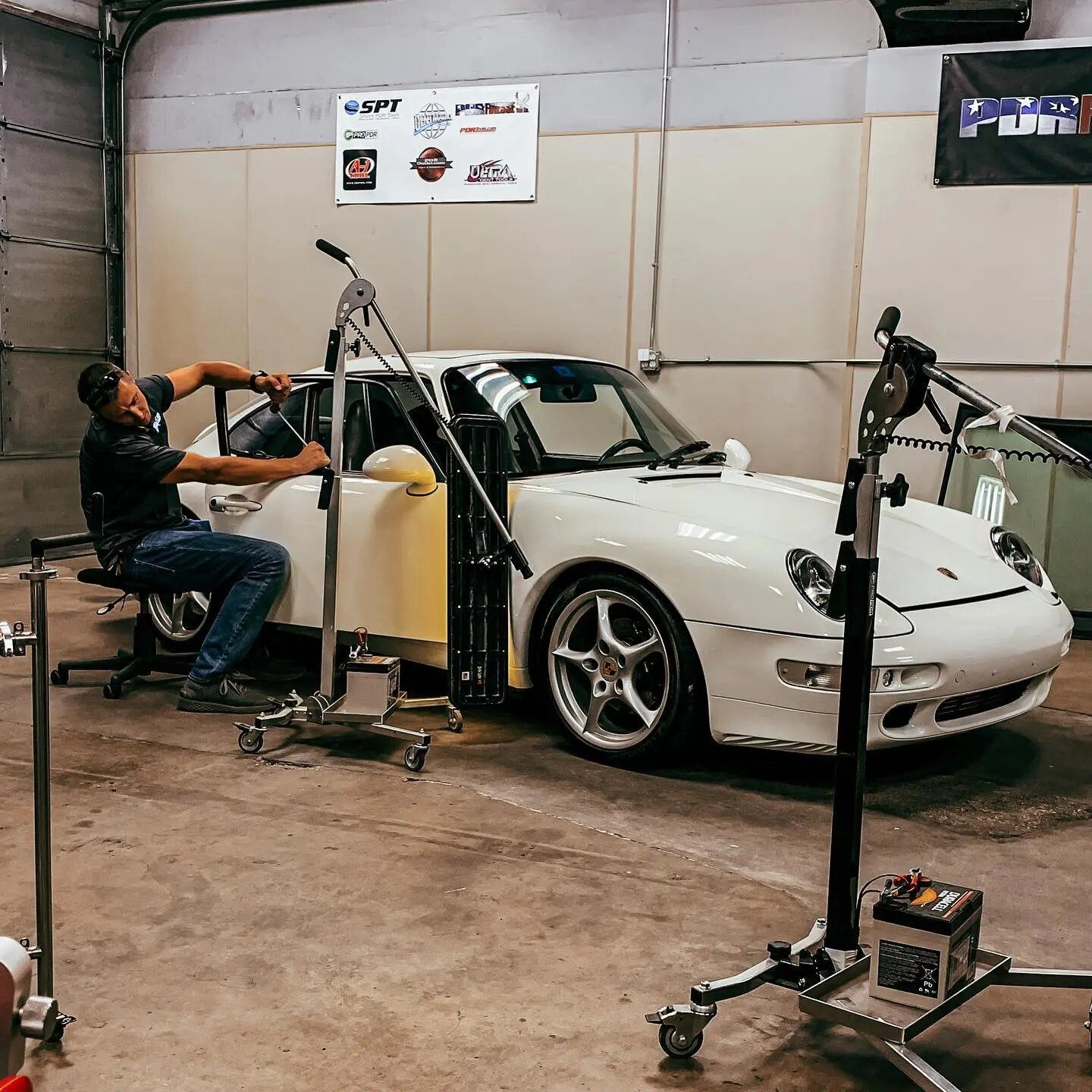
Owners of newer vehicles ask this constantly, and they are right to. A factory paint and corrosion warranty is one of the few pieces of coverage that survives for years, and nobody wants to trade a dent repair for a warranty argument later. The good news is that the technique itself is the least invasive option available. The nuance is in what "protecting the warranty" actually means.
What a factory paint or corrosion warranty covers
Manufacturer coverage in this area usually falls into two parts. Paint coverage addresses defects in the original finish — coating that fails, peels or discolours because of how it was applied, not because something hit it. Corrosion or perforation coverage addresses rust that eats through a panel from the inside out within a stated period. Both are defect warranties. Neither is damage insurance: hail, road debris, scratches and parking-lot dents were never covered in the first place.
That distinction matters here. When a hailstorm dents your hood, no warranty was going to pay for it. The question is only whether the repair you choose puts the remaining coverage at risk.
Why paintless dent repair is the least invasive choice
Paintless dent repair reshapes the metal from behind the panel — or lifts it from the front with glue — while the original coating stays exactly where the factory put it. Nothing is sanded, nothing is filled, no primer or colour is sprayed, and no clearcoat is blended into an adjacent panel.
Compare that with conventional refinishing. Once a panel is sanded and repainted, the coating on that panel is no longer the manufacturer's work. Whatever the factory promised about its paint no longer describes what is on your car, and any future claim about that panel becomes a conversation about the body shop's work instead. This is the practical reason PDR is the default recommendation for dents with intact paint: it keeps the original finish, and it keeps the original coverage conversation intact along with it.
Where corrosion risk actually comes from
Rust needs an opening. A dent with an intact coating has no opening: the steel or aluminium moved, but the paint, primer and e-coat are still sealing it. That is why dents with unbroken paint are stable for years and why we can repair hail damage that has been sitting on a vehicle since a storm two seasons ago.
The risk changes the moment the coating breaks. A chip in the bottom of a dent, a crack in the clearcoat along a sharp crease, or a scrape that took paint down to bare metal is a genuine corrosion entry point — and North Texas weather does not help, since panels heat-cycle hard every summer and humidity swings do the rest. We covered the longer version of that in our guide on what Texas heat does to unrepaired dents.
This is also where the choice of repair method gets decided rather than debated. If the paint inside the dent is already broken, PDR alone will not restore the seal — the panel needs coating work, and pretending otherwise would be the actual warranty risk. We do what is best for the vehicle, and sometimes that means telling a customer their panel needs paint.
What a repair should not do to a warranted panel
- Drill access holes in structure or panels. Any hole created to reach the back of a dent is a corrosion path unless it is properly sealed, and on a warranted vehicle it is an unnecessary argument waiting to happen. Our approach is to reach dents through existing openings and by removing trim, not by making new holes.
- Grind or sand "just a little" to hide a high spot. Once abrasive touches the clearcoat, the factory finish on that spot is gone.
- Over-heat a panel. Controlled warmth is a normal PDR tool in cold conditions; excessive heat is not, and paint that has been cooked can craze later.
- Force a repair the metal cannot take. Pushing a badly stretched panel until the coating splits converts a paint-preserving repair into a repaint — the opposite of the goal.
Aluminium, EVs and modern coatings
Manufacturers use more aluminium and more high-strength steel than they did a decade ago, and many of them publish repair procedures that specify which methods are acceptable on which panels. Aluminium in particular behaves differently under a rod — it work-hardens and has less shape memory — which is why we treat it as its own discipline and why aluminium repair usually costs more. Procedures vary by model year and configuration, so on a newer vehicle we plan the repair around what the manufacturer documents rather than around what is fastest.
The same care applies to electric vehicles, where panel access can run close to sensors, cameras and high-voltage routing. Following the documented procedure is both the safe answer and the warranty-friendly one.
Method versus coverage at a glance
| Repair method | Factory coating on that panel | Practical warranty effect |
|---|---|---|
| PDR, paint intact | Untouched, original | Original paint and corrosion coverage on that panel is unchanged |
| PDR with drilled access holes | Untouched, but new openings created | Avoidable corrosion path — we do not work this way |
| Push-to-paint (metal shaped, then refinished) | Replaced on the repaired area | Refinished area is the shop's work, backed by the shop's warranty |
| Full refinish or panel replacement | Replaced | Factory paint coverage no longer describes that panel; replacement may also appear on a history report |
Common mistakes
- Assuming any dent repair voids the paint warranty. It does not follow automatically — the question is whether the factory coating was disturbed on that panel.
- Letting a driveway crew work a warranted panel. After a storm, temporary operations move through DFW neighbourhoods offering fast pulls. A stretched panel or a cracked clearcoat is exactly the outcome you were trying to avoid; see our guide on spotting storm-chaser operations.
- Trying it yourself first. Suction cups, boiling water and heat guns are the fastest route from "covered original paint" to "needs a repaint" — the reasons are in our guide on why DIY dent tricks fail.
- Ignoring a chip in the dent. The dent is cosmetic; the chip is the part that can become corrosion.
What to do next
If your vehicle is still inside its paint or corrosion coverage, have the damage assessed before anyone touches it, and ask the shop directly how it plans to access each dent. At our Plano shop, every panel is read under LED line boards first, the repair method is chosen panel by panel, and the finished work is signed off by whoever runs quality control — a record you can see in your customer portal. If a panel needs coating work to be done properly, we say so instead of forcing a paintless repair.
Bring the vehicle in for a free assessment, or send photos for a quick verbal quote. You can see how finished work looks in our before and after gallery, or read more about our paintless dent repair service.
Frequently asked questions
Does paintless dent repair void a factory paint warranty?
It should not, because PDR does not alter the factory coating — the metal is reshaped while the original paint, primer and e-coat stay in place. What can create a problem is a repair that drills access holes, sands a high spot, or forces a stretched panel until the clearcoat cracks. Check your own warranty booklet for the exact terms.
Will a repainted panel still be covered by the manufacturer?
Once a panel is refinished, the coating on it is the body shop's work rather than the factory's, so future paint questions about that panel belong to the shop that sprayed it. That is not a reason to avoid paint when a panel genuinely needs it — it is a reason to prefer PDR when the paint is still intact.
Can hail dents cause rust if I leave them?
A dent with unbroken paint is sealed and stable, which is why hail damage can be repaired with PDR years later. A dent with a chip, crack or bare metal is different — that is a genuine corrosion entry point, and it is the part of hail damage worth addressing sooner rather than later.
Do you drill holes to reach dents?
No. We reach dents through existing openings and by removing trim or interior panels where needed. Creating new holes in a warranted vehicle adds a corrosion path and an avoidable argument later, so it is not part of how we work.
Is PDR safe on aluminium panels under warranty?
Yes, when it is done as its own discipline. Aluminium work-hardens and has less shape memory than steel, so it needs different technique, more time and, on newer vehicles, attention to the manufacturer's documented repair procedures. Those procedures vary by model year and configuration.
What if the shop cannot repair it without paint?
Then it should tell you before starting. Some dents are too deep, too sharp or too stretched for a paintless repair, and forcing one damages the coating you were trying to protect. We do what is best for the vehicle, even when that means recommending refinishing or replacement.
Sources and methodology
Repair, cost and timing statements that are not tied to a listed source come from DentPicks' own quoting and repair history at the Plano, TX shop. They are typical ranges and shop-floor observations, not industry statistics or promises — your vehicle, its condition, your policy language and your insurer determine your specific outcome.
Newer vehicle with a dent you would rather not repaint?
Send photos or bring it to the Plano shop. We read every panel under proper lighting and tell you honestly which dents can come out without touching the factory finish.