

The short answer
Hidden filler usually removes the paintless option on that part of the panel. Filler is rigid and bonded to the surface, so pushing metal underneath it can crack it or lift it instead of restoring the shape. A thin skim well clear of the new dent may still allow repair; thick filler that is holding the panel's shape means a refinish route. A depth gauge reading at the inspection, before any work starts, is what settles it.
 Written by the DentPicks Editorial Team
Technically reviewed by Vytas Kucinskas, Founder & Master PDR Technician
Written by the DentPicks Editorial Team
Technically reviewed by Vytas Kucinskas, Founder & Master PDR Technician
Published: Aug 19, 2026 · Last reviewed: Aug 19, 2026 · 10 min read
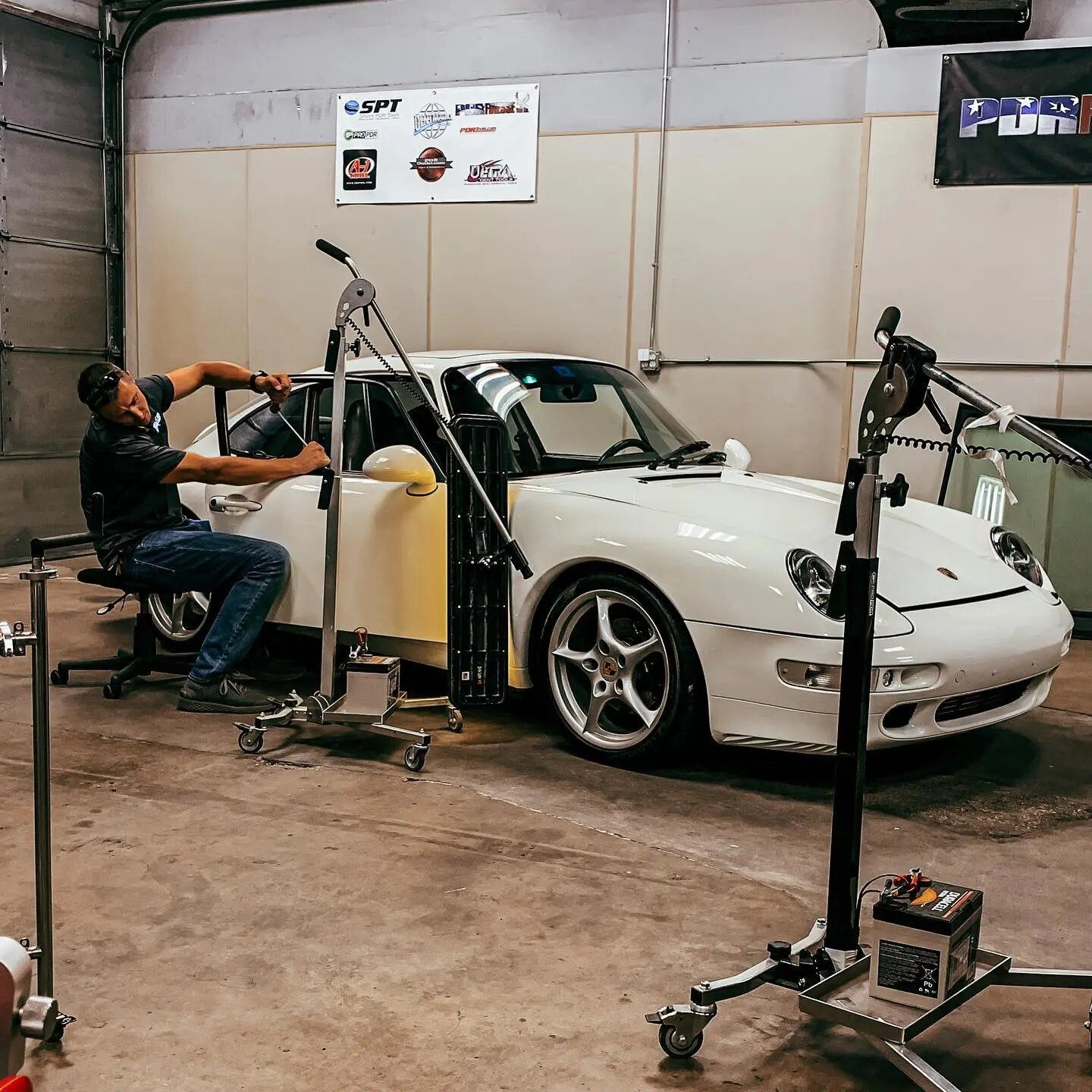
Plenty of vehicles carry a repair nobody mentioned. A door was smoothed before a trade-in, a fender was tidied up at auction, a quarter panel was fixed years ago by an owner two owners back. The paint looks right, the panel feels right, and nothing on the vehicle history says a word about it. Then a new dent lands in the same area, and the repair plan changes before anyone has touched a tool.
Hidden body filler is not a scandal. It is common, it is often perfectly competent work, and on many panels it is invisible to everyone except a technician with a paint depth gauge. What it does is remove options. A panel carrying filler behaves differently under pressure than bare, original metal, so the honest answer to "can this be done paintlessly?" sometimes becomes no for reasons that have nothing to do with the new damage.
Why filler is there in the first place
Body filler is a polyester compound used to level the last fraction of a panel's surface after metalwork. Used thinly over metal that was straightened properly, it is a legitimate part of a quality refinish. Used thickly, as a shortcut in place of metalwork, it becomes the shape of the panel rather than a skim over it.
The reasons you find it on a used vehicle are ordinary: a prior collision repair, reconditioning before a wholesale sale, a hail repair done the fast way, or an owner-arranged fix that was never reported to an insurer and therefore never appeared on any record. Nothing about a clean vehicle history report rules out filler, because a great deal of bodywork is paid for out of pocket and never enters a database.
How a shop finds it before quoting
Discovering filler after work has started is the outcome everybody wants to avoid, which is why finding it is part of the inspection rather than part of the repair.
- Paint depth readings. A gauge measures total coating thickness. Factory finishes fall in a fairly consistent band across a panel; a reading that jumps sharply in one region is the strongest single indicator of prior work. Readings are taken in a grid, not one spot, because the point is the variation rather than any single number.
- Reflection reading. Under LED line boards, a filled area often shows a subtly different reflection character than the surrounding factory surface — the line bends slightly differently across the boundary. Outdoor light hides this almost completely.
- Edges and jambs. Door jambs, panel edges, under the lip of a wheel arch and around fasteners are where a respray reveals itself: overspray, tape lines, a slightly different texture, or masking that stopped short.
- Sound and feel. A filled section responds differently to a light tap and often feels marginally warmer or duller to the hand than surrounding steel.
- Access from behind. On many panels the back of a filled area shows the sanding, welding or pull marks the front no longer does.
A gauge is not infallible on every substrate — plastic panels read differently, and some aluminum applications need the gauge in the right mode — so the reading is one input among several rather than a verdict on its own.
What filler does to a paintless repair
Paintless dent repair works because sheet metal has memory. A technician applies many small, controlled pressures from behind, and the panel returns toward the shape it was pressed into at the factory. The factory finish flexes with it and survives.
Filler does not participate in that. It is rigid, it is bonded to the surface rather than part of it, and it has no memory to return to. Push metal that is carrying filler and three things can happen: the filler cracks, the bond releases from the metal underneath and lifts, or the metal moves while the filler stays put and the surface ends up worse than it started. None of those is recoverable without stripping the area back and refinishing.
How the plan changes, case by case
| What is found | Effect on the plan | What you should hear from the shop |
|---|---|---|
| No filler, factory paint, good access | Standard paintless repair | A straightforward repair quote |
| Thin skim well away from the new dent | Usually proceed, working clear of the filled area | Where the boundary is and that pressure will stay off it |
| Thin skim directly under the new dent | Higher risk; may still be attempted with your informed agreement | The risk stated plainly, and what happens if the filler lets go |
| Thick filler building the panel shape | Paintless repair ruled out for that area — refinish route instead | That the limitation comes from the prior repair |
| Filler over stretched or previously torn metal | Metal condition unknown until stripped; the estimate may be provisional | An honest "we will know more once it is opened up" |
| Filler with corrosion or lifting edges underneath | Repair scope widens; the rust has to be addressed regardless | Why patching over it is not an option |
Repairability depends on paint condition, metal stretch, panel access and prior repairs, which is why filler moves so many jobs out of the paintless category. Our comparison of paintless repair versus a traditional body shop sets out what each route involves once that decision is made.
Texas heat and old filler
North Texas gives every panel a daily thermal cycle for months at a time, and filler and metal do not expand and contract at the same rate. Over years, that difference works at the bond line. The classic symptoms are a faint outline that becomes visible in low sun, a slight ripple that was not there when the car was bought, or edge lifting where the filler meets original paint.
Vehicles that spend summers outdoors in DFW show this earlier than garage-kept cars. We covered the mechanism in our guide on what Texas heat does to filler-based dent repair. The practical consequence for a new repair is that old filler encountered today may already be closer to failing than it looks.
What it means on an insurance claim
A hail or collision claim covers the damage from that event. It does not cover restoring a prior repair that somebody else did badly. If a panel has to be refinished rather than repaired paintlessly because of filler that predates the storm, that is a conversation with the adjuster rather than an automatic addition to the estimate.
Two things usually follow. An adjuster may apply a deduction for pre-existing condition on the affected panel. And if the shop discovers the filler only after the estimate was written, the correct route is a supplement documented with photographs and gauge readings — a normal part of the process, explained in our guide on how supplements work on hail repair. The customer files the claim; DentPicks helps and walks alongside you through photos, adjuster meetings and paperwork. Coverage depends on the language of your policy, and your insurer or licensed agent can confirm your specific coverage.
How it runs at the Plano shop
- Gauge before quoting. Panels are read with a depth gauge in a grid pattern, so prior work is identified at the inspection rather than mid-repair.
- Read under line boards. The same panels go under LED reflection lighting, where filled boundaries and hidden hail dents both show up.
- Photograph the findings. Gauge readings and reflection photos are captured before anything is touched — useful for you, and necessary if a supplement is needed later.
- Tell you before starting. If filler changes the route or the price, you hear it before work begins, along with what the alternatives cost. Quotes are usually verbal, from photos, in about 30 minutes, and revised in person when the gauge says something the photos could not.
- Sign off under the same lighting. Finished work is checked under the lighting used to read the original damage and signed off by whoever runs quality control — visible in your customer portal.
Red flags and common mistakes
- A quote for an older vehicle with no depth reading taken. On a car with unknown history, gauging is basic diligence, not an upsell.
- "We will just push it and see." On a filled panel, seeing means finding out by damaging it.
- More filler over old filler. Building on a bond that is already aging repeats the problem on a shorter timeline.
- Assuming a clean history report means no prior work. Out-of-pocket repairs leave no record at all.
- Treating the discovery as a bait-and-switch. A revised plan backed by gauge readings and photographs is the shop being straight with you; a revised plan with no evidence is not.
If you are preparing to sell or trade, this cuts both ways: a dealer appraiser gauges panels too, and old filler is found at appraisal whether or not it was found at repair. Our guide on repairing dents before selling or trading in covers how that plays out on value.
What to do next
If you are buying a used vehicle, ask for panels to be gauged before you commit — it takes minutes and tells you more about the car's past than the paperwork does. If you already own it and a new dent has appeared over an old repair, expect the estimate to depend on what the gauge says, and expect a good shop to check before quoting rather than after.
At DentPicks in Plano we gauge and read panels under PDR lighting before we quote, tell you plainly when a prior repair limits what is possible, and do what is best for the vehicle rather than what keeps the job in one category. Repairs carry a written lifetime warranty for as long as you own the vehicle — not transferable. See finished examples in our before and after gallery, or read how our dent repair process runs from inspection to delivery.
Frequently asked questions
Can a paint depth gauge tell how thick the filler is?
It measures total coating thickness above the metal, so it tells you how far a reading departs from the factory band across the rest of the panel. That difference is what matters. It cannot separate filler from primer and paint precisely, which is why readings are taken in a grid and compared rather than read as a single number.
Will a vehicle history report show that a panel has filler?
Often not. A large share of bodywork is paid for out of pocket and never reported to an insurer, so it never enters a database. A clean report is evidence of no reported claim, not evidence of no prior repair.
Does finding filler mean the earlier repair was bad?
No. A thin skim over metal that was properly straightened is normal, competent refinish work. The problem is thickness — filler used as a substitute for metalwork rather than a final leveling step. That is what fails over time and what rules out paintless repair.
Can filler be removed so the panel can be repaired paintlessly again?
Not usefully. Stripping filler means taking the finish off that area, and once the paint is gone the panel is being refinished anyway. At that point the sensible route is straightening the metal properly and then painting, rather than trying to preserve a finish that no longer exists.
Will my insurance pay to fix filler from a previous repair?
A claim covers damage from the event you are claiming for, not restoration of someone else's earlier work. An adjuster may apply a deduction for pre-existing condition on that panel. If the filler is discovered after the estimate is written, the route is a documented supplement. Coverage depends on the language of your policy.
Does filler under a hail-damaged panel change the repair timeline?
Usually yes. A panel that would have been a paintless repair in hours becomes a refinish job with prep, spray and cure time. On a full-vehicle hail repair, which typically runs about 5 to 10 business days in the shop, one refinished panel tends to push the job toward the longer end of that range.
How do I check for filler before buying a used car?
Ask for panels to be read with a depth gauge, and look at door jambs, panel edges and wheel-arch lips for overspray, tape lines or texture changes. Both take minutes. On a vehicle whose history you cannot verify, that is the fastest honest picture of what has been repaired.
Sources and methodology
- Automobile insurance guide — Texas Department of Insurance.
Repair, cost and timing statements that are not tied to a listed source come from DentPicks' own quoting and repair history at the Plano, TX shop. They are typical ranges and shop-floor observations, not industry statistics or promises — your vehicle, its condition, your policy language and your insurer determine your specific outcome.
Not sure what is under your paint?
Bring the vehicle to the Plano shop and we will gauge and read the panels before quoting, so you know what a prior repair rules in or out before anything is committed.