

The short answer
It can, but usually it does not. When a panel has rear access, the repair happens behind the film and nothing touches it. Film is at risk from front-side techniques: glue pulling can lift or stretch it, heat near a cut line can start edge lift, and refinishing means removal. Removed film is not reusable, so any section that comes off is a replacement cost worth agreeing in advance.
 Written by the DentPicks Editorial Team
Technically reviewed by Vytas Kucinskas, Founder & Master PDR Technician
Written by the DentPicks Editorial Team
Technically reviewed by Vytas Kucinskas, Founder & Master PDR Technician
Published: Aug 19, 2026 · Last reviewed: Aug 19, 2026 · 8 min read
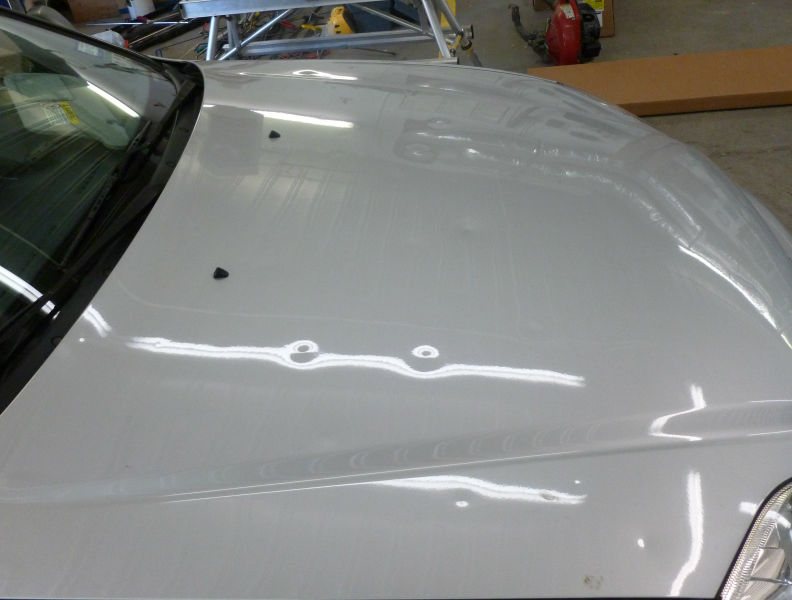
Paint-protection film is a different animal from a ceramic coating, and the difference matters the moment a dent appears. A coating is a microscopically thin cured layer. Film is a physical sheet of urethane with real thickness, stuck to the paint with adhesive, wrapped around panel edges and cut to a pattern. It is closer to a fitted part than to a finish.
That changes three things about dent repair: whether the film survives, whether the technician can even read the damage properly through it, and whether the sensible plan is to work around the film or take it off.
How film is attached, and why that is the whole story
Installed film is bonded across its full area and usually tucked slightly around panel edges so no lip is exposed. It has a topcoat designed to self-heal light marring when warmed, and it is thick enough that you can feel the step at a cut line with a fingernail.
Film is generally removable with controlled heat and patience, but removal is a one-way trip — a sheet that comes off does not go back on. It also interacts with what is underneath it. Film sitting on factory paint in good condition normally releases cleanly. Film sitting on a previously refinished panel, on paint that was already compromised, or on a very old installation, can be more stubborn and can leave adhesive residue behind. That is not a reason to avoid film; it is a reason to know the panel's history before anyone starts pulling.
Does the repair itself damage the film?
When the panel can be worked from behind, no. The tool tip is on the inner surface, the technician is reading the reflection off the front, and nothing touches the film at all. A door ding on an accessible panel is repaired under film routinely.
The complication is reading the damage. Film has thickness and a slightly softer surface than clear coat, and it takes the sharp edge off a reflection. Under a line board, a covered panel shows a marginally blurrier reflection than a bare one, so shallow damage is harder to resolve and small high spots are easier to miss. Good technicians compensate by working more slowly and checking from more angles, but it is genuinely a harder read. The same property is why light hail sometimes looks better than it is on a filmed hood — the film softens what your eye picks up, and the dents underneath are still exactly the depth they were.
Where the film is actually at risk
- Glue pulling. Where there is no rear access, tabs are adhered to the outside and pulled. On film, the pull force acts on the film's adhesive bond as well as on the metal, and the risk is lifting or stretching the film rather than only moving the panel.
- Heat near edges. Warmth is used to release glue tabs. Film edges and cut lines are the least secure part of an installation, and localized heat close to them is where edge lift starts.
- Solvent. Cleaning adhesive residue near a film edge can work its way under the boundary.
- Anything abrasive. A polishing pass on film is a different operation from polishing clear coat, and it is not something to do by reflex at delivery.
Repair around the film, or remove it?
This is the real decision, and it usually comes down to access and to how much of the damage sits under film.
- Rear access exists and the damage is modest. Work under the film. Nothing is removed, nothing is replaced, and the film's condition is unchanged.
- Rear access exists but the damage is dense. Still usually workable, but expect a longer job and a frank conversation about how sharp the final read can be through a covered surface.
- No rear access, front-side work required. The film over that area normally comes off. Because it cannot be reused, that means new film for that section — a real cost line, not a footnote.
- Paint broken inside the dent. The area is being refinished, so the film over it is coming off regardless. New film goes on after the paint has properly cured.
- Film is old, yellowing or already lifting. If it was near the end of its life anyway, removing it before the repair often produces a better result and a cleaner reinstall.
What happens to the film, scenario by scenario
| Situation | Effect on the film | Practical note |
|---|---|---|
| Door ding, rear access, film intact | None | Repaired under the film; reading takes longer |
| Hail on a filmed hood, rear access available | Usually none | Damage often looks lighter than it is — get it read under line boards |
| Glue pulls needed on a filmed panel | Film over the work area comes off | Removed film is not reusable; budget for that section |
| Heat used near a cut line | Risk of edge lift | Worth agreeing in advance rather than discovering later |
| Panel refinished | Film removed entirely from that panel | Reinstall after the paint cures, not the same week |
| Old film over a previously repainted panel | Removal can be stubborn | Panel history matters — say so at intake if you know it |
Film on a hail vehicle
Full-front film is common on cars that spend time on I-35 and the Dallas North Tollway, and a hailstorm does not care. Film adds a little surface toughness against rock chips; it does not stop a hailstone from displacing metal. A filmed hood in a hail vehicle is treated like any other panel — assessed under lighting, worked from behind wherever possible — with the added question of whether any front-side work is needed.
On the claim side, film removal and replacement is a line item like any other, and whether it is covered depends on the language of your policy; your insurer or licensed agent can confirm your specific coverage. Where film work is only identified once panels are read properly in the shop, it is normally handled through a supplement — our guide on how hail repair supplements work explains that process. The Texas Department of Insurance also publishes a plain-language consumer guide to auto policies that is worth ten minutes before you argue about a line item.
Timing is the other thing film changes. Film that has to come off and be reinstalled adds days to a repair that would otherwise run the usual course — see how long hail repair takes for the normal shape of the schedule.
Common mistakes
- Not mentioning the film. Same mistake as with coatings, with higher stakes, because film has a replacement cost.
- Assuming film prevented the dent. It did not. It may be hiding how many dents there are.
- Installing new film over an unrepaired dent. Film follows the surface it is applied to. A dent under fresh film is still a dent, and now it is under a sheet you just paid for.
- Filming a freshly refinished panel too early. New paint needs to cure before it is covered. This is a scheduling conversation with the painter, not a preference.
- Peeling film yourself to "help." Uncontrolled removal is how paint edges get lifted, particularly over previous repairs.
- Letting a post-storm driveway crew glue-pull a filmed hood. A bad pull on film costs you the panel work and the film.
What to do next
Tell us the car is filmed, say roughly when it was installed and which panels are covered, and send photos. If the damage is on a panel with rear access, the film almost certainly stays where it is. If front-side work is required, you will get a clear answer about which sections come off and what reinstalling them involves — before anything is touched, not at pickup.
Assessment at the Plano shop is free, panels are read under LED reflection boards rather than daylight, and finished work is signed off by whoever runs quality control and visible in your customer portal. You can see finished panels in our before and after gallery, read how our dent repair process works, or look at hail repair if the whole car took a beating.
Frequently asked questions
Can a dent be repaired without removing the film?
Frequently, yes. If the technician can reach the back of the panel, the film stays on and is unaffected. Reading the damage takes longer because film softens the reflection, but the repair itself does not involve the covered surface.
Will the self-healing topcoat make the dent disappear if I heat it?
No. Self-healing recovers fine scratches and swirl marks in the film's own topcoat. A dent is displaced metal underneath; the film simply followed it down. Heating changes nothing about the panel.
Can film be taken off and put back on?
It can be removed with controlled heat, but it cannot be reinstalled. Any section removed for a repair has to be replaced with new film, which is a real cost line rather than a footnote on the estimate.
Does removing film damage the paint underneath?
On factory paint in good condition, removal is normally clean. Film over a previously refinished panel, over paint that was already compromised, or from a very old installation can be more stubborn and can leave adhesive residue. Tell the shop what you know about the panel's history.
Does insurance pay to replace film on a hail claim?
It is a line item like any other, and whether it is covered depends on the language of your policy. Your insurer or licensed agent can confirm your specific coverage. Film work identified once panels are read in the shop is normally handled through a supplement.
Should I repair the dents before having film installed?
Yes. Film follows the surface it is applied to, so a dent under new film is still a dent — and correcting it later may mean replacing film you have just paid for.
Does film protect against hail?
Not meaningfully. It adds surface toughness against rock chips and light abrasion. It does not stop a hailstone displacing metal, and it can make light hail look less severe than it is.
Sources and methodology
- Automobile insurance guide — Texas Department of Insurance.
Repair, cost and timing statements that are not tied to a listed source come from DentPicks' own quoting and repair history at the Plano, TX shop. They are typical ranges and shop-floor observations, not industry statistics or promises — your vehicle, its condition, your policy language and your insurer determine your specific outcome.
Filmed car, and now a dent
Send photos and tell us which panels are covered and roughly when the film went on. We will tell you whether the repair can be done underneath it before anything gets peeled.