

The short answer
Look for documented work on comparable aluminium or composite panels, a fixed facility with controlled LED lighting, and a technician who will walk you through exactly how they would access your dent. The most valuable answer is what they refuse to attempt. Verify the written warranty terms, who actually performs the work, and whether they follow the manufacturer's documented repair procedure — which varies by model year and configuration.
 Written by the DentPicks Editorial Team
Technically reviewed by Vytas Kucinskas, Founder & Master PDR Technician
Written by the DentPicks Editorial Team
Technically reviewed by Vytas Kucinskas, Founder & Master PDR Technician
Published: Aug 19, 2026 · Last reviewed: Aug 19, 2026 · 7 min read
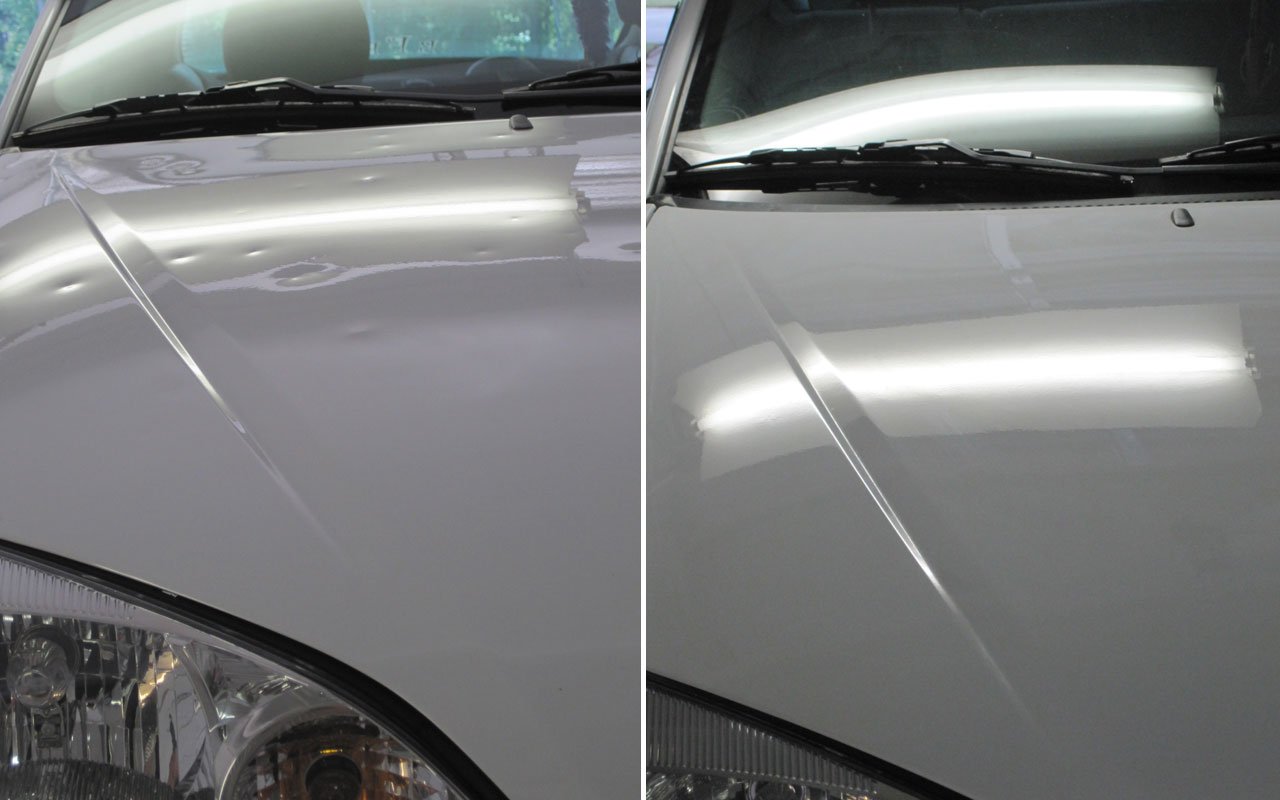
A door ding on an exotic is a different problem from a door ding on a commuter car, and not because the metal is exotic. It is because the downside is asymmetric: a good repair is invisible and costs a few hundred dollars, while a bad one can mean refinishing a panel on a car where refinishing is both expensive and permanently visible in the history. The selection process should reflect that asymmetry.
Most of what follows applies to any high-value vehicle — supercars, low-volume models, and anything where the panels are aluminium, carbon fibre or hand-finished.
What actually makes these cars harder
- Panel materials vary within one car. A single vehicle can mix aluminium body panels, steel structure and composite closures. Each behaves differently under pressure, and aluminium in particular work-hardens and holds less shape memory than steel, so it needs different tools, more time and more patience.
- Access is often designed out. Bonded panels, structural adhesive, one-piece inner frames, foam-filled cavities and hidden bracing can mean there is simply no path to the back of a dent.
- Finishes are less forgiving. Multi-stage, tinted-clear, matte and hand-polished finishes react differently to flex, and matching one later is a specialist job in itself.
- Trim is expensive and fragile. Clips and mouldings that cost a few dollars on a mass-market car can be long-lead, low-stock parts here — so trim removal must be planned rather than improvised.
- Sensors sit under the skin. Radar, ultrasonic and camera hardware live near the panels that get hit, which is why repair planning starts with what has to be disturbed and what must not be.
What to verify before you hand over the keys
- Documented experience on comparable panels. Not "we do exotics" — ask what they have repaired recently on aluminium or composite panels, and ask to see the work rather than a folder of generic before-and-afters.
- A fixed facility with controlled lighting. Exotic panels are read under LED line boards, not daylight. A shop that assesses your car in a parking lot cannot see what it is agreeing to repair.
- An honest limits conversation. The most valuable thing a specialist tells you is what they will not attempt. A shop that says every dent is repairable has told you nothing.
- Willingness to follow manufacturer procedure. On newer vehicles the manufacturer documents which methods are acceptable on which panels, and procedures vary by model year and configuration. The right answer is "we work to the documented procedure," not "we have always done it this way."
- Written warranty terms you can read. Ours is a written lifetime warranty for as long as you own the vehicle — it is not transferable, and we say so plainly rather than implying otherwise.
- A real quality-control step. The technician who finishes a panel should not be the only person who approves it. At our shop the job is signed off by whoever runs quality control, and that sign-off is visible in your customer portal.
- Insurance literacy, if a claim is involved. High-value vehicles produce complicated hail estimates; a shop should be able to explain how the estimate gets built and how a supplement works without taking over your claim — you file it, the shop helps around it.
Warning signs
| Signal | Why it matters on a high-value car |
|---|---|
| "Guaranteed 100% removal, any dent" | Nobody can promise that across unknown panels and finishes; it usually means the shop has not looked properly |
| Assessment done outdoors or from a phone photo only | A verbal photo quote is fine as a starting point, but the commitment should follow an in-person look under proper lighting |
| Willingness to drill an access hole | A new opening in a warranted or high-value panel is an avoidable corrosion path — we reach dents through existing openings and trim removal instead |
| Vague about who actually performs the work | Subcontracted work on an exotic means the accountability chain is unclear before anything goes wrong |
| Pressure to decide on the spot, especially after a storm | A classic pattern of temporary operations; see our guide on spotting storm chasers |
| No mention of what happens if paint cracks | Rare, but real on deep or sharp dents and aged finishes — a specialist raises this before starting, not after |
How a careful assessment runs
The sequence matters more than the toolbox. Panels get read under LED line boards so the true shape of the damage is visible. Paint thickness is checked to see whether the surface is original or somebody else's earlier repair. Access is mapped — what trim comes off, what stays, and whether the back of each dent can be reached without disturbing anything fragile. Only then does a method get chosen: rods from behind, glue pulling from the front, or the honest recommendation that a particular dent needs paint. Sometimes a panel genuinely needs refinishing or replacement, and saying so is part of doing the job properly.
If a claim is involved, the same discipline applies to the paperwork: photographs of every panel, a dent map, and a record you can hand to an adjuster. Our adjuster inspection guide explains how that estimate gets built.
Common mistakes
- Choosing on proximity. The nearest shop is rarely the criterion that matters here; capability is.
- Choosing on price alone. The cheapest quote on an exotic panel is often the one that has not understood the access problem yet.
- Trying it yourself first. Suction pullers and heat on a high-value finish are the fastest route to a repaint; the reasons are in our guide on why DIY dent methods fail.
- Skipping documentation. On a car whose value depends on condition and provenance, keep the photographs, the invoice and the warranty with the service records.
What to do next
Send clear photographs of the panel — one straight on, one at a low angle showing the reflection, and one wide shot for context — and you will get a verbal assessment quickly. For anything beyond a simple ding, bring the car to the Plano shop so the panel can be read properly before anyone commits to a method or a price. You will get a straight answer about what is realistic, including when the answer is that the panel needs paint.
See finished work in our before and after gallery, or read more about our paintless dent repair service.
Frequently asked questions
Can paintless dent repair be done on aluminium supercar panels?
Often yes, but it is its own discipline. Aluminium work-hardens and holds less shape memory than steel, so it needs different technique, more time and more frequent reassessment. Bonded or structurally adhesive-mounted panels can also limit access from behind, which decides the method more than the material does.
Should I let a mobile technician work on a high-value car?
Mobile work is legitimate for simple, accessible door dings. For anything on a high-value panel, the argument for a fixed facility is lighting and access: line boards show the true shape of the damage, and trim removal on fragile, long-lead parts is not a driveway job.
Will the repair show up on a vehicle history report?
Paintless dent repair itself does not create a collision record because nothing is filled or refinished. The exception worth knowing is that an adjuster-required panel replacement can be reported, and an insurance claim is a separate data trail from the repair record.
What if the shop cannot repair a dent without paint?
Then it should say so before starting. Some dents are too deep, too sharp or too stretched for a paintless repair, and forcing one risks cracking a finish that is expensive and difficult to match. We do what is best for the vehicle, including recommending refinishing when that is the honest answer.
Do you drill access holes?
No. Dents are reached through existing openings and by removing trim where needed. On a high-value or warranted panel, creating a new opening adds a corrosion path and an avoidable argument later.
How should I get a first opinion without bringing the car in?
Send three photos: one straight on, one at a low angle showing how the reflection bends across the dent, and one wide shot for context. That is usually enough for a verbal assessment, though anything beyond a simple ding should be seen in person under proper lighting before a method or a price is committed.
Sources and methodology
Repair, cost and timing statements that are not tied to a listed source come from DentPicks' own quoting and repair history at the Plano, TX shop. They are typical ranges and shop-floor observations, not industry statistics or promises — your vehicle, its condition, your policy language and your insurer determine your specific outcome.
High-value panel you would rather never repaint?
Send photos for a quick verbal assessment, or bring the car to the Plano shop so the panel can be read under proper lighting before anyone commits to a method.