
The short answer
Not on its own. Paintless dent repair relies on the factory finish stretching with the metal, and a crack is a stress point that will run when the panel is worked. Glue tabs also will not bond reliably to cracked clearcoat. The metal can often still be corrected using PDR technique, with that panel refinished afterwards — which keeps filler and repair area to a minimum. A chip through to bare metal should be sealed promptly.
 Written by the DentPicks Editorial Team
Technically reviewed by Vytas Kucinskas, Founder & Master PDR Technician
Written by the DentPicks Editorial Team
Technically reviewed by Vytas Kucinskas, Founder & Master PDR Technician
Published: Aug 19, 2026 · Last reviewed: Aug 19, 2026 · 10 min read
This is the question where a straight answer matters most, because it is the one place the paintless dent repair trade is most tempted to overpromise.
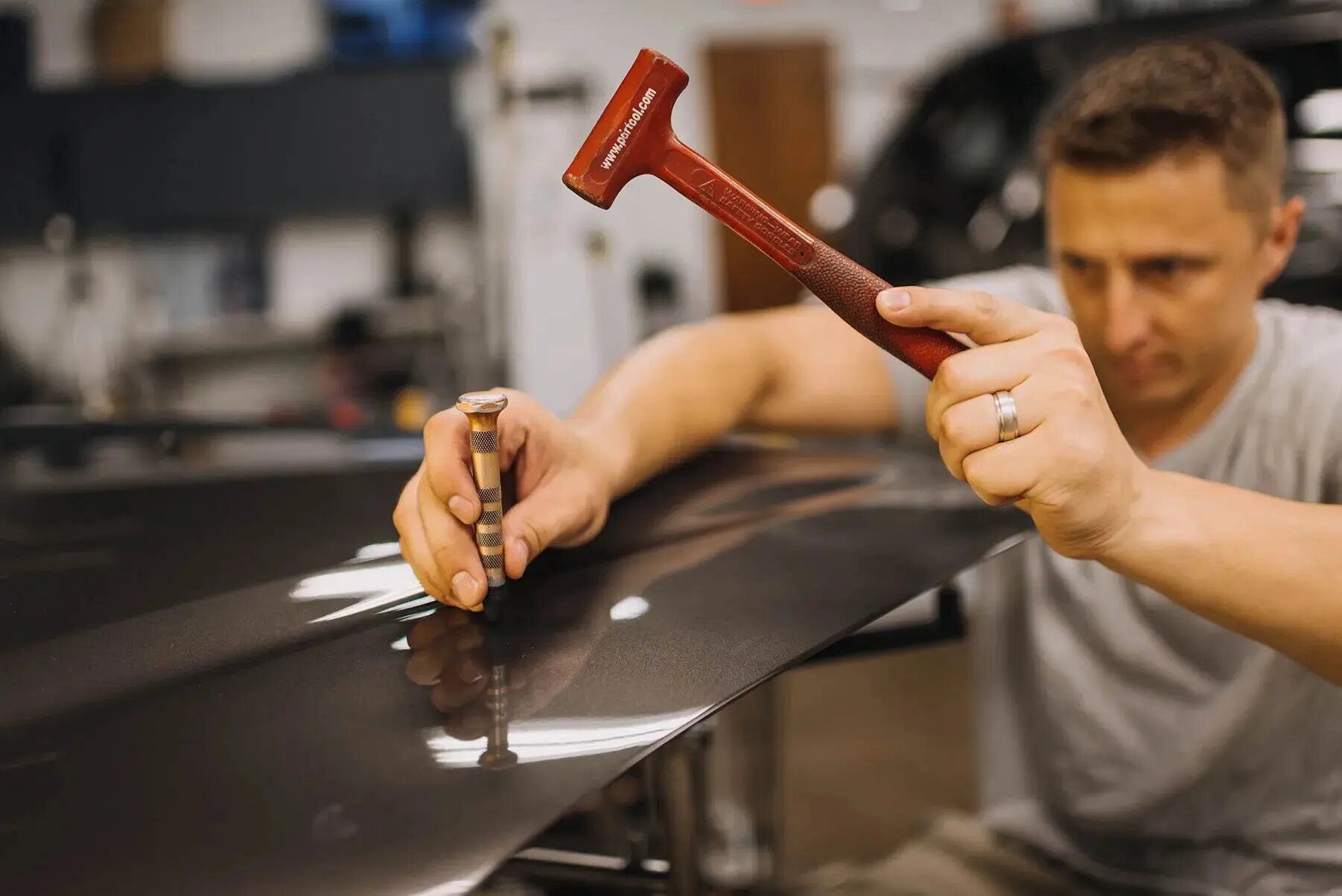
Paintless dent repair moves metal and relies on the factory finish coming along with it. When the finish is already broken, that relationship is gone. PDR cannot heal a crack, a chip or a scratch — no technique, tool or amount of warmth puts coating back on a panel. What PDR can often still do is correct the metal underneath, so that whatever paint work follows is smaller, cheaper and closer to factory than it would otherwise have been.
So the honest answer is: the dent can frequently be fixed. The paint will need attention either way.
Finding out what is actually cracked
Not everything that looks like cracked paint is cracked to metal, and the difference changes the plan. Under an LED line board, with the panel clean and dry, a technician is looking for four distinct things:
- Clearcoat crazing. Fine hazy lines in the top layer, often radiating from the impact point. The color coat below may be untouched.
- A crack through to the color or primer. Visible as a hard line with a different tone inside it. Wetting the panel makes these show up sharply, then reappear as the water dries.
- A chip to bare metal. The one that matters most, because it is an open corrosion path.
- Cracking that signals what is underneath. Paint that shatters or flakes in a wide area around a modest impact usually means a previous refinish, filler, or poor adhesion — which changes the whole assessment of that panel.
A fingernail drawn lightly across the mark tells you whether there is a physical edge or just an optical one. A paint depth gauge tells you whether the panel is wearing factory finish or something added later. Factory paint is remarkably tough and flexible; aftermarket refinish work varies enormously, and it is far more likely to crack under a hail strike than original coating is.
Why the crack rules out a straight PDR repair
Two mechanical realities, both easy to see once pointed out.
First, working the metal loads the finish. Pushing a dent up from behind or lifting it from the front stretches the coating across the area being moved. Intact clearcoat handles that; a crack is a stress concentrator and it will run. A hairline you could barely find becomes an obvious line across the panel.
Second, glue pulling needs sound paint to bond to. Adhesive tabs load the finish directly, so on cracked or lifting clear a tab either fails to hold or takes coating with it. That removes the option a technician would normally use where there is no access from behind.
What the realistic options are
| Situation | Typical approach | What you should expect |
|---|---|---|
| Light clearcoat crazing, metal barely displaced | Assess whether the crazing is stable; polish or leave, correct metal only if it will not spread the crazing | An honest conversation about appearance versus risk |
| Small chip, shallow dent | Metal corrected where it can be done without running the crack, then touch-up to seal the chip | Sealed and stable, but touch-up is visible at close range |
| Crack or chip with real dent depth | Metal brought back with PDR technique, then that panel refinished | Correct shape, new finish on one panel, blending into neighbours for match |
| Wide cracking over filler or a previous respray | Conventional body repair — the panel is assessed as a body job, not a PDR job | Longer timeline, full refinish of the affected area |
| Severely stretched or torn metal | Panel replacement and refinishing | The right call sometimes; an adjuster-required panel replacement can be reported on a vehicle history report |
The third row is the one people underestimate. Using PDR technique to bring the metal back to shape before refinishing means the body shop needs little or no filler and a much smaller repair area. That is better for the panel long-term and usually better for the timeline. Our comparison of PDR and traditional body shop repair covers where the two disciplines hand off to each other.
The dent and the paint are two separate problems. PDR solves one of them, and solving it well makes the other one smaller.
Touch-up, spot repair and refinish — what each really gets you
- Touch-up paint. Seals bare metal and stops corrosion. It does not disappear. Under direct light you will find it. On a small chip in a non-focal area, most people take that trade willingly.
- Spot or panel refinish. Restores appearance properly. Modern metallic and pearl finishes usually need blending into adjacent panels for the color to read correctly, which is why a "one panel" repaint often involves the panels next to it. Aging and sun exposure make an exact match to an untouched neighbour harder, not easier.
- Panel replacement. Sometimes the right answer, especially where the metal is torn or heavily stretched. It is also the one route that can create a record: PDR itself creates no vehicle history entry, but an adjuster-required panel replacement can be reported.
How it works on a hail claim
Most hail vehicles are mixed jobs. The great majority of dents on a typical hail car have intact paint and are straightforward paintless work; a handful — usually on edges, on body lines, or on a panel that was repainted at some point in its life — have cracked coating and need refinishing. An estimate that reflects reality will therefore contain both PDR lines and conventional repair lines.
Cracked paint is also one of the things most often missed on a first-pass estimate written in a driveway or a catastrophe tent, because hairline cracking simply does not show up without proper lighting. When it turns up on the shop floor, the correct route is a documented supplement. The customer files the claim; we help with photos, adjuster meetings, supplements and paperwork, and walk alongside you through it. Our guide on how hail supplements work explains what to expect, and the Texas Department of Insurance publishes general consumer guidance on handling hail and windstorm claims. Coverage depends on the language of your policy, and your insurer or licensed agent can confirm your specific coverage.
On timing, a mixed job takes longer than a pure PDR job because refinishing brings its own preparation, application and cure time. Full-vehicle hail repair generally runs about 5–10 business days in the shop, a typical range rather than a guarantee, and panels needing paint sit at the longer end of it.
Common mistakes with cracked paint
- Letting anyone pull on it. A glue tab on cracked clear can lift coating off the panel. A rod push behind it runs the crack. Neither is recoverable.
- Waiting a season. Intact-paint dents can wait. Bare metal cannot, and the fix gets larger the longer it sits.
- Pressure washing broken paint edges. High pressure at a chipped edge lifts more coating.
- Accepting "we can do that paintless" without a lighting inspection. If nobody read the panel under a line board, nobody knows whether the clear is cracked.
- Assuming a repaint means the whole car. It usually means one panel plus blending into its neighbours — worth asking so the estimate makes sense.
What to do next
Get the panel read under proper lighting before you decide anything. Cracked paint is the single most common thing missed in outdoor inspections, and it changes both the method and the price. If you are sending photos, wet the panel first and shoot with a hard-edged reflection running across the damage — cracks show far better wet than dry.
At the Plano shop we inspect free of charge, tell you plainly which dents are paintless work and which panels need paint, and do what is best for the vehicle rather than forcing everything into one method. Every finished repair carries our written lifetime warranty for as long as you own the vehicle, and is signed off by whoever runs quality control — visible in your customer portal. You can see finished work in our before and after gallery, or read how the process runs on our hail repair page and our dent repair page.
Frequently asked questions
How can I tell if the paint in my dent is actually cracked?
Clean and dry the panel, then look at it with a hard-edged reflection running across the damage. Wetting the surface makes cracks show sharply and they reappear as the water dries. Draw a fingernail lightly across the mark — a physical edge means the coating is broken, while a mark you cannot feel is often only an optical one. Fine cracking is very easy to miss outdoors.
Will working the dent make the crack worse?
Yes. Pushing metal from behind or lifting it from the front stretches the coating across the working area, and a crack is exactly where that stress concentrates. A hairline you could barely find can become an obvious line across the panel. This is why the paint is assessed before any tool touches the metal.
Is a small chip urgent?
More urgent than the dent itself. Dents with intact paint are stable and can wait months or years. A chip through to bare metal is an open corrosion path, and Texas heat cycling and humidity work at the damaged edges continuously. Sealing it promptly, even with touch-up, is worth doing while you decide on the full repair.
Does touch-up paint look acceptable?
It seals the metal and stops corrosion, which is its real job. It does not disappear — under direct light you will find it. On a small chip in a non-focal area most people accept that trade. On a hood, a door face or anywhere you look at every day, a proper spot refinish is usually the better answer.
If one panel is repainted, will it match the rest of the car?
Modern metallic and pearl finishes normally need blending into the adjacent panels for the color to read correctly, which is why a single-panel repaint often involves its neighbours. Years of sun exposure make an exact match to untouched paint harder rather than easier, and that is a fair thing to discuss before work starts.
Why does cracked paint show up after the estimate was written?
Because hairline cracking does not show without proper lighting, and first-pass estimates are often written outdoors or in a catastrophe tent. When it turns up under the line boards, the correct route is a documented supplement to the insurer. You file the claim; we help with the photos, the adjuster meeting, the supplement and the paperwork.
Does a repaint or replacement show up on a vehicle history report?
Paintless dent repair itself creates no vehicle history record. An adjuster-required panel replacement can be reported, which is one reason replacement is a decision made on the merits of the panel rather than for convenience. Repairability depends on paint condition, metal stretch, panel access and prior repairs.
Why did my paint crack when other cars in the same storm did not?
Factory finish is tough and flexible. Aftermarket refinish work varies a great deal, and a panel that was repainted at some point in its life — or that has filler under the surface — cracks far more readily under a hail strike. Widespread flaking around a modest impact is usually telling you something about the panel's history.
Sources and methodology
- After hail or windstorms: consumer tips — Texas Department of Insurance.
Repair, cost and timing statements that are not tied to a listed source come from DentPicks' own quoting and repair history at the Plano, TX shop. They are typical ranges and shop-floor observations, not industry statistics or promises — your vehicle, its condition, your policy language and your insurer determine your specific outcome.
Not sure whether the paint is cracked?
It is the single most common thing missed in an outdoor inspection. Bring the car to the Plano shop and we will read the panel under PDR lighting and tell you plainly what it needs.