The short answer
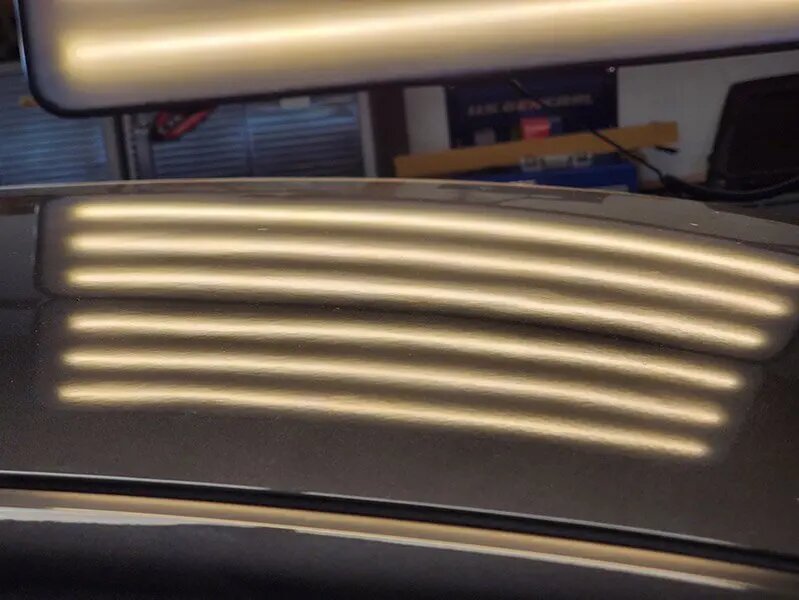
A panel should be replaced rather than repaired when the metal is torn or split, when the finish is destroyed across a large area, when the metal is stretched beyond what shaping can recover, or when the back of the panel cannot be reached with a tool. Cost, timeline, corrosion protection and what ends up on the vehicle's record all belong in the comparison. Ask to see the panel read under reflection lighting before either route is committed.
 Written by the DentPicks Editorial Team
Technically reviewed by Vytas Kucinskas, Founder & Master PDR Technician
Written by the DentPicks Editorial Team
Technically reviewed by Vytas Kucinskas, Founder & Master PDR Technician
Published: Aug 19, 2026 · Last reviewed: Aug 19, 2026 · 9 min read
Paintless dent repair covers far more damage than most drivers expect, and a shop that works with it every day would rather keep your factory finish than take it off. But some panels are genuinely past the point where pushing metal is the right answer, and pretending otherwise produces a repair that looks acceptable at handover and disappoints a year later.
Knowing where that line sits is useful whether you are paying out of pocket or going through a hail claim, because it tells you when a shop is being honest with you and when it is being convenient.
The four things that push a panel toward replacement
Almost every replacement decision comes down to one or more of these.
- The metal is torn, split or holed. PDR moves metal; it cannot add metal back. A tear at the bottom of a crease, a puncture from debris or a split along a body line ends the conversation immediately.
- The finish is destroyed over a large area. Cracked, flaking or delaminating coating across a panel means the surface has to be restored regardless of what the metal does. At that point, refinishing and replacement are competing on cost, not on principle.
- The metal is stretched beyond what shaping can recover. Severely thinned or work-hardened metal will not return a flat surface. It can be improved, but a reflection board will always show it.
- The back of the panel cannot be reached. Bonded seams, structural reinforcements, foam-filled cavities and double-skinned areas leave nowhere to put a tool. Access is a bigger limit than most people realize, and it is the reason two identical dents on different cars get different answers.
Panel-by-panel realities
| Panel | Usual PDR outlook | What pushes it to replacement |
|---|---|---|
| Roof | Very often repairable, even with heavy hail | Torn metal, damage into the roof rails or a sunroof surround, cracked paint across the panel |
| Hood | Usually repairable; aluminum hoods take longer | Deep creasing near the leading edge, damage to the inner frame, badly stretched aluminum |
| Doors | Generally good access, good outcomes | Crease through a body line with cracked paint, damage at the beltline or into the intrusion beam |
| Quarter panel | Often possible, but access varies a lot | Sealed or reinforced areas with no tool path; welded construction makes replacement itself a major job |
| Bed side / truck box | Repairable in many cases | Double-wall construction with no access, or a crease at a stake pocket |
| Plastic bumper covers | Not PDR — different material behaviour | Cracks, tabs broken at the mounting points, or sensor housings damaged |
Repairability depends on paint condition, metal stretch, panel access and prior repairs — which is why this table describes tendencies rather than rules, and why the real answer comes from an in-person read. Our guide on deep creases and large dents covers the borderline cases in more depth.
Where safety systems change the calculation
Modern panels are not just skin. Roof rails on many vehicles house curtain airbags and their inflators. Doors carry side-impact sensors, wiring, and occasionally airbag components. Quarter panels and bumper covers house blind-spot radar, parking sensors and cameras. A windshield may carry the forward-facing camera for lane keeping and automatic emergency braking.
None of that makes replacement automatic — it makes procedure mandatory. Good practice means following the manufacturer's documented removal and installation procedure for that specific vehicle, disconnecting and protecting airbag components and harnesses before trim comes out, keeping tools and pressure away from routed wiring, and confirming afterwards whether any driver-assistance system requires calibration before the vehicle goes back on the road. Manufacturer procedures vary by model year and configuration, and the documentation for your vehicle is the authority, not a general rule of thumb.
This matters for PDR too, not only for replacement. Reaching the back of a roof skin usually means dropping a headliner, and that is exactly where curtain airbag components live. It is one of the reasons roof work belongs in a shop with the vehicle's procedure in front of the technician rather than in a parking lot. NHTSA publishes general vehicle safety information worth reading if you want background on why these systems are treated carefully.
Cost is a comparison, not a verdict
Replacement is not automatically more expensive, and PDR is not automatically cheaper. A hail-damaged roof with a hundred dents can cost more in PDR labour than a new panel would — but a new roof on a modern vehicle also brings adhesive-bonded or welded installation, headliner removal, refinishing, blending into the pillars, and possibly recalibration. Those add up quickly.
The practical comparison a shop should make for you covers four things: total repair cost either way, how long each route takes, what happens to the factory finish and corrosion protection, and what each route means for the vehicle's record. PDR itself creates no vehicle-history record; an adjuster-required panel replacement can be reported.
On an insurance claim, the estimate decides much of this. If a panel is written for repair and the shop finds it is not repairable once work begins, that is a supplement — a normal part of the process rather than a problem. Our guide on how supplements work on hail repair explains the sequence. The customer files the claim; DentPicks helps and walks alongside you through photos, adjuster meetings and paperwork.
Where damage is extensive enough that the numbers approach the vehicle's value, a different question opens up — see our guide on when hail damage becomes a total loss in Texas.
How the decision is made in the shop
- Read every panel under lighting. At our Plano shop panels go under LED line boards, because outdoor light hides a large share of hail dents and every hidden dent changes the arithmetic.
- Check paint depth. Gauge readings reveal prior refinishing and filler, both of which change what is possible.
- Test access from behind. Before quoting a repair, the technician confirms there is a tool path — and what has to come off to get there.
- Look at the metal condition. Torn, split or severely thinned metal is identified early, not discovered mid-repair.
- Give you both numbers. Where it is genuinely a close call, you should hear the repair figure and the replacement figure and be told which one we would choose and why.
- Sign it off. Whichever route the panel takes, the finished work is checked under the same lighting and signed off by whoever runs quality control — visible in your customer portal.
Red flags in either direction
- "PDR can fix anything." It cannot. Panels sometimes do need replacement and refinishing, and a shop that will not say so is selling rather than assessing.
- Replacement recommended without the panel being read under lighting. Replacement is more billable than repair. It should still be justified by what the panel is doing under a reflection board.
- A quote for a roof or quarter panel given from photos alone with no in-person check. Photos start the conversation; they do not show access or paint depth.
- No mention of calibration on a vehicle with cameras or radar. If sensors or the glass they sit behind are disturbed, whether calibration is required should at least be checked against the manufacturer's procedure.
- Aftermarket panel fitted without you being told. You are entitled to know whether a replacement part is an original equipment panel or an aftermarket one, and what your policy allows.
What to do next
If someone has told you a panel needs replacing, ask them to show you why under proper lighting, and ask what the repair alternative would cost and how long it would take. If someone has told you a badly damaged panel can be fully repaired paintlessly, ask the same question in reverse.
At DentPicks in Plano we assess panels under PDR lighting, tell you plainly which ones are repairable and which are not, and do what is best for the vehicle rather than what keeps the job in one category. Our repairs carry a written lifetime warranty for as long as you own the vehicle. You can see the range of finished work in our before and after gallery, or read how our dent repair process runs from inspection to delivery.
Frequently asked questions
Is a replaced panel ever better than a repaired one?
Yes, when the original is torn, holed or so stretched that no amount of shaping returns a flat surface. A properly fitted and refinished replacement then gives a better long-term result than a repair that will always read wrong under reflection lighting.
Does replacing a panel hurt my car's resale value?
It can, mainly because an adjuster-required panel replacement can be reported on a vehicle history record, while PDR itself creates no record. Fit, color match and whether the part is original equipment or aftermarket also matter to a used-car appraiser. Ask which part is being ordered.
Do driver-assistance systems need calibration after panel work?
Sometimes. Radar, cameras and parking sensors mounted in or behind panels, glass or bumper covers may require calibration once disturbed or replaced. The manufacturer's documented procedure for your specific vehicle is the authority. Manufacturer procedures vary by model year and configuration.
Why can't PDR reach the back of some panels?
Because many panels are double-skinned, bonded, foam-filled or reinforced behind the visible surface. Without a tool path there is no way to apply controlled pressure from behind. Access is often the single limiting factor, which is why the same dent gets different answers on different vehicles.
Can a hail-damaged roof usually be saved?
In most cases yes, even with heavy dent counts. Roofs have generally good access once the headliner is dropped, and hail dents are typically round and shallow rather than sharp. Damage that runs into the roof rails or a sunroof surround, or paint cracked across the panel, is what changes it.
Who decides — the shop, the insurer or me?
All three have a role. The shop assesses repairability, the insurer's estimate sets what is authorized, and you own the vehicle and approve the work. Where the shop finds a panel is not repairable after the estimate was written, a supplement is the normal route. Coverage depends on the language of your policy.
Sources and methodology
- Vehicle safety information — National Highway Traffic Safety Administration.
Repair, cost and timing statements that are not tied to a listed source come from DentPicks' own quoting and repair history at the Plano, TX shop. They are typical ranges and shop-floor observations, not industry statistics or promises — your vehicle, its condition, your policy language and your insurer determine your specific outcome.
Told a panel needs replacing?
Get a second read before you agree. We inspect panels under PDR lighting in Plano, check paint depth and access, and give you both numbers when it is genuinely a close call.