

The short answer
Ask which wear standard applies, how dents are measured, which items are chargeable versus normal wear, whether you will receive the report and photographs, how long you have to repair, whether repairs need re-inspection, whether independent shops are accepted, whether items can be added at drop-off, and who handles disputes. Write the answers down and photograph every flagged item yourself.
 Written by the DentPicks Editorial Team
Technically reviewed by Vytas Kucinskas, Founder & Master PDR Technician
Written by the DentPicks Editorial Team
Technically reviewed by Vytas Kucinskas, Founder & Master PDR Technician
Published: Aug 19, 2026 · Last reviewed: Aug 19, 2026 · 8 min read
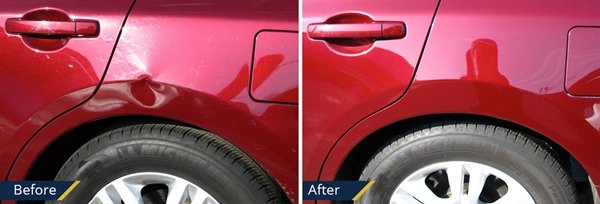
The lease-return inspection is the last moment you have any leverage. Before it, you can fix things. After it, the report is written, the car is going back, and any conversation about charges happens with a finance company that already has its number.
Most people treat the appointment as something that happens to them — the inspector walks around with a tablet, says "you're all set," and leaves. Twenty minutes of questions during that visit is the difference between knowing what you owe and finding out by mail six weeks later.
What the inspection is and who is doing it
On most leases the inspection is ordered by the captive finance company that owns the vehicle, not by the dealership, and it is frequently carried out by a third-party inspection company. The inspector's job is to measure the car against the lender's published wear-and-use standard and file a report. They generally do not set prices, waive charges or negotiate.
That matters for how you use the visit. The inspector is a source of information and a witness to the car's condition. They are not the person who decides what you pay, and a friendly verbal "that's fine" from them is worth nothing if the standard says otherwise.
Timing is usually a defined window before lease maturity, which exists precisely so you have time to repair what gets flagged. Our lease return dent repair guide walks through the full timeline from 90 days out.
The questions worth asking, in order
Ask these while the inspector is still standing at the car. Write the answers down.
- "Which wear standard are you inspecting against, and can I see it?" Standards differ by lender and change over time. You want to know which document your car is being measured against before anything is marked.
- "How are dents and dings measured?" Many programs use a physical template or gauge card with a defined diameter. Ask to see the gauge used on your panels.
- "Which items are you marking as chargeable, and which as normal wear?" Get the split verbally, item by item, while you can still look at each one with them.
- "Will I receive the written report and the photographs?" Ask how and when. Photographs are the part people forget to request, and they are what any later discussion rests on.
- "How long do I have to repair flagged items before turn-in?" Confirm the deadline against your maturity date, not against a general policy.
- "If I repair something, does the car need re-inspection?" Some programs re-inspect, some accept documentation at turn-in. The answer changes your schedule.
- "Are repairs by an independent shop accepted, or must they be done at a franchised dealer?" Ask specifically, and ask what documentation is expected.
- "Can items be added after this inspection?" Frequently the grounding dealer performs its own check at drop-off. Knowing whether this report is final tells you how much protection it actually gives you.
- "What about tires, wheels, glass and missing items?" Tread depth, curb rash, chips and cracks, plus second keys, cargo covers, charge cables and floor mats. These are often larger line items than any dent.
- "Who do I contact about the report, and how do I dispute an item?" Get the name of the entity and the channel — the inspection company, the lender, or both.
Questions the inspection does not answer
A few things fall outside the inspector's scope entirely, and it saves time to know that going in. Direct them to the finance company instead:
| Question | Ask | Why |
|---|---|---|
| How much will each item cost me? | The finance company | Inspectors document condition; the lender applies its charge schedule. |
| Does my wear protection product cover this? | The finance company or the product administrator | Caps, per-item limits and exclusions are in the product contract, not the inspection report. |
| Will re-leasing the same brand waive charges? | The finance company, in writing | Loyalty provisions vary by program and change over time. Verbal assurances at a dealership are not the contract. |
| What is my mileage overage? | The lease agreement | Per-mile overage is a contract term. Compare it against your odometer now, not on turn-in day. |
| What is the disposition fee? | The lease agreement | It is typically owed regardless of condition, and it belongs in your total, not your surprise. |
| Is this dent repairable without paint? | A repair shop | Repairability depends on paint condition, metal stretch, panel access and prior repairs — an inspector is not assessing that. |
After the report arrives
Read it the day it lands. Then work through it in this order:
- Check the report against the car. Match every flagged item to the actual panel. Reports occasionally list items from the wrong vehicle or the wrong side.
- Separate the fixable from the fixed cost. Dents, wheel rash and missing accessories are usually addressable. Mileage overage and the disposition fee are not.
- Get a repair number for the addressable items. You are comparing a repair you control against a charge derived from retail body-shop rates.
- Decide, then move. Repair windows before maturity are short, and shops fill up in hail season across DFW.
- Photograph everything on handover day. All four corners, the roof, each wheel, the odometer, the interior, and get a dated receipt for the vehicle and the keys.
How a lease car moves through our shop
Lease work is time-boxed by definition, so it gets handled that way. At our Plano shop the car is read under LED reflection boards rather than in daylight, panel by panel, because outdoor light hides shallow dents that an inspector with a gauge card will still find. You get told which dents come out completely, which will improve but not disappear, and which need paint — sometimes a panel genuinely does need refinishing, and we say so rather than pretending otherwise.
Quotes are usually verbal, from photos, in about 30 minutes, with a written estimate after the in-person read. Most multi-dent lease jobs are a day or two rather than a week. Finished work is signed off by whoever runs quality control and that sign-off is visible in your customer portal, which gives you dated documentation of the car's condition before it goes back — useful if a charge later appears for something you already had repaired. Our guide on how paintless dent repair works explains what happens between those two points.
Common mistakes at the final inspection
- Not being there. An inspection you did not attend is a report you cannot question, made about a car you can no longer photograph.
- Taking a verbal reassurance as a decision. The inspector documents; the lender charges. Only the written standard governs.
- Leaving the car dirty. Dirt hides nothing from a trained inspector and it makes minor scuffs read as damage. Wash it first.
- Forgetting the second key and the accessories. Missing-item charges are among the easiest to avoid and the most commonly incurred.
- Waiting for the report to schedule repairs. By then the window is shorter. Inspect the car yourself first and get a quote in parallel.
- Assuming a repaint is the safe choice. Refinishing a panel is permanent and detectable, and on a car you are handing back it buys you nothing that a proper dent repair would not.
What to do next
Before your appointment, find the wear-and-use standard in your lease packet and read the dent, wheel, tire and glass sections. Then wash the car and walk every panel at a shallow angle in indirect light, photographing whatever you find. Turning up already knowing what is on the car changes the tone of the entire visit.
If you want a second opinion on what you found, send photos for a range or bring the car to our lease return dent repair bay in Plano — straightforward from Frisco, McKinney, Allen and the north Dallas corridor. You can see the standard of finish in our before and after gallery before you commit to anything.
Frequently asked questions
Do I have to be present at the lease-return inspection?
It is usually optional and almost always worth doing. An inspection you did not attend produces a report you cannot question about a car you can no longer photograph. Being there also lets you see the gauge used on each panel.
Can the inspector waive a charge if they say the car looks good?
No. The inspector documents condition against the lender's wear-and-use standard; the finance company applies its own charge schedule and issues the bill. A friendly verbal assurance carries no weight if the written standard says otherwise.
Can more damage be added after the inspection?
Often yes. The grounding dealer frequently performs its own check when you drop the car off, and damage occurring between inspection and turn-in is still yours. Ask directly whether the report is final, and photograph the car on handover day.
Will the lender accept repairs done at an independent shop?
Many do, but confirm it with the finance company rather than assuming, and ask what documentation they expect. Keep an itemized repair order showing the method used for each panel, plus dated before-and-after photographs.
What besides dents gets flagged most often?
Tires below the program's tread standard, curb rash on wheels, windshield chips and cracks, and missing items — a second key, cargo cover, charge cable or floor mats. These are frequently larger line items than any body damage on the car.
Should I wash the car before the inspection?
Yes. Dirt hides nothing from a trained inspector working with a gauge and good light, and it makes ordinary road film read as scuffing. A clean car is also easier for you to photograph, which is the record you will want later.
How do I dispute an item on the report?
Ask at the appointment who owns the process — the inspection company, the finance company, or both — and get the channel in writing. Then support your position with dated photographs and any repair documentation showing the item was addressed before turn-in.
Sources and methodology
Repair, cost and timing statements that are not tied to a listed source come from DentPicks' own quoting and repair history at the Plano, TX shop. They are typical ranges and shop-floor observations, not industry statistics or promises — your vehicle, its condition, your policy language and your insurer determine your specific outcome.
Inspection scheduled?
Send photos of anything you found and we will tell you what comes out without paint, usually with a verbal range in about 30 minutes. Most multi-dent lease jobs are a day or two.